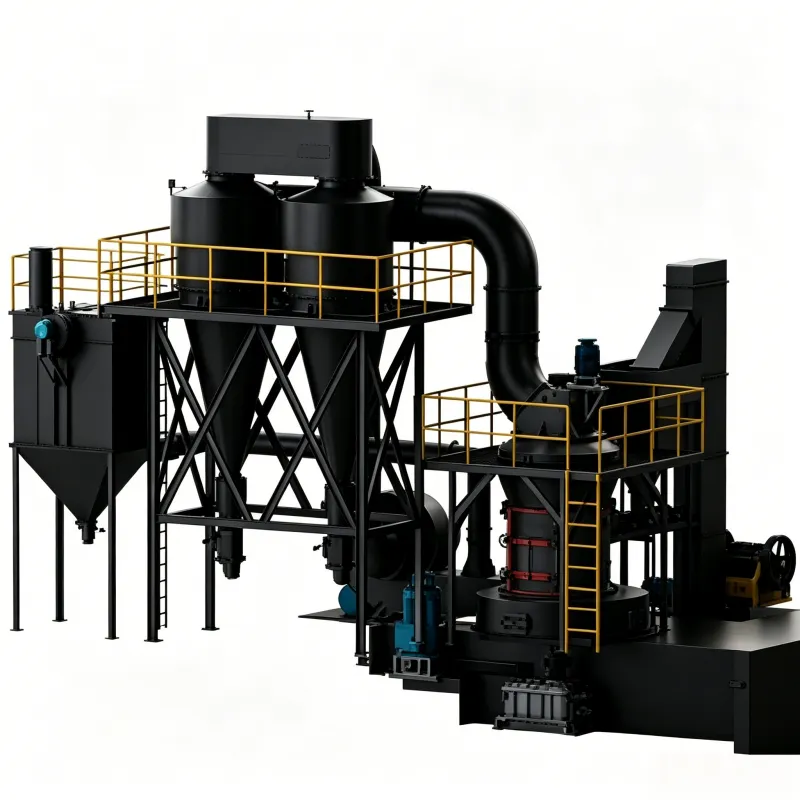
KX-Raymond-Mühle
Einführung in die Raymond-Mühle Die Kx-Raymond-Mühle ist ein Kernprodukt…

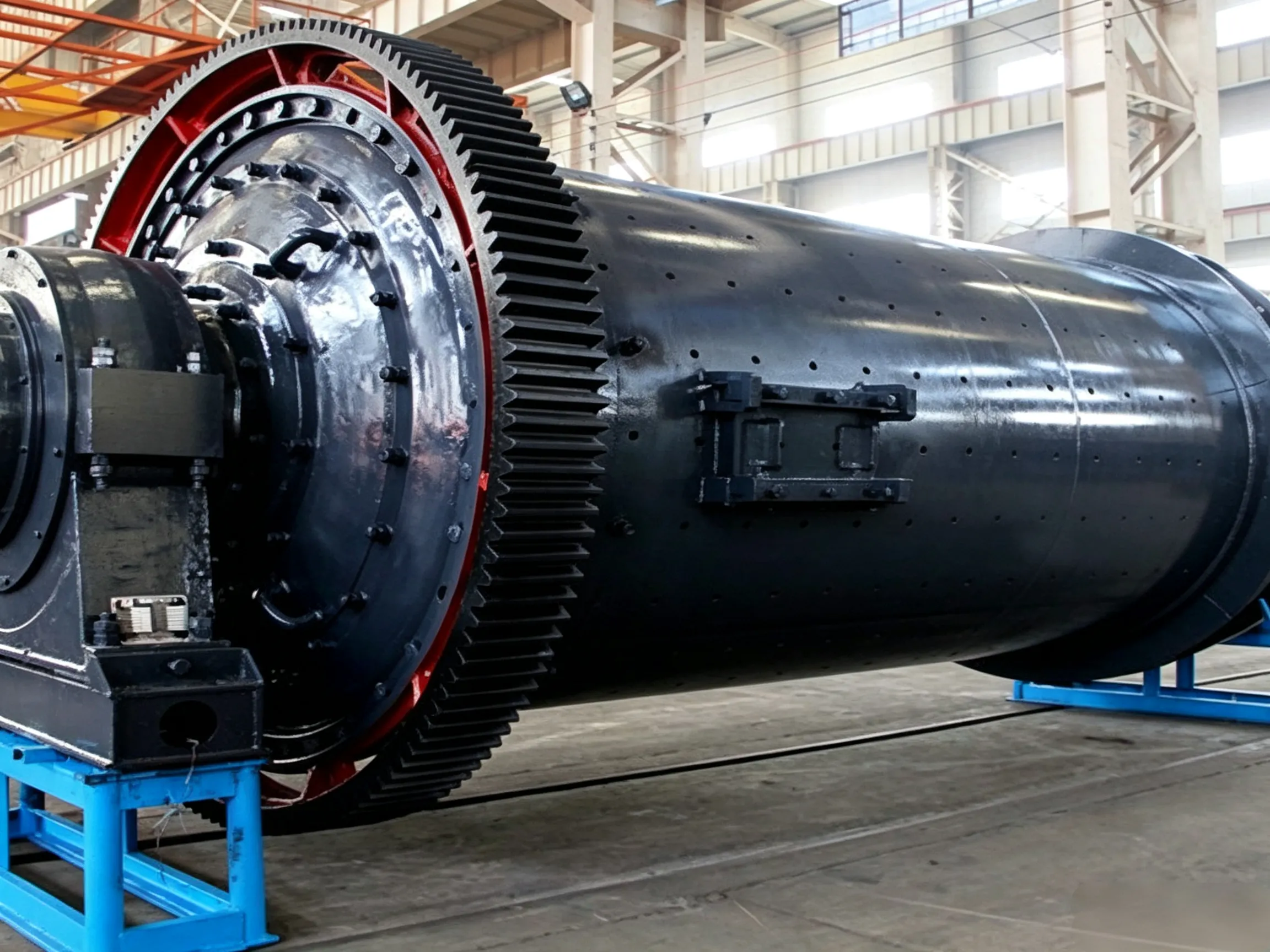
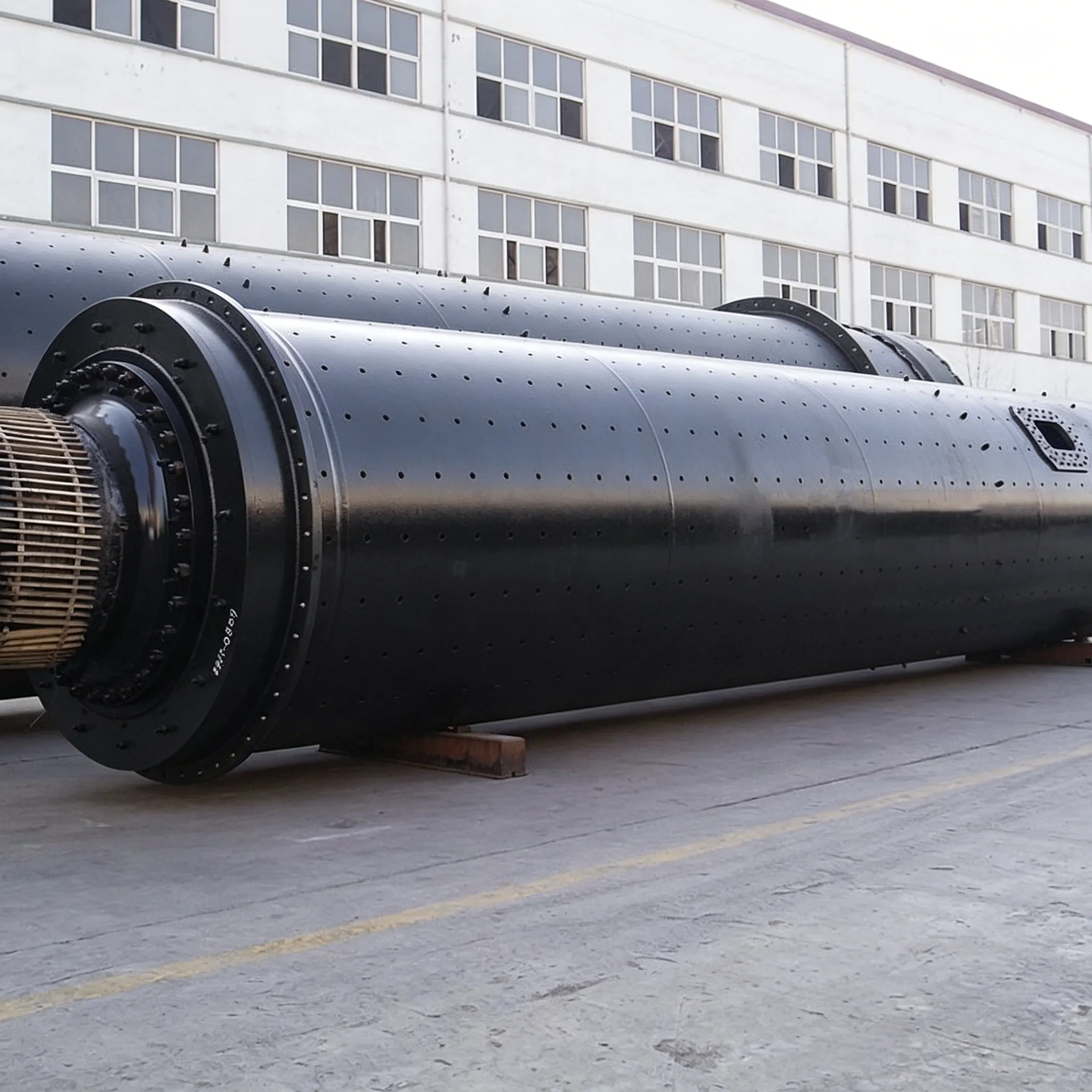
Internal ventilation has a significant influence on both output and quality. Good ventilation not only discharges fine powder from the mill in time to avoid over‑grinding, but also removes grinding heat, lowers the internal temperature, reduces gypsum dehydration, and prevents ball coating and grate blockage in the last compartment. Generally, the air velocity in closed‑circuit mills is 0.8–1.0 m/s, while in open‑circuit mills, due to higher internal temperatures, the air velocity should be somewhat higher than that in closed‑circuit mills. Some plants use ball mills designed before the 1990s, which structurally often have poor airflow paths. Improvements can be made by opening ventilation ports at the feed inlet, modifying the feed screw, making the feed chute stepped, enlarging the centre holes of the intermediate diaphragm and discharge grate, and strengthening air‑lock at the discharge end. These measures not only solve material blockage but also increase the ventilation area.
Earlier designs of intermediate diaphragms and discharge grates merely served to divide compartments by function, separate large and small grinding media, and prevent media from being discharged. Today, however, they are expected to control material flow rate, balance the grinding capacity between the head and tail compartments, increase the material‑to‑ball ratio, and prevent reverse classification – thereby enhancing the effective utilisation of grinding media kinetic energy and increasing output. For older ball mills, diaphragm plates with screening function and discharge grates can be selected according to material characteristics. A screening diaphragm is a new type that classifies material passing through it into coarse and fine fractions. Its main function is to screen the material entering the fine‑grinding compartment and prevent coarse particles from entering, thus creating conditions for using micro‑sized grinding media with high specific surface area and high grinding efficiency in the fine‑grinding compartment. In other words, the new diaphragm not only controls material flow and balances grinding capacity across compartments, but also achieves classification of coarse and fine particles and forced material lifting, allowing finer material to enter the fine‑grinding compartment earlier for further grinding.
To fully utilise the grinding potential of the mill, activation devices can be installed inside the mill. These create three‑dimensional motion conditions for micro‑media, enhance grinding capability, and make better use of the kinetic energy of the grinding media, thereby greatly improving grinding efficiency. The main structure of an activation device consists of trapezoidal elements mounted on the mill liners at a certain angle to the mill axis. Their height is 20%–30% of the shell diameter, thickness about 40 mm, and width equal to that of the liner. Depending on product requirements, 2–5 sets are installed along the mill axis, with one set installed longitudinally for every other liner. Due to the activation device, the grinding media not only move in a circular path along the liners but also move axially. At the same time, the stagnant zone where media farther from the liners have reduced motion because the liners cannot effectively drive them is eliminated by the action of the activation device.
In addition to their protective function, liners are mainly used to adjust the dynamic distribution and motion trajectory of the grinding media. Their form must match the mill speed and material characteristics. The use of various new‑type liners has greatly improved the adjustment of media motion and adaptability to materials. The selection of hyperboloid liners in the last compartment – with inclined curved surfaces both axially and circumferentially – not only enhances the transverse classification of steel balls but also improves the grinding efficiency of steel cylpebs and balls.
Classifying liners enable the grinding media inside the mill to be graded, achieving the ideal state where large balls crush large particles and small balls crush small particles.
Optimising the operating condition of a ball mill means achieving a balance between the crushing capacity and grinding capacity for the material inside the mill. The key lies in the filling rate and gradation of the grinding media. Traditional ball mill process parameters were determined based on the mechanical and electrical conditions and grinding theories of the time. Nowadays, with the use of phase modifiers, variable‑frequency drives, and large rolling bearings replacing plain bearings, production practice has long surpassed the traditional norms: the filling rate has increased from 29%–31% to 36%–40%, the mill speed has been raised by 5%–10% (some even approaching the critical speed), and the grinding media load has increased correspondingly – resulting in high quality, energy saving, and high output.
Moderately increasing the speed is particularly effective for smaller‑diameter mills, because such mills have weaker impact force from steel balls due to their smaller diameter; increasing the speed enhances the comminution capability.
① Increasing the speed means increasing the number of impacts per grinding medium inside the mill.
② It also intensifies the friction and attrition between grinding media, and between media and liners.
In cement mills, the large amount of impact and friction between grinding media, and between media and liners, generates considerable heat, raising the cement temperature. This can easily cause gypsum dehydration, leading to false set of cement, affecting storage and packaging, making paper bags brittle, increasing breakage rates, and worsening the working environment. High cement temperature also tends to cause cement agglomeration due to electrostatic attraction, resulting in ball coating and cylpeb coating, reducing grinding efficiency and mill output.
Spraying atomised water into the cement mill can significantly reduce the internal temperature and is an effective means of cooling. The atomised water vaporises quickly upon injection, without causing cement hydration or reducing cement strength. After absorbing heat inside the mill, the water vapour is carried out by the ventilation. Especially when the mill is at a high temperature, spraying atomised water into the high‑temperature zone of the last compartment produces an immediate effect, ensuring that the discharge cement temperature is kept below 95°C and significantly increasing mill output.
During grinding, due to the rotation of the mill and the movement of grinding media, much of the material remains in a suspended state – particularly in slag powder mills. These suspended particles are difficult for the grinding media to reach, and under the influence of internal ventilation, they are easily carried out of the mill, causing excessively fast material flow and insufficient grinding, so that the product does not reach the required specific surface area. At this point, spraying atomised water into the mill can cause some of the suspended material to settle, effectively improving grinding efficiency, preventing excessively fast material flow, allowing sufficient grinding, and significantly increasing the specific surface area and mill output. For slag powder mills, adopting an internal water‑spray system typically increases output by 10%–50%. By adjusting the spray volume and mill ventilation, the specific surface area of the discharged slag powder can be easily controlled, reaching up to 650 m²/kg or more.
 English English
 Spanish
 Russian
 Arabic
 Swahili
 French
 Turkish
 Portuguese
 Korean
 Japanese
 German
 Italian