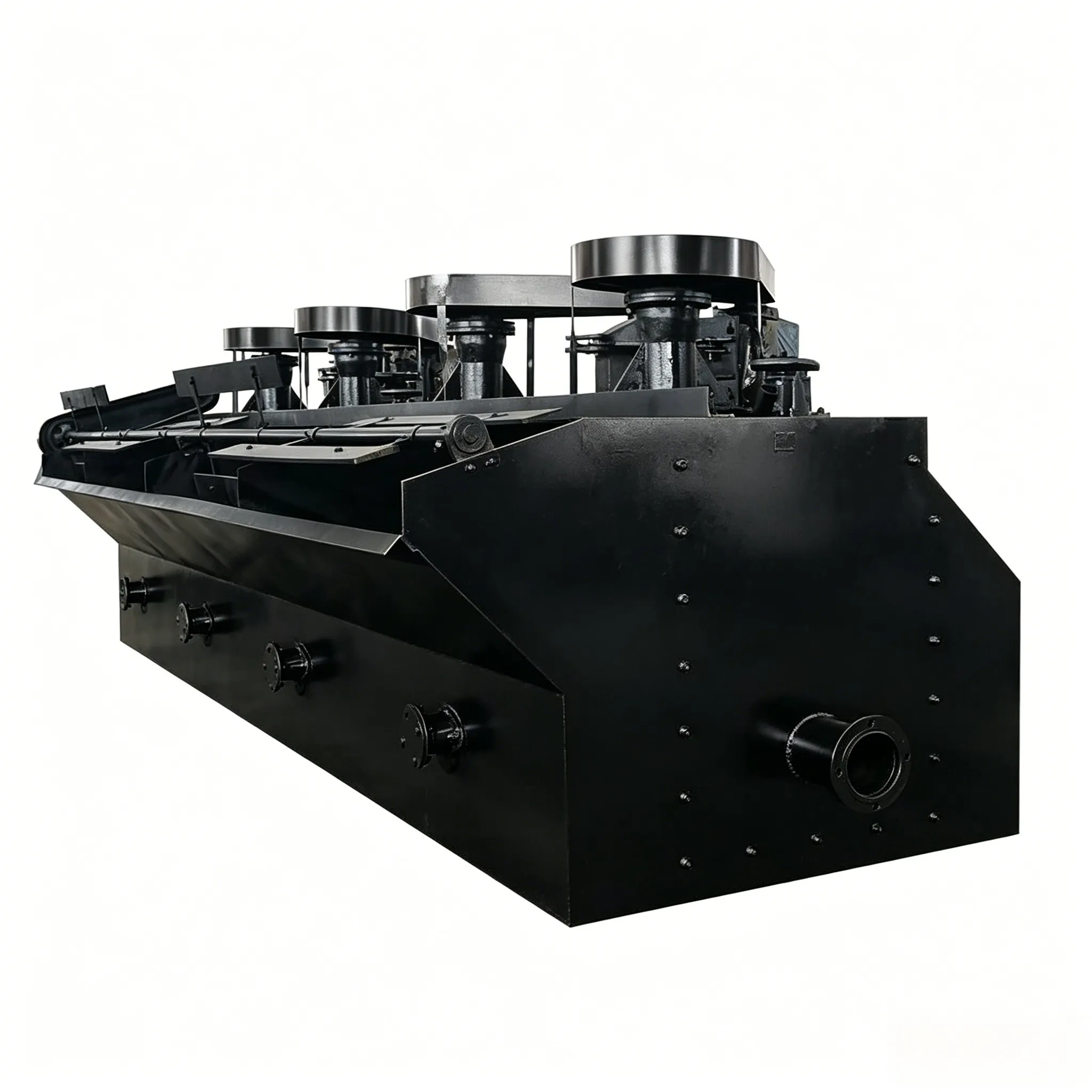
XJZ-Flotationsmaschine
XJZ-Flotationsmaschine Es gibt Tausende von XJ-Flotationsmaschinen älterer Bauart in…

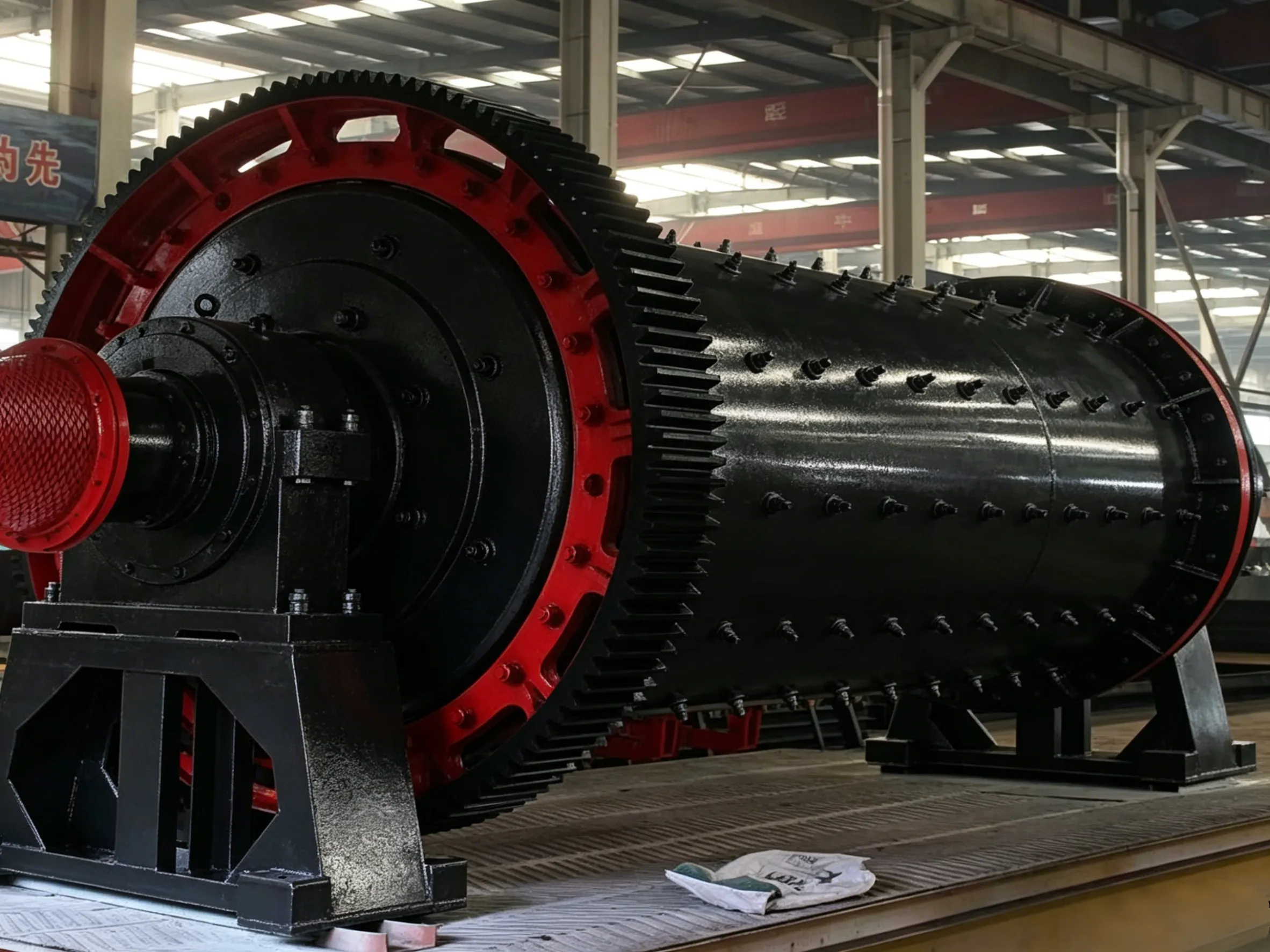
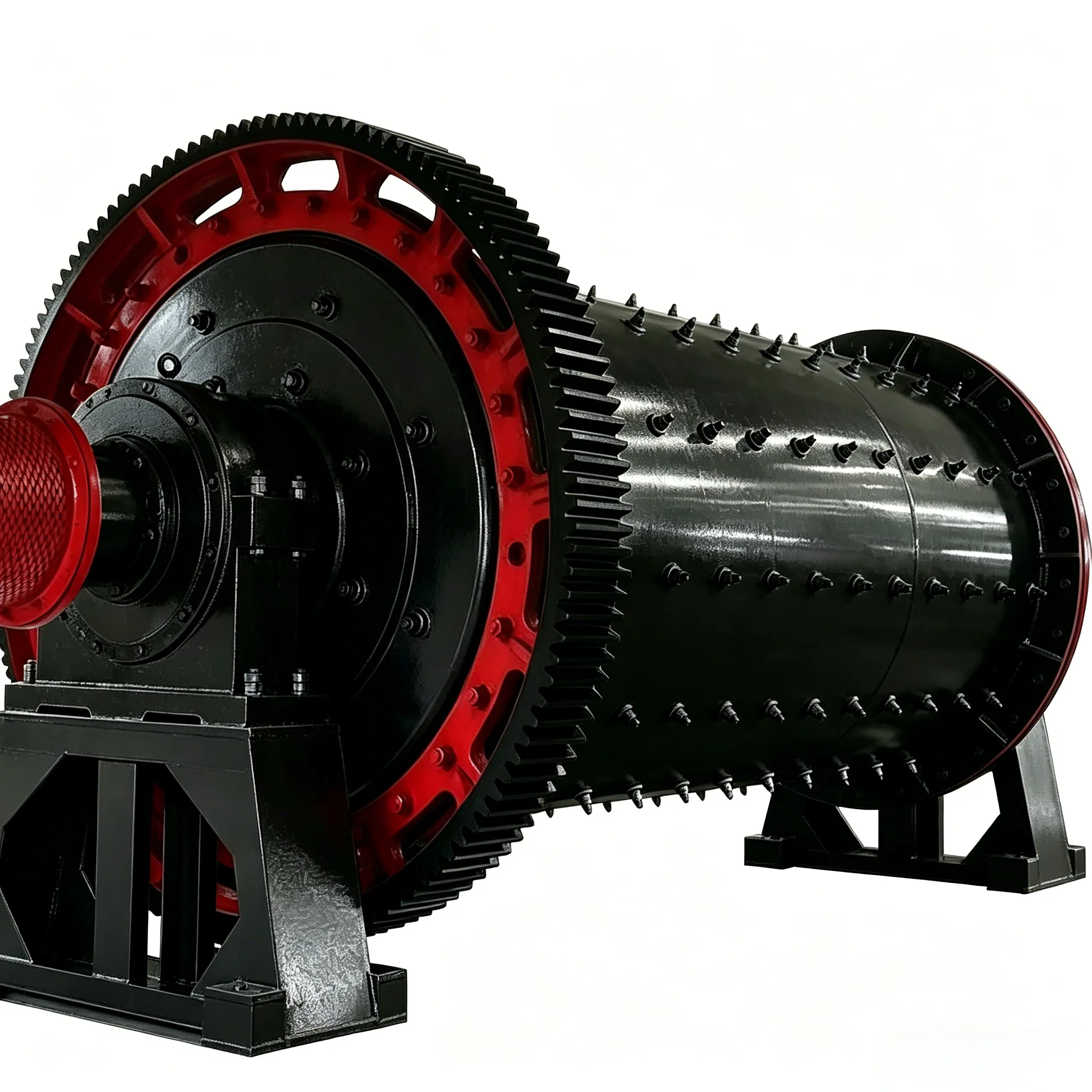
Ball mills are key equipment for grinding materials after they have been crushed. They are widely used in mineral processing, cement, building materials, chemicals, and other industries. Based on the discharge method, ball mills are mainly divided into two types: grate discharge ball mills (also called grid ball mills) and overflow discharge ball mills. These are the most common grinding machines in mineral processing plants. Although their overall structure and basic working principles are largely similar, they differ significantly in discharge method, performance characteristics, and application scenarios. A detailed comparative analysis from multiple perspectives is provided below.
The overall structures of the two types are essentially the same, mainly consisting of a feeding device, main bearings, a rotating part, a transmission device, and a lubrication system. The core difference lies in the design of the discharge end.
1. Discharge end structure of the overflow ball mill
The overflow ball mill does not have a discharge grate plate at the discharge end. The pulp is discharged automatically by overflowing when its liquid level exceeds the lowest generatrix of the discharge hollow shaft neck. To prevent small balls or coarse particles from being discharged with the pulp, the inner surface of the hollow shaft neck liner is equipped with spiral vanes that rotate in the opposite direction to the mill. Because a relatively high pulp level must be maintained for discharge, the overflow ball mill is sometimes referred to as a “high‑pulp‑level mill.”
2. Discharge end structure of the grate discharge ball mill
The grate discharge ball mill is equipped with a discharge grate plate (also called a grid plate or discharge screen) at the discharge end. After grinding, the material passes through the apertures of the grate plate into the fan‑shaped chambers, is lifted by the lifter plates as the drum rotates, and is finally discharged through the discharge spiral cylinder. The grate plate provides forced discharge. The pulp level at the discharge end is lower than the lowest generatrix of the discharge shaft neck, hence it is called a “low‑level discharge” mill. Grate discharge ball mills typically have a two‑compartment structure.
The working principles of both mills are broadly similar: the rotation of the drum causes the steel balls and material to be lifted and then dropped, crushing the material through impact and attrition. The difference lies mainly in the discharge method:
Overflow ball mill: Discharge relies on the pulp itself flowing over the lower edge of the hollow shaft neck liner. The pulp level inside the drum must be higher than the lowest generatrix of the discharge journal. Finely ground particles cannot be discharged promptly and continue to be subjected to impact and grinding in the drum.
Grate discharge ball mill: The ground product is discharged through the grate plate, providing forced discharge. The discharge speed is fast. There is a pulp level gradient from the feed end to the discharge end, which accelerates the flow of pulp through the mill, allowing finely ground particles to be discharged in a timely manner.
Owing to the different discharge methods, the two mills exhibit the following performance differences:
1. Production capacity and efficiency
The grate discharge mill has forced discharge, so the discharge speed is fast. In addition, it holds less pulp inside, and because of the grate plate, it can accommodate more balls, including smaller ones. The steel balls fall with less resistance from the pulp, resulting in better impact effect. These factors make the productivity and efficiency of the grate discharge mill about 10%–25% higher than those of the overflow mill.
Although the power consumption of the grate discharge mill is also about 10%–20% higher than that of the overflow type, its specific productivity per unit of power consumption is still better because of its higher production rate.
2. Product particle size
The grate discharge mill discharges promptly, so the material residence time in the mill is short, resulting in a relatively coarse product and less over‑grinding. The product size is generally greater than 0.2 mm.
The overflow mill has a slower discharge speed and a longer material residence time. Already‑fined particles cannot be discharged in time and continue to be impacted and ground, leading to a tendency for over‑grinding. However, the product is finer, generally less than 0.2 mm.
3. Structural complexity and maintenance
The overflow mill has a simple structure and is easy to operate and maintain. The grate discharge mill, with its additional grate plates and lifter mechanisms, is more complex in construction, and the grate plates are prone to clogging during operation, making maintenance more complicated.
4. Ball loading and steel ball consumption
The grate discharge mill, thanks to the retaining effect of the grate plate, can hold more balls and can accommodate both large and small balls, with small balls not being discharged. The overflow mill holds relatively fewer balls. Moreover, during operation, worn‑out small balls in the grate discharge mill can be discharged through the grate apertures—this “automatic ball cleaning” effect ensures that mostly intact balls remain in the mill, enhancing grinding performance.
5. Sensitivity to external factors
The overflow mill is more sensitive to changes in external conditions and requires timely operational adjustments.
| Vergleichsaspekt | Kugelmühle mit Gitterauslass | Überlauf-Kugelmühle |
|---|---|---|
| Discharge method | Forced through grate plate (low level) | Free overflow by pulp (high level) |
| Productivity | High (10%–25% higher than overflow) | Nach unten |
| Product fineness | Coarse (>0.2 mm), less over‑grinding | Fine (<0.2 mm), prone to over‑grinding |
| Structural complexity | Complex, more difficult maintenance | Simple, easy maintenance |
| Ball loading capacity | High; can accept large and small balls | Relatively low |
| Power consumption | Higher total, but better specific productivity per unit power | Lower total |
| Sensitivity to external factors | Nach unten | Higher |
Applications of grate discharge ball mills:
Grate discharge ball mills are suitable for coarse grinding, generally producing particles larger than 0.2 mm. Specific uses include:
Applications of overflow ball mills:
Overflow ball mills are suitable for fine grinding, generally producing particles smaller than 0.2 mm. Specific uses include:
The choice between the two mills should be based on specific process requirements:
In actual production, conversions between the two types are also seen. For example, some concentrators have converted overflow mills to grate discharge mills by installing fan‑shaped grate plates with apertures at the discharge end. After conversion, forced discharge is achieved, the pulp level is lowered, discharge speed is increased, steel ball consumption is reduced, and grinding performance is improved. Conversely, some plants have converted grate mills to overflow type for regrinding applications.

 English English
 Spanish
 Russian
 Arabic
 Swahili
 French
 Turkish
 Portuguese
 Korean
 Japanese
 German
 Italian