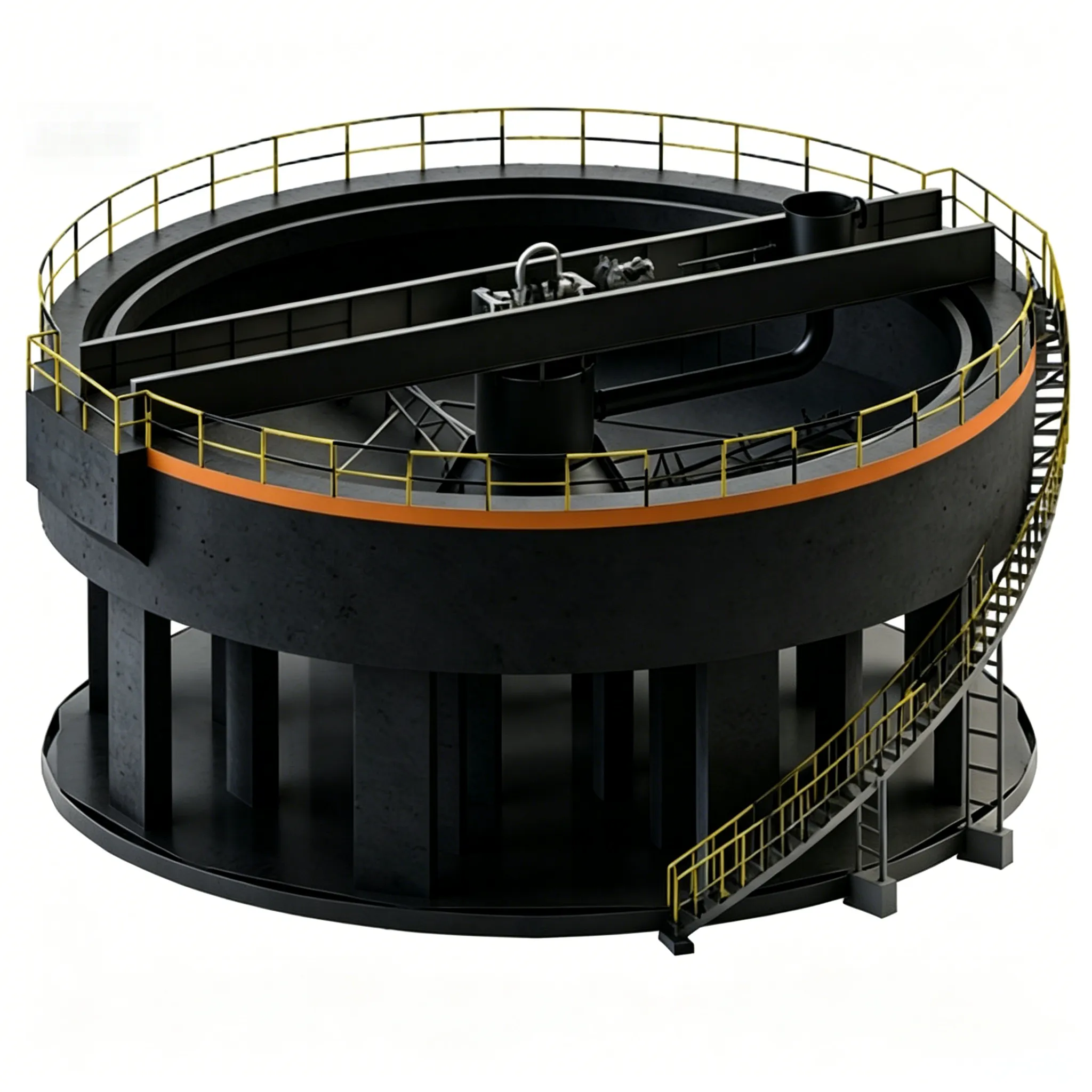
Zentralangetriebener Eindicker
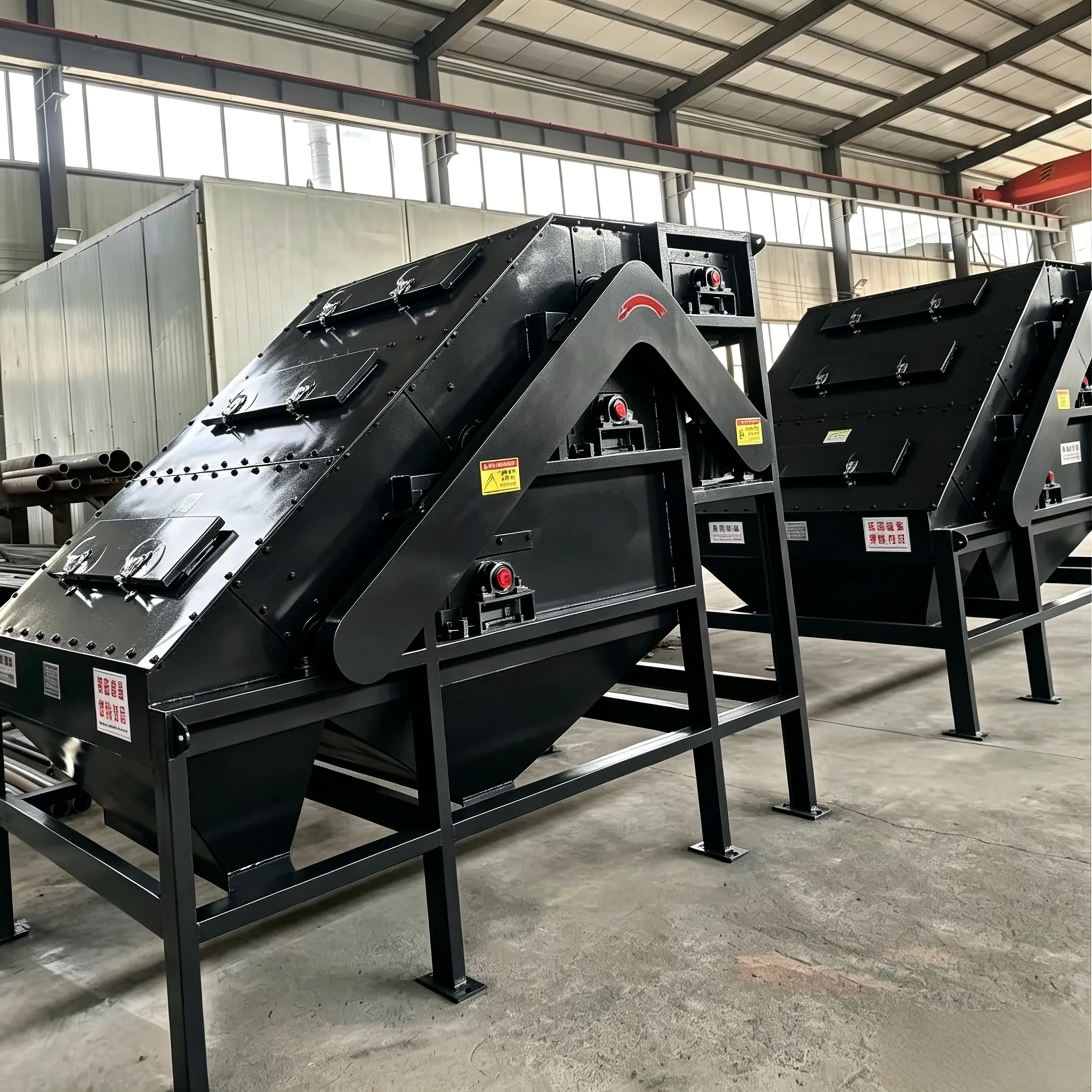
Zentralangetriebene Eindicker Derzeit sind die in China hergestellten zentralangetriebenen Eindicker relativ klein…


A Kugelmühle is a type of grinding machine used in mineral processing to reduce crushed ore into a very fine powder. It is one of the most important pieces of equipment in mining plants because it prepares the ore for mineral separation processes such as:
In simple terms:
A Kugelmühle is a rotating cylindrical drum filled with grinding media (steel balls) that crushes and grinds ore through impact and abrasion.
A typical mineral processing flow:
Mine Ore
   ↓
Jaw Crusher
   ↓
Cone Crusher
   ↓
Ball Mill
   ↓
Classification (Hydrocyclone)
   ↓
Mineral Separation
   ↓
ConcentrateA ball mill consists of several major parts:
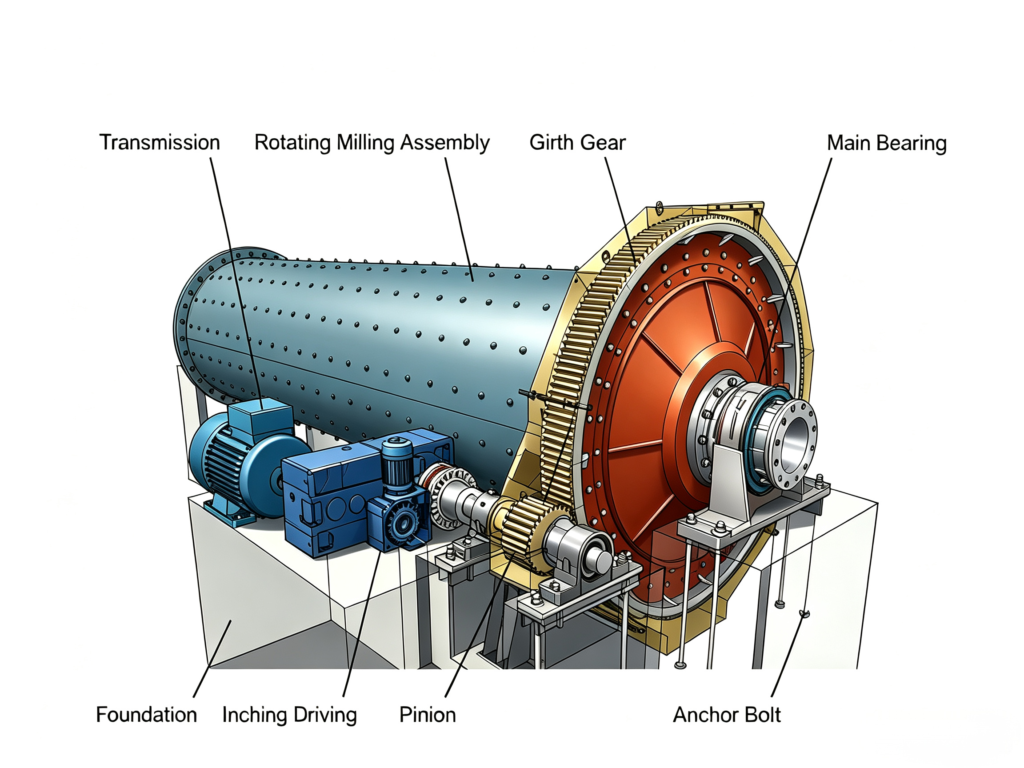
The shell is the main rotating body.
Characteristics:
Typical dimensions:
Example:
Diameter × Length

3.0 m × 4.5 m
Large mining ball mills can exceed:
Inside the mill are thousands of steel balls.
Common sizes:
Materials:
Their purpose:
The inside of the shell is protected by liners.
Functions:
They prevent the steel shell from wearing out.
Special liner shapes lift the grinding balls upward.
Common liner types:
Examples:
Smooth liner

────────────


Lifter liner

/\/\/\/\/\The motor provides rotational power.
Drive arrangement:
Motor
 ↓
Gear Reducer
 ↓
Pinion Gear
 ↓
Large Ring Gear
 ↓
Ball Mill Rotation
Large mills may use:
Ore enters through the feed end.
The feed usually contains:
Example:
Ore + Water
      ↓
 Feed Chute
      ↓
Ball MillAfter grinding, slurry leaves the mill.
Types:
The discharge system controls:
The working principle is based on:
Crushed ore enters the rotating drum.
Example:
Before grinding:
Ore particles:

50 mm
20 mm
10 mmThe motor rotates the shell.
Typical speed:
60–80% of critical speedThe critical speed is the speed where balls would stick to the wall due to centrifugal force.
As the shell rotates:
          Balls rise

             ●
          ●
       ●

   ----------------
  |                |
  |      Mill      |
  |                |
   ----------------
The liners lift the balls upward.
When balls reach a certain height, they fall.
They hit the ore:
       Steel Ball

            ↓

           ROCK

            ↓

       Broken particles
This is the main force for coarse grinding.
At the same time, particles are rubbed between:
This produces fine powder.
Example:
Before:
Quartz particle
50 mm
After:
Fine powder
75 micronsLarge balls fall and break large particles.
Best for:
Particles rub against each other.
Best for:
Particles are squeezed between balls.
Most common in mineral processing.
Process:
Ore + Water + Balls
          ↓
        Slurry
Advantages:
✅ Higher grinding efficiency
✅ Less dust
✅ Better mineral liberation
✅ Suitable for flotation and leaching
Used for:
Process:
Ore + Balls
     ↓
Dry Powder
Used for:

Characteristics:
Common use:
Characteristics:
Common use:
Too slow:
→ balls roll without impact
Too fast:
→ balls stick to the wall
Optimal:
65–75% critical speedThe amount of balls inside the mill.
Typical:
30–45% of mill volumeToo little:
Too much:
Typical feed:
<25 mmafter crushing.
Common outputs:
| Anwendung | Product Size |
|---|---|
| Coarse grinding | 200–300 μm |
| Normal mineral grinding | 75–150 μm |
| Fine grinding | <45 μm |
A common gold plant:
Gold Ore
   ↓
Jaw Crusher
   ↓
Cone Crusher
   ↓
Ball Mill
   ↓
Hydrocyclone
   ↓
Gravity / Flotation
   ↓
Gold Concentrate
The ball mill liberates gold by separating it from:
Example:
Before grinding:
Quartz rock

████████
   ●
 Gold trapped inside
After grinding:
Fine slurry

● Gold particles
+ quartz particles
The liberated gold can then be recovered.
✅ High grinding capacity
✅ Reliable operation
✅ Suitable for hard minerals
✅ Produces uniform particle size
✅ Works in wet and dry conditions
✅ Can operate continuously
❌ High power consumption
❌ Large equipment footprint
❌ Requires regular liner replacement
❌ Steel ball consumption cost
❌ Not efficient for extremely fine grinding
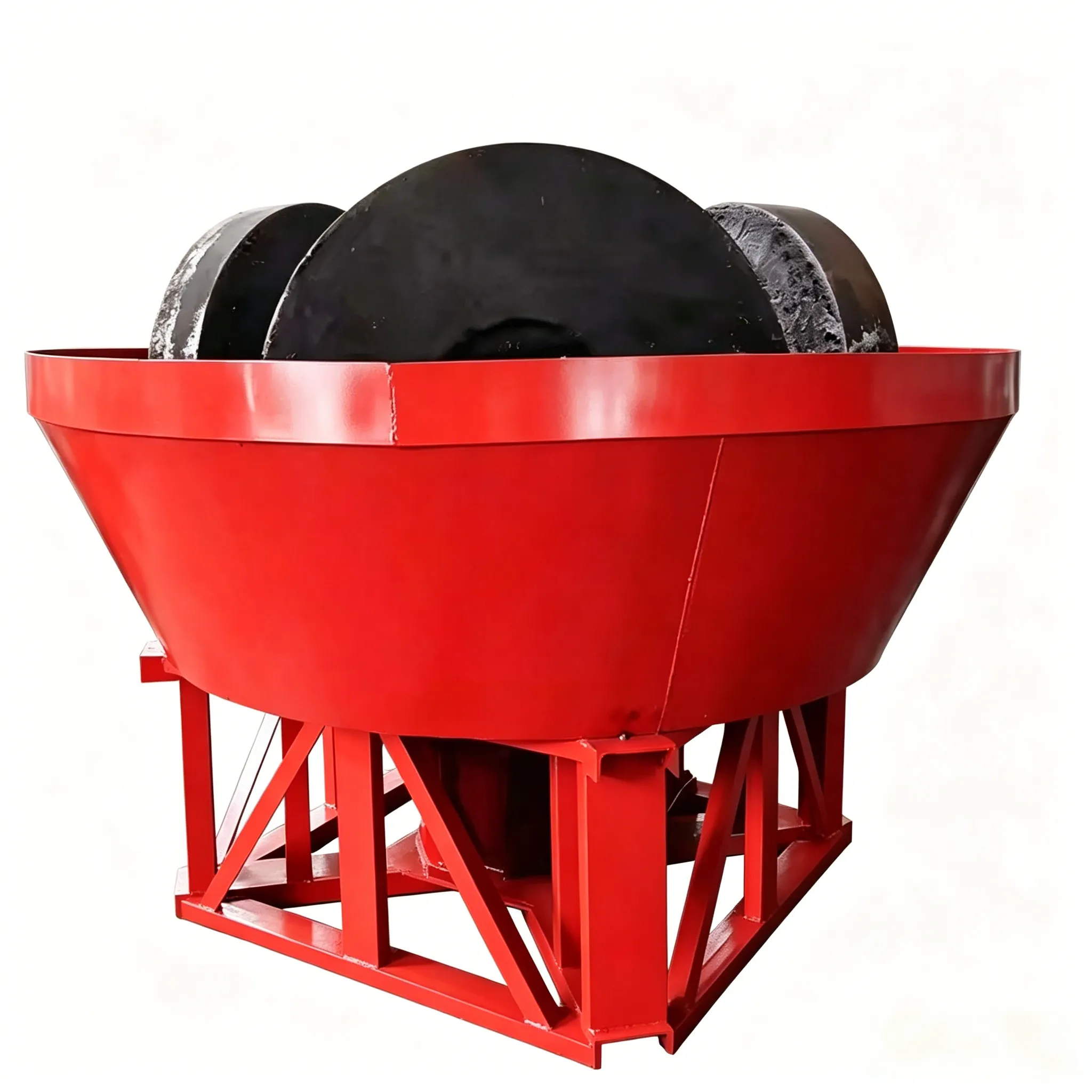
| Feature | Kugelmühle | Wet Pan Mill |
|---|---|---|
| Grinding media | Steel balls | Heavy rollers |
| Kapazität | Hoch | Low-medium |
| Grinding action | Impact + abrasion | Compression + shearing |
| Product size | Finer | Medium-fine |
| Large mining plants | Excellent | Limited |
| Small gold plants | Possible | Very common |

 English English
 Spanish
 Russian
 Arabic
 Swahili
 French
 Turkish
 Portuguese
 Korean
 Japanese
 German
 Italian