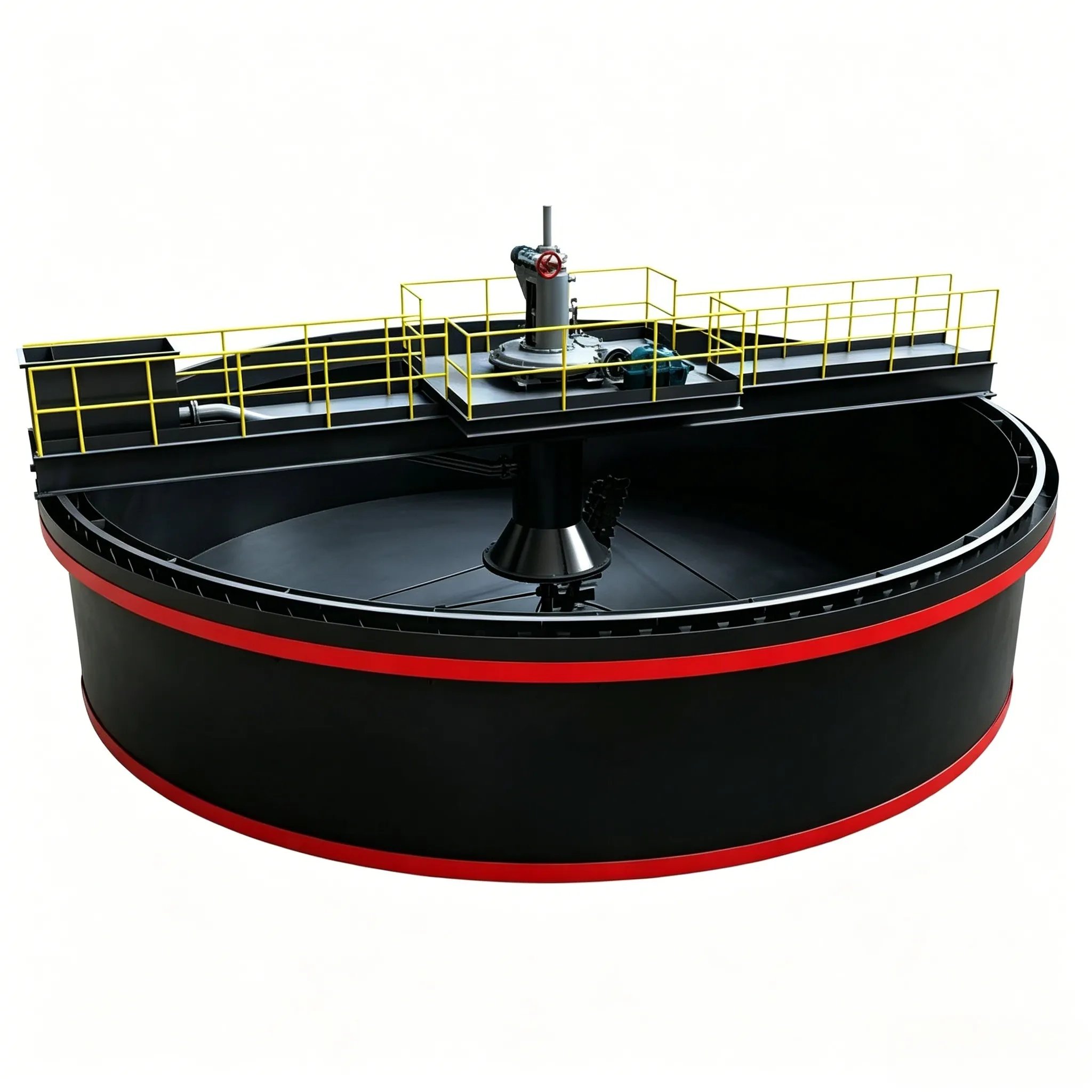
Espesador de alto rendimiento
Espesador de alto rendimiento El espesador de alto rendimiento es un nuevo tipo de equipo de espesamiento...

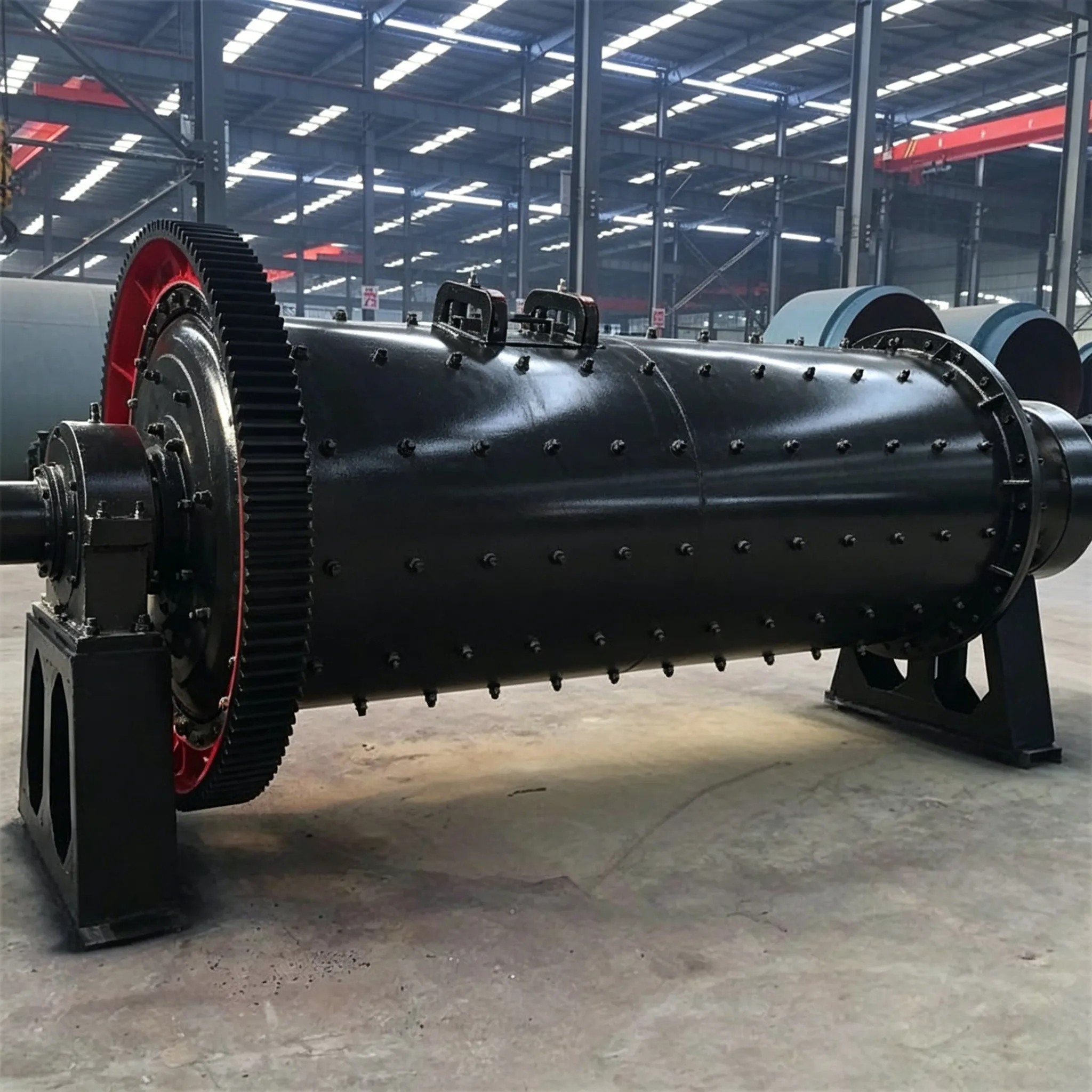
During grinding operations, the grinding mill operator is responsible for both the equipment and the production performance. Therefore, the grinding mill and its associated equipment, as well as all aspects of the grinding circuit, must be regularly inspected and adjusted. Faults must be eliminated promptly to prevent accidents and ensure the normal progress of the grinding process.
When the lubrication system uses forced external circulation of thin oil, it includes the oil pump, oil lines (piping), and lubrication points or parts. The main inspection items are:
(1) Check the oil pressure gauge. The normal oil pressure should be maintained at 0.05–0.15 MPa.
(2) Check the oil temperature. The oil temperature should not exceed 60°C. Inspection methods: Some grinding mills have an oil temperature gauge installed on the oil line; others have a temperature measuring device on the switch cabinet. For the former, directly observe the thermometer; for the latter, observe the pointer as it connects to various temperature measurement points (e.g., front bearing, rear bearing, reducer housing). When the button on the switch cabinet is not pressed, the pointer is at zero. To check the temperature at a certain lubrication point, press the button corresponding to its number, and the pointer immediately indicates the temperature at that point. This is a process where a thermocouple converts the temperature signal into an electrical signal. Some devices further convert the electrical signal into an audible signal via certain devices; when the oil temperature exceeds the set value, an electric horn or bell sounds. If no temperature measurement device is available, feel the return oil pipe by hand. If the return oil pipe is too hot to touch, it indicates that the oil temperature is too high. The return oil temperature is generally within 35–45°C.
(3) Check the oil flow rate. Inspection locations include: 1) the oil flow indicator on the piping; 2) the observation hole on the hollow shaft bearing cap; 3) the oil level indicator in the tank; 4) the oil pressure gauge, because when the piping is unobstructed, the oil flow rate is proportional to the pressure (flow velocity). A drop in oil pressure gauge reading may indicate a reduction in flow rate. Determining the appropriate oil flow rate is largely based on experience; generally, the flow rate that provides normal lubrication is considered suitable. Alternatively, when lubrication is normal, measure the flow rate with a graduated cylinder and use that as a reference thereafter.
(4) Check whether the oil flow on the hollow shaft journal is evenly distributed. For grinding mills with internal circulation lubrication, use a dipstick to check the oil level and feel the oil temperature by hand, and pay attention to whether the oil ring is rotating. For grinding mills using solid lubricants, check the contact between the lubricant and the lubricated parts, the consumption of the lubricant, and whether sand or water has infiltrated the lubricant.
(5) Check for oil leakage, sand ingress, or water ingress at the seals of the oil pump, oil lines, and each lubrication point.
(6) Observe the viscosity and cleanliness of the oil through the oil line indicator or the observation hole on the main bearing cap. Poor fluidity indicates high viscosity or low temperature; discoloration of the oil indicates lack of cleanliness.
The rotating body of the grinding mill mainly includes the shell, end covers, and feeder. The main inspection items for these three parts are:
(1) Pay attention to slurry leakage caused by loose or broken bolts. Bolts that secure the liners to the shell and end covers, if loose or broken, will cause slurry and water leakage. Slurry leakage through bolt holes in the end covers and the shell near the end covers will allow slurry to enter the main bearings and the large and small gears, resulting in damage to the gears and bearings. When slurry enters the lubrication system, the entire lubrication condition deteriorates. Sometimes, after a shell bolt breaks, the liner may fall off and damage the shell. Therefore, pay attention to slurry leakage. Once slurry leakage is found, stop the grinding mill for correction. Some operators, instead of replacing broken shell bolts, stuff wooden wedges into the holes and restart the mill. This is incorrect, especially with newly replaced liners, where broken bolts most easily lead to liner detachment; such practice is not allowed. Treatment for slurry leakage: if the bolt is not broken, add or replace washers and tighten the nut; if the bolt is broken, replace the bolt. Practice has shown that using rope gaskets is effective.
(2) Pay attention to coarse discharge (runaway coarse particles) and ball discharge (balls escaping from the mill).
(3) Observe the wear condition of the spoon head through the observation hole on the safety guard.
All equipment in the grinding mill unit may experience loosening of anchor bolts due to vibration. Once loosened, vibration may intensify and even cause displacement, changing the levelness, parallelism, and concentricity, and damaging the equipment. Therefore, attention should be paid to inspection, using a wrench. As for the fastening of moving parts, they can only be observed during operation; after shutdown, they can be checked by lightly tapping with a small hammer or using a wrench.
During operation, the main inspection item for motors and electrical equipment is temperature. The temperature of the motor essentially refers to the winding temperature, followed by the bearing temperature. For bearing temperature at an ambient temperature of 40°C, plain bearings are allowed up to 80°C, and rolling bearings up to 95°C. The motor nameplate generally indicates the allowable temperature rise. Depending on the insulation class of the motor, the allowable temperature rise varies. The temperature rise of a motor refers to the allowable increase above a specified ambient temperature. The specified ambient temperature is sometimes 35°C and sometimes 40°C. When the ambient temperature meets the specified standard, the motor temperature is the ambient temperature plus the temperature rise. For example, if a motor nameplate indicates a temperature rise of 60°C and the ambient temperature is 35°C, then the maximum motor temperature can reach 60°C + 35°C = 95°C.
If the ambient temperature does not reach or exceeds the specified temperature, the motor temperature is not simply ambient plus temperature rise; a correction must be applied.
Motor temperature is generally measured using an industrial thermometer. If automatic temperature measuring devices are installed, pay attention to the instrument readings. When no other temperature measuring means are available, you can place the back of your hand against the motor to feel it. Based on general experience, if your hand feels heat but can remain on the motor for a long time, the motor temperature is within the allowable range. If the motor is too hot to touch, the temperature has exceeded the allowable limit.
For spiral classifiers, pay attention to whether the spiral blades have fallen off. Fallen blades can easily wear out the spiral. Also observe whether the entire spiral body moves smoothly. If the spiral rotates off-center, the lower shaft bearing may be worn out.
For hydrocyclones, check whether the feed pressure is stable, whether the wall and the apex (discharge nozzle) are worn through, and whether piping is worn through or leaking slurry.
For screens, pay attention to whether the voltage and current are abnormal, whether there are sudden changes in vibration, whether springs are broken, whether the screen mesh is intact, and whether the load is appropriate.
Changes in new feed rate and particle size, changes in return sand amount, or changes in media addition will all cause changes in the grinding mill load. Pay attention to inspection. Inspection methods include:
(1) Observe the reading on the counter of the run-of-mine ore meter.
(2) Observe the movement of the ammeter pointer. Under normal load, the pointer swings within a small range. When the load is very high, the pointer initially increases slightly. However, when the load becomes very high and “swelling” (overloading) begins, the pointer drops. When the mill is “choked” (completely overloaded), the pointer drops significantly.
(3) Listen attentively for changes in the sound of the grinding mill. Different loads produce different sounds from the impact of balls or rods. Under low load, the impact noise between media and between media and liners is very strong. As the load increases, this impact noise weakens. When swelling occurs, the impact noise is almost inaudible; only a humming sound from the shell rubbing against the air can be heard.
(4) Pay attention to changes in the return sand amount of the classifier.
In summary, monitor the grinding mill load from all aspects to ensure uniform load and prevent swelling or empty milling.
Maintaining a stable and balanced feed rate is an important prerequisite for ensuring grinding process indicators (density, fineness, grinding efficiency, etc.) and also for good performance in downstream beneficiation operations. Most concentrators have a scale installed on the feed belt, which can measure both instantaneous feed rate and cumulative feed. Therefore, pay attention to the movement of the counter digits. Rapid and slow fluctuations in digit movement indicate uneven feed. Convert the digit movement into feed rate, then adjust to maintain the specified standard. Some concentrators do not have the grinding operator control the feed; instead, a dedicated feeder operator is employed. In this case, observe and, if feed rate changes are found, promptly contact the feeder operator to make adjustments. Some concentrators have no feed measuring facilities; feed rate is determined by manual sampling, weighing, and then checking a table.
Grinding product quality mainly refers to the density and fineness of the mill discharge, or the density and fineness of the final product from the classifier. There are various methods for checking these two indicators: some use a density can (pulp density measure), others have automatic detection devices such as gamma densitometers, particle size analyzers, etc. In addition to using measuring tools and automatic detectors to check density and fineness, you can also use visual observation and hand feeling (touching) to judge density and fineness by intuition. As long as you are willing to observe, feel frequently, and accumulate experience, the error of estimation will not deviate too greatly from actual measured results.
In closed-circuit grinding, regardless of the classification equipment used, there is always coarse sand (return sand) returned to the mill for regrinding. The amount of return sand directly affects grinding performance, so attention should be paid. For a spiral classifier, observe the amount of return sand and the supplementary water condition from the top, so as to maintain a balance between new feed, return sand, and overflow.
In wet grinding, pay attention to the stability of the water addition rate. If no measuring device is available, fix the number of turns that the gate valve is opened to maintain stable water addition.
The purpose of grinding mill maintenance is to restore their mechanical performance, extend the overhaul cycle, and prolong their service life. Therefore, equipment repair, operation, and maintenance should be closely integrated. For grinding equipment, in order to shorten downtime and increase the operating rate, it is necessary to promptly inspect and replace excessively worn or defective mechanical components according to a planned schedule. Hence, a maintenance plan should be developed based on the wear patterns and replacement cycles of components, and a sufficient inventory of wearing parts should be stocked according to the spare parts reserve quota, so as to achieve planned maintenance and condition-based monitoring repair.
Equipment maintenance work is generally divided into minor repair, medium repair, and major repair. The maintenance cycles and the scope of minor, medium, and major repairs are not entirely uniform across different practices. As equipment ages, the maintenance workload increases. The maintenance classification for grinding mills is as follows:
(1) Minor Repair. The minor repair cycle is generally one month, and also includes repairs as needed (run-to-failure repair). The scope of minor repair mainly includes: inspection, cleaning, and oil change of the oil pump, oil filter, and lubrication piping; inspection, replacement, or tightening of various fasteners; inspection of the large and small gears, recording wear conditions, measuring backlash, and repairing worn gears; checking whether the concentricity of the coupling has changed, inspecting the wear of elastic rubber cushions and plungers, and replacing them as needed; opening the manhole cover to enter the mill to inspect the wear of the shell liners, grid plates, wedges, and end cover liners, and replacing them as appropriate; measuring the grinding media filling rate; inspecting and repairing the feed and discharge pipes; inspecting the feeder and replacing the spoon head or mounting bolts; inspecting the motor bearing shells and oil rings; inspecting or replacing the wear liners, lower shaft head, and drive belts of the spiral classifier, as well as lubrication conditions, etc.
(2) Medium Repair. In addition to all the items included in minor repair, medium repair mainly involves more extensive cleaning and adjustment of various equipment components and replacement of a large number of wearing parts. Specific inspection focuses, in addition to those of minor repair, include inspecting and replacing feed and discharge pipe liners, feed pipes, and repairing the large and small gears. The medium repair cycle is 4 to 6 months, or in some cases one year.
(3) Major Repair. In addition to all the items included in minor and medium repairs, major repair focuses on repairing and replacing major components of the grinding mill, such as replacing the girth gear and main bearings; inspecting the wear and deformation of the shell, and repairing or replacing the shell; inspecting, repairing, or replacing the feed and discharge end covers; replacing the classifier main shaft; repairing, aligning, and re-grouting the mill foundation, etc. The major repair cycle is sometimes 2–4 years, sometimes longer, depending mainly on routine maintenance, component material quality, and manufacturing quality.
The average service life and minimum stocking quantities of main wear parts of grinding mills are shown in Table 9-16.
Table 9-16 Service life and minimum stocking quantity of wear parts of grinding mills
(Note: The table data was not provided in the original text; only the title is given.)
| Part name | Material | Usage period/month | The minimum reserve quantity for each grinding mill | |
| Village board | Cylinder liner plateend cover liner plateInlet and outlet pipe bushingsgrid board | High manganese steelManganese steelCarbon steel or cast iron, manganese steel or chromium steel | 6~12 8~10 12-18 6~18 | 2 sets2 sets1 set2 sets |
| mining tool spoon bodyMiner’s body shellMining tool scoop headMain bearing shellTransmission bearing bushingSmall gearlarge gearliner screw | Carbon steel or cast ironCarbon steel or cast ironHigh manganese steelBabbitt metalbearing alloy40Cr | 824248-60186~1236~483-8 | 2 sets1 set21 set2 sets2 sets1 set50% of the required amount | |
Whether it is a minor, medium, or major repair, the necessary tools must be available, such as measuring tools, instruments, jacks, pullers, and common tools; materials, such as steel plates, round bars, and materials for electric welding, oxy-acetylene welding, and gas cutting; and spare parts, such as screws, nuts, bearings, washers, lubricants, and cleaning agents.
During maintenance, attention should be paid to the following procedures and basic operations:
(1) The disassembly sequence of the grinding mill should be the reverse of the assembly sequence. Therefore, one must be familiar with the structure, construction, and assembly of the mill. When using lifting equipment (such as an overhead crane, chain block), jacks, and pullers, they should be inspected first, for example, whether the wire ropes have broken strands, whether the brakes and locking devices are reliable, and whether the load capacity is adequate.
(2) To ensure reassembly accuracy, before disassembly, important assemblies should first be marked for positioning, and then disassembled using proper methods. Random hammering or cutting that damages components is not allowed.
(3) When hammering is necessary, the component should not be struck directly with a hammer. A soft pad, such as wood, or a copper rod should be used as an intermediate cushion to prevent the part from being expanded, burred, or even damaged.
(4) Before replacing a part, its working surfaces must be thoroughly cleaned, wiped (or sticky-cleaned with cotton yarn or dough), and then coated with grease before assembly.
(5) Tightened connecting surfaces (such as between the end cover and shell, and between the hollow shaft and end cover) must have no gaps or looseness. When tightening bolts, the force on bolts in all directions must be uniform; some bolts should not be loose while others tight. Otherwise, due to uneven force, the bolts under greater force may break, or looseness may cause loss of concentricity of the connecting parts, leading to equipment damage.
(6) Bolts used to connect or secure rotating parts must be equipped with spring washers and locknuts to prevent automatic loosening due to rotation, which would cause parts to become loose.
(7) For plain bearings with Babbitt metal, the Babbitt layer must not have any detachment from the bearing back or any movement. Otherwise, the bearing movement will cause poor fit with the shaft, leading to overheating or even burnout.
(8) Reducers, gears, and bearings must be assembled in strict accordance with technical specifications. For interference fits, a press should be used for assembly. If a press is not available and the hot expansion method is used, the heating temperature and assembly speed must be properly controlled. The heated part must not be heated to red heat; otherwise, either the expansion will be insufficient, or overheating will cause annealing, or due to slow assembly speed, the non-heated part will also expand and prevent proper seating.
(9) When installing connecting components, axial and radial alignment must be performed according to technical standards to ensure concentricity.
(10) When installing machine bases (such as those for pumps, pinion shafts, and main bearing pedestals), installation with adjusting shims must be carried out.
(11) After maintenance and installation are completed, trial operation, inspection, and acceptance must be carried out to ensure maintenance quality.
There are various forms of equipment maintenance organization. In some countries, specialized maintenance companies exist, and concentrators do not perform their own repairs but only daily maintenance. In China, most concentrators have their own maintenance teams, generally organized in the following forms:
(1) Centralized form. Maintenance personnel, equipment, tools, and spare parts are all centralized to form a maintenance team. This form is only suitable for small-scale concentrators with simple equipment.
(2) Decentralized form. Maintenance personnel, equipment, tools, and spare parts are distributed to individual workshops or sections as needed, forming maintenance groups. This form has a small working scope and strong specialization, which helps improve maintenance quality.
(3) Mixed form. The concentrator has a specialized major repair team, while each workshop or section is equipped with certain maintenance personnel, equipment, and tools. The specialized major repair team is responsible for major repairs of key equipment, large-scale equipment replacements, and technical modifications. The maintenance personnel in each workshop or section are responsible for minor and medium repairs.
At present, in most Chinese concentrators, maintenance and operation are separated: maintenance personnel are responsible for repairs, and operators are responsible for running the equipment. However, a few concentrators adopt a “combined operation and maintenance” approach, where maintenance and operation are integrated. This form can reduce the number of employees and promote better operation and equipment maintenance, improving equipment availability and extending maintenance cycles. However, this form can only be implemented in concentrators where workers have a relatively high level of skill.
During major repairs or when bearing damage (burning) occurs due to an accident, the main bearings (hollow shaft bearings) need repair or replacement. The disassembly sequence is: remove the pinion guard, lift out the pinion shaft, remove the feed end assembly, and remove the girth gear guard. Then, after jacking up the mill shell to a certain height, inspect the wear condition of the main bearings. If the damage is not severe (local burning, melting, cracks, chipping, etc.), repair by welding and patching with Babbitt metal. If the wear or damage is severe, the bearing should be re-poured with Babbitt metal. The alloy layer should have a machining allowance of 4–6 mm. After pouring, the machined surface of the bearing shall have no defects such as blowholes, porosity, or cracks. If blowholes or porosity have a depth not greater than 4 mm and an area not greater than 2 cm², or if there are minor cracks, they can be repaired by welding and then machined for use. If the defects are larger, the bearing should be re-poured. After pouring, scraping and fitting are required. Apply a developer (marking compound) to the already-fitted bearing surface, turn and rotate to mark high spots, then scrape off the marked spots with a scraper. Repeat this marking and scraping process to gradually enlarge the contact area of the bearing working surface until uniform spots appear on the contact surface. When scraping, do not apply excessive force to avoid scraping too deep. The scraper marks should be fine and made in alternating directions. The contact points shall be no less than 1–2 points per cm².
When the girth gear is in operation, if the radial runout deviation exceeds 0.25 mm per meter of pitch diameter, or the axial runout (end face runout) exceeds 0.23 mm per meter of pitch diameter; if the tooth surfaces are severely worn; if there are broken teeth; or if cracks appear on the gear rim or ribs, timely maintenance should be carried out.
The causes of excessive radial and axial runout deviations are poor manufacturing quality, improper installation, or loosening of mating parts during operation. Improper installation or loosening can be corrected by adjusting the relative radial and axial positions between the girth gear and the gear connecting flange on the shell. If inspection shows that the excessive runout is due to poor manufacturing, corrective action should be taken. The repair method depends on the specific situation; generally, machining is performed on a large lathe or on a custom-built face lathe at the site.
Severe tooth surface wear and broken teeth generally require replacement of the gear. However, even if some gears are severely worn or damaged, repair may still be possible. The repair method depends on the damage condition and mainly includes the following methods: one-time build-up welding, build-up welding followed by machining, rim replacement, tooth insertion, rim replacement (again mentioned), and profile-shifted cutting.
Cracks on the gear rim or ribs are most often repaired by welding or by welding on steel plates.
The shell of a grinding mill is generally not prone to wear under normal conditions due to the protection of the liners. However, at the two end covers, due to prolonged operation, connection bolts may loosen, causing sand leakage and wear. In this case, maintenance is required. Mark the contact area between the end cover and the shell, then disassemble, clean, scrape, and level. After leveling, insert a 0.5 mm thick red presspaper gasket coated with linseed oil, and reassemble according to the marks made during disassembly. First, insert the positioning bolts, evenly tighten the fastening bolts, and finally install the stabilizing bolts. In rare cases, improper liner installation or excessive gaps may cause the shell to wear through, resulting in leakage. In such cases, repair by welding on steel plates.
After long-term operation or short-term poor maintenance, the inner sleeve of the hollow shaft journal may wear, allowing slurry to enter the inner bore of the hollow shaft journal, causing severe wear or damage to the journal. If cracks appear on the hollow shaft journal, they should be repaired by welding and then machining. If holes (leaks) appear, a steel plate should be welded over the area and then machined. Cracks, holes, or concealed large pits must be carefully and thoroughly inspected and treated. If the journal becomes excessively thin locally due to wear, or if cracks or holes are severe such that there is a risk of shaft fracture, reinforcing steel plates or ribs should be welded in the excessively worn area of the journal bore, without affecting the assembly clearance of the inner sleeve, to increase the bending and shear strength of the journal.