
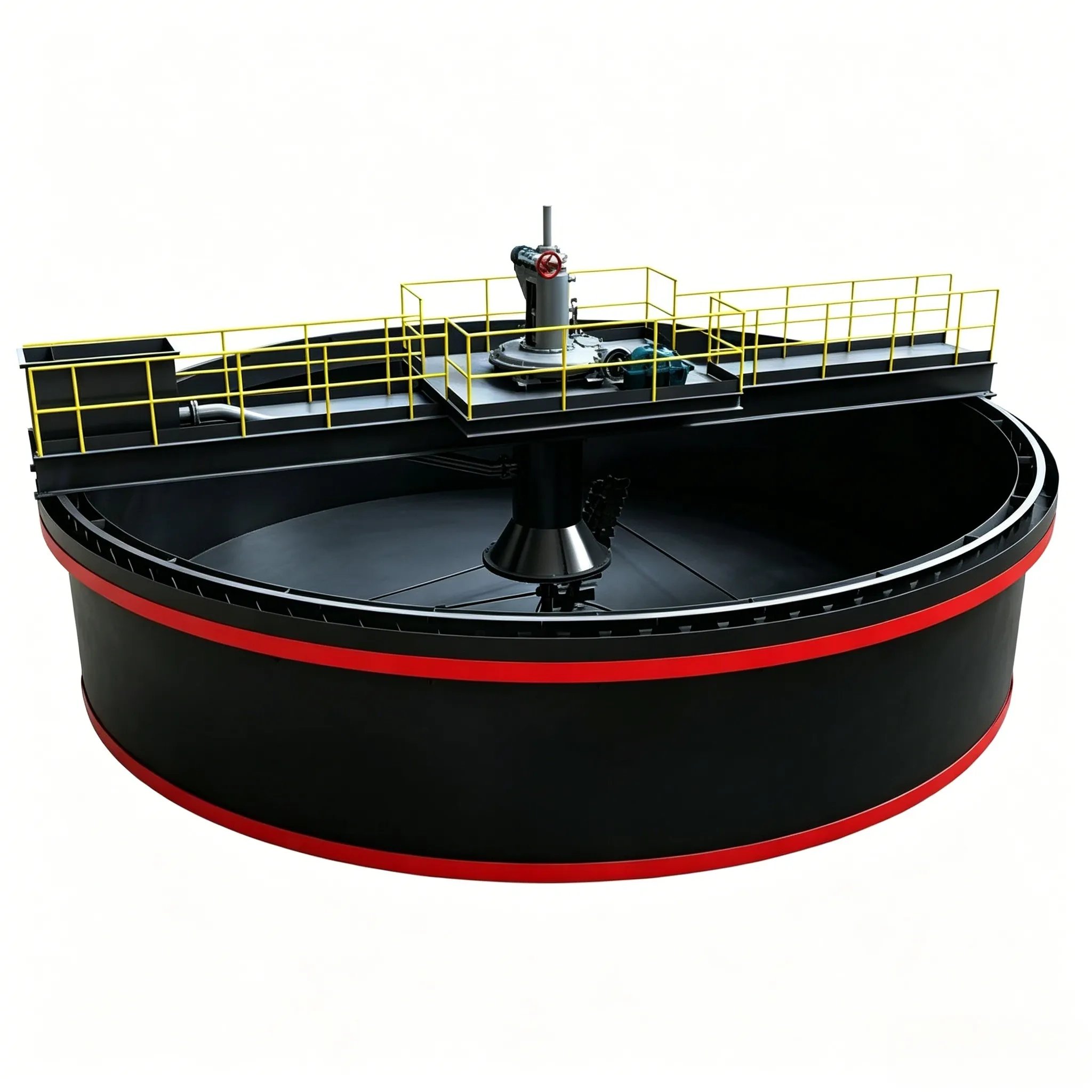
The high-efficiency thickener is a new type of thickening equipment developed overseas in the 1970s and subsequently applied in industrial production. In China, research, development, and production of high-efficiency thickeners began in the 1980s.
The high-efficiency thickener is a new type of thickening equipment developed overseas in the 1970s and subsequently applied in industrial production. In China, research, development, and production of high-efficiency thickeners began in the 1980s.
The structure of a high-efficiency thickener is similar to that of a center‑drive thickener. Its main feature is the addition of a certain amount of flocculant to the slurry to be thickened, causing the solid particles to form flocs, which accelerates their settling velocity and thereby improves thickening efficiency. However, the need to add flocculant also limits its range of application. In recent years, high-efficiency thickeners have been further improved, with an expanding range of sizes, and have now become a product series.
The GX series high‑efficiency thickener system is shown in Figure 14‑4. It consists of the main unit, flocculant preparation and dosing equipment, and an automatic control system. In addition to the sound design of the main unit, its automatic control system is quite advanced. The functions of the automatic control system are: first, to continuously and accurately measure relevant process parameters; second, to provide stabilizing control over certain process parameters that affect technical performance, such as underflow concentration, overflow turbidity, flocculant concentration, and the interface height of the flocculated slurry.
High‑efficiency thickeners have the following characteristics:
(1) High underflow concentration. When treating slurries, the solids concentration by weight of the underflow can reach over 40%.
(2) Large processing capacity and small footprint. The settling area required to treat the same volume and concentration of slurry is only about 20% of that required by a conventional thickener.
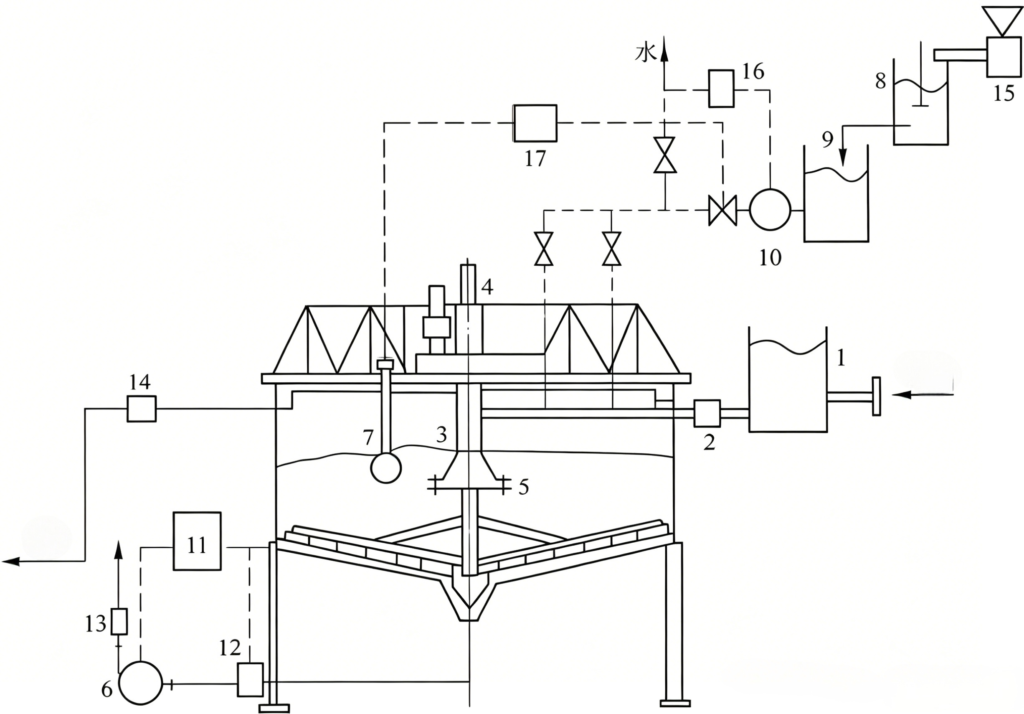
Figure 14-4 GX series high-efficiency thickener system
1—Deaeration device; 2—Flow meter; 3—Mixing device; 4—Central drive unit; 5—Rake mechanism; 6—Underflow pump; 7—Interface level meter; 8—Flocculant make-up tank; 9—Flocculant storage tank; 10—Metering pump for flocculant dosing; 11—Underflow concentration control system; 12—Density meter (concentration meter); 13—Underflow flow meter; 14—Turbidity meter; 15—Dosing machine; 16—Dilution water control system; 17—Flocculant control system
(3) Good overflow water quality. The suspended solids content in the overflow is less than 500 mg/L, allowing it to be reused as circulating water.
(4) Automatic detection and control system can be provided according to user requirements.
Its main technical parameters are listed in Table 14-3.
Table 14-3 Main Technical Parameters of GX High-Efficiency Concentrator
| modelo | Inside the concentration tank, diameter/mm | Thickener depth/mm | Settlement area /m² | Processing capacity /m³ ·h-¹ | Main motor Power/kW | Rake lifting height/mm | Rake rotation speed /r ·min-1! | Total weight/t | Pond form |
| CX-1.8 | 1800 | 1000 | 2.5 | 0.75 | 200 | 0.8 | 2.8 | ||
| GX-2.0 | 2000 | 1800 | 3.1 | 1.1 | 200 | 0.8 | 3.0 | ||
| GX-2.5 | 2500 | 1730 | 4.9 | 15~20 | 0.75 | 300 | 1.68 | 4 | Steel plate pool |
| GX-3.6 | 3600 | 1980 | 10.0 | 30~40 | 0.75 | 200 | 1.10 | 6 | |
| GX-5.18 | 5180 | 2380 | 21.0 | 60-80 | 1.50 | 300 | 0.80 | 10 | |
| GX-9 | 9000 | 3000 | 63.0 | 180-240 | 3.00 | 400 | 0.47 | 12 | Cement pool |
| GX-12 | 12000 | 3600 | 110.0 | 250~350 | 4.00 | 400 | 0.30 | 16 |