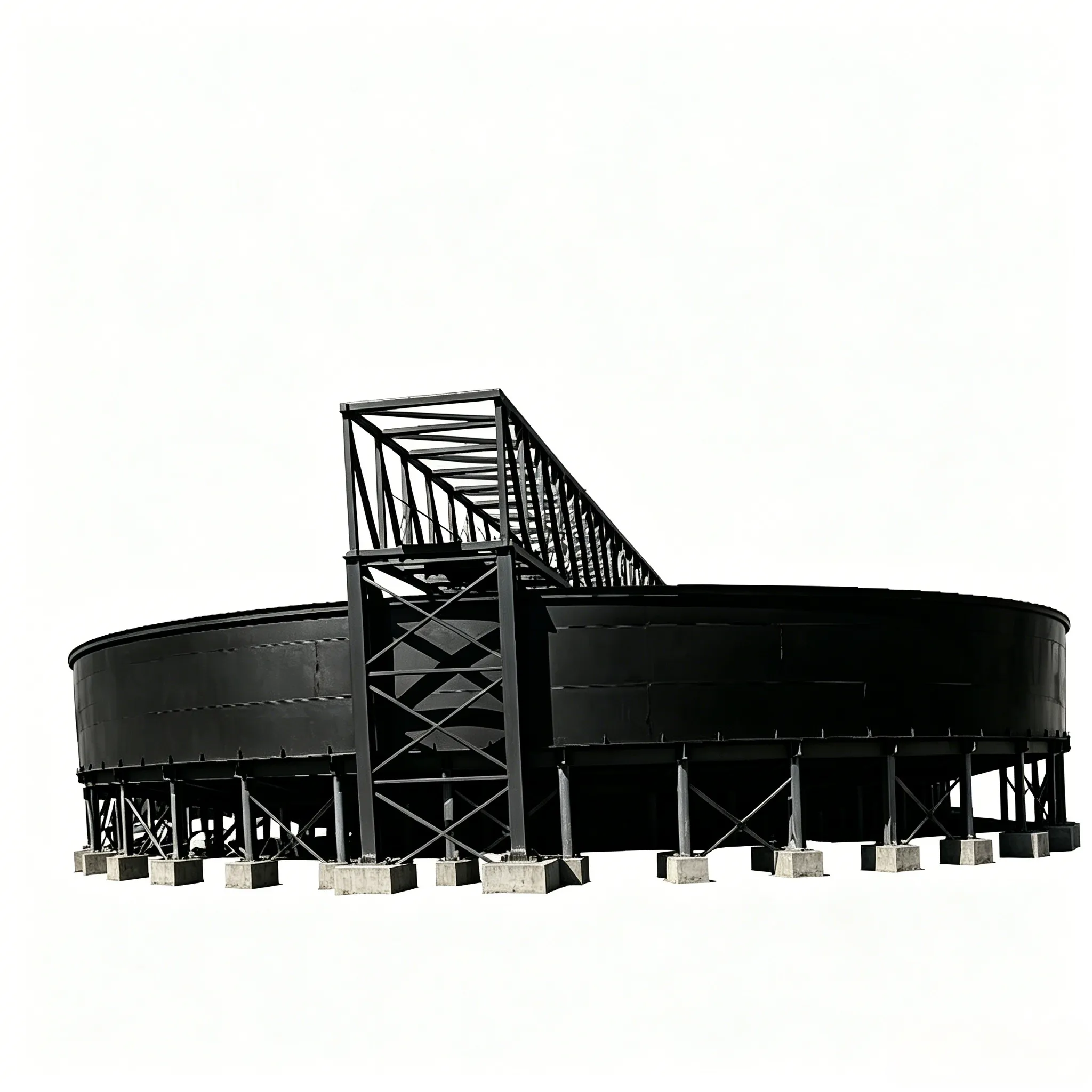
Espesador de accionamiento periférico
Peripheral Drive Thickener Currently, the peripheral drive thickeners produced in China generally…

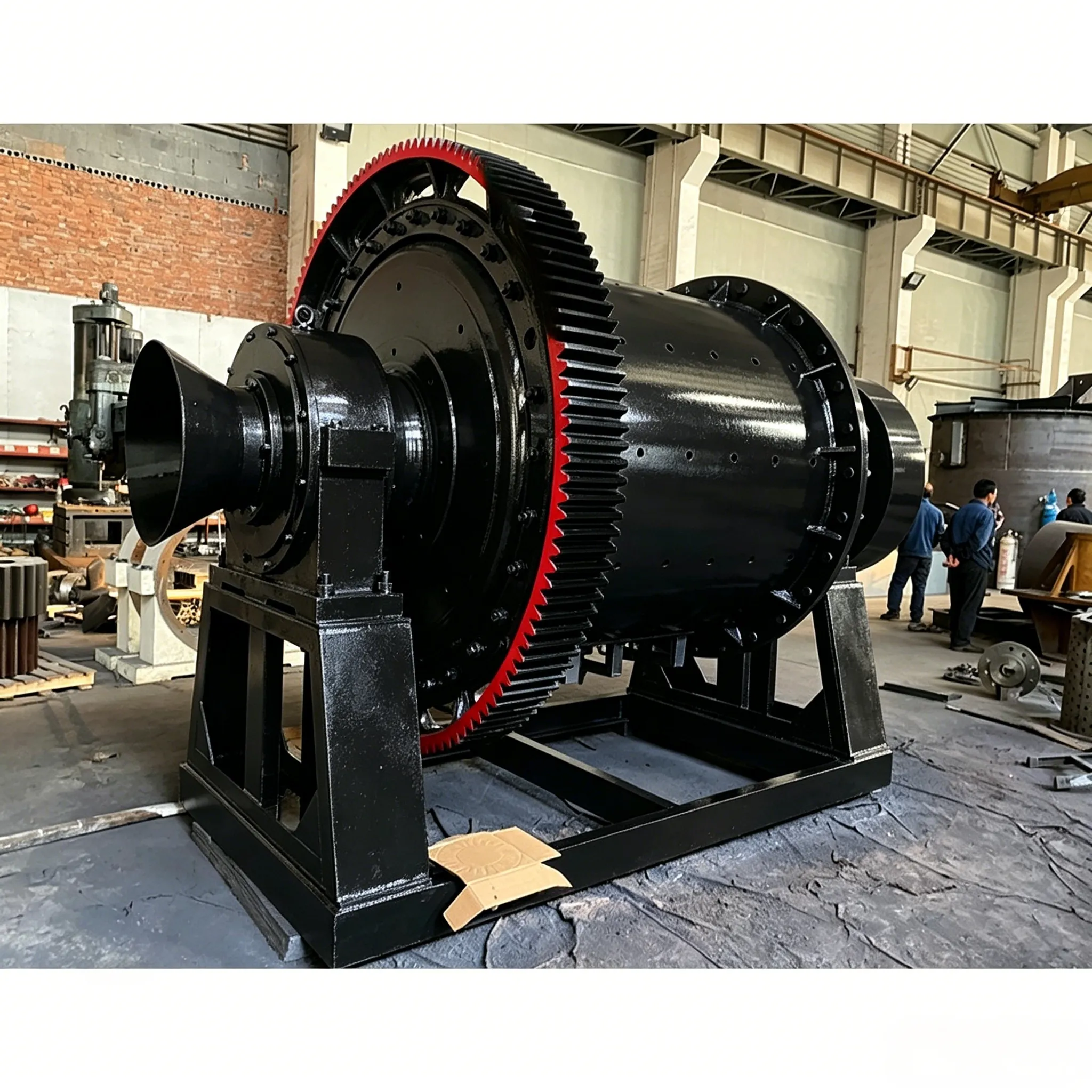
Grinding operations include various aspects such as feeding, water addition, grinding, classification, and media addition, which together form a complete system known as the material grinding system engineering. The grinding-classification process is not static but a dynamic equilibrium process. Dynamic equilibrium is entirely a relative concept; the relatively balanced state is called static or steady state, and the relatively unbalanced state is called dynamic.
During the grinding and classification process, when the properties of the raw ore remain essentially unchanged and factors such as feed rate, water addition, grinding, classifier return sand and overflow, and media addition can all maintain balance according to given conditions, ideal grinding performance can be achieved. If a significant disturbance occurs in any factor, the equilibrium will be disrupted. If timely adjustments are not made to restore a new balance, the grinding performance will deteriorate, and this will also affect the mineral processing performance. Therefore, the operation and management of the grinding-classification process mainly refer to using various methods and means, whether manually or with automatic devices, to promptly detect key process indicators such as feed rate, pulp density, fineness, water addition rate, and return sand amount, compare them with the given conditions, analyze the causes of changes, and take various measures to eliminate disturbance factors, thereby maintaining the dynamic equilibrium of the entire grinding process and ensuring that the process indicators of each aspect meet the given conditions, thus achieving optimal grinding performance.
The integrity and normal operation of grinding and classification equipment are prerequisites for normal grinding. Correct operation and reasonable maintenance are guarantees that the grinding process can proceed stably and for a prolonged period. Therefore, strict control of the grinding-classification process and reasonable maintenance and management of the grinding and classification equipment are equally important.
The grinding mill (including classifying equipment) is one of the large pieces of equipment in a concentrator. During startup or shutdown, operating procedures must be strictly followed; otherwise, major equipment accidents may occur due to improper operation.
A grinding mill unit, in open-circuit grinding, generally includes the grinding mill, lubrication equipment, and feeder; in closed-circuit grinding, classifying equipment is also included. The startup and shutdown of a grinding mill unit generally follow the two principles below:
(1) Only after all equipment has been started and is operating stably and normally can feed be introduced;
(2) During startup, equipment shall be started one by one in the direction opposite to the ore flow, from bottom to top, i.e., in the order: lubricating oil pump → classifier → grinding mill → feeder. Starting several pieces of equipment simultaneously is strictly prohibited. Shutdown is the reverse: equipment shall be stopped in the direction of the ore flow, from top to bottom, i.e., in the order: feeder → grinding mill → classifier → oil pump. During normal shutdown, the material in the equipment shall be emptied as much as possible, and the equipment shall be stopped under no-load conditions. In two-stage closed-circuit grinding, some grinding-classification flowsheets require that the first stage of grinding operates for a certain period before the ore reaches the second stage. In this case, the second-stage mill may be started only when the second-stage classifier has return sand; otherwise, the second-stage mill would run idle for a certain period, consuming grinding media and liners and often causing slurry leakage from the shell.
Upon receiving the startup command, before starting the grinding mill unit, the grinding operator must carefully perform inspection and preparation work, which mainly includes the following:
(1) Thoroughly check the grinding mill and its associated equipment (classifier, feeder, electric motor, etc.) for any obstructions, such as crowbars, iron bars, tools, or other objects, to prevent them from hindering equipment operation or being thrown out or flung out during startup, causing injury or damage to equipment. Sometimes these objects may directly damage the equipment being started.
(2) Check the tightening condition of fasteners such as gears, couplings, reducers, anchor bolts, and pulleys to prevent loosening or poor connections. For elastic couplings, pay attention to the wear condition of the plungers or rubber rings.
(3) Check the lubrication condition of the transmission gear tooth surfaces and whether there is any sand ingress or foreign objects.
(4) For internal circulation lubrication points, check whether the oil quantity is sufficient and the oil quality is good. For places using solid lubricants, check the consumption of the solid lubricant and its contact with the lubricated parts, as well as whether any sand or water has entered.
(5) For equipment with manual reduced-voltage starting, check whether the handwheel of the oil-immersed rheostat is at the zero position and whether the short-circuit knife switch is in the open position. For synchronous motors, push the DC operating handle to the working position and check whether the contact between the slip rings and the rotor is good.
(6) Check whether various protective devices, such as mercury switches and oil pressure relays for oil-cut protection, interlocking devices, and audible signals, are complete and reliable.
(7) Check whether various instruments, such as ammeters, voltmeters, oil pressure gauges, thermometers, timers, and indicator lights, are complete and functioning normally. For equipment with automatic monitoring devices, such as electric ears, gamma densitometers, and electromagnetic flowmeters, check whether they are responsive and reliable.
(8) Check whether the grinding mill feed meter, such as an electronic belt scale, is reliable and normal. The empty belt conveyor can be started without feed to check the zero point and sensor contact. If the counter operates while the empty belt is running, adjustments must be made or relevant components/elements checked until the counter does not operate when the belt is empty.
(9) After completing the above inspection and adjustment work, prepare to start the oil pump. Before starting the oil pump, check the oil level and oil quality in the tank to ensure sufficient and clean lubricating oil. Then open the cooling water valve of the cooler and check that the cooling water flows smoothly. In summer when the temperature is high, the cooling water should be turned on before starting the oil pump. In winter when the temperature is low, the oil pump may be started first to circulate, and the cooling water turned on only after the oil temperature rises to a certain value; otherwise, the oil fluidity is too poor and lubrication效果 is compromised. If an electric heater is used, the oil pump should be operated to circulate to ensure uniform oil temperature rise. After starting the oil pump, carefully check its operation and the entire oil supply and lubrication system: whether the oil pressure is normal, whether the oil supply and return lines are clear, whether there is any leakage or spillage, and whether the oil distribution on the hollow shaft journal is uniform.
(10) After the oil pump is operating normally, start the grinding mill. If the grinding mill has been stopped for a relatively long period (generally more than 4 hours), bar the mill for 2–3 revolutions. Barring is mainly to check whether the mill collides with other objects such as safety guards or feed chutes, whether the grinding media are caked, and whether rotation is free. If no sound of media rolling is heard during barring, it indicates caking. In this case, bar the mill more times until the media move. If barring cannot make the media move, inject high-pressure water from the feed end or discharge end while barring. If the media still cannot be moved, the manhole cover must be opened for treatment; otherwise, the mill will be severely eccentric, and forced starting may damage the motor, electrical equipment, or the mill itself. When the mill has been stopped for less than 4 hours, it can generally be started directly without barring.
(11) Check the classifier. If the classifier is a screen, check whether the screen mesh and drive belt are intact and whether there is ore on the screen surface; if there is a large amount of ore, it should be removed. If it is a spiral classifier, the lower end of the spiral should be in the raised position; if not, operate the lift to raise the spiral.
After completing the inspection and preparation work and confirming there are no problems, issue the startup signal as specified (e.g., ringing a bell). Most equipment has a concealed switch inside the switch cabinet; before starting, push the concealed switch to the “closed” position. Then start the classifier, then start the grinding mill. After the grinding mill has been running for 2–3 minutes, start the belt conveyor and the feeder. Immediately after feeding, turn on the grinding mill supplementary water (generally called “rear water”) and the discharge supplementary water (generally called “front water”). Alternatively, the front and rear supplementary water may be turned on before starting the grinding mill. Then slowly lower the classifier (referring to the spiral classifier) to the normal position. The entire startup procedure is now complete.
After startup is completed and the equipment enters normal operation, conduct a thorough inspection of all equipment. If any equipment is found not meeting operational requirements, take immediate action, stopping if necessary. At the same time, inspect and adjust the feed rate and front/rear supplementary water as specified to ensure appropriate throughput, density, and fineness.
The following precautions should be taken during equipment startup:
(1) For a grinding mill started with manual reduced-voltage starting, after pressing the start button, the handwheel of the oil-immersed rheostat should be turned slowly to the running position; otherwise, sudden acceleration of the mill may cause tripping or other accidents.
(2) For a grinding mill started with a frequency-sensitive rheostat for reduced-voltage starting, the starting process must not exceed the specified starting time. The starting time is generally 15–20 seconds. If, after pressing the start button, the mill begins to rotate but does not reach the rated speed within the specified time, the start must be stopped immediately; otherwise, the frequency-sensitive rheostat will burn out. After stopping the start, inspect the mechanical and electrical systems to find the cause of the startup failure. The interval between the first and second start attempts should be more than 15 minutes. If the temperature of the frequency-sensitive rheostat is relatively high, a fan may be used for forced cooling.
(3) The grinding mill shall not be started consecutively more than twice. A third start can only be performed after electricians and fitters have conducted a joint inspection.
(4) No matter which equipment is being started, the operator must keep their eyes on the equipment being started during startup, so that if any abnormality occurs, the start can be stopped immediately or emergency measures taken.