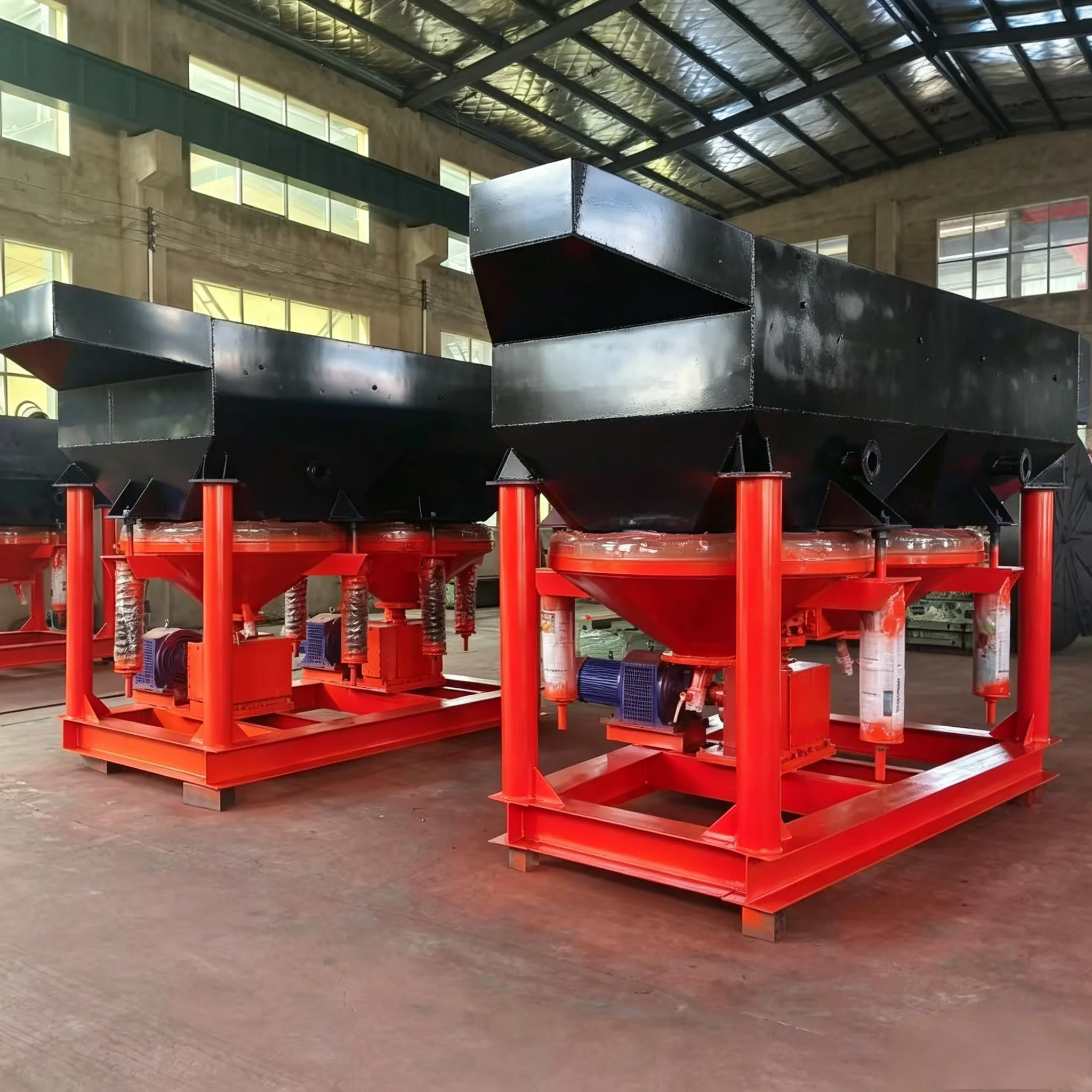
Macchina per la lavorazione con dima
Jig – Concentratore a gravità ad alta efficienza Panoramica del prodotto Un jig è un concentratore a gravità…

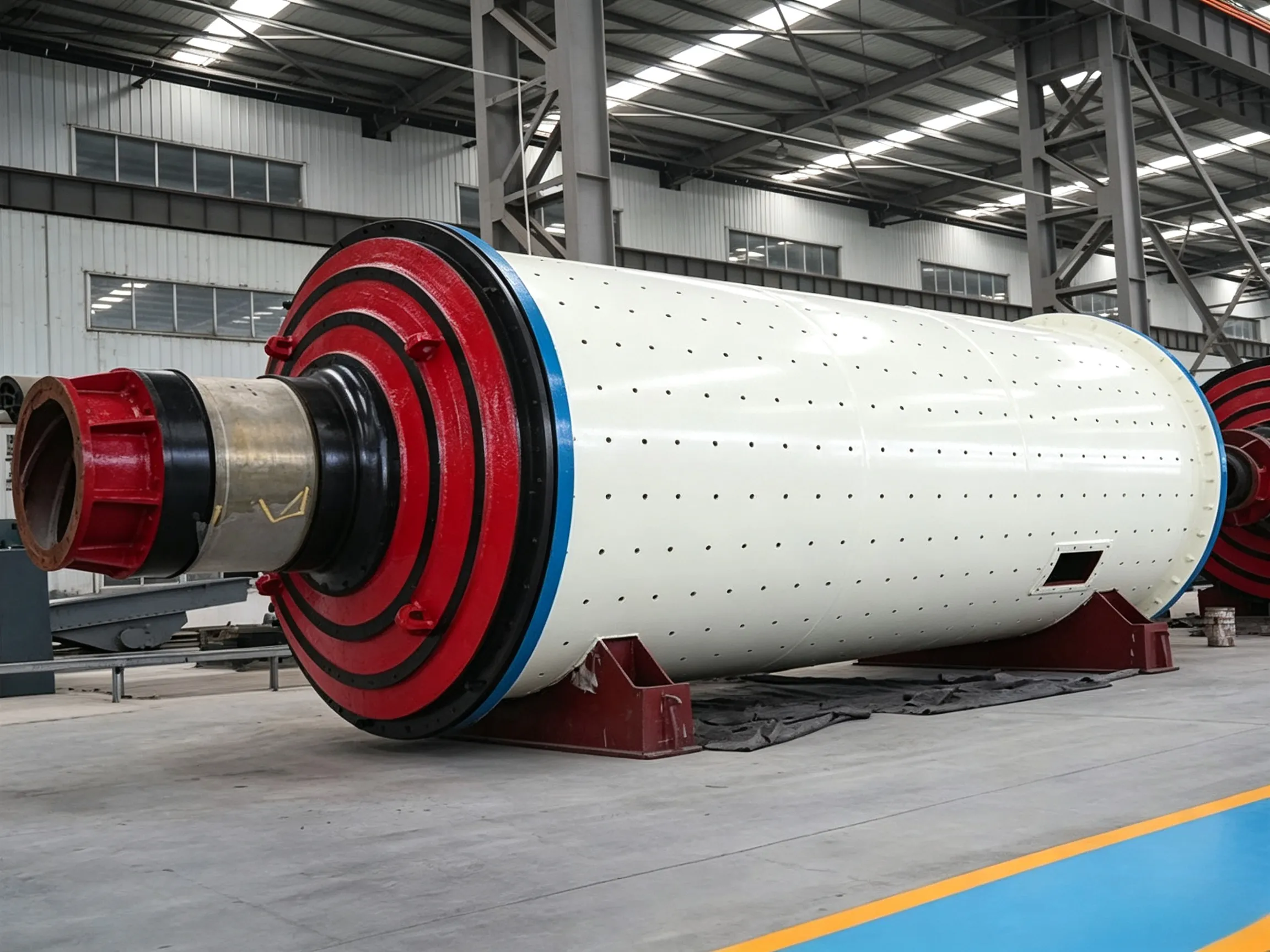
Since 1930, thanks to the development of the materials industry, the liner materials for grinding mills have made considerable progress. Successively, hundreds of types of steel and iron liners, ceramic liners, special rubber liners, and composite liners have appeared. For AG/SAG mills, liners are still predominantly made of alloy steel or iron. Research and development have focused on two aspects: one is developing new alloy types, and the other is adjusting the contents of alloying elements in existing alloys and using different heat treatment methods to change the hardness and metallographic structure of the alloy materials. In addition, two non-ferrous metal-based materials—special rubber products and high-alumina bricks—have also been developed for use as mill liners. There is also a specially sintered tungsten carbide used in small mills for special purposes, but due to its high cost, it is not economically viable for the vast majority of industrial-scale mills.
Wear problems with liners emerged as soon as AG/SAG mills appeared, but at that time, because the mill diameters were small, insufficient attention was paid to liner wear. As mill sizes increased and automation levels rose, liner wear has become increasingly prominent. Poor liner wear resistance leads to frequent liner replacement, reducing equipment availability and increasing grinding costs. As mentioned earlier, liners in a mill are replaceable parts, but they must have effective resistance to impact and abrasive wear and must facilitate the proper movement of the grinding material. Therefore, engineers and technicians pay great attention to liner materials in order to reduce maintenance costs and improve grinding efficiency. Currently, the most commonly used liner materials for tumbling mills on the market include: steel/iron liners, rubber liners, rubber–steel head composite liners, and magnetic liners.
Each liner material has its own suitable application range. Traditional steel or alloy liners are still widely used in primary grinding operations, with at least ten wear-resistant alloy materials used in primary ball mills. Increasingly, abrasion-resistant alloys are being widely adopted; these alloys contain large amounts of alloying elements such as manganese, chromium, molybdenum, and nickel, and therefore their cost is also high. Rubber liners have been widely and economically used in secondary or regrinding applications because of their long life and good abrasion resistance. The latest development is composite liners with alloy heads and rubber bases, which fully utilise the advantages of both metal and rubber. Currently, they are still mainly used for liners in small to medium AG/SAG mills, but they have begun to be applied to end liners and grate plates in medium and even large AG/SAG mills. This is because these parts are subjected to relatively low impact forces, with abrasive wear being the dominant mechanism.
Since mill liners represent one of the main costs in a concentrator and are also one of the main causes of mill downtime, liner manufacturers and mines are making every effort to extend liner service life. However, liner material selection is not based solely on wear rate; downtime, maintenance costs, and grinding performance are also decisive factors in the economics of mill liners. For most concentrators, however, liner cost per tonne of ore is commonly used as a benchmark. For large AG/SAG mills, the choice of liner material tends to favour the optimal, most economical service cycle, which must consider liner cost, labour for replacement, production losses during replacement downtime, and cost/benefit changes arising from grinding performance.
5.3.1 Steel Materials
Carbon steel liners are still widely used in small and medium mills, especially in primary grinding stages.
5.3.2 Alloy Materials
The alloy materials for mill liners have gone through several stages—from high-manganese steel, ordinary white cast iron, and Ni‑Hard cast iron to high-chromium cast iron. They have now developed into two major categories: wear-resistant steel and wear-resistant cast iron. In addition to traditional austenitic manganese steel, modified high-manganese steel, and medium-manganese steel, wear-resistant steels can be classified by carbon content into medium‑carbon, medium‑high‑carbon, and high‑carbon alloy wear-resistant steels; by alloying element content into low‑alloy, medium‑alloy, and high‑alloy wear‑resistant steels; and by microstructure into austenitic, bainitic, and martensitic wear‑resistant steels.
Among wear-resistant cast irons, ordinary white cast iron and low‑carbon white cast iron are now rarely used. The commonly used types fall into two main categories: low‑alloy white cast iron and high‑alloy white cast iron. The most representative of these are low‑chromium white cast iron and high‑chromium white cast iron. Because chromium resources are far more abundant than nickel and cheaper, these two materials have now taken a dominant position in wear‑resistant cast irons. In terms of resource cost and wear resistance, there are very few reports of Ni‑Hard cast iron being used for mill liners today. The so‑called high‑chromium cast iron actually refers to high‑chromium molybdenum white cast iron, and it can be divided into Cr15 and Cr20 types by chromium content; the former is used for general impact‑abrasion conditions, and the latter for high‑abrasion wear and thicker wear parts. High‑chromium cast irons with chromium content on the order of 30% or more are used for heat‑resistant, wear‑resistant, or corrosion‑resistant applications, such as regrinding steel balls. In general, alloy white cast irons are relatively brittle and are suitable for grinding environments with relatively low impact forces, such as regrinding mills where the balls are smaller than 60–70 mm. However, they have high abrasion resistance, giving these liners a long service life.
Compared with alloy white cast irons, wear‑resistant cast steels have better toughness but lower hardness, and they are suitable for AG/SAG mills where impact forces are relatively high; they are also widely used in wear‑resistant pipes. However, liners made of this material have lower wear resistance.
Heat treatment can effectively adjust the microstructure of alloy materials, thereby affecting their hardness and toughness. Therefore, heat treatment has a great impact on the wear and impact resistance of large AG/SAG mill liners.
Based on good abrasion resistance, impact resistance, and reasonable production costs, the following alloy liner materials have been or are now widely used in the manufacture of mill liners:
(1) Austenitic manganese steel.
(2) Ni‑Hard cast iron.
(3) Low‑carbon chrome‑molybdenum steel.
(4) High‑carbon chrome‑molybdenum steel.
(5) Chrome‑molybdenum white iron.
(6) High‑chromium iron.
5.3.2.1 Austenitic Manganese Steel
High‑manganese steel, also known as Hadfield steel, is a wear‑resistant steel invented by R.A. Hadfield in the United Kingdom in 1882. It exhibits pronounced work‑hardening characteristics and belongs to the Fe‑Mn‑C system of austenitic manganese steel. The nominal manganese content of classic high‑manganese steel is 13% by mass.
Both medium‑manganese steel and high‑manganese steel are austenitic manganese steels; after water quenching, their microstructures are single‑phase austenite. However, their main performance differences are as follows:
(1) The mechanical properties of medium‑manganese steel are generally lower than those of high‑manganese steel. Medium‑manganese steel without molybdenum typically has a tensile strength of about 550 MPa, elongation of 10%–20%, reduction of area of 20%–25%, and impact toughness of about 100 J/cm². Although the mechanical properties of medium‑manganese steel can be significantly improved by adding molybdenum, they still fall short of high‑manganese steel.
(2) High‑manganese steel has a higher manganese content, better austenite stability, and a martensite start temperature (Mₛ) below room temperature. It hardens mainly through deformation twinning and stacking‑fault mechanisms, increasing its wear resistance; the surface hardness after work‑hardening reaches HBW 400–450. Medium‑manganese steel has a lower manganese content, which reduces austenite stability and raises the Mₛ temperature. It hardens mainly through deformation‑induced α‑martensite transformation, with a rate of hardness increase that is 2–3 times higher than the twinning and stacking‑fault mechanisms; its surface hardness after work‑hardening can reach HBW 750–850.
(3) When treating softer materials, medium‑manganese steel gives better results. For example, when medium‑manganese steel jaw plates were used in small crushers for crushing limestone, their service life was about 185% that of high‑manganese steel; however, when crushing hard ores (such as gold ores with a Protodyakonov hardness coefficient f ≈ 14), the life improvement was slight.
Austenitic manganese steel typically contains 0.9%–1.4% C and 10%–14% Mn, with an impact strength αₖ of about 150 J/cm². Its initial hardness is only HB 179–229, but after wear, the hardness increases to HB 240–350, with a maximum hardness up to HB 605 (equivalent to HRC 56). However, the layer beneath the surface remains tough, allowing it to withstand high impact without cracking. Austenitic manganese steel is commonly used for grid liners or liners in small mills. Its main disadvantage is diffusion impact, which causes the solid liners to begin to squeeze together, making removal extremely difficult. If the pressure is too high and they stick together too tightly, the mill shell may even be damaged during removal.
Various modified high‑manganese steels have been developed: (1) reducing the manganese content to low‑manganese or medium‑manganese levels, or maintaining high‑manganese levels while adding other alloying elements to change the microcrystalline structure; (2) adding carbide‑forming elements such as Ti, Nb, V, Mo, and Cr to achieve second‑phase strengthening; (3) adding elements such as W, Cu, Ni, and B to achieve solid‑solution strengthening; and (4) adding rare‑earth elements to purify the molten steel, improve the morphology and distribution of inclusions, and achieve comprehensive strengthening. In addition, new heat‑treatment processes, improved casting quality, and extended service life of high‑manganese steel are being explored.
5.3.2.2 Ni‑Hard Cast Iron
Ni‑Hard cast iron is produced by adding 3.0%–5.0% Ni and 1.5%–3.5% Cr to ordinary white cast iron, resulting in a very hard and wear‑resistant martensitic matrix with M₃C‑type carbides. Nickel forms an infinite solid solution with iron, effectively increasing hardenability and promoting a martensite‑bainite matrix; at the same time, nickel stabilises austenite, and excessive nickel content can lead to large amounts of retained austenite. The addition of chromium prevents graphitisation, promotes carbide formation, and increases the hardness of the M₃C‑type carbides.
Ni‑Hard alloy liners were initially used in small rod mills and ball mills with very low impact forces. This alloy is brittle but has good abrasion resistance. However, with the advent of high‑chromium and chrome‑molybdenum alloys, this alloy is now almost extinct in mill liner applications.
5.3.2.3 Low‑Carbon Chrome‑Molybdenum Steel
The hardness of low‑carbon chrome‑molybdenum steel is typically BHN 300–370.
Before the use of high‑carbon chrome‑molybdenum steel, low‑carbon chrome‑molybdenum steel was commonly used for AG/SAG and ball mill liners. It has excellent abrasion resistance and a certain degree of impact resistance. Compared with high‑carbon chrome‑molybdenum steel, low‑carbon chrome‑molybdenum steel is now mainly used in discharge grate plates or thinner sections that require slightly better impact resistance.
5.3.2.4 High‑Carbon Chrome‑Molybdenum Steel
The hardness of high‑carbon chrome‑molybdenum steel is typically BHN 325–380.
High‑carbon low‑alloy chrome‑molybdenum steel (e.g., 1.15% C, 1% Cr, 0.25% Mo) can have similar hardness but significantly different wear resistance when the microstructure is different. After austenitising and oil quenching, followed by tempering at different temperatures, normalising, or isothermal treatment near the martensite start temperature, microstructures such as tempered martensite, pearlite, and bainite can be obtained. The tempering temperature after quenching affects wear resistance. For example, high‑carbon chrome‑molybdenum steel balls (0.8% C, 1.0% Cr, 0.4% Mo) were austenitised at 880 °C and 820 °C, respectively, then oil‑quenched and subjected to wear tests under the same conditions. The balls quenched from 880 °C showed higher wear resistance. This is attributed to the higher carbon content in the martensite solid solution and the greater amount of retained austenite at the higher quenching temperature, both of which are beneficial to wear resistance. Martensite has the lowest wear rate and thus the best wear resistance.
High‑carbon chrome‑molybdenum alloy liners have relatively low impact toughness because of their high carbon and alloy contents, with impact values generally only 30–40 J. Moreover, to ensure a certain level of impact toughness, these liners are typically subjected to air cooling plus tempering during heat treatment, resulting in a tempered troostite structure, which has moderate hardness and relatively poor wear resistance. As a result, high‑carbon chrome‑molybdenum alloy liners are prone to fracture during use and have short service cycles, forcing concentrators to replace liners frequently, reducing equipment availability and increasing operating costs.
High‑carbon chrome‑molybdenum alloys are used in AG/SAG mill liners. There is a range of products with varying carbon and chromium contents, and typically the carbon and chromium contents of these alloys vary with the size and thickness of the mill liners. In this field, due to the requirements of liner dimensions, standard high‑carbon chrome‑molybdenum alloys can no longer meet process needs, and development of such alloys is still ongoing.
5.3.2.5 Chrome‑Molybdenum White Iron
The hardness of chrome‑molybdenum white iron is typically BHN 600–700.
This cast material has been highly developed and is widely used in abrasive grinding environments. It is now extensively used for cement mills and large ball mill liners, as well as in areas where abrasion resistance still needs to be improved.
5.3.2.6 High‑Chromium Cast Iron
The hardness of high‑chromium cast iron is typically greater than BHN 600.
In chromium‑series alloy cast irons, carbon and chromium form M₃C‑type carbides. As carbon content increases, the carbide content increases and the hardness rises, but impact toughness decreases. At carbon contents of 2.37%–2.69%, pearlitic chromium cast iron can achieve relatively high impact fatigue resistance, toughness, and good impact‑abrasion resistance when silica sand is the abrasive. Therefore, increasing the content of the key element chromium can improve the carbide morphology and increase the impact toughness of the material. High‑chromium cast iron is characterised by relatively high toughness and wear resistance, and the carbides are entirely of the (Fe,Cr)₇C₃ type. Among the chemical elements in high‑chromium cast iron, chromium and carbon are the two most important: carbon determines the quantity of carbides, while chromium determines the type of carbides. For a given carbon content, increasing chromium content increases both the eutectic carbide content and the chromium dissolved in the matrix; however, for a given chromium content, increasing carbon content increases eutectic carbides but reduces the chromium dissolved in the matrix. There is a functional relationship between the eutectic carbide fraction K and the carbon and chromium contents:
K = (11.3C + 0.5Cr – 13.4)%
High‑chromium cast iron generally refers to alloy white cast irons with a chromium content of 12%–30% and a carbon content of 2.4%–3.6%. The advantages of high‑chromium cast iron are: first, at 12% Cr, it can form Cr₇C₃‑type carbides, whose microhardness HV 1300–1800 is much higher than that of Fe₃C‑type carbides in ordinary white cast iron (HV 800–1100), thus providing better wear resistance; second, the carbide morphology becomes discontinuous networks, rosette‑shaped, or isolated particles dispersed in the martensitic matrix (the hardest matrix structure), reducing the deleterious cutting effect on the matrix. Consequently, these alloy liners have high strength, toughness, and wear resistance, with better toughness than those with network carbides. In addition, the matrix of high‑chromium cast iron can be adjusted through different heat‑treatment processes to obtain various matrices, ranging from fully austenitic to fully martensitic, thus broadening its application range and meeting different service conditions. In terms of wear resistance, it is much better than alloy steel; in toughness and strength, it is much better than ordinary white cast iron and superior to Ni‑Hard cast iron.
High‑chromium cast iron is often used to make small to medium grinding steel balls and liners for large cement rod/ball mills, as shown in Figure 5‑10. High‑chromium cast iron has excellent abrasion resistance; the service life of the latter type often exceeds 5 years, and can even approach 15 years, giving it a very good price‑performance ratio. However, it is more brittle than chrome‑molybdenum white cast iron.

Figure 5-10 High-chromium cast iron liners for large cement rod/ball mills
However, special attention must be paid to the following points when using high-chromium cast iron:
(1) Improving the impact toughness of high-chromium liners. When selecting high-chromium cast iron for liner production, while prioritising wear resistance, special attention should also be paid to the synergy of strength and toughness. To improve the performance of high-chromium cast iron, the fracture toughness KIC should first be increased. When the eutectic carbide content is constant and the Cr/C ratio is between 6.6 and 7.1, the fracture toughness KIC is at its highest, meaning that the resistance to crack propagation is strongest. High-temperature quenching or appropriately extending the holding time can also improve the morphology, distribution, and size of M₇C₃ eutectic carbides, refine the carbides, increase strength, and enhance toughness. Modification treatment of the molten iron is the simplest and most economical effective method to change the morphology, quantity, size, and distribution of eutectic carbides in high-chromium cast iron and to improve strength and toughness. It controls solidification and, more importantly, refines the eutectic carbides, reduces their cutting effect on the matrix, refines the matrix, and improves toughness.
(2) Safe use of high-chromium liners.
5.3.2.7 Composite Alloys
In general, the abrasion resistance and impact resistance of alloy materials are contradictory to each other. Therefore, wear-resistant alloys and impact-resistant alloys are used together. Typically, the impact-resistant alloy serves as the base, while the wear-resistant alloy serves as the insert. This combination has been applied to the feed-end liners of AG/SAG mills. For example, the feed-end liners of AG/SAG mills experience severe local wear. By inserting high-chromium cast iron pieces into the lifter bars made of a chrome-molybdenum alloy base, the service life is significantly extended.
It has been reported that in China, drawing on the principle of reinforced concrete, steel mesh and chromium-series alloy cast iron are compositely cast to form liners. In an industrial trial on a 5.50 m × 1.80 m mill, the service life reached nearly 7 months, which is about 1.75 times that of the original high-manganese steel liners.
5.3.2.8 Comparison of Abrasion Resistance of Metallic Materials
Chrome-molybdenum alloy is one of the most widely used mill liner materials, especially for shell liners of AG, SAG, and large ball mills, because its pearlitic-ferritic microstructure can withstand severe impact. For other coarse grinding operations such as rod mills and ball mills, where the impact intensity is far less than in AG/SAG mills, various hard alloy materials are used. When the ball diameter is less than 50 mm, the ball mill liners can be made of hard cast iron. However, when it is greater than 50 mm, alloy materials such as manganese cast steel and chromium cast steel should be prioritised. Rod mill liners are mainly made of alloy steel or cast iron. When the rod diameter is less than 40 mm, Ni‑Hard stepped mill liners are sometimes also used.
Grinding environments with very high abrasion typically prioritise martensitic-bainitic steel, for example, in regrind ball mills. Currently, the most wear-resistant alloys are high-chromium cast iron and chrome-molybdenum white cast iron. Table 5‑3 lists and compares the advantages, disadvantages, application ranges, and usage limits of various steel liners. Table 5‑4 compares the wear rates of various alloy materials and heat treatment methods under given conditions.
Tabella 5-3 Selection of various alloy lining plates
| material | mulino a sfere | semi-autogenous mill | Self-grinding machine | |||||||||
| Ore feeding end | cylinder | Discharging end | Lattice board | Ore feeding end | cylinder | Discharging end | Lattice board | Ore feeding end | cylinder | Discharging end | Lattice board | |
| Pearlitic chromium-molybdenum steel | ○ | ◆ | ○ | ○ | ◎ | ◎ | ○ | o | ◎ | △ | ◎ | ◎ |
| high-chromium cast iron | ◎ | △ | ◎ | △ | ||||||||
| Wear-resistant welded plate | ▲ | |||||||||||
| Hard nickel cast iron | △ | △ | ||||||||||
| Martensitic chromium-molybdenum steel | ▲ | △ | △ | |||||||||
Table 5-4 Wear Resistance of Various Alloy Mill Liners 1401
| serial number | Descrizione | heat treatment | Typical content/% | hardness | Friction resistance | ||||||
| C | Mn | Si | Cr | Mo | Ni | RC1 | RC2 | ||||
| 1 | Martensitic Cr-Mo white iron | AQ&T | 2.8 | 1.0 | 0.6 | 15.0 | 3.0 | 54 | 66 | 89 | |
Continued Table 5-4
| serial number | Descrizione | heat treatment | Typical content/% | hardness | Friction resistance | ||||||
| C | Mn | Si | Cr | Mo | Ni | RC1 | RC2 | ||||
| 2 | Martensitic high Cr-Mowhite ironMartensitic high chromium molybdenum white cast iron | AQ&T | 1.7 | 1.0 | 0.9 | 26.0 | 0.5 | 53 | 64 | 98 | |
| 3 | Martensitic Cr-Mo steel | AQ&T | 1.0 | 0.8 | 0.6 | 6.0 | 1.0 | 49 | 55 | 100 | |
| 4 | Chill-cast Ni-Cr-Mowhite ironCold-cast nickel-chromium-molybdenum white cast iron | 3.2 | 0.7 | 0.5 | 2.0 | 1.0 | 3.0 | 59 | 107 | ||
| 5 | Sand-cast Ni-Cr white iron | 3.2 | 0.6 | 0.5 | 2.0 | 4.0 | 53 | 60 | 109 | ||
| 6 | Martensitic Cr-Mo steel | Brine Q&T | 0.7 | 1.0 | 0.6 | 1.5 | 0.5 | 55 | 58 | 111 | |
| 7 | Austenitic 6-1 alloy steel, martensitic 6-1 steel | WQ | 1.2 | 6.0 | 0.5 | 1.0 | 10 | 49 | 115 | ||
| 8 | Chill-cast Ni-Cr white iron | 3.0 | 0.5 | 0.4 | 2.1 | 4.5 | 55 | 116 | |||
| 6 | Martensitic Cr-Mo steel | WQ&T | 0.4 | 1.5 | 0.4 | 0.8 | 0.5 | 48 | 55 | 120 | |
| 10 | Type 420 cast stainless steel | AQ&T | 0.4 | 0.5 | 0.5 | 13.3 | 0.7 | 50 | 52 | 126 | |
| 11 | Pearlitic Cr-Mo steel | AQ&T | 0.8 | 0.8 | 0.6 | 2.3 | 0.4 | 38 | 39 | 127 | |
| 12 | Austenitic Mn steel | WQ | 1.2 | 12 | 0.5 | 10 | 49 | 140 | |||
Note: RC1 – average hardness of the new steel ball surface below 1/8 inch; RC2 – average hardness of the worn surface, which is the highest hardness of the working surface;
AQ&T – Air Quenching and Tempering; Q&T – Quenching and Tempering; WQ – Water Quenching.
The relative wear resistance of alloys before and after heat treatment is mainly determined simply by their macro-hardness; however, the slope of the change in wear resistance with increasing macro-hardness varies. Wear resistance depends not only on the hardness of the steel, but also on its composition. Even if different steels with different compositions have the same hardness after heat treatment, their wear resistance can differ, indicating that there is no single-valued correspondence between the wear resistance of various steels and their macro-hardness.
It has been reported [38] that a multi-alloy liner, through an appropriate heat treatment process, achieved improved mechanical properties, with an impact value reaching 120–150 J. A performance comparison with high-carbon chrome-molybdenum alloy liners for SAG mills is shown in Table 5-5. Its composition (mass fraction) is: C 1.1%–1.3%, Si 0.3%–0.8%, Mn 11%–14%, Cr 0.8%–1.5%, Mo 0.1%–0.5%, V 0.3%–0.7%, Ti 0.05%–0.2%, P < 0.05%, and S < 0.03%. This multi-alloy liner has been successfully applied in an 8.8 m × 4.8 m SAG mill at Inner Mongolia Mining Co., Ltd. and a 5.5 m × 2.4 m SAG mill at the Zhenyuan Branch of Yunnan Gold Co., Ltd. (as shown in Figures 5-11 and 5-12). The application results show that this multi-alloy liner exhibits no deformation, no fracture, and excellent wear resistance, with a service life approximately 1.3 times that of other similar products.
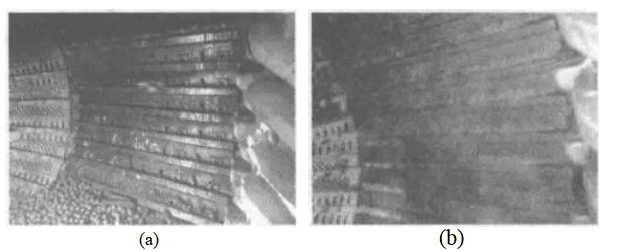
Figure 5‑11 Application of a multi‑alloy liner in an SAG mill at Inner Mongolia [38]: (a) Newly installed; (b) After service.

Figure 5‑12 Application of a multi‑alloy liner in an SAG mill at Yunnan [38]:
(a) Newly installed; (b) After service.
Table 5‑5 Performance comparison between high‑carbon chrome‑molybdenum alloy liners and multi‑alloy liners [38]
| Product name | Initial average hardness (HBW) | Average hardness after service (HBW) | Impact value / J·cm⁻² | Metallurgical structure |
|---|---|---|---|---|
| High‑carbon chrome‑molybdenum alloy liner | 345 | 404 | 33.5 | T + C |
| Multi‑alloy liner | 305 | 535 | ≥150 | A + C |
Notes on metallurgical structure abbreviations:

 English English
 Spanish
 Russian
 Arabic
 Swahili
 French
 Turkish
 Portuguese
 Korean
 Japanese
 German
 Italian