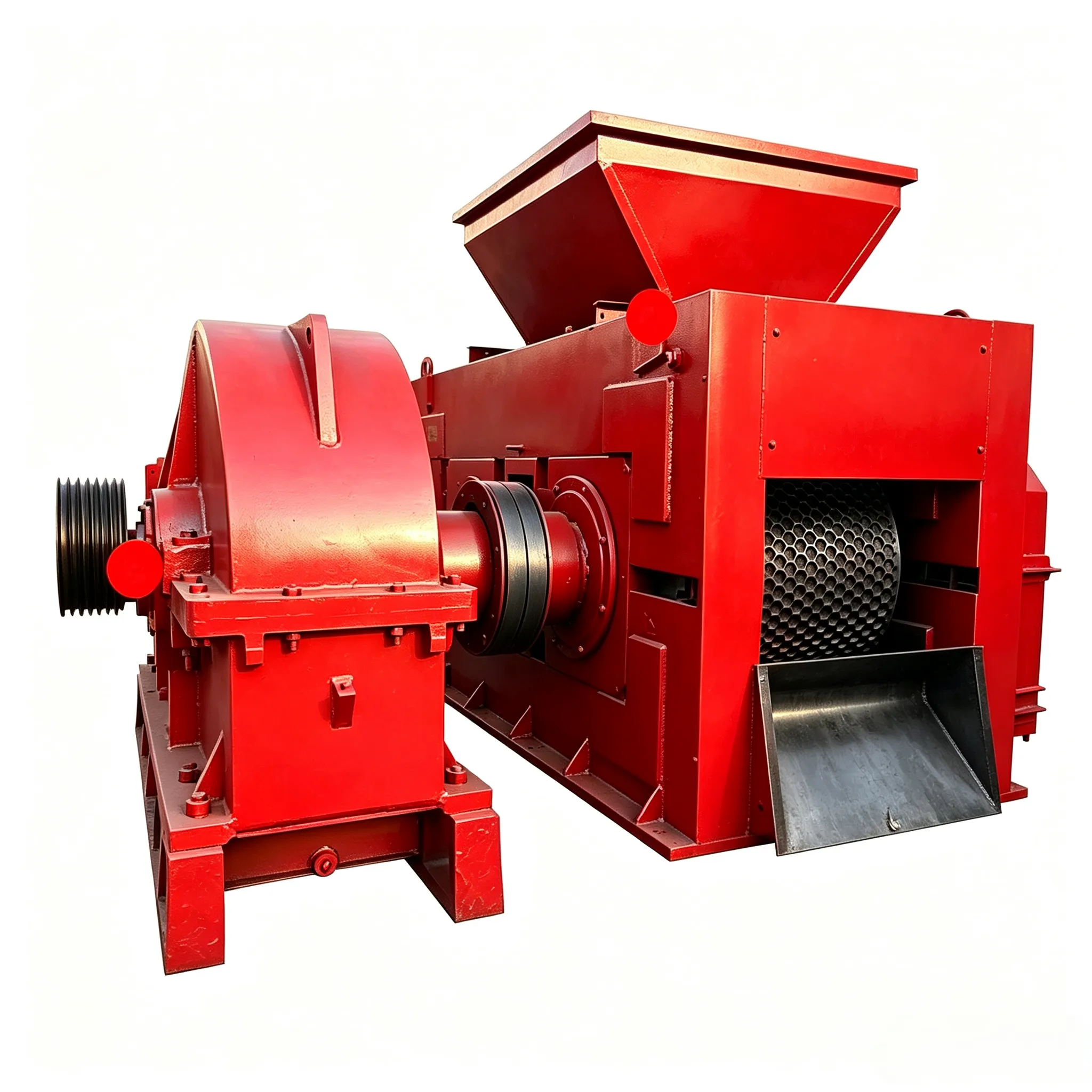
Macchina per bricchetti
Panoramica del prodotto Le macchine per la produzione di bricchetti sono apparecchiature industriali progettate per comprimere materiali in polvere o…

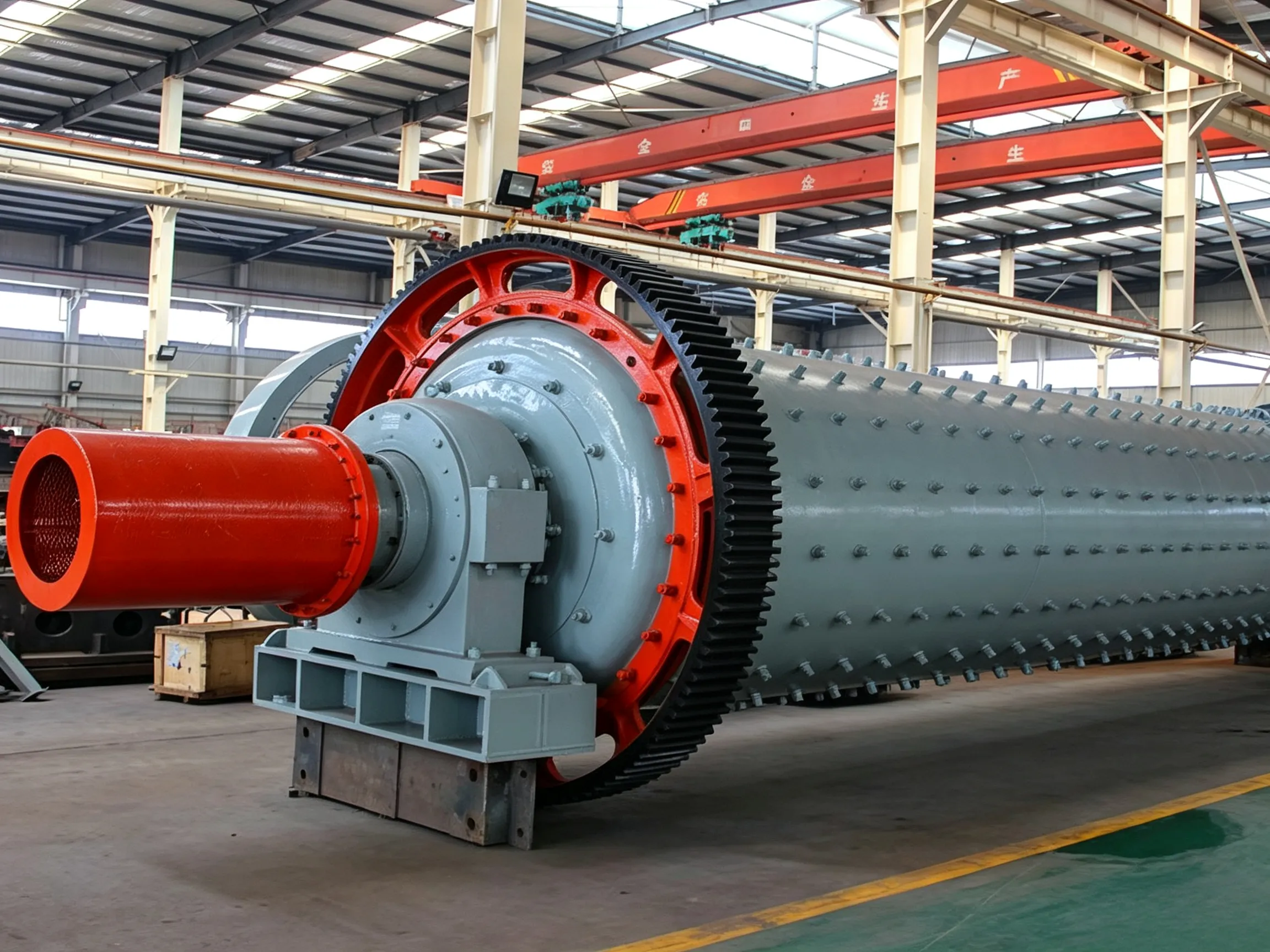
Regarding how to deal with overheating of the hollow shaft bearing bush in a ball mill, Chen Guoyuan holds the view that: for both new and old ball mills, once the temperature of the hollow shaft bearing bush suddenly rises, or even becomes severely hot and emits smoke, emergency shutdown should not be performed. At this time, the oil film of the bearing bush has already been destroyed, and the journal and bearing bush are in direct contact, which can easily cause tearing and adhesion, potentially leading to a major equipment accident. First, immediately stop feeding material into the mill, and at the same time try to increase the cooling water flow to the water‑cooled bearing bush or directly pour lubricating oil onto the hollow shaft. Only after the bearing bush temperature has been reduced as much as possible should the mill be stopped.
For old mills, the causes of hollow shaft bearing bush overheating are almost always related to cooling water and lubricating oil. One case is poor cooling. This occurs because after several years of operation, the cooling water pipes of the water‑cooled bearing bush have never been cleaned, and serious scaling has built up inside the pipes, causing the water pipes to lose effectiveness either partially or completely, resulting in overheating. For this situation, concentrated hydrochloric acid should be used to clean the cooling water pipes of the water‑cooled bearing bush to restore unobstructed cooling water flow. Another case is lubrication problems, such as failure to replenish lubricating oil for a long time, failure to clean or replace the lubricating oil, poor oil distribution by the oil‑carrying ring or oil distribution plate, or no oil pressure from the oil pump. For such cases, specific measures should be taken depending on the exact problem, including replenishing lubricating oil, cleaning and replacing oil, repairing the oil‑carrying ring or oil distribution plate, or replacing oil pump components, so as to achieve a good lubrication condition.
The causes of hollow shaft bearing bush overheating in newly installed ball mills are more complex, generally including the following situations:
(1) Overheating of the bearing bush caused by insufficient shaft shoulder clearance at the sliding end (feed end) of the ball mill, with both bearing bushes heating up simultaneously under axial force. This occurs because during installation of the ball mill, the installation unit did not consider the thermal expansion ΔL generated during mill operation, and merely installed the bearings according to the longitudinal center distance between the two bearings indicated on the equipment foundation drawing. The solution is to remove the foundation base of the bearing at one end (generally the non‑drive end) and reinstall it, so that the ball mill conforms to the shaft shoulder clearance shown in Figure 2.37, which will reduce the bearing bush temperature.

(2) Overheating caused by insufficient precision in scraping the bearing bush. In this case, the bearing bush must be removed and rescraped. First, scrape the contact points of the bearing bush so that there are 6–8 points per 25 mm × 25 mm square, while also ensuring the side clearance between the hollow shaft and the spherical bearing shell. If the side clearance is absent or too small, it will affect the lubrication effect of the shaft. Generally, the side clearance between the hollow shaft and the bearing bush must be maintained between 1/1000 and 1.5/1000 of the hollow shaft diameter, and the contact angle between the hollow shaft and the bearing bush should be kept within the range of 75° to 90°.
(3) Drive imbalance causes vibration of the machine body, affecting the formation of the oil film on the bearing bush and leading to overheating. This condition is mainly caused by non‑parallelism between the longitudinal centerline of the drive shaft and the longitudinal centerline of the mill body. The principle for adjustment and correction is to make the longitudinal centerline of the drive shaft parallel to the longitudinal centerline of the mill body, while also giving due consideration to the gear meshing condition.
(4) Improper selection of lubricating oil grade. If the viscosity is too high, the oil cannot enter the hollow shaft bearing bush; if too low, it cannot form a pressure oil film in the bearing bush and thus cannot provide lubrication or cooling. In this case, simply replacing the oil with one of suitable viscosity will eliminate the overheating of the bearing bush.

 English English
 Spanish
 Russian
 Arabic
 Swahili
 French
 Turkish
 Portuguese
 Korean
 Japanese
 German
 Italian