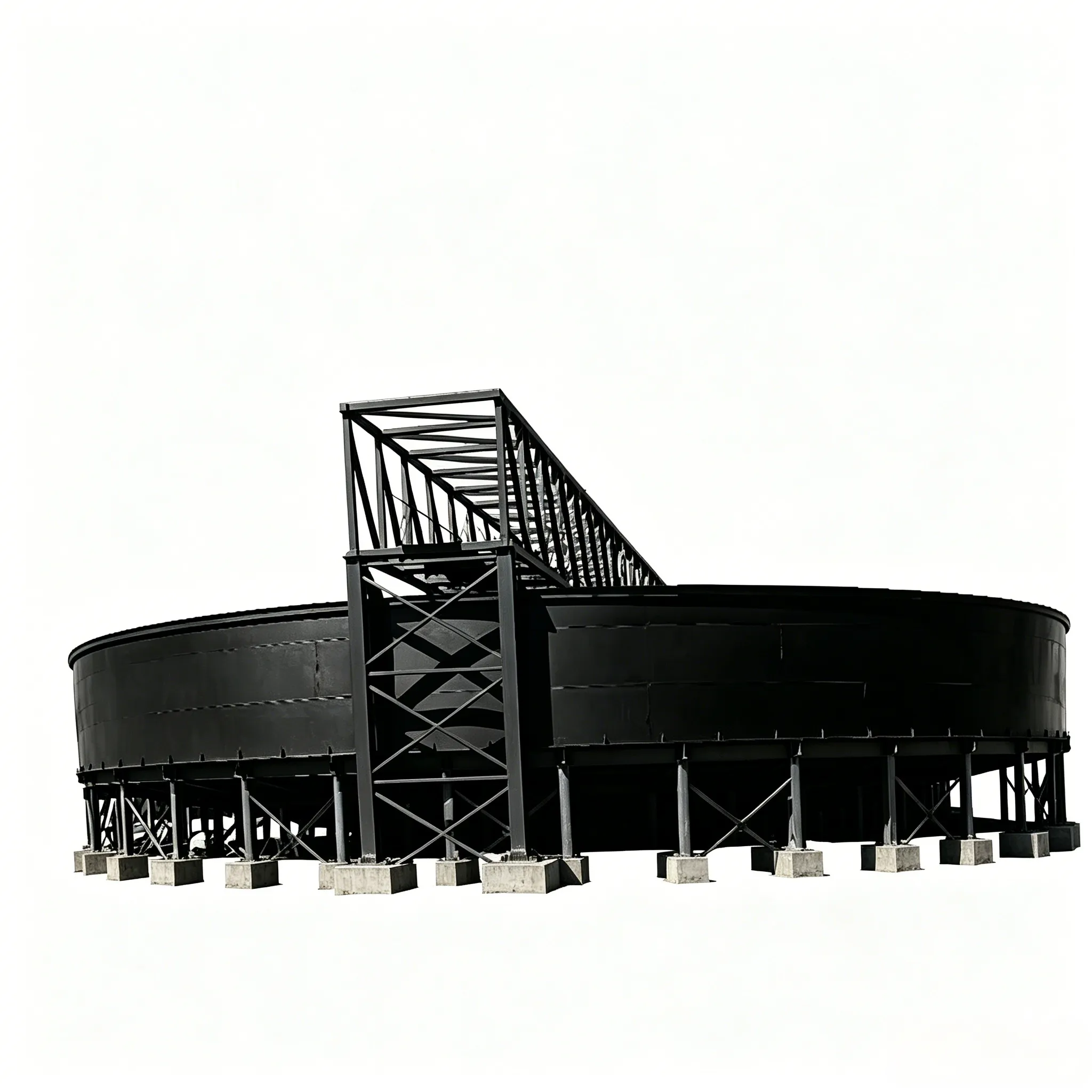
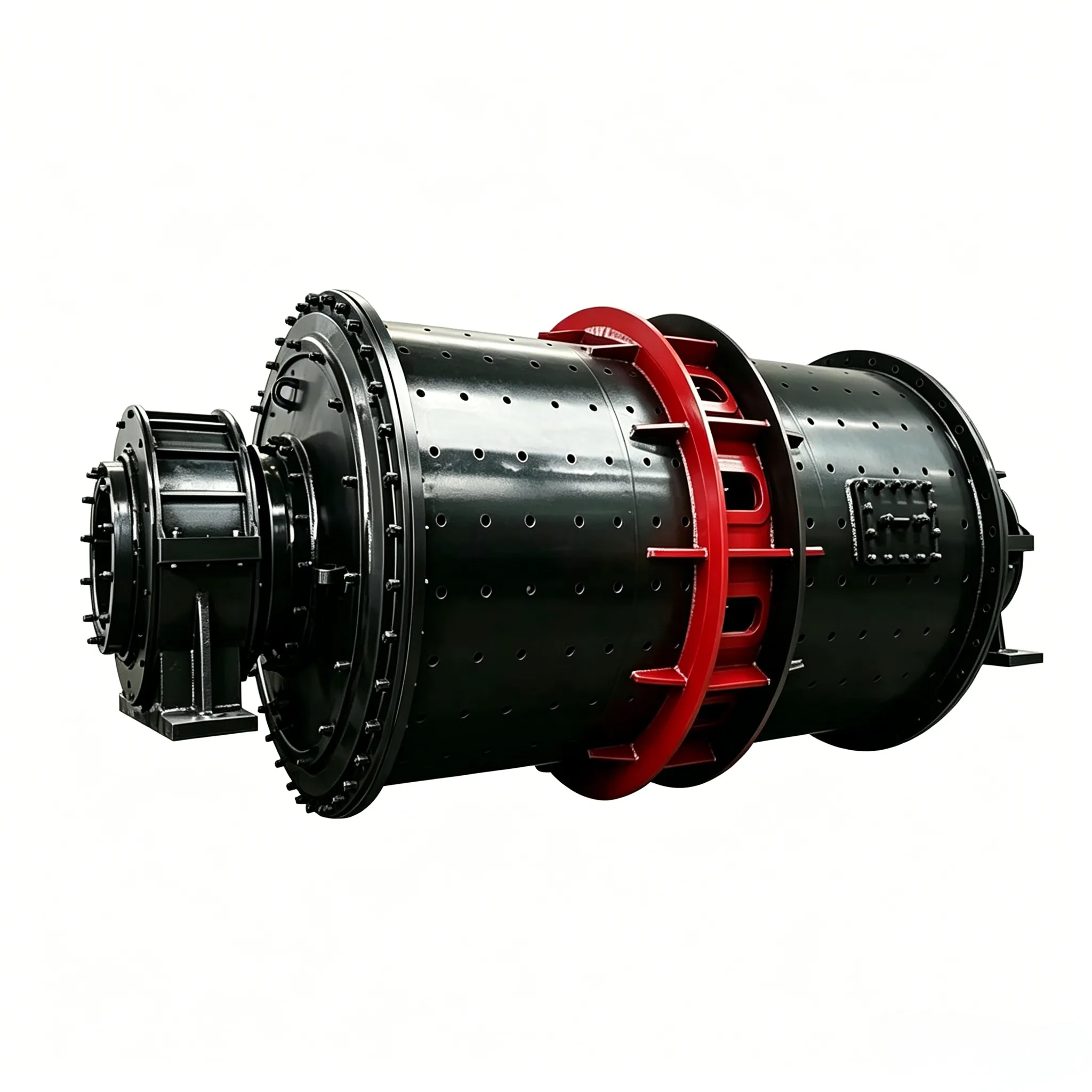
周辺駆動式増粘機
周縁駆動式増粘機 現在、中国で製造されている周縁駆動式増粘機は、概して…


1. A fluorite calcium-removal beneficiation process, consisting of one roughing stage and multiple cleaning stages, wherein roughing is carried out using oleic acid or its substitutes as a collector, characterized in that: a mixture of sulfuric acid and acidified water glass is used as a depressant for calcium-bearing minerals, the ratio of sulfuric acid to acidified water glass being 1:0.5 to 1:2, and the combined dosage being 0.5 to 1.5 kg/t of raw ore.
2. The fluorite calcium-removal beneficiation process according to claim 1, characterized in that the ratio of sulfuric acid to acidified water glass is 1:1 to 1:1.5.
3. The fluorite calcium-removal beneficiation process according to claim 1, characterized in that the acidified water glass is prepared by mixing sulfuric acid and water glass at a concentration of 2–10% in a ratio of 1:0.6 to 1:1.5.
4. The fluorite calcium-removal beneficiation process according to any one of claims 1, 2, or 3, characterized in that the acidified water glass is prepared by mixing sulfuric acid and water glass at a concentration of 4–6% in a ratio of 1:1.
The present invention relates to a beneficiation process for removing calcium from fluorite ore, and is particularly applicable to the selection of premium‑grade fluorite concentrate from high‑calcium fluorite ores.
At present, the main beneficiation method used domestically and internationally for calcium removal from fluorite is flotation. By selecting suitable flotation reagents to enlarge the surface property differences between fluorite and calcium‑bearing minerals, separation is achieved. The article “Flotation Separation of Fluorite and Calcite” published in Metal Mine (Issue 12, 1996) describes methods for the flotation separation of fluorite and calcium‑bearing minerals. The flotation reagents include collectors and regulators. Commonly used collectors are mainly oleic acid and its substitutes; there are many types of regulators, such as soda ash, lime, phosphates, water glass, tannins, lignosulfonates, etc. The article suggests that, depending on ore properties, the type of collector used, and the requirements for the pH of the medium, selecting appropriate regulators, especially depressants, is very important and is often the key to obtaining high‑quality concentrate. However, when the calcium carbonate content of the raw ore is too high, using the above‑recommended depressants such as water glass, phosphates, lime, etc., often fails to achieve satisfactory results, so that some plants encountering such ores can only stockpile them because they cannot be processed. Metal Mining Abstracts (Issue 10, 1986, page 45) introduced a chemical cleaning method for low‑grade fluorite concentrates, which uses acid leaching to remove calcium carbonate from the fluorite concentrate. However, this method has high cost and complicated processes, making it difficult to implement in existing plants.
The object of the present invention is to provide a fluorite calcium‑removal beneficiation process that is simple in process and low in cost, addressing the above‑mentioned problems in existing fluorite calcium‑removal methods, and capable of reducing the calcium content in the fluorite concentrate to meet the requirements of premium‑grade concentrate standards.
To achieve the above object, the fluorite calcium‑removal beneficiation process of the present invention adopts the following technical solution:
The fluorite calcium‑removal beneficiation process of the present invention consists of one roughing stage and multiple cleaning stages. Oleic acid or its substitutes are used as collectors for roughing, and sulfuric acid and acidified water glass are used to depress the calcium‑bearing minerals. The ratio of sulfuric acid to acidified water glass is 1:0.5 to 1:2, and the combined dosage is 0.5 to 1.5 kg/t of raw ore.
The preferred ratio of sulfuric acid to acidified water glass is 1:1 to 1:1.5.
The acidified water glass is prepared by mixing sulfuric acid and water glass at a concentration of 2%–10% in a ratio of 1:0.6–1.5, with the best being mixed at a concentration of 4%–6% at a ratio of 1:1. The ratio of sulfuric acid to acidified water glass and the combined dosage vary depending on the calcium content of the raw ore. When the calcium carbonate content of the raw ore is high, the ratio of sulfuric acid to acidified water glass should be lower (i.e., more sulfuric acid is added); conversely, less should be added.
For ores with uneven dissemination particle sizes, a portion of the concentrate can be obtained during coarse grinding while discarding tailings, and then the middlings can be concentrated and reground for re‑separation to obtain another portion of the concentrate. Compared with the conventional approach of coarse grinding for tailings discarding and regrinding and re‑separation of the rough concentrate, this reduces the amount of material to be reground, avoids losses due to over‑grinding of already liberated fluorite minerals during regrinding, and eliminates difficulties caused by transporting rough concentrate froth.
For fluorite ores with high silicon and calcium contents, roughing can be carried out in an alkaline medium using water glass as a depressant, so that more than 90% of the silicon‑bearing minerals are discarded in the roughing tailings. Then, sulfuric acid and acidified water glass are added in the cleaning stages, which enhances calcium removal and reduces the dosage of calcium‑removal reagents.
The fluorite calcium‑removal beneficiation process provided by the present invention uses sulfuric acid in combination with acidified water glass as a depressant for calcium‑bearing minerals. Sulfuric acid can cause selective dissolution on the surface of calcite minerals, thereby removing the active areas necessary for collector adsorption, and enhancing the depressing effect of acidified water glass, thus obtaining high‑quality concentrate. It has the advantages of high calcium‑removal efficiency, simple process, and low cost.
To further describe the present invention, some examples are listed below. Example 1 presents detailed test results using the technical solution provided by the present invention for separating a fluorite ore from Zhejiang Province. Examples 2–6 are comparative tests.
例 1: The fluorite raw ore was from a fluorite mine in Zhejiang Province. This ore is of high‑silicon and high‑calcium type with uneven dissemination. Its main mineral composition includes: fluorite, quartz, calcite, chalcedony, opal, etc., with minor amounts of pyrite, apatite, and secondary kaolinite. The raw ore contains CaF₂ 39.15%, SiO₂ 48.50%, and CaCO₃ 5.98%. The raw ore was coarsely ground to 55% passing 0.076 mm. In an alkaline medium, water glass and oleic acid were added. During roughing, more than 90% of SiO₂ was removed. The froth product was subjected to one cleaning, followed by the addition of sulfuric acid and acidified water glass. After two calcium‑removal stages, the froth product underwent four cleaning stages to obtain one portion of fluorite concentrate. The tank products from the last four cleaning stages were combined and reground to 90% passing 0.076 mm, and after one roughing and three cleaning stages, another portion of fluorite concentrate was obtained. The two portions were combined as the final concentrate. The test conditions are shown in Table 1, and the test results are shown in Table 2.
surface 1 Test conditions

surface 2 Test results
| Assignment Name | Product Name | Yield % | grade % | return yield % | ||||
| CaF₂ | SiO₂ | CaCO₃ | CaF: | SiO₂ | CaCO, | |||
| coarse grind | 集中する tail mine | 18.18 63.01 | 99.16 6.00 | 0.43 75.49 | 0.13 8.88 | 47.83 9.68 | 0.17 98.07 | 0.41 93.58 |
| regrinding of medium ore | Refined mine tail mine | 15.46 2.65 | 98.29 54.64 | 0.71 28.17 | 0.20 12.39 | 38.82 3.67 | 0.22 1.54 | 0.52 5.49 |
| combine count | concentrate ore tail ore ore | 34.34 65.66 100.00 | 98.77 7.96 39.15 | 0.56 73.58 48.50 | 0.16 9.02 5.98 | 86.65 13.35 100.00 | 0.39 99.61 100.00 | 0.93 99.07 100.00 |
Examples 2-6: Table 3 shows the comparison between other inhibitors and the method of the present invention under optimal dosage conditions.
The results of a comparative test of the inhibitors used were as follows: the feed consisted of 1.4 kg /t of sodium bicarbonate .
The crude and refined ore obtained from the fluorite ore in Example 1 was separated by adding 0.6 kg /t of water glass そして 0.2 kg /t of oleic acid.
Ore. In each embodiment, S₁ S₂ represents sulfuric acid. This represents acidic water glass .
Table 3 right Compare try Test Knot fruit
| Inhibitor types and dosages | Produce Taste | Produce Rate | CaCO, content | CaCO, Recovery rate | |
| 500g/t of water glass | Foam products Products in the tank Give mine | 75.27 24.73 100.00 | 5.71 21.49 9.61 | 44.72 55.28 100.00 | |
| 400g/t of acidic water glass | Foam products Products in the tank Givemine | 83.51 16.49 100.00 | 4.30 37.05 9.70 | 37.02 62.98 100.00 | |
| Tannin 400g/t | Foam products Products in the tank Give mine | 76.18 23.82 100.00 | 3.70 28.76 9.67 | 29.15 70.85 100.00 | |
| S₁ : 300g /t S₂ : 400g /t | Foam products Products in the tank Give mine | 78.85 21.15 100.00 | 0.96 42.42 9.73 | 7.78 92.22 100.00 | 例 2 |
| S1: 600g/t S₂ : 300g /t | Foam products Products in the tank Give mine | 66.31 33.69 100.00 | 0.78 27.23 9.69 | 5.33 94.67 100.00 | 例 3 |
| S₁ : 300g /t S₂ : 300g /t | Foam products Products in the tank Give mine | 78.60 21.40 100.00 | 0.98 41.96 9.75 | 7.90 92.10 100.00 | 例 4 |
| S₁ : 300g /t S₂ : 600g/t | Foam products Products in the tank Give mine | 79.91 20.09 100.00 | 1.65 42.14 9.78 | 13.48 86.52 100.00 | 例 5 |
| S₁ : 600g/t S₂ : 900g/t | Foam products Products in the tank Give mine | 60.55 39.45 100.00 | 0.70 23.60 9.73 | 4.35 95.65 100.00 | 例 6 |
The amounts of the inhibitors sulfuric acid and acidic water glass used in Examples 3-6 above are not optimal. Quantity. In practical applications, a simple test can be conducted based on the CaCO₃ content in the raw fluorite ore. The appropriate dosage and ratio of sulfuric acid and acidic water glass can be determined and added to each stage in batches. It is advisable to select the best assignments.
 English English
 Spanish
 Russian
 Arabic
 Swahili
 French
 Turkish
 Portuguese
 Korean
 Japanese
 German
 Italian