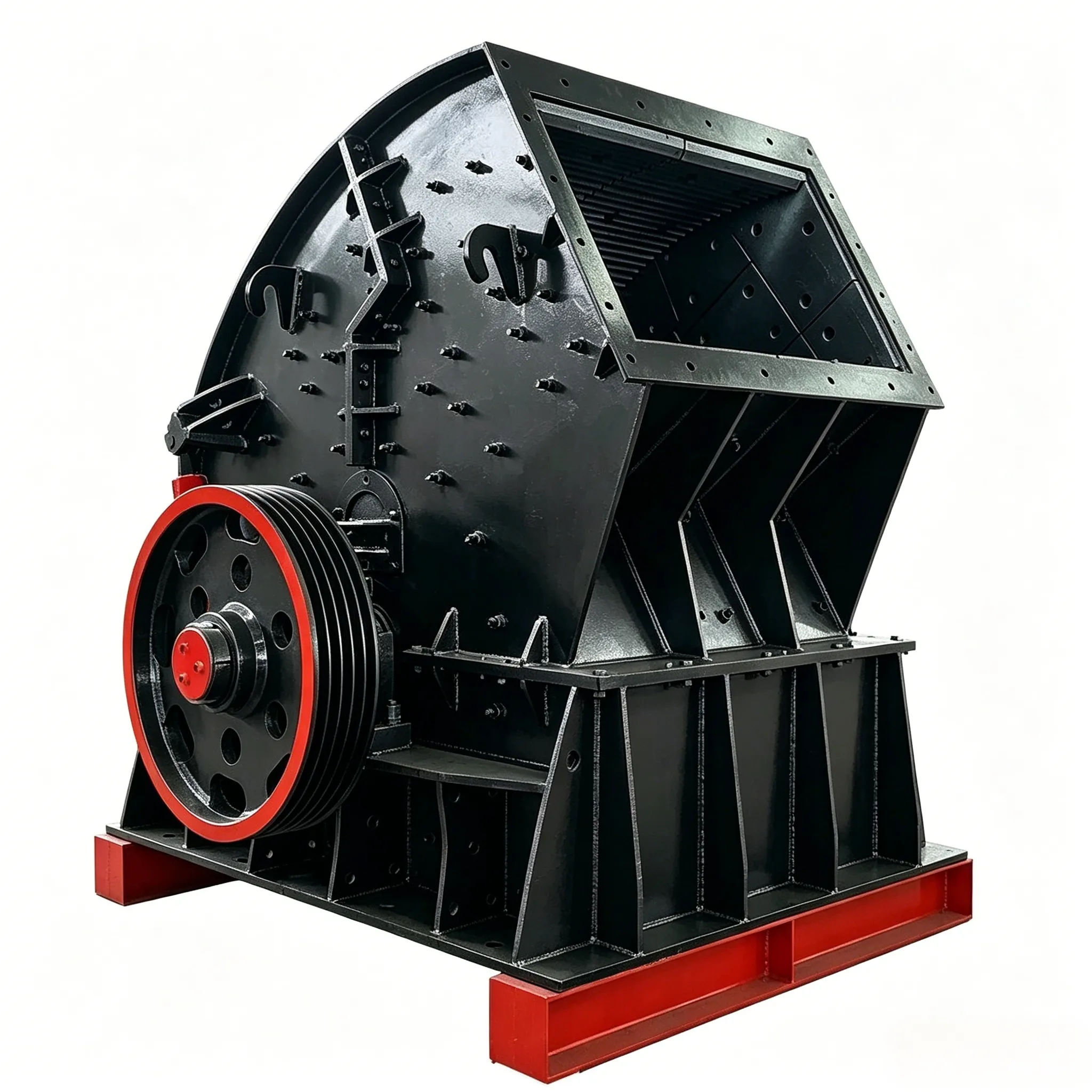
ハンマークラッシャー
ハンマークラッシャーの種類 1924年の登場以来、ハンマークラッシャーは…


The liners of a ボールミル are subjected to multifaceted actions from grinding balls and materials, including impact, chiselling (gouging), extrusion, and micro-cutting. The wear characteristics manifest as surface pits, cracks, and ploughing grooves (furrows). The degree of wear is related to material properties, particle size, particle sharpness (angularity), grindability, as well as the mill diameter and the specific location of the liner.
Taking a φ2.2m × 6.5m cement mill as an example, according to SEM (scanning electron microscope) observations, the liners in the first compartment show numerous ploughing grooves and spalling pits. This is because the average ball diameter in the first compartment is φ60–70 mm, with the largest balls reaching φ90–100 mm; the average feed particle size is 25 mm, with a maximum of up to 40 mm, and the particles have sharp edges and corners. In the second compartment, the ball diameter is φ30–50 mm, or steel cylpebs below φ35mm × 30mm. After being crushed in the first compartment and passing through the intermediate diaphragm into the second compartment, the material particle size has been reduced to about 5 mm, and the sharpness/angularity of the edges has been greatly reduced. Therefore, the liners in the second compartment are mainly subject to micro-cutting, extrusion and compaction, and scouring (erosion) wear.
The feed-end head liner is much more severely worn than the discharge-end grate plate because it is subjected to lateral impact and sliding cutting from larger grinding media and coarser, sharper-edged material. The intermediate diaphragm is subjected to both lateral impact from balls in the first and second compartments and micro-cutting from material scouring as it passes through the grate slots, so its wear is also relatively severe. If the diaphragm is required to have both impact wear resistance and high yield strength, hardness, bending resistance, and material scouring resistance, while maintaining consistent grate slot widths to meet process requirements, materials with good toughness and high hardness should be selected.
Even on the same mill liner, different areas experience different degrees of wear. For example, the end sections and middle sections of the liner suffer severe impact from material and balls—especially the material‑facing side—while the area near the tail of the shell experiences relatively lighter wear. For shell liners, whether stepped, ribbed, or lifting bar types, the ball‑facing material side always suffers more severe cutting and impact. Therefore, in the liner production process, consideration should be given to the wear resistance against impact and abrasion at different areas, or improvements should be made through structural design—for example, adding reinforcing ribs on the material‑facing side of the mill head end liner, making the first‑compartment liners in a double‑stepped configuration, or increasing the thickness of wear‑prone areas on the intermediate diaphragm.
 English English
 Spanish
 Russian
 Arabic
 Swahili
 French
 Turkish
 Portuguese
 Korean
 Japanese
 German
 Italian