二酸化チタン加工におけるレイモンドミルと垂直ローラーミルの選定分析

Raymond Mill and Vertical Roller Mill in Titanium Dioxide

二酸化チタン加工におけるレイモンドミルと垂直ローラーミルの選定分析

I. Equipment Overview

レイモンドミル (suspension roller mill) and 縦型ローラーミル (VRM) are two commonly used grinding equipment in titanium dioxide processing. They differ significantly in structural principles, performance characteristics, and application scenarios.

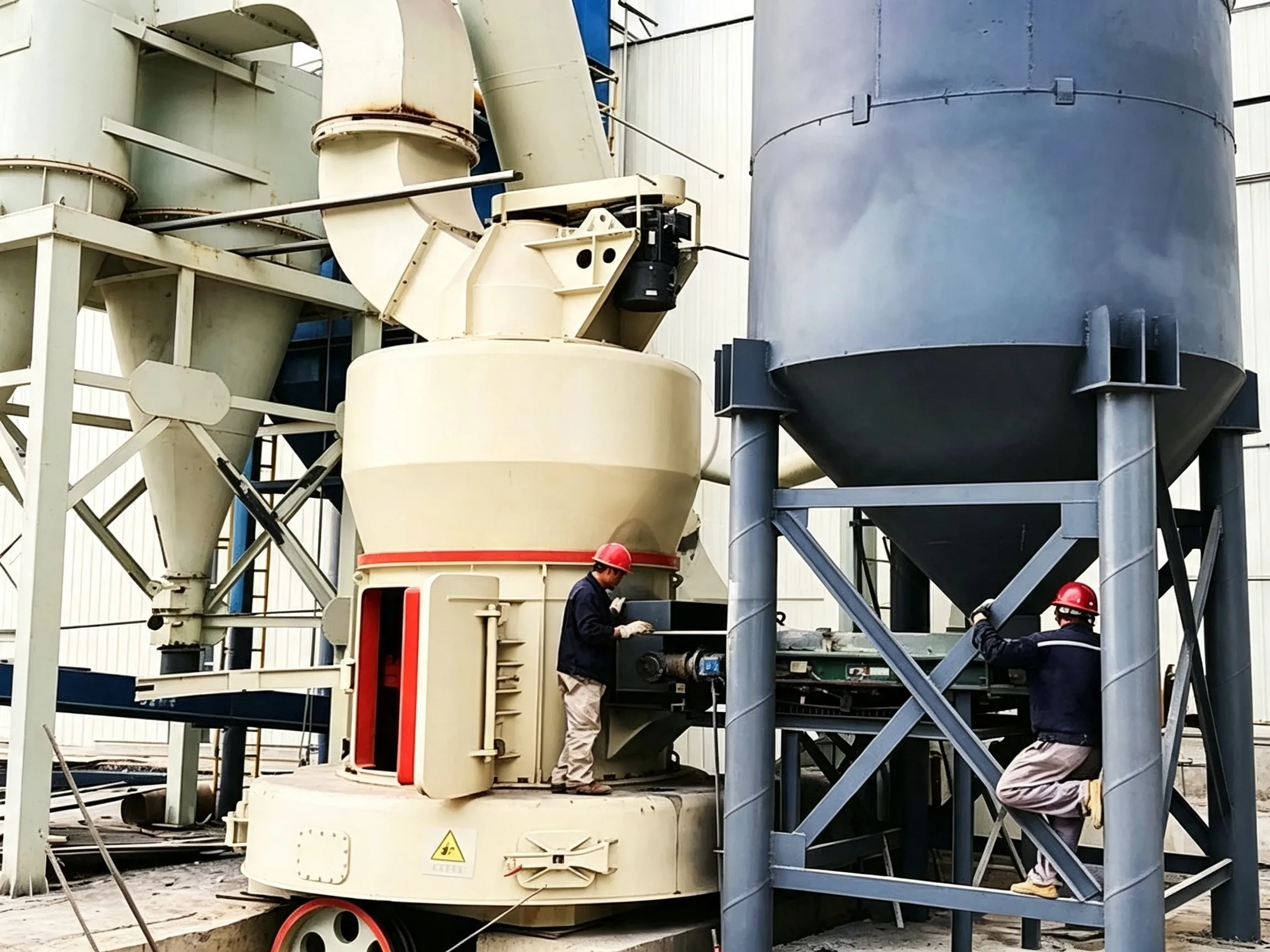
その レイモンドミル relies on the rolling and pressing action between grinding rollers and the grinding ring to crush materials. Under centrifugal force, material is fed into the grinding zone by a shovel blade, where it undergoes repeated milling before being carried by airflow to a classifier for particle size control. This system has a compact structure and is suitable for continuous production in the medium fineness range.

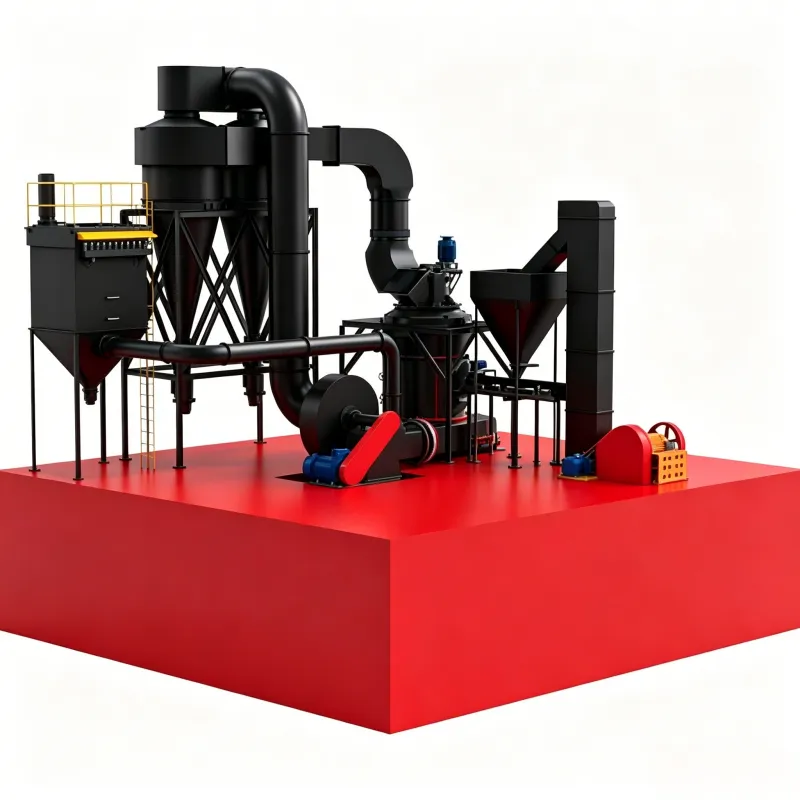
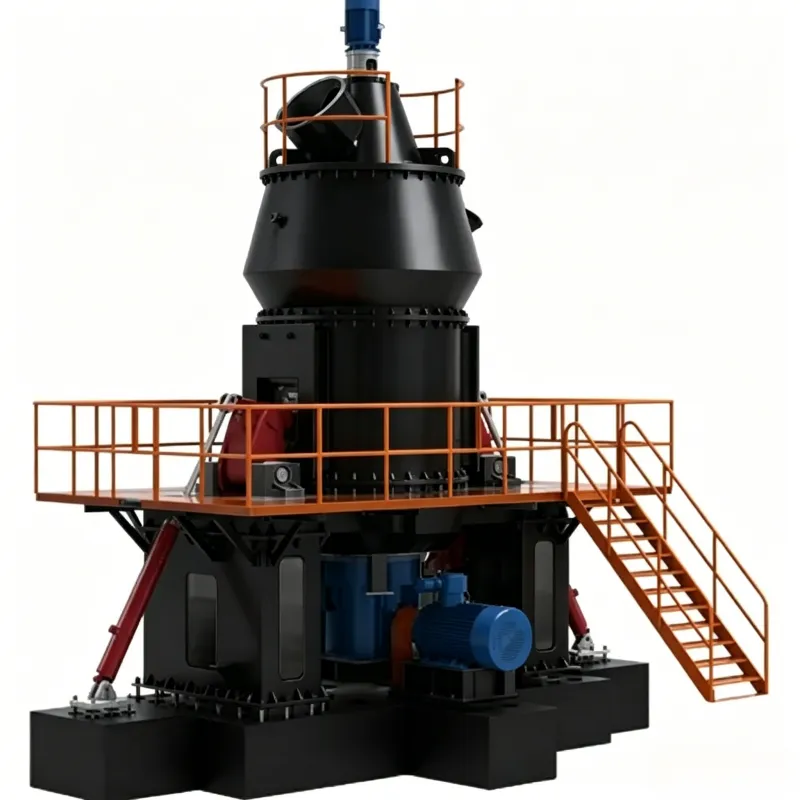
その 縦型ローラーミル operates on the principle of bed‐of‐material grinding. Material enters the grinding table and moves outward under centrifugal force, where it is subjected to high‐pressure compaction and shearing by the rollers for crushing and grinding. It also integrates drying and air‐classifying functions, offering a higher level of system integration.


II. Core Comparative Analysis

1. Processing Capacity

パラメータレイモンド・ミル縦型ローラーミル
Single‐unit throughputTens of tons per hourUp to several hundred tons per hour
Suitable scaleMedium‐sized plants or cost‐sensitive operationsLarge‐scale titanium dioxide production lines

Conventional domestic Raymond mills process TiO₂ at about 0.8–1.5 t/h, while imported models can reach 3 t/h. Optimised new‐generation Raymond mills can increase capacity to 2–8 t/h.

2. Product Fineness

The performance of titanium dioxide powder is closely related to particle size and size distribution:

  • レイモンドミル: Equipped with an internal classifier, it allows adjustment within the range of 80–400 mesh. The product has a uniform particle size and a relatively narrow distribution, meeting the requirements of most applications.
  • 縦型ローラーミル: Uses a dynamic rotor classification system for high‐precision separation, achieving high fines extraction efficiency. It is particularly suitable for premium products requiring ultrafine powder (e.g., d90 < 10 μm). The VRM can readily produce ultrafine powders with a D50 around 0.3 μm.

3. Energy Consumption and Operating Costs

  • レイモンドミル: Has lower single‐unit power consumption, a simple structure, and is easy to maintain. However, traditional Raymond mills have relatively high specific energy consumption; optimised designs can reduce energy consumption per ton by more than 50%.
  • 縦型ローラーミル: Although its single‐unit power draw is higher, because it integrates crushing, grinding, drying, and conveying, the overall system energy consumption can be lower than a Raymond‐based system comprising multiple separate machines, especially when processing feed materials with higher moisture content. VRM energy consumption can be reduced by over 30% compared with conventional equipment.

4. Maintenance and Investment

  • レイモンドミル: Simple structure, convenient maintenance, lower initial investment, but wear parts may need more frequent replacement.
  • 縦型ローラーミル: More complex construction, higher capital cost, and higher maintenance costs, but offers higher automation and long‐term operational stability.

5. Environmental Performance

  • 縦型ローラーミル: Operates under negative pressure with good sealing, minimising dust leakage. This favours cleaner production and compliance with environmental regulations.
  • レイモンドミル: Sealing is relatively weaker, requiring additional attention to dust control.

6. Material Suitability

  • レイモンドミル: Suitable for materials with low Mohs hardness and moderate moisture (typically ≤ 6%).
  • 縦型ローラーミル: Can handle feed moisture up to about 15% and is suitable for harder materials as well.

III. Selection Recommendations

The choice between a Raymond mill and a vertical roller mill for titanium dioxide processing should be based on the following principles:

Prefer the vertical roller mill when:

  • Large production capacity and high automation are required.
  • There is a stable demand for ultrafine powder (e.g., d90 < 10 μm).
  • Feed material has high moisture content and integrated drying is beneficial.
  • Environmental standards are strict and clean production is emphasised.
  • Long‐term return on investment is the priority, and a higher initial expenditure is acceptable.

Prefer the Raymond mill when:

  • Production scale is moderate, with emphasis on cost‐effectiveness and operational reliability.
  • The required product fineness falls within the conventional range (80–400 mesh).
  • Initial capital investment is a major constraint.
  • Maintenance resources are limited, and a simpler, easier‐to‐maintain machine is preferred.

Ultimately, the final decision should consider feedstock characteristics, product positioning, energy availability, and long‐term development plans through a systematic techno‐economic evaluation.
こちらの商品もおすすめです

SAM 機械式破砕機

SAM 機械式破砕機

SAM 機械式破砕機 SAM 機械式破砕機は、日本とドイツの技術を融合させ、…
Copyright © 2026 Oreprocessings. All Rights Reserved.