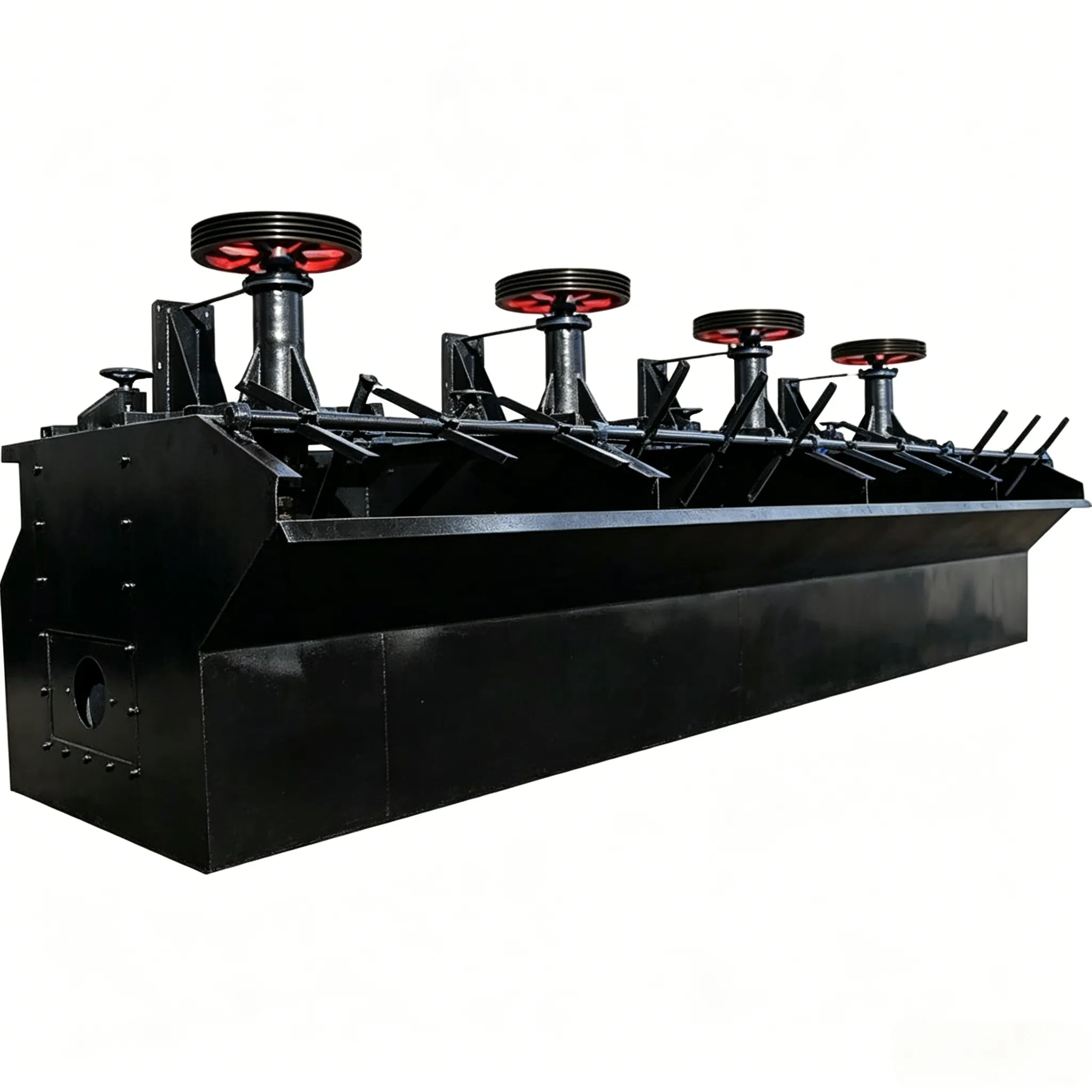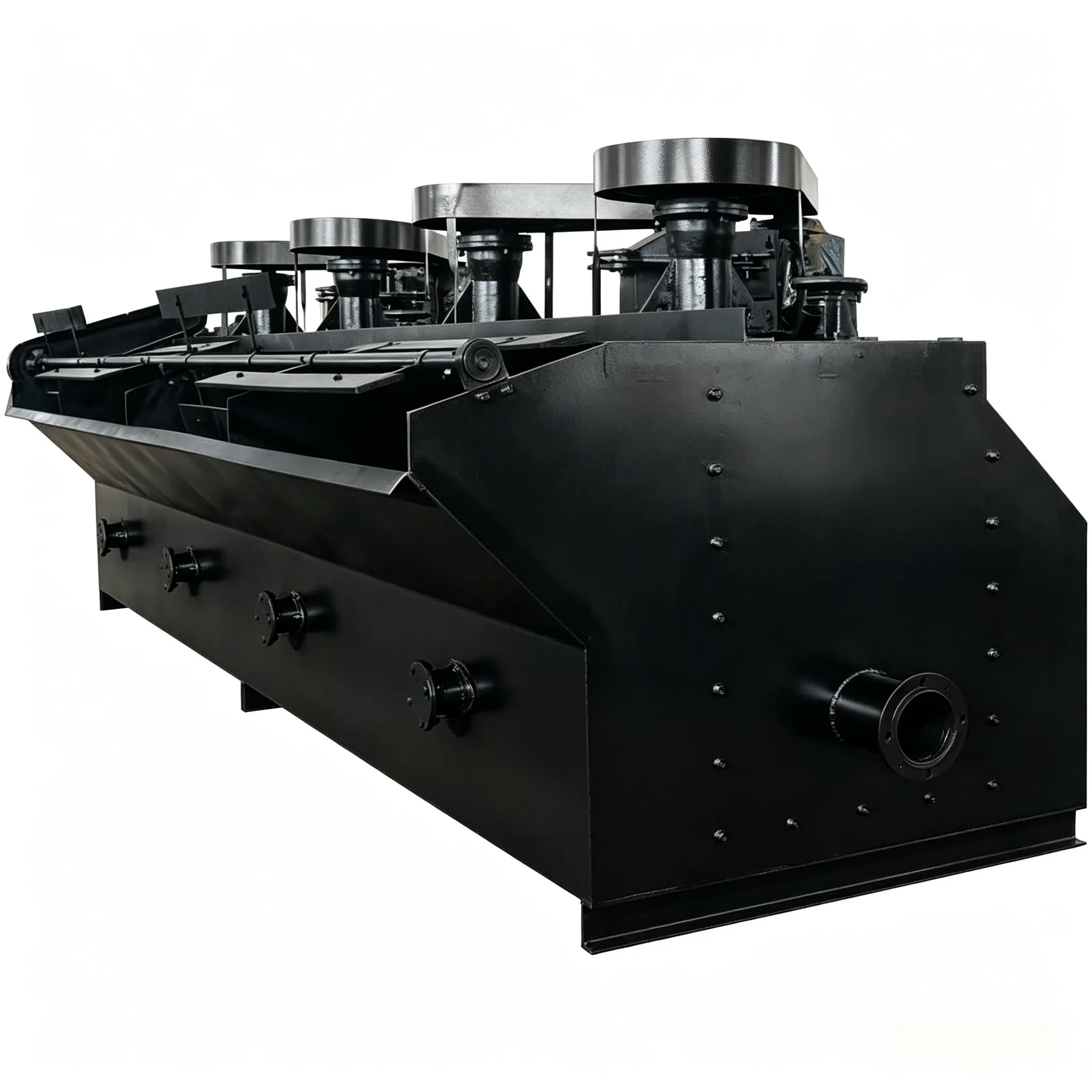
SF浮選機
SF、BF浮選機、およびSF+JJF複合ユニット まず、…

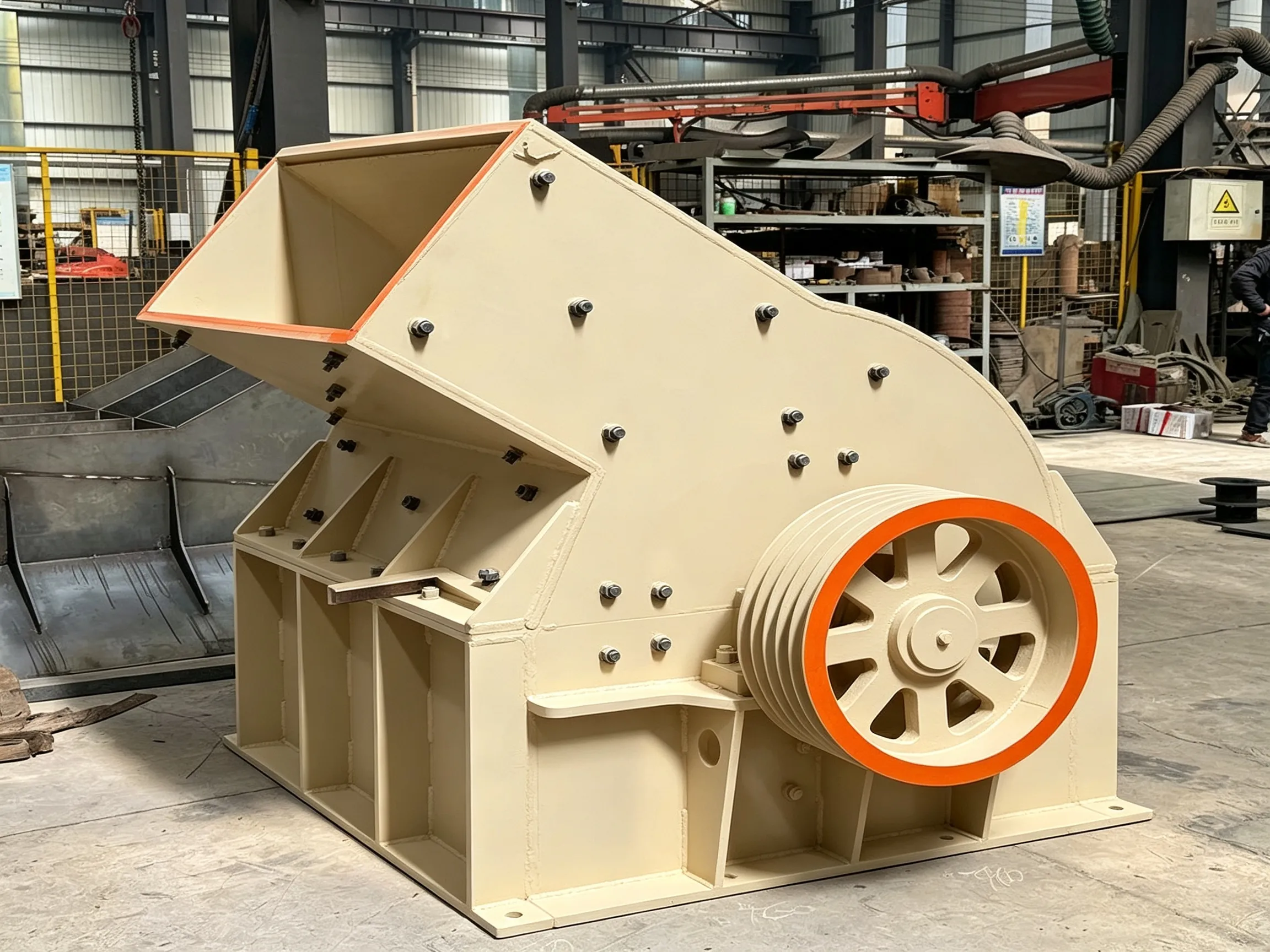
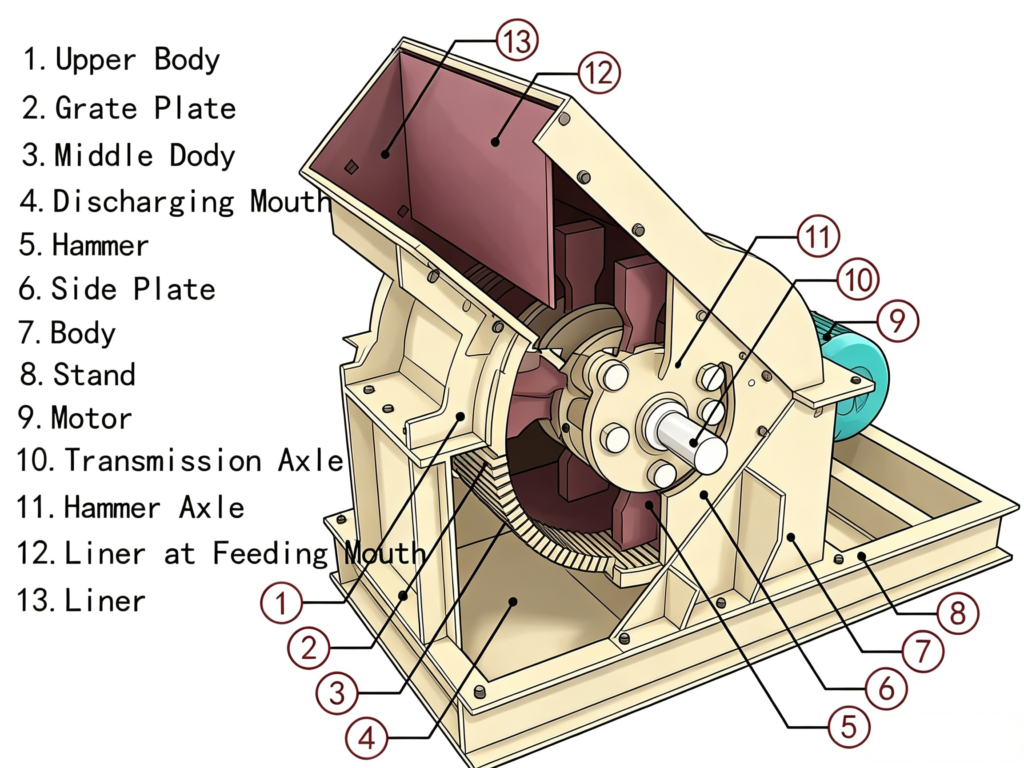
A ハンマークラッシャー (also called a hammer mill crusher) is a type of impact crusher that uses high-speed rotating hammers to crush materials into smaller sizes. It is widely used in mining, metallurgy, cement, chemical, power plants, and construction industries for crushing medium-hard and brittle materials.
Typical materials processed by hammer crushers include:
A hammer crusher is especially popular for primary and secondary crushing because it can produce relatively fine output in a single stage.
A hammer crusher mainly consists of the following components:

その rotor is the rotating core part of the machine.
The rotor provides the impact energy needed to break the material.
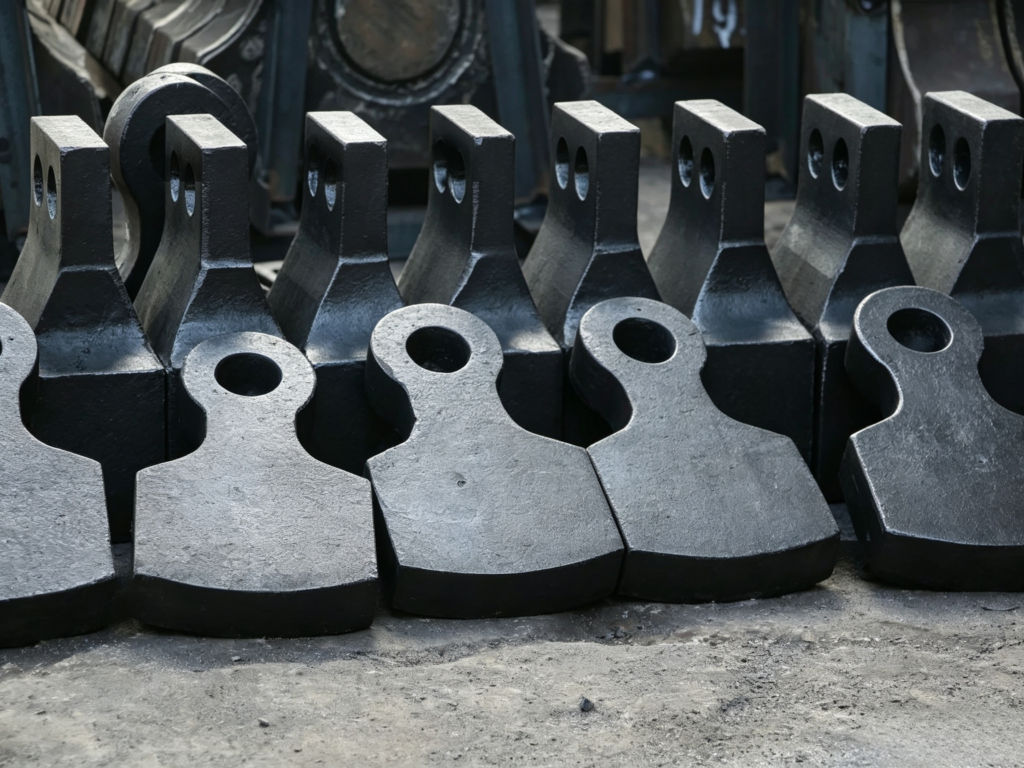
その hammer heads are the crushing tools attached to the rotor.
They are usually made from:
The hammer heads strike the incoming material with high velocity and gradually wear during operation.

The crushing chamber is the working area where material is broken.
It includes:
Material enters the chamber and is repeatedly impacted until it reaches the required size.
The impact plate receives secondary impacts from the material.
Its functions:
The grate controls the final product size.
Feed opening:
Discharge opening:
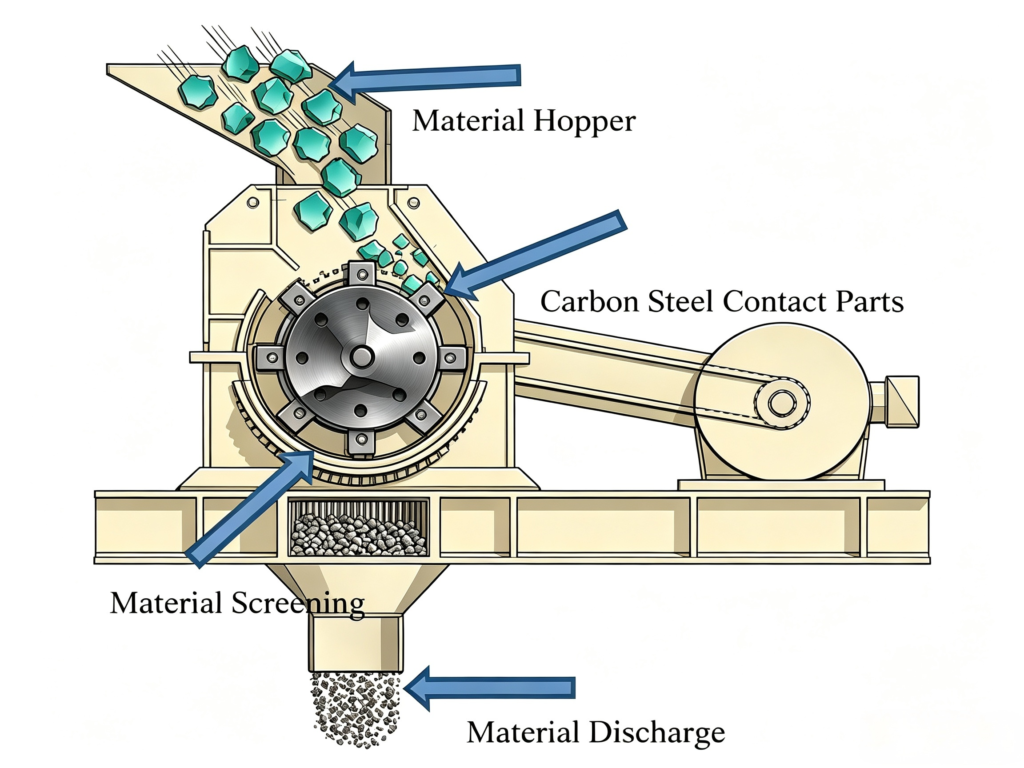
The working principle is based on high-speed impact crushing.
The crushing process happens in several steps:
Large rocks or raw materials enter the crusher through the feed hopper.
例:
A limestone block of 300 mm size enters the machine.
↓
The electric motor drives the rotor to rotate rapidly.
When the rotor spins:
The main crushing forces are:
↓
After the first impact:
This repeated collision creates finer particles.
↓
When particles become small enough:
Oversized particles stay inside and continue being crushed.
        Feed Material
             ↓
       ┌───────────┐
       │           │
       │   Rotor   │
       │  ↻ ↻ ↻    │
       │  Hammer   │
       │  ↓ ↓ ↓    │
       │   ★★★     │ ← Impact Crushing
       │           │
       │  Grate    │
       └────┬──────┘
            ↓
     Finished Product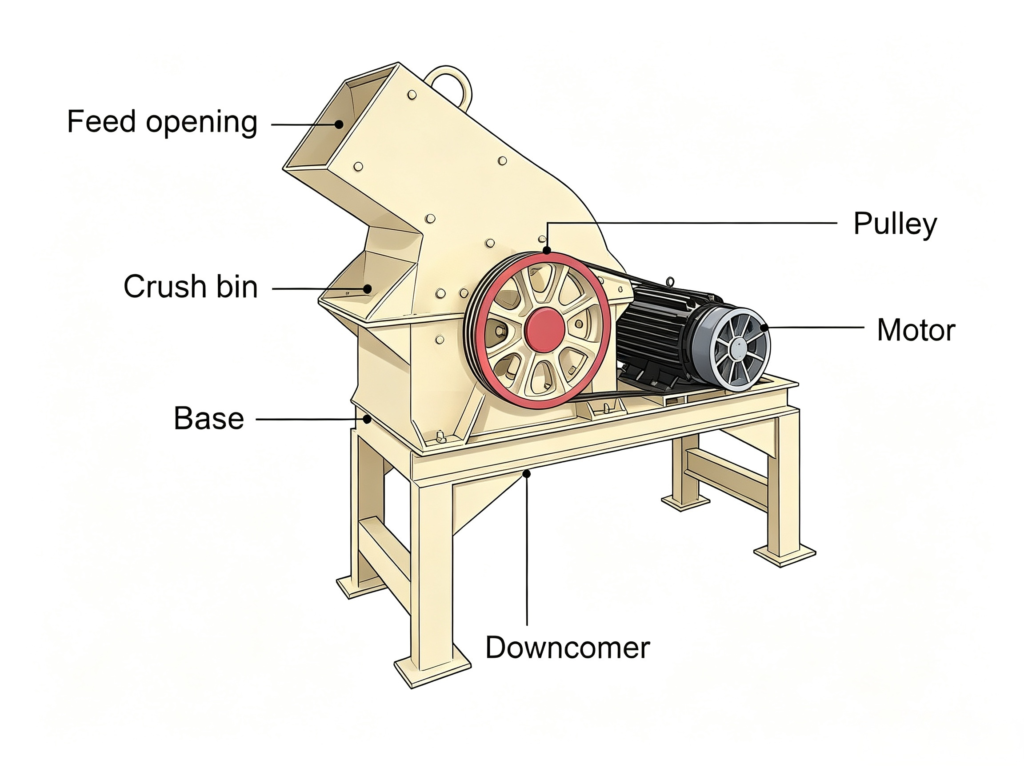
Features:
Applications:
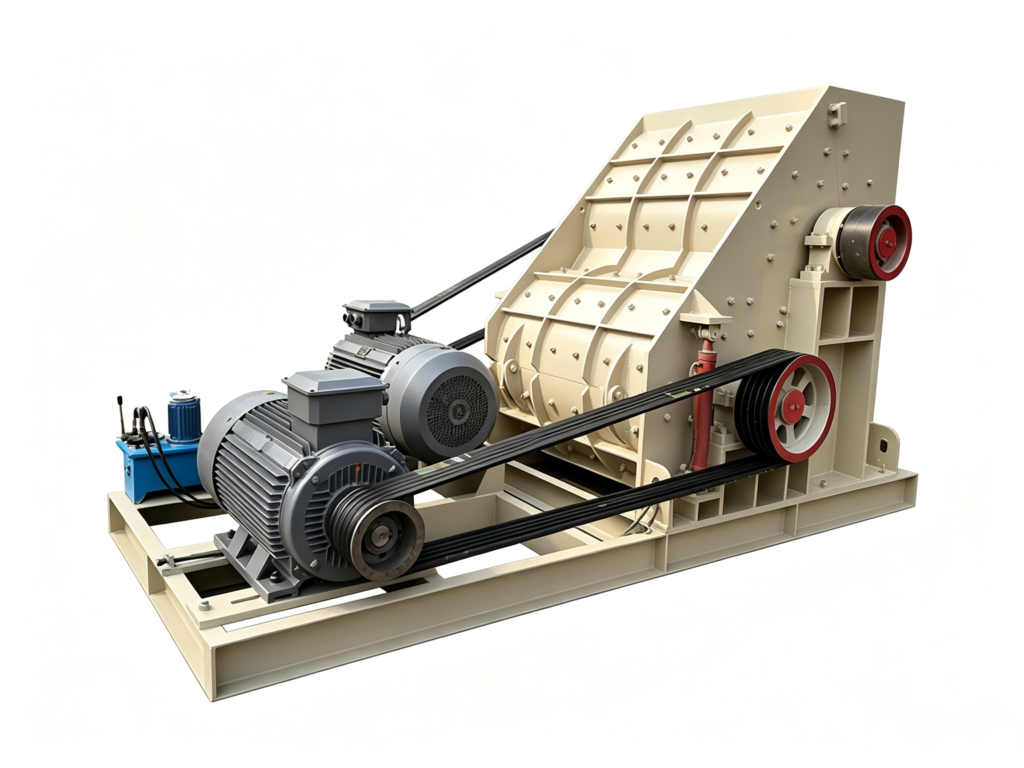
Features:
Applications:
The rotor can rotate in both directions.
メリット:
A hammer crusher can achieve a crushing ratio of approximately:
10:1 to 25:1
This means it can reduce large feed materials into much smaller products in one stage.
Compared with jaw crushers, hammer crushers usually produce:
メリット:
Because crushing happens through direct impact:
Hammer heads directly contact hard materials, so they wear quickly.
Wear parts include:
Hammer crushers work best with materials below approximately:
They are not ideal for:
For harder materials, jaw crushers, cone crushers, or impact crushers are usually preferred.
Wet and sticky materials may:
| 特集 | Hammer Crusher | Jaw Crusher |
|---|---|---|
| Crushing method | 影響 | Compression |
| Main part | Hammer head | Jaw plate |
| Product size | Finer | Coarser |
| Crushing ratio | Higher | Lower |
| Wear cost | Higher | Lower |
| Hard rock ability | Limited | Excellent |
| Typical use | Limestone, coal, gypsum | Granite, ore, construction rock |
In a mining plant, a hammer crusher is often used after primary crushing:
例:
Gold Ore Processing Plant
Raw Gold Ore
      ↓
Jaw Crusher
      ↓
Hammer Crusher
      ↓
Ball Mill
      ↓
Gravity Separation / Flotation
      ↓
Gold Concentrate
Hammer crushers are commonly used when the ore is relatively soft and a fine feed size is required before grinding.
 English English
 Spanish
 Russian
 Arabic
 Swahili
 French
 Turkish
 Portuguese
 Korean
 Japanese
 German
 Italian