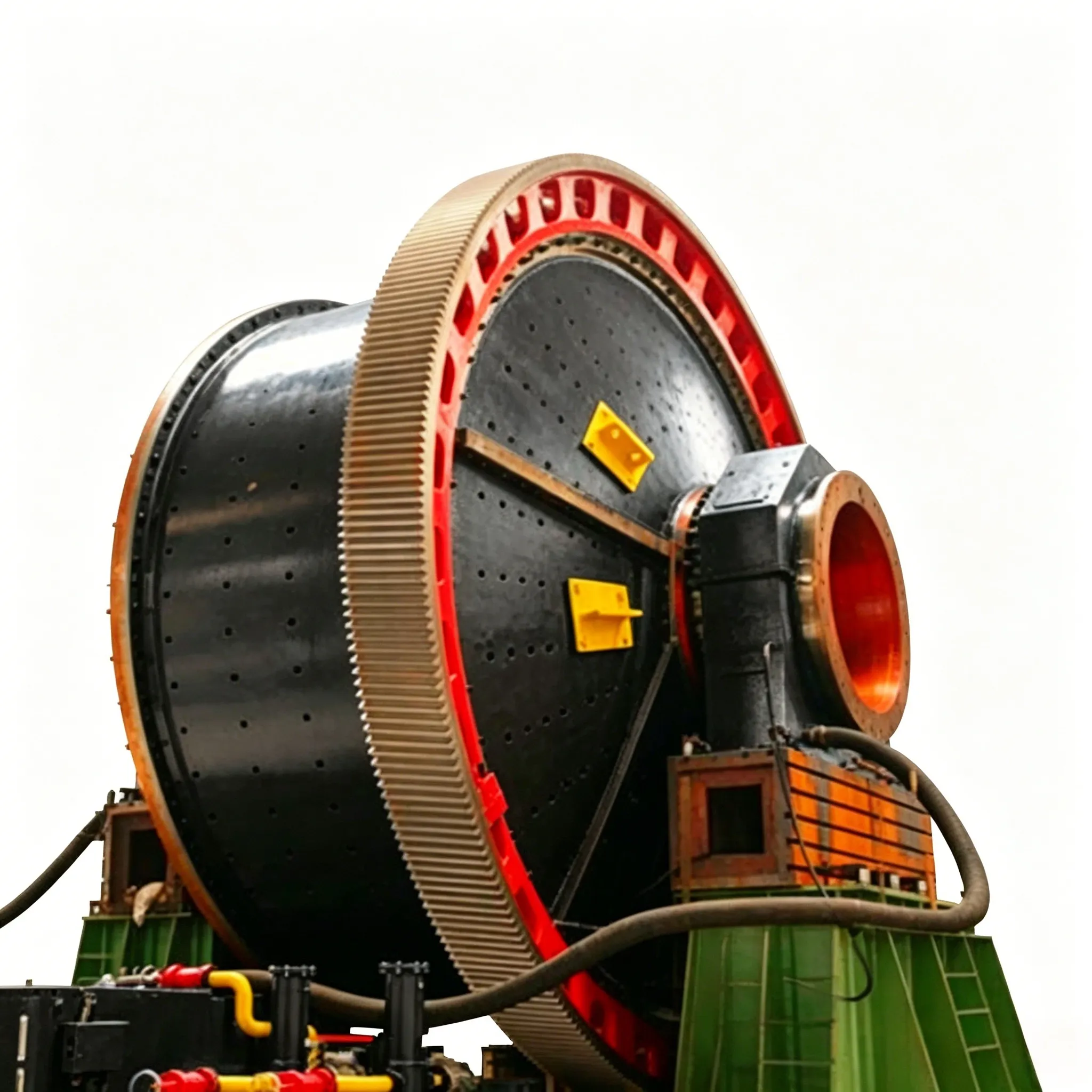
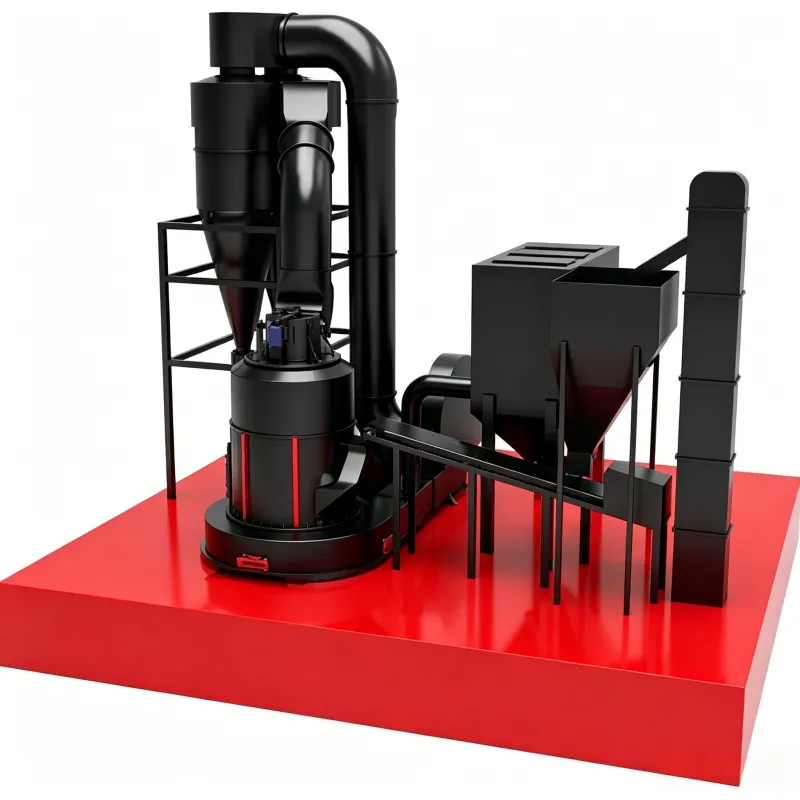
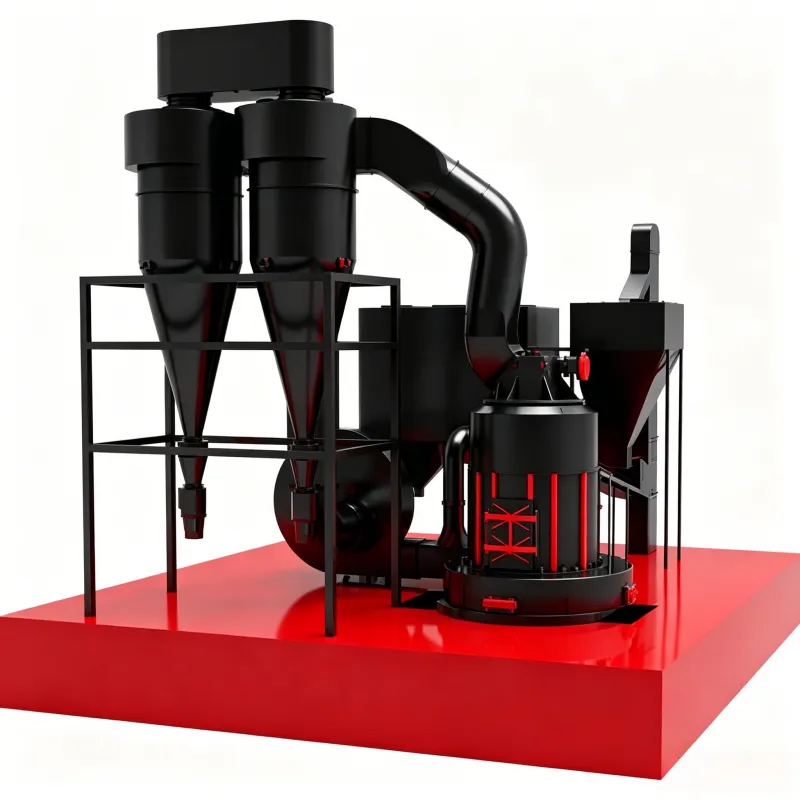
Moinho Autógeno
Princípio de funcionamento de um moinho autógeno O processo de moagem de um moinho autógeno…

The present invention is a flotation separation method for zircon and titanium-bearing minerals, specifically designed for the preferential flotation of zircon from titanium-bearing zircon beach placer ores.
Beach placer ores are the most important raw material source for extracting titanium and zirconium minerals. They contain a wide variety of mineral species, commonly including titanium-bearing minerals such as ilmenite, rutile, leucoxene and anatase, as well as zircon, while the gangue minerals are predominantly quartz, with coarse and uniform particle sizes. At present, the treatment of such ores generally employs gravity concentration to first discard the majority of light minerals such as quartz. The resulting heavy fraction (Ti‑Zr rough concentrate) is dried and then subjected to magnetic separation to obtain an ilmenite concentrate. The magnetic tailings (non‑magnetic product) serve as the feed for zircon recovery. These magnetic tailings are then subjected to multiple cleaning stages on shaking tables to remove quartz; after drying the concentrate, a complex electrostatic separation process with multiple recleaning stages is employed to separate titanium-bearing minerals such as rutile, and the non‑conductive product is obtained as a zircon concentrate. However, because shaking table separation cannot completely remove quartz, it becomes mixed into the zircon concentrate during electrostatic separation, resulting in inferior concentrate quality. In addition, due to the complex combined flowsheet of gravity and electrostatic separation, the numerous separation stages, and the significant process losses, the zircon recovery is very low, generally only around 60%. Numerous existing processes for recovering zircon exist, mostly based on combined gravity, magnetic, flotation and electrostatic separation flowsheets, though some methods employ flotation alone for zircon recovery. For example, according to published information, an Australian company treated magnetic tailings by agitating with a 0.5% soap solution containing 0.025% caustic soda at 95°C for about 20 minutes, followed by four washes with 0.2% sulphuric acid, and then flotation at pH 1.9. Using this method, a concentrate with 98% zircon and a recovery of 90% could be obtained. Although this method achieves good indices, its high energy consumption, high cost, and extremely complex flowsheet have limited its widespread application. To date, the collectors used for flotation of zircon from beach placer ores include oleic acid, sodium oleate, soap, naphthenic acid soaps, oxidized paraffin soaps, tall oil, kerosene and hydroxamic acids. Most of these collectors are fatty acids and their soaps, which collect both zircon and titanium minerals with very poor selectivity. The depressants used include sodium silicate, aluminium sulphate and starch, etc., which, in addition to depressing titanium-bearing minerals, also depress the flotation of zircon. When the above collectors and depressants are used for flotation separation of titanium and zirconium minerals, the concentrate quality is poor, recovery is low, and separation efficiency is unsatisfactory. Strict process conditions such as pulp heating and prolonged conditioning are required, making the flowsheet complex and operation and control very inconvenient.
The present invention is directed to solving the flotation separation of zircon from titanium-bearing minerals and simplifying the existing complex separation processes, and proposes a simple and effective flotation separation method for preferentially floating zircon from beach placer ores at ambient temperature.
The method of the present invention is realised as follows: The magnetic tailings containing minerals such as zircon, rutile, ilmenite, leucoxene, anatase and quartz are adjusted to a solids concentration of 30%. A specified amount of sulphuric acid is added and conditioned for 3 minutes, then alkylhydroxy diphosphonic acid is added at 600 g/t to control the pulp pH below 4.2, conditioned for 3 minutes, and floated for 3 minutes to obtain a rougher concentrate. Then, a further addition of alkylhydroxy diphosphonic acid at 200 g/t is made in the flotation cell, maintaining the pulp pH the same as in the rougher stage, conditioned for 2 minutes, and floated for 3 minutes to obtain a scavenger concentrate. The rougher and scavenger concentrates are combined as the final concentrate. In order to improve the quality of the zircon concentrate and reduce its titanium dioxide content, prior to the addition of alkylhydroxy diphosphonic acid in the rougher stage, 300–800 g/t of humic acid or its salts may be added and conditioned for 3 minutes.
The characteristic feature of the present invention lies in the addition of 1‑hydroxy‑alkyl‑1,1‑diphosphonic acid as a highly selective collector for zircon during the flotation of zircon from magnetic tailings of beach placer ores. The alkylhydroxy diphosphonic acid contains two phosphonic acid groups (‑PO(OH)₂) as anchoring functional groups. Its unique spatial geometry results in a high selective complexation with Zr ions on the surface of zircon (ZrSiO₄), while the complexation with Ti or Fe ions in titanium‑bearing minerals is extremely weak, thereby producing selective adsorption on the zircon surface.
Another characteristic feature of the present invention is the addition of humic acid or its salts (sodium salt, ammonium salt, etc.) as a depressant for titanium‑bearing minerals during the preferential flotation of zircon using alkylhydroxy diphosphonic acid. Humic acid or its salts have a strong chelating ability with Ti, Fe and other ions, and can eliminate the interfering effects of metal ions such as Mg and Ca in the pulp, thereby enhancing the depression of titanium‑bearing minerals and quartz, regulating froth conditions, reducing mechanical entrainment in the froth, and perfecting the preferential flotation performance of alkylhydroxy diphosphonic acid for zircon.
The dosage of alkylhydroxy diphosphonic acid is generally 400–800 g/t, preferably 300–600 g/t for the rougher stage and 100–200 g/t for the scavenger stage. The dosage of humic acid or its salts is preferably 300–800 g/t, and it can be added at the rougher, scavenger or cleaner stages. The preferential flotation of zircon with alkylhydroxy diphosphonic acid is highly dependent on the pulp pH, which is generally adjusted with sulphuric acid to a pH value below 4.2.
Bench‑scale tests were conducted using the method of the present invention on magnetic tailings from a beach placer ore containing 26.5% ZrO₂ and 11.5% TiO₂ for zircon flotation, and favourable separation results were obtained. When using alkylhydroxy diphosphonic acid alone as the collector in a broad acidic medium at pH below 4.2, after only one roughing and one scavenging stage, a zircon concentrate was obtained containing over 61.5% ZrO₂ (pure zircon in the feed contains 68.5% ZrO₂), with a zircon recovery exceeding 99% and a titanium dioxide recovery of less than 10%. If one additional cleaning stage is applied, a zircon concentrate containing over 65% ZrO₂ can be readily obtained. When humic acid or its salts were added at 300–800 g/t during the rougher stage, the TiO₂ content in the resulting zircon concentrate was reduced from 4.4% (when using alkylhydroxy diphosphonic acid alone) to below 0.8%, while the zircon recovery remained unchanged.
 English English
 Spanish
 Russian
 Arabic
 Swahili
 French
 Turkish
 Portuguese
 Korean
 Japanese
 German
 Italian