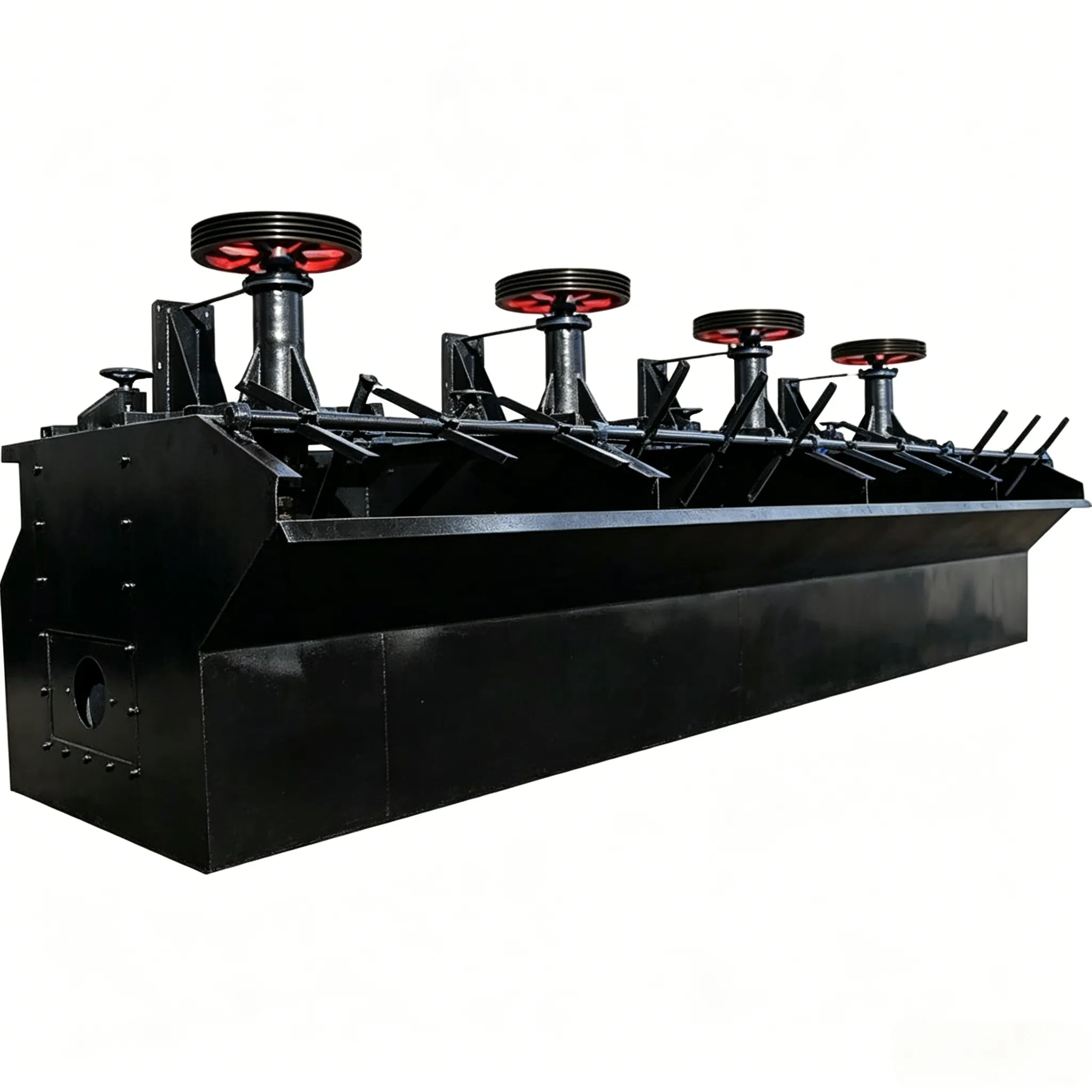
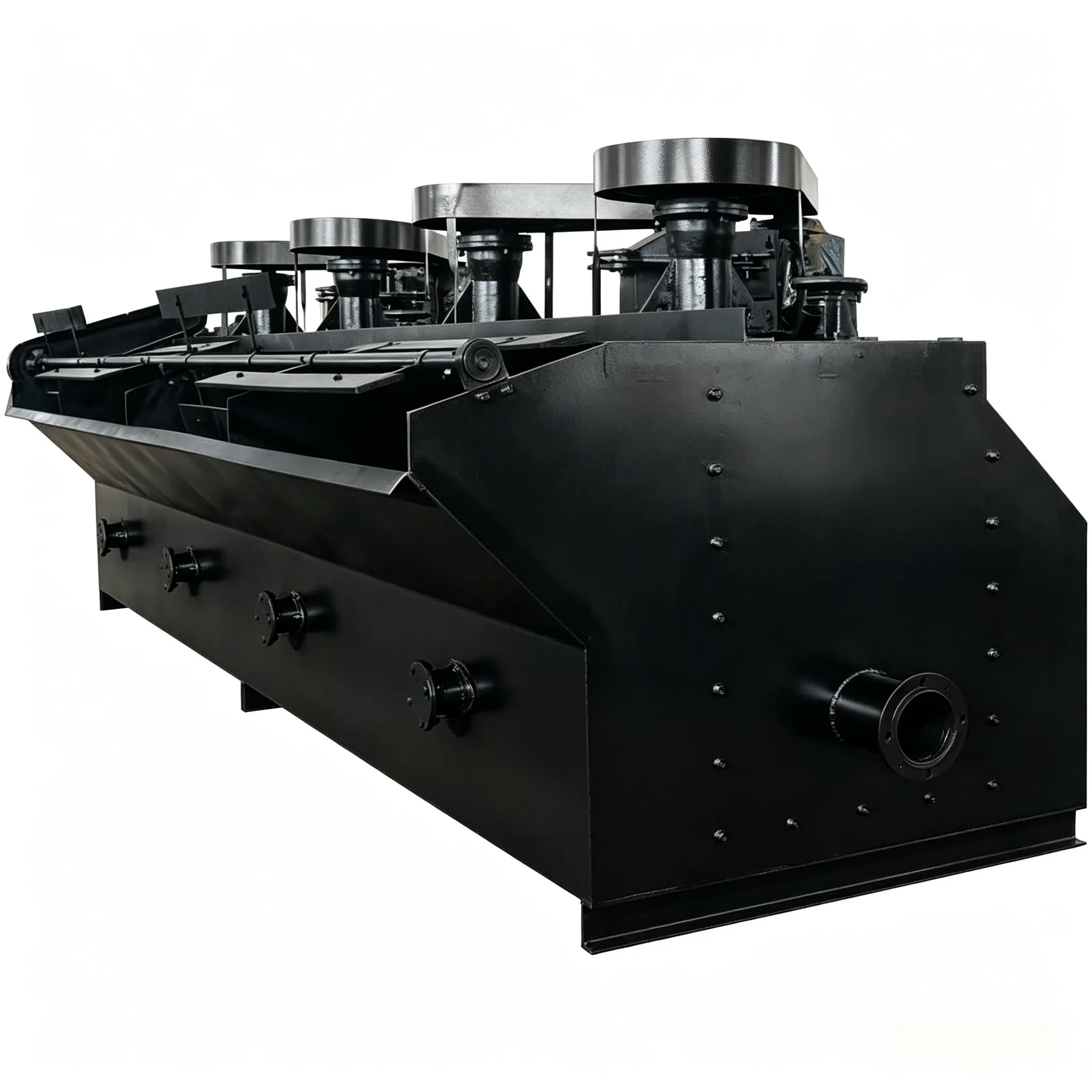
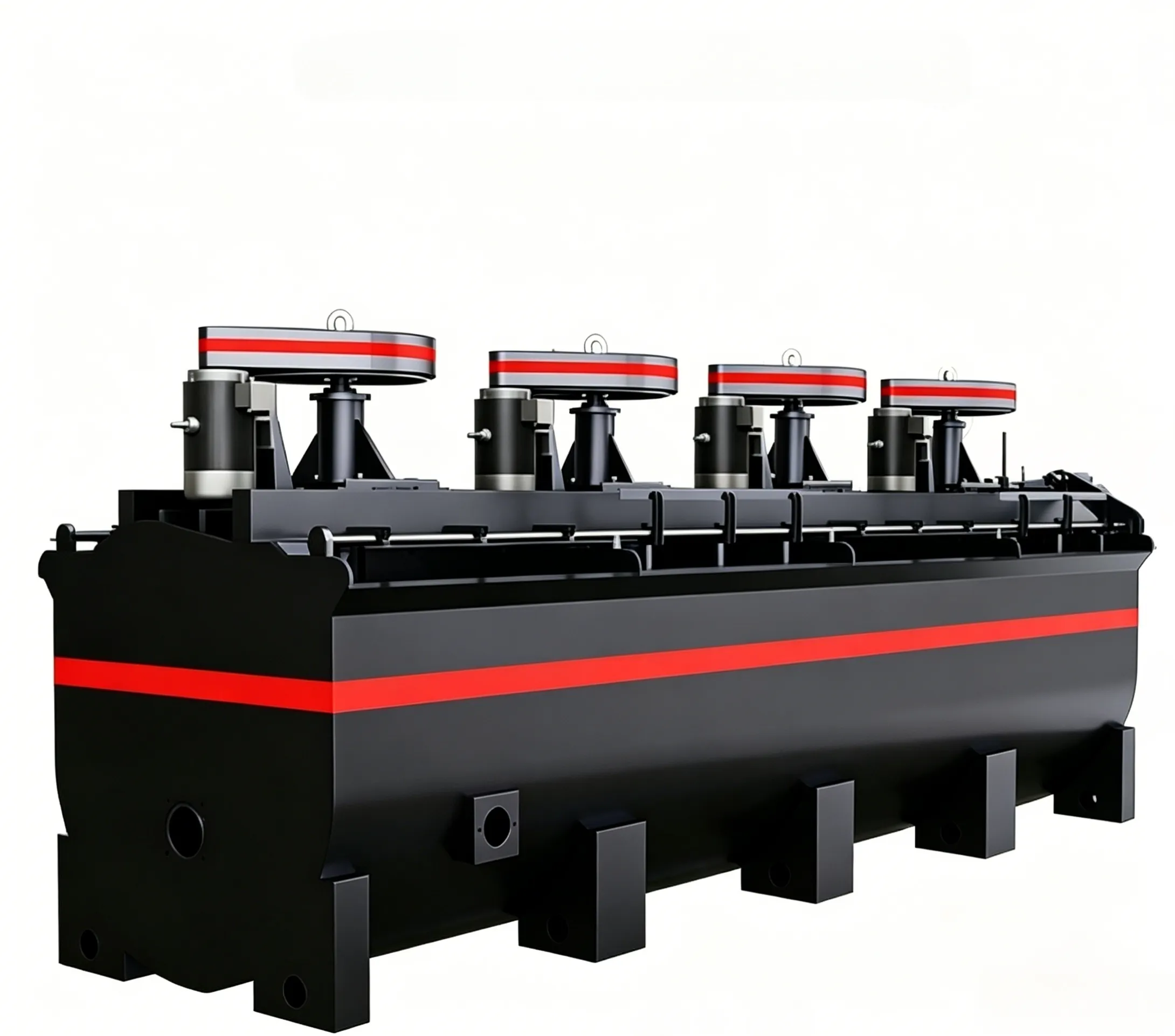
Флотационная машина XJQ
Флотационные машины XJQ, JJF и BS-M Эти три типа флотационных машин…

I. Техническая область
The present invention relates to a gold ore beneficiation process, in particular to a beneficiation process for low‑grade oxidized gold ore containing gold.
II. Искусство в контексте
In current gold production, the treatment of low‑grade oxidized gold ore mainly adopts heap leaching processes and agglomeration‑heap leaching processes. The former is suitable for ores with low slime content and good permeability, while the latter is suitable for ores with high slime content, in which a certain proportion of cement is added as a binder during agglomeration, and heap leaching is carried out after agglomeration and curing. Both belong to single heap leaching processes.
The above two processes have the advantage of low beneficiation costs, but for low‑grade oxidized ores containing coarse gold, neither of the two processes can achieve an ideal recovery rate, generally only reaching 60‑70%, resulting in a waste of valuable resources.
III. Краткое описание изобретения
The object of the present invention is to provide an ideal beneficiation process for low‑grade oxidized ores with a grade of 0.8‑1 g/t, high slime content, and containing a certain amount of coarse visible gold, so as to increase the recovery rate from 60‑70% to above 80%, and solve the problem of low recovery for this type of ore.
To achieve the above object, the technical solution adopted by the present invention is:
In view of the characteristics of low‑grade oxidized ores with high slime content and containing coarse visible gold, the present invention adopts a combined beneficiation process of pre‑screening, crushing, washing and screening, gravity concentration, carbon‑in‑leach (CIL), and heap leaching. That is, after pre‑screening, the coarse ore is crushed and then fed together with the undersize material to a double‑deck heavy vibrating screen, with water sprayed on the screen so that screening and ore washing are carried out simultaneously. The oversize from the upper deck is subjected to secondary crushing, and the undersize slurry from the lower deck is first subjected to gravity concentration to recover coarse gold in advance. The slurry after gravity concentration is then subjected to two stages of classification successively. After separation of the coarse sand, it undergoes debris removal and thickening. The thickened underflow enters the CIL system, and the overflow water is returned to the double‑deck vibrating screen for ore washing. The coarse sand from the classifier, the secondary crushed ore, and the oversize from the lower deck of the double‑deck screen are combined and, without grinding, directly enter the heap leaching system for heap leaching.
The above gravity concentration is carried out by installing a vibrating sluice in front of the classifier, so that the coarse gold in the slurry is recovered in advance through the vibrating sluice.
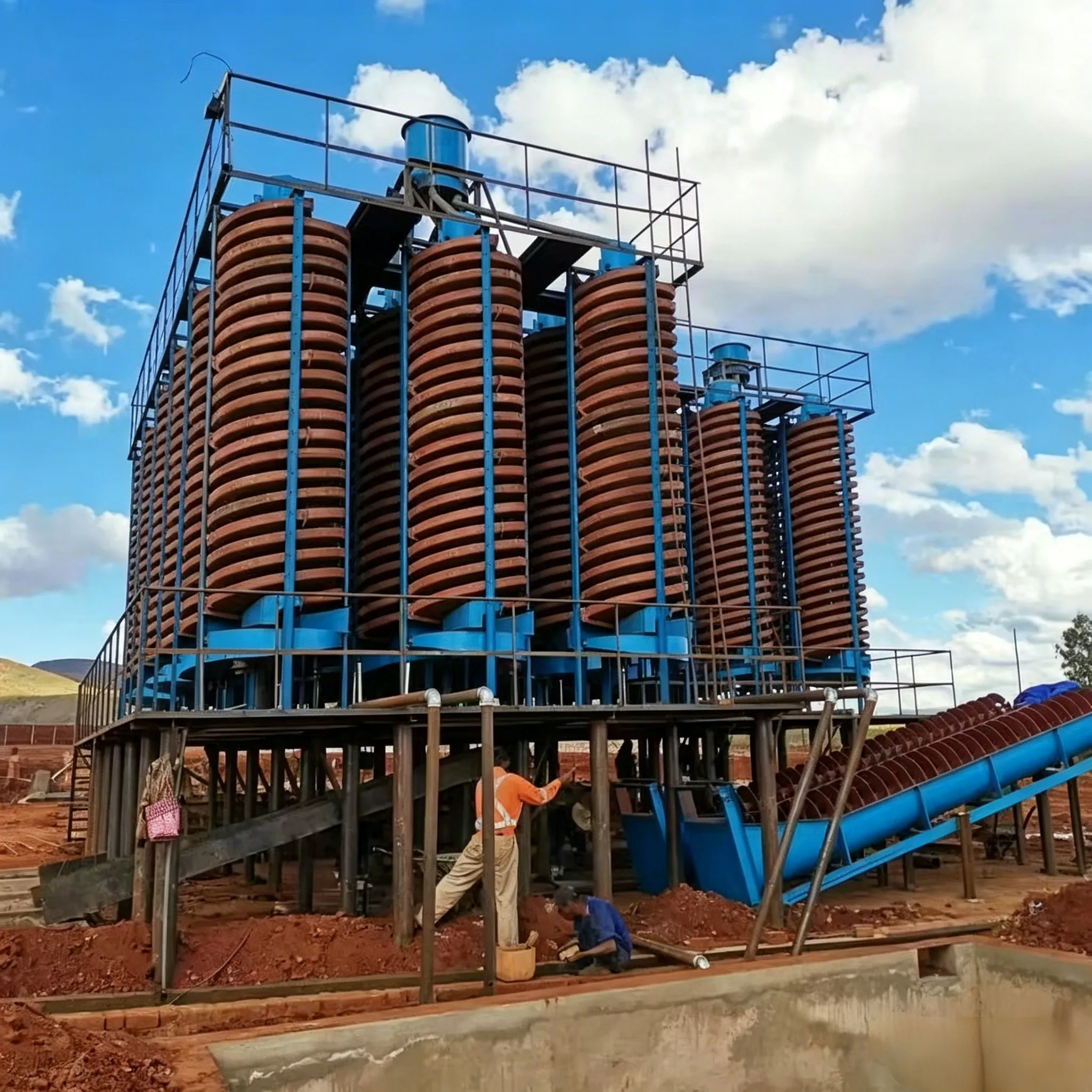
In the two stages of classification, the first stage uses a spiral classifier, and the second stage uses a hydrocyclone.
The underflow from the hydrocyclone is combined with the sand return from the spiral classifier, the secondary crushed ore, and the oversize from the lower deck of the double‑deck screen, and directly enters the heap leaching system for heap leaching.
The underflow from the hydrocyclone may also be returned to the spiral classifier.
Since the present invention changes the single heap leaching, gravity concentration, or CIL processes traditionally used in gold production beneficiation, and achieves a scientific combination of these three processes, when producing gold from low‑grade, high‑slime oxidized ores containing a certain amount of coarse visible gold, it not only effectively improves the overall gold recovery from the current 60‑70% to above 80%, making full use of valuable resources, but also removes slime from the ore after crushing and washing, thereby improving the permeability of the heap leach ore, shortening the leaching cycle, and reducing production costs while increasing output.
IV. Detailed Description of the Embodiments
The present invention has been trialed in the No. 1 Beneficiation Plant of Zijin Mining Group Co., Ltd. in Fujian. The present invention is further described in detail below with reference to specific embodiments.
The Zijinshan gold deposit in Shanghang, Fujian Province, is a secondary enriched gold deposit formed by surface weathering of a primary gold‑bearing sulfide deposit. The ore type is oxidized secondary gold ore, mined by open‑pit methods. The mined ore has a high slime content, and a large amount of the gold occurs as visible native gold, predominantly granular in shape, with some flaky, dendritic, and irregular forms. The largest individual gold grain is about 1 mm. The grade of the gold ore entering the concentrator is 0.803 g/t.
Пример 1:
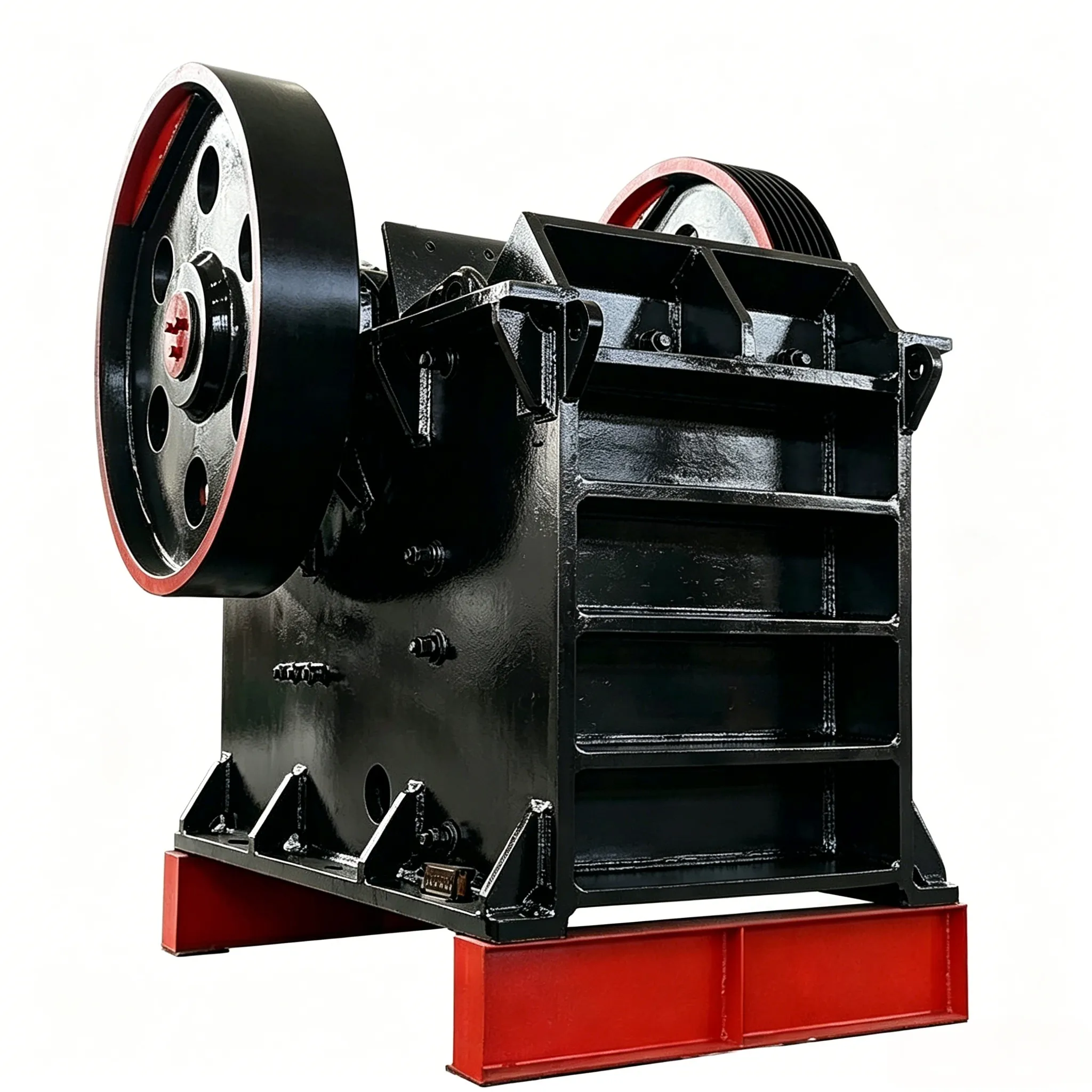
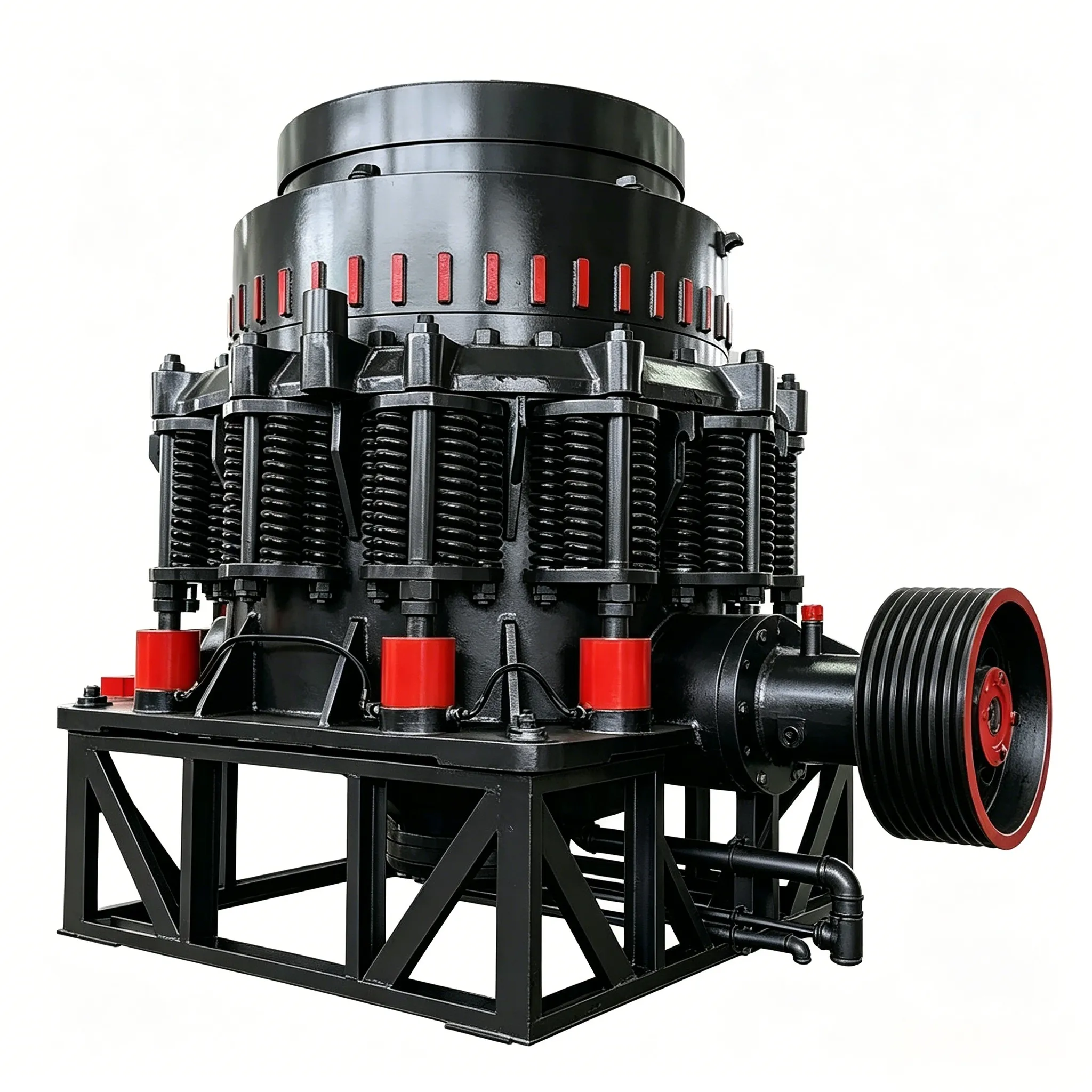
According to the characteristics of the Zijinshan gold ore, the beneficiation process adopted is as follows: After pre‑screening of the gold‑bearing ore, the oversize product is crushed by a 1050×2100 jaw crusher. The crushed ore and the undersize product are screened by a 2YAH2460 double‑deck vibrating screen, with water sprayed on the screen for ore washing. The oversize from the upper deck enters a PYB1750 cone crusher for secondary crushing. The undersize slurry from the lower deck enters a fixed vibrating sluice for gravity concentration to recover coarse gold in advance. The tailings from the fixed vibrating sluice are classified by a 2FG‑2 spiral classifier. The overflow from the classifier is subjected to secondary classification by a φ500 hydrocyclone. The sand return from the spiral classifier, the underflow from the hydrocyclone, the oversize from the lower deck of the double‑deck vibrating screen, and the product from the PYB1750 cone crusher are combined and sent to the heap leaching site for heap leaching, with a particle size of 0.1‑80 mm. The hydrocyclone overflow, after debris removal, enters a thickener. The thickener underflow enters an 8000×8500 mm leaching‑adsorption tank for CIL, with a particle size of 85% passing 200 mesh. The loaded carbon is transported to the smelter for desorption, electrowinning, and smelting. The tailings slurry passes through a safety screen to recover broken carbon and is then discharged to the tailings pond. The thickener overflow water is returned to the 2YAH2460 double‑deck vibrating screen for ore washing.
The main production technical indices obtained by adopting the above technical solution (averaged after multiple tests) are:
Пример 2:
The difference from Example 1 is that the underflow from the hydrocyclone is returned to the spiral classifier, rather than being combined with the sand return from the spiral classifier, the oversize from the lower deck of the double‑deck vibrating screen, and the product from the PYB1750 cone crusher. Other processes are the same as in Example 1. The main production technical indices obtained are comparable to those of Example 1.
The implementation of the above two examples shows that the application of the present invention not only significantly improves the recovery rate, but also has low beneficiation costs, with obvious economic and social benefits.
 English English
 Spanish
 Russian
 Arabic
 Swahili
 French
 Turkish
 Portuguese
 Korean
 Japanese
 German
 Italian