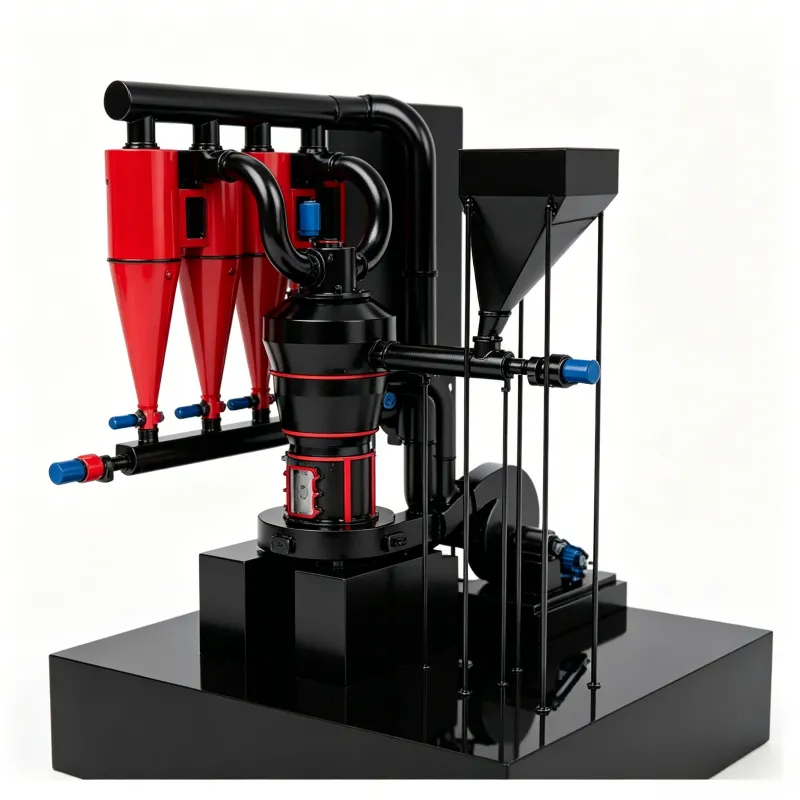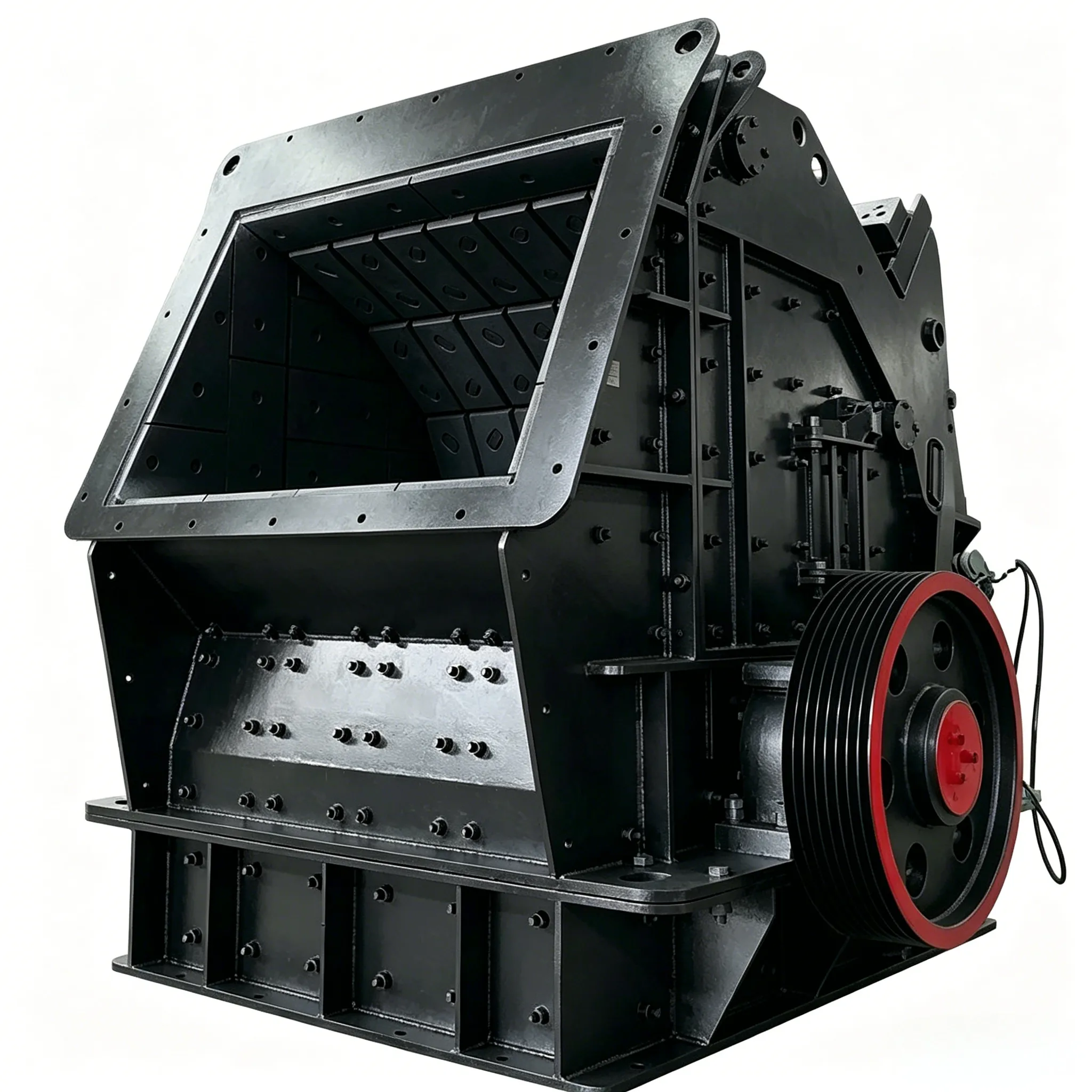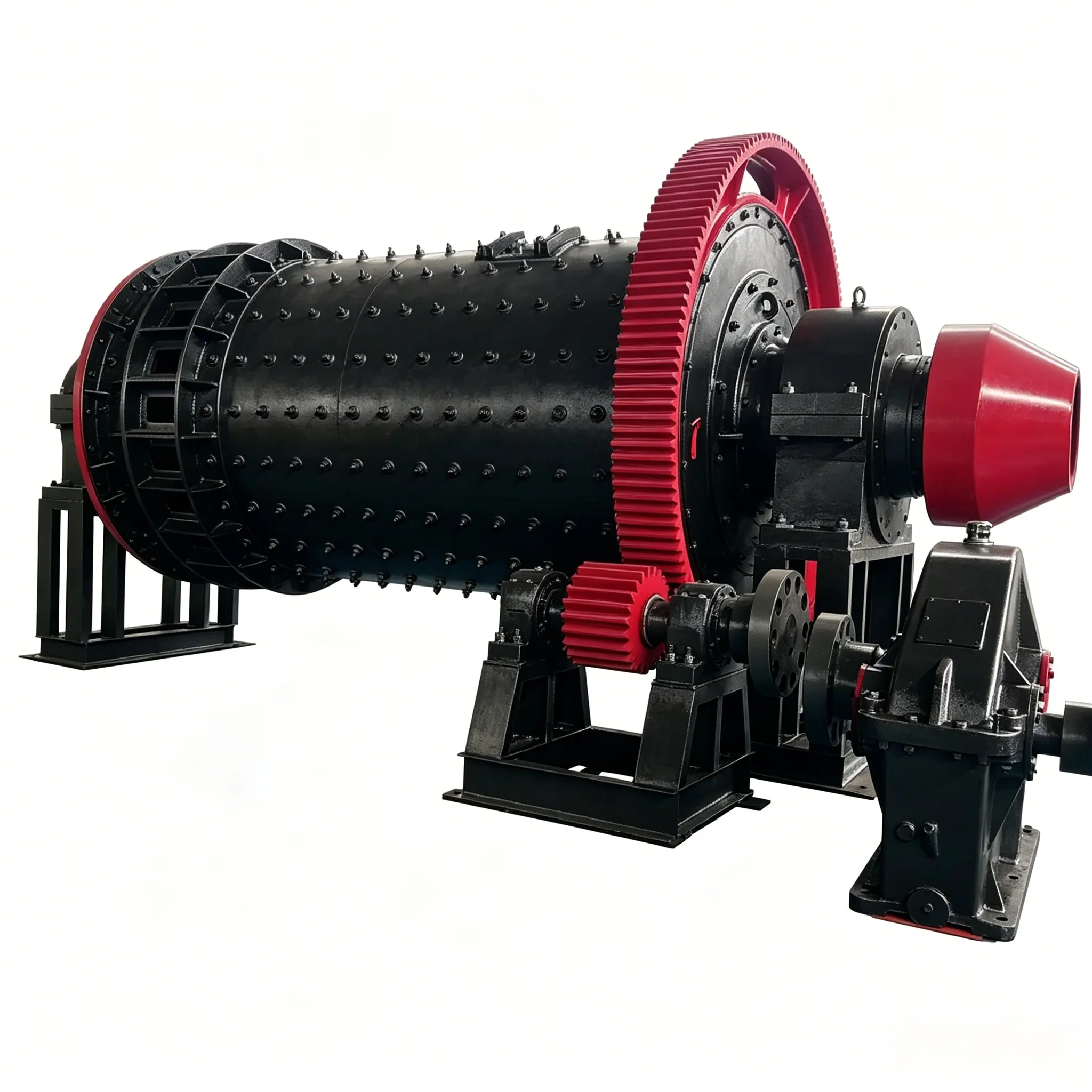
Molino de barras
Construction of a Rod Mill Wet rod mills can be classified into…

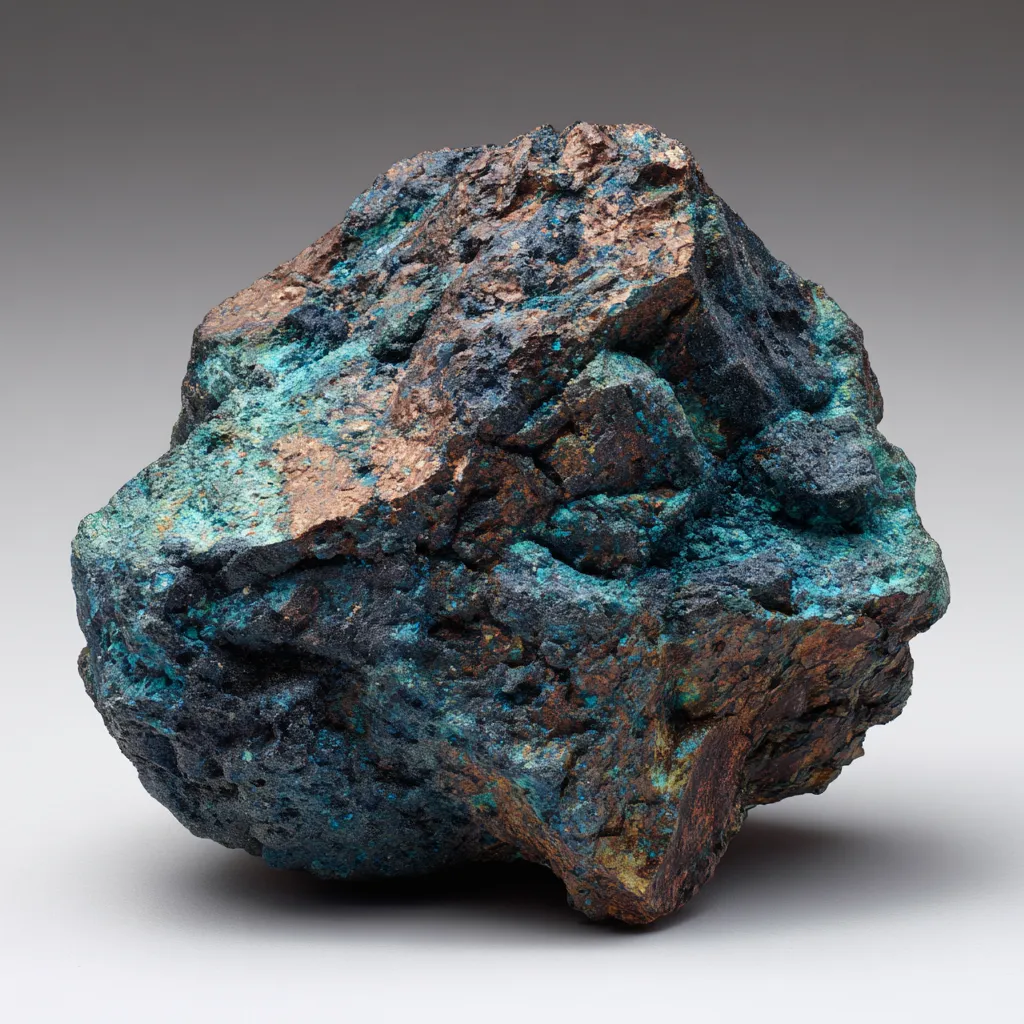
A mine in Yunnan Province is a Mesozoic fluvial-lacustrine deposit of copper-bearing sandstone . There are four mineral occurrences, with the main ore bodies mostly hosted in light-colored feldspathic quartz sandstone at the interface between light-colored ore rocks and purplish-red sandstone . The upper part of the ore body is oxidized ore, and the lower part is sulfide ore. The size and shape of the copper minerals embedded in the ore vary depending on the spacing between the quartz and calcite grains.
While similar, they differ; the vast majority are irregularly granular or scattered. Copper minerals have extremely fine grains. Generally in 0.009 ~ 0.045 mm Between these ranges, gangue minerals are 0.019–0.35 mm in size .
The ore is rich in copper, with chalcocite being the main copper mineral and quartz and calcite being the main gangue minerals . The mineral phases… The content is shown in Table 5-2.
Table 5-2 Relative mineral content in ore unit:%
| mineralname | quartzFeldspar | calcite | Ferric hydroxidemanganese hydroxide | Serpentinechlorite | tourmaline | Chalco | Bornite | Natural copper | Copper Blue | Chalcopyrite | malachite |
| content | 75.10 | 16.30 | 3.42 | 2.47 | 0.037 | 2.26 | 0.07 | 0.14 | 0.078 | 0.033 | Very few |
The ore contains relatively little mud, is dense, hard, and difficult to grind, with a relative density of 2.33–2.66. Besides copper minerals, the ore contains other minerals. The stone has a high silver content. The chemical analysis results of the raw ore are shown in Table 5-3.
Table 5-3 Chemical analysis results of raw ore unit:%
| Element | Cu | Pb | Zn | SiO₂ | Fe | Al ₂ O ₃ | CaO | MgO |
| content | 1.39 | 0.018 | 0.023 | 72.48 | 2.80 | 3.82 | 7.35 | 0.48 |
| Element | Mn | TiO₂ | Mo | Ga | Ge | Ag/(g/t) | Au/(g/t) | |
| content | 0.18 | 0.30 | 0.001 | 0.00016 | 0.00005 | 10.55 | 0.03 | |
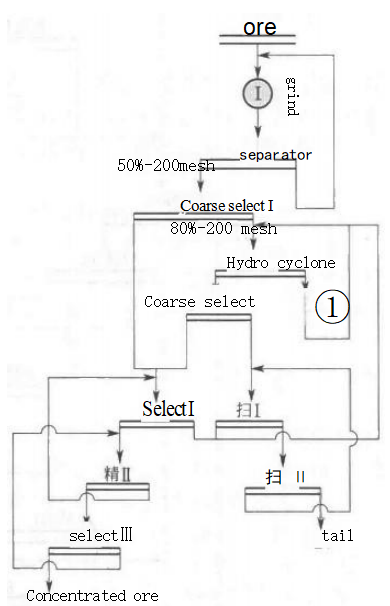
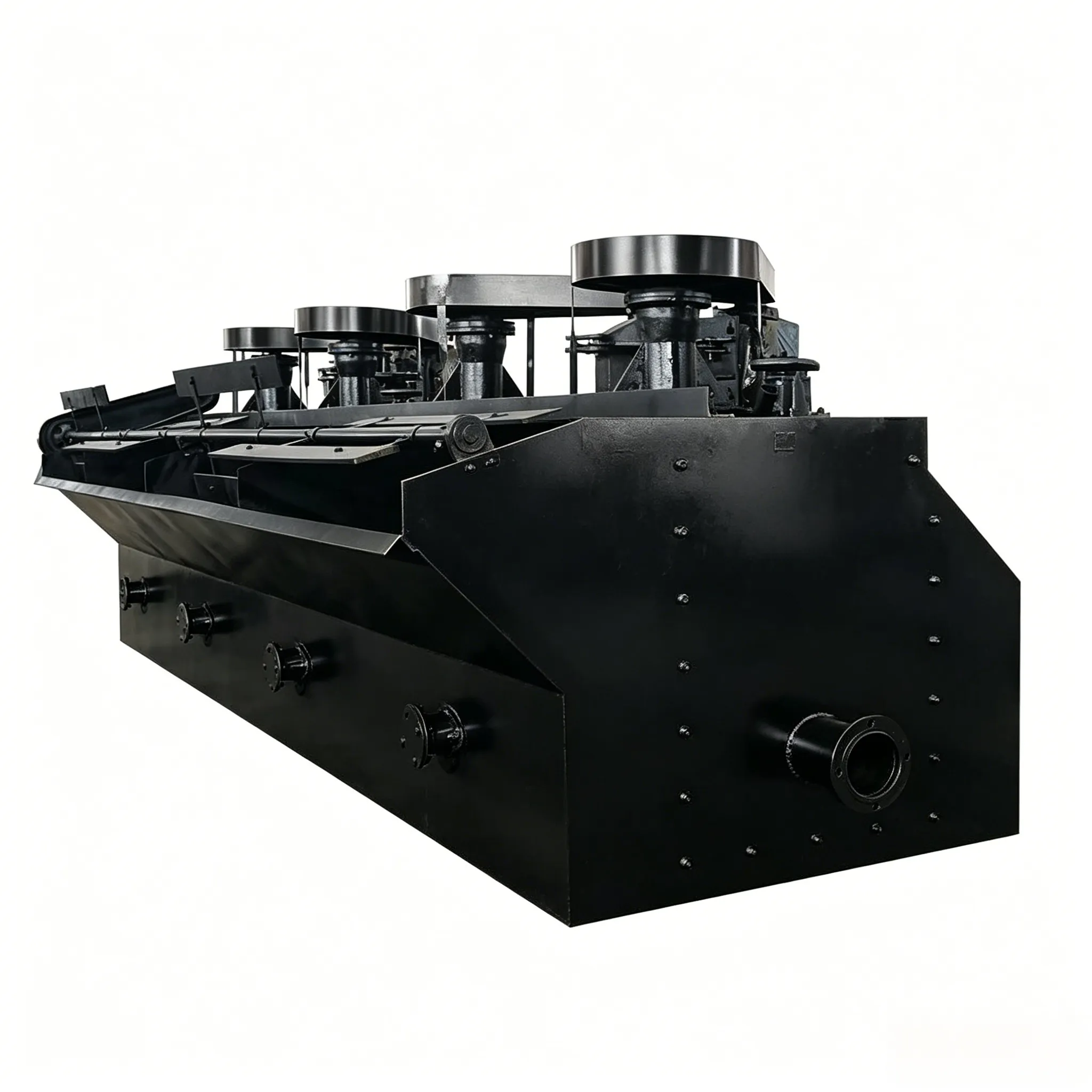
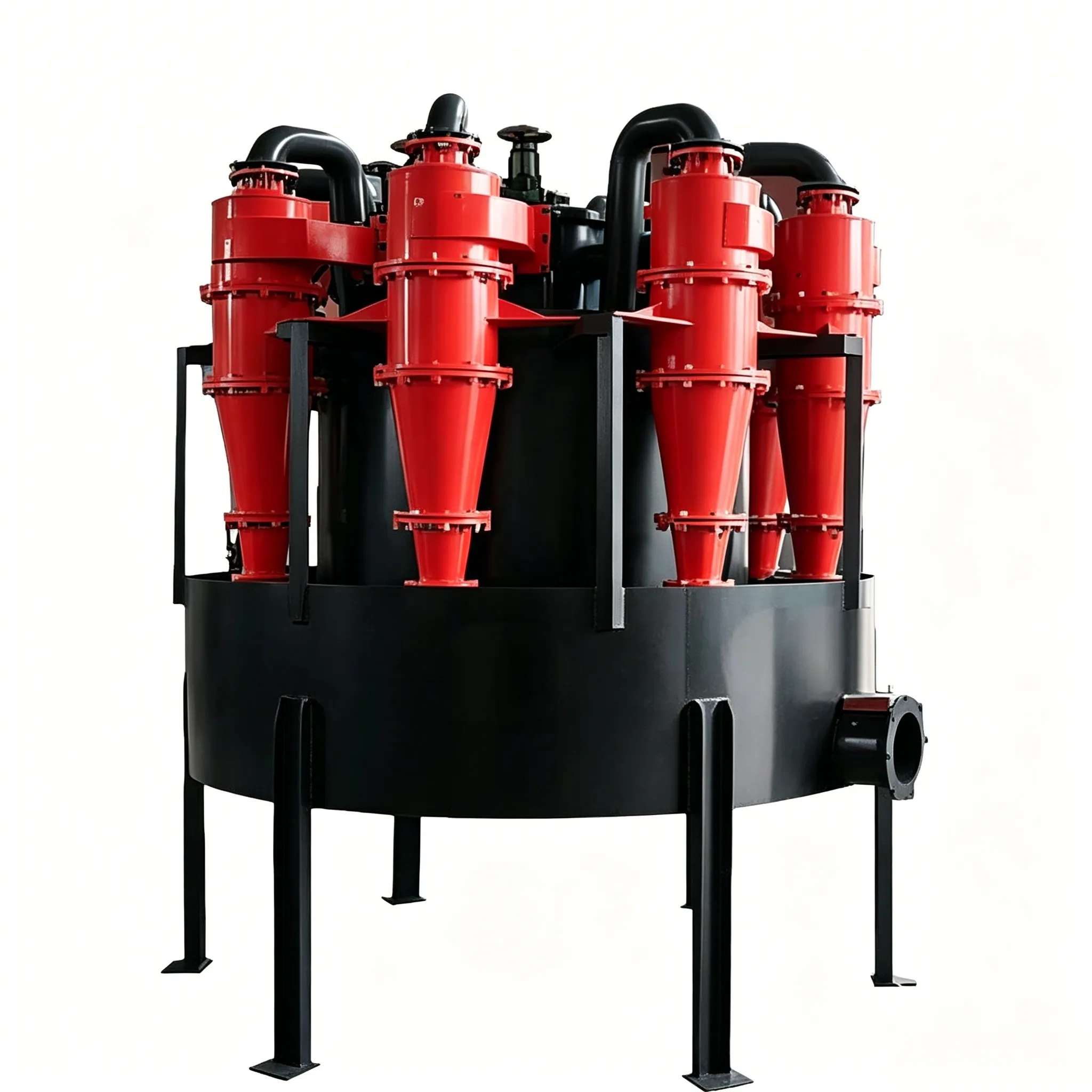
Based on the characteristics of the fine-grained copper minerals in the ore and the easy crushing of chalcocite, the concentrator adopts a two-stage grinding and two-stage flotation process. The final grinding fineness is -0.074 mm, accounting for 80%. The beneficiation process flow is shown in Figure 5-1.
Flotation is carried out under natural pH conditions. The collector is butyl xanthate (260 g/t), and the frother is pine oil (32 g/t). A small amount of sodium sulfide (95 g/t) must be added to stabilize the froth and improve the performance indicators.
The main problem in the plant’s production is grinding. On the one hand, it is necessary to liberate the fine-grained copper mineral monomers; on the other hand, it is necessary to reduce the yield of the -0.01 mm particle size, because the copper recovery rate of the -0.01 mm particle size is only 62.7%.
Production indicators: Raw ore contains 1.02% copper, concentrate grade is 22.12% Cu, recovery rate is 96.46%. The copper concentrate contains 200–320 g/t of silver, and the recovery rate of silver in the copper concentrate is 78%–95%.