SAM Mechanical Crusher
SAM Mechanical Crusher SAM Mechanical Crusher Incorporating technology from Japan and Germany,…

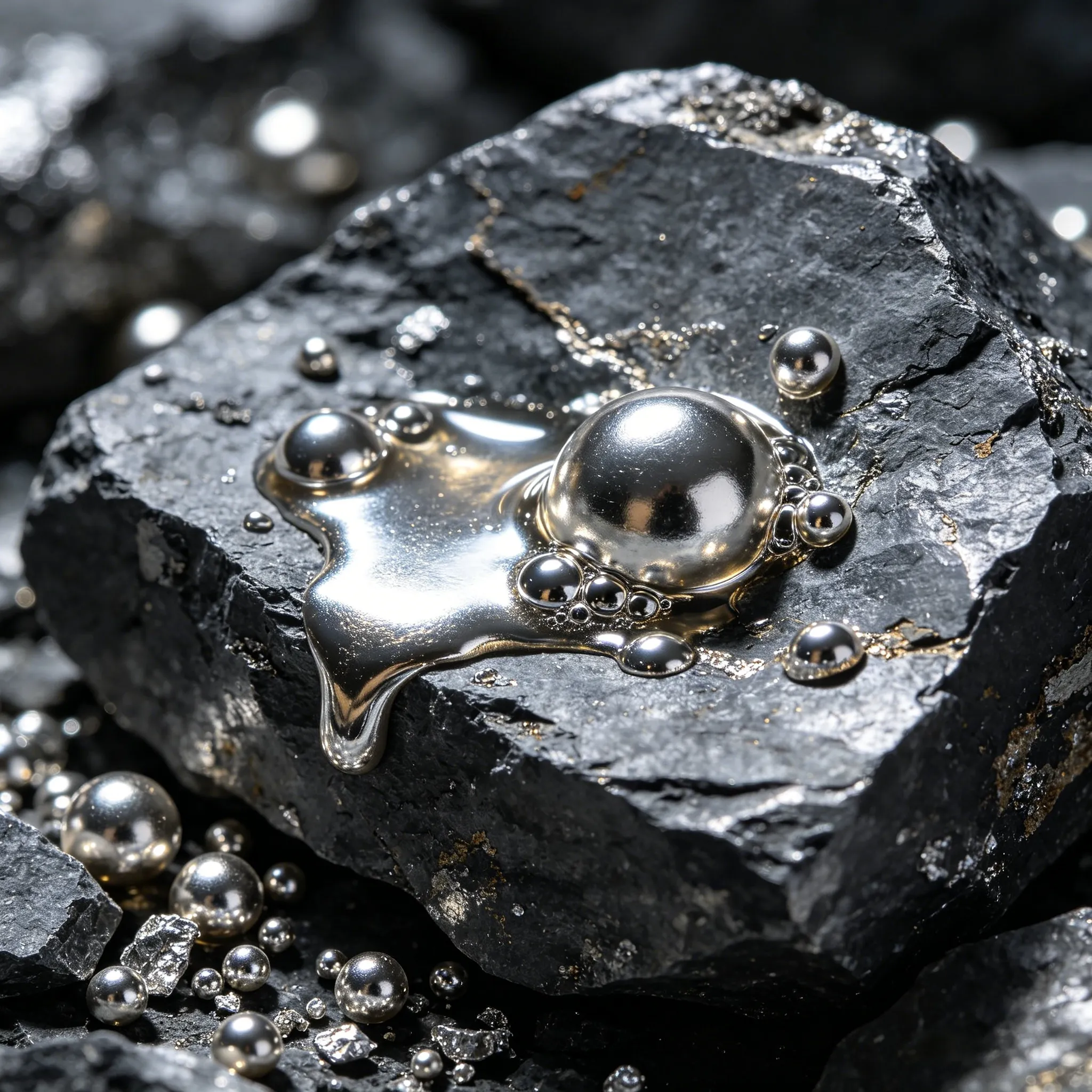
Cinnabar is red in color, has high density, is brittle, and possesses good natural floatability. A combination of pre-concentration, gravity separation, and flotation can be used.
(1) Pre-concentration
Hand sorting is a traditional pre-concentration method. Cinnabar is red or dark red, making it easy to distinguish from gangue minerals. In addition, because cinnabar is brittle, the ore tends to fracture along the densely cinnabar-bearing zones during crushing, exposing the cinnabar on the broken surfaces, which facilitates hand sorting. Hand sorting is usually carried out on a hand-sorting belt with a belt speed of generally 0.1–0.4 m/s. For large lump ores, a dedicated hand-sorting platform is sometimes set up before coarse crushing. Hand sorting can be performed either by picking out concentrate or by discarding waste rock. The former is used when the feed ore grade is low, and the latter when the feed ore grade is high. Before hand sorting, the ore is usually subjected to coarse crushing and classification. The waste rock discard rate is generally 40%–70% (relative to the feed amount). The ore often needs to be washed with water to remove slime from the surface before hand sorting. Since cinnabar has good natural floatability, fine cinnabar particles are easily lost with the washing water; therefore, appropriate facilities (e.g., settling ponds) must be provided to recover fine cinnabar from the wash water.
(2) Gravity separation
The high density of cinnabar makes gravity separation a viable method. However, in practice, a single gravity separation flowsheet is generally not used for mercury ores for two reasons: first, cinnabar is often unevenly disseminated in coarse and fine grains or as fine grains, making it difficult to recover fine cinnabar efficiently by gravity separation; second, cinnabar is brittle and possesses good natural floatability, so the fine cinnabar generated during grinding tends to float on the water surface during gravity separation and is lost. Therefore, the tailings from gravity separation are often classified, reground, and then treated by flotation. At one concentrator of the Xinhuang Mercury Mine, a single gravity separation flowsheet was used from 1959 to 1963 to treat ore with an average grade of 0.186% Hg. The average recovery was 56% Hg, the tailings grade was 0.087% Hg, and the concentrate grade was 3.4% Hg. In 1964, it was changed to a single flotation flowsheet. Consequently, mercury concentrators often use a combined gravity-flotation flowsheet. Gravity separation is used only to recover a portion of the coarse liberated cinnabar or to produce some vermilion product. Shaking tables and jigs are the most commonly used gravity separation equipment for mercury ores. Shaking tables can produce high-quality concentrate for vermilion production. Jigs are often used to treat the undersize from pre-screening before grinding, or are installed in the grinding-classification circuit to recover liberated cinnabar in time and avoid overgrinding. At the same time, some coarse vermilion can be recovered from the jig concentrate. In recent years, some concentrators have been trying to replace roughing shaking tables with jigs. In Japan, the Itomuka Concentrator uses a jig and a native mercury trap to recover most of the native mercury from the raw ore.
(3) Flotation
Flotation is the most widely used and effective beneficiation method for mercury ores. Flotation not only efficiently recovers cinnabar from the ore but also effectively recovers various other mercury minerals such as native mercury and mercury chlorosulfide. Flotation is also used for treating mercury-bearing polymetallic ores. In the vast majority of mercury ores, the main target mineral is cinnabar. Cinnabar has good natural floatability; therefore, the flotation flowsheet and reagent scheme for simple cinnabar ores are relatively simple. The commonly used flowsheet is one-stage or two-stage grinding, with the classification overflow size generally being –0.074 mm accounting for 85%, though some concentrators use a coarser flotation feed size. The flotation circuit usually consists of one roughing stage, one to two cleaning stages, and two to three scavenging stages. In terms of flotation reagents, heavy metal salts are often used as activators for cinnabar, such as copper sulfate, lead nitrate, lead acetate, and mercuric chloride. Copper sulfate is the most widely used, with a typical dosage of 100–300 g/t. Some concentrators use no activator. Xanthates are used as collectors for cinnabar. Domestic concentrators commonly use ethyl xanthate at a dosage of 80–240 g/t. Some concentrators have tried a mixture of xanthate and dithiophosphate, but the results were similar to using xanthate alone. The McDermitt Concentrator in the USA treats ore containing cinnabar and mercury chlorosulfide (in a 7:3 ratio) and uses isopropyl xanthate as collector. The Itomuka Concentrator in Japan treats ore in which 70% of the mercury is native mercury and 30% is cinnabar, and uses amyl xanthate as collector. Some test data indicate that to improve the concentrate grade of low-grade mercury ores, depending on the ore properties, tannin, quebracho, citric acid, carboxymethyl cellulose, starch, or water glass can be used as gangue depressants or slime dispersants; however, these are not widely applied in practice. The optimum pulp pH for flotation of cinnabar is 6 and 7.5–7.8, but cinnabar can still maintain high flotation recovery in the pH range of 5–8.5. Therefore, most concentrators do not use pH regulators and instead operate at the natural pH of the pulp, which is generally between 6 and 8. For simple cinnabar ores, very good flotation indices can be achieved. When the head grade is 0.1%–0.5% Hg, flotation recovery can reach 90%–96%. For more complex ores, the recovery is slightly below 90%. The grade of flotation concentrate varies considerably among concentrators: domestic concentrators generally produce concentrate with 10%–30% Hg, while foreign concentrators have produced concentrates with grades as high as 75% Hg and as low as 1.5% Hg. The concentrate grade depends not only on the head grade and mineral complexity but also on the smelting method used. As for equipment, domestic concentrators mostly use small- to medium-scale crushing and grinding equipment and mechanically agitated flotation cells. A few concentrators have used flotation columns as roughers, but the techno-economic results are similar to those of mechanically agitated cells. Some large-scale foreign concentrators use autogenous mills and larger flotation cells.
(4) Combined gravity-flotation beneficiation
The combined gravity-flotation flowsheet is very common in mercury ore concentrators. In China, the vast majority of vermilion products come from mercury concentrators using this combined flowsheet. In mercury ore concentrators with a gravity-flotation combination, tailings are generally not discarded in the gravity separation stage. Instead, the gravity tailings (overflow) are dewatered, classified, reground, and then treated by flotation. Otherwise, the overall recovery would be adversely affected. For simple cinnabar ores, tests and production practice have shown that the recovery of single flotation is slightly higher than that of the combined gravity-flotation flowsheet. Moreover, the capital investment and operating costs are lower for a single flotation plant. Therefore, concentrators using the combined gravity-flotation flowsheet often do so because of ore characteristics (e.g., recovery of native mercury) or for producing vermilion. Currently in China, there are two main types of production flowsheets using the combined gravity-flotation process: