Trituradora mecánica SAM
Trituradora mecánica SAM. La trituradora mecánica SAM, que incorpora tecnología de Japón y Alemania,…

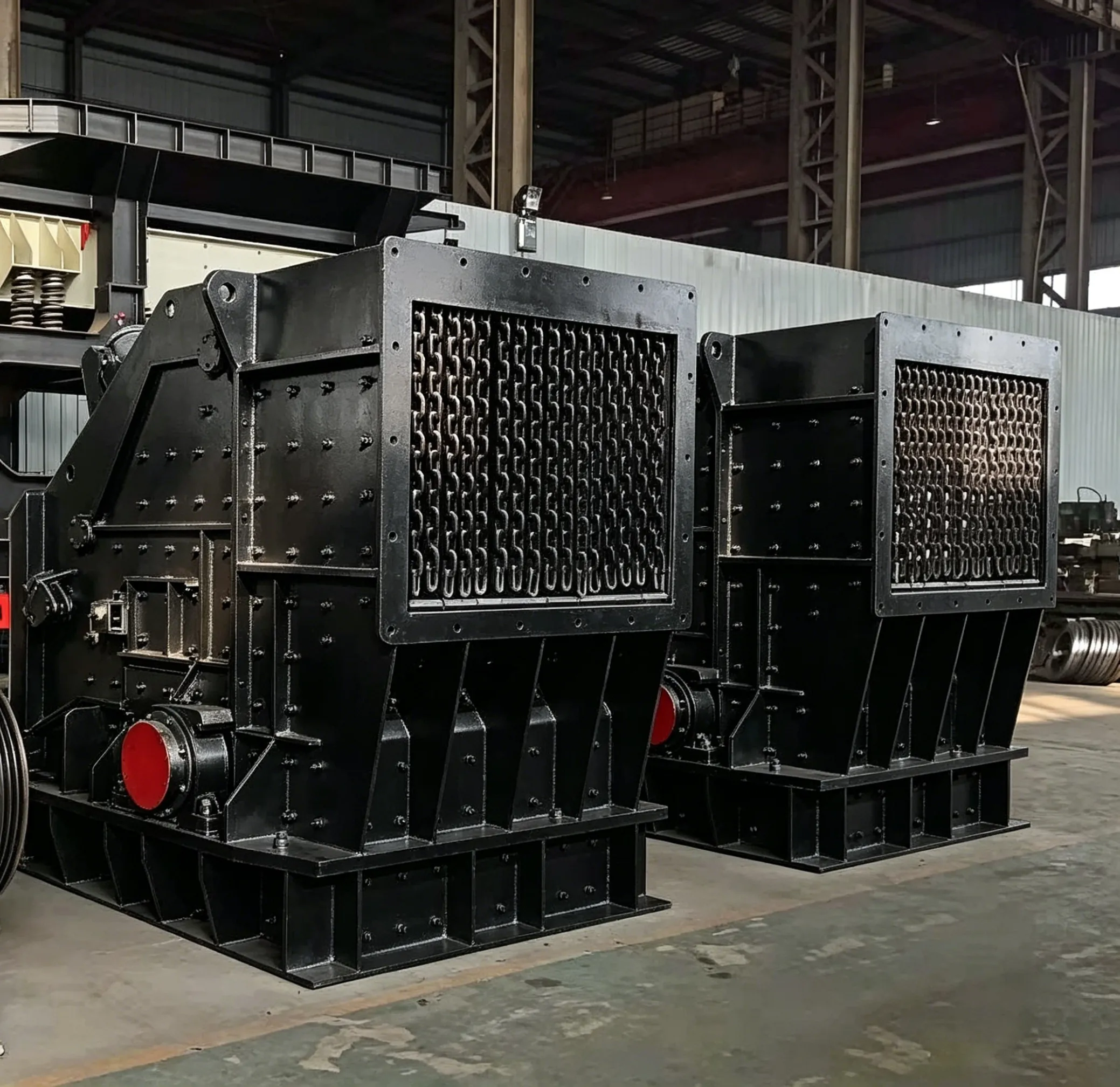
The blow bars of an impact crusher rotate at high speed with the rotor, striking and crushing the material, and are subject to impact and abrasion. Therefore, they wear easily. Factors affecting the service life of blow bars include: the material of the blow bars, manufacturing quality, properties of the crushed material, rotor peripheral speed, blow bar structure, and throughput.
At present, wear-resistant materials such as high manganese steel and chromium alloy steel are mainly used in China for manufacturing blow bars. Due to differences in heat treatment processes among manufacturers, their mechanical properties vary greatly, resulting in significant differences in blow bar service life. Many tests have been conducted in China regarding the selection of blow bar materials. It has been found that embedding low-alloy white cast iron into blow bars more than doubles their service life (compared to cast high manganese steel blow bars). This low-alloy white cast iron has high hardness, good wear resistance, simple production, and low cost, making it suitable for wider application.
Some plants and mines use “Shanghan 64” or “Shanghan 64A” welding rods to build up carbon steel blow bars, or build up high manganese steel electrode onto high manganese steel blow bars. In both cases, the service life is 30% longer than that of cast high manganese steel blow bars. These two methods are also simple, easy to implement, and low in cost.
In some plants and mines, a φ1000 mm × 700 mm single-rotor impact crusher is used to crush coal, with blow bars made of white cast iron, which also achieve a relatively long service life.
Apart from the blow bar material, the following factors also affect the blow bar life in some crushers: due to the high rotor linear speed of the impact crusher, the rotor is equipped with 3–6 blow bars, up to 8–10 pieces. The time interval between two consecutive blow bars passing is only a few tenths of a second. In such a short time, only a small amount of material can enter the striking zone as whole pieces, while most material, especially large pieces, enters the striking zone only at one end. Therefore, the blow bar does not strike the center of gravity of the material block—i.e., it does not impact the entire block squarely but rather obliquely. This not only reduces crushing efficiency but also causes sliding friction between the material and the blow bar, leading to very rapid wear of the blow bar. Additionally, when fines adhere to the impact plates, friction between the blow bars and fines becomes even more severe, accelerating blow bar wear.
To reduce blow bar wear, the number of blow bars on the rotor should not be too large, the rotor diameter should not be too small, the blow bar height should be appropriately increased, and fines, soil, and moisture in the feed should be screened out as much as possible.
The structure of the blow bar and its fixing method also affect its service life. At present, in impact crushers manufactured in China, blow bars are mostly fixed using countersunk screws, as shown in Figures 6-5a and 6-5b. This fixing method has a simple structure and is easy to disassemble and assemble; replacement does not require lifting the rotor out of the machine body. In the fixing screw design shown in Figure 6-5a, the screws are subjected to shear force during operation, making them prone to breakage and causing blow bar detachment. The structure shown in Figure 6-5b overcomes this shortcoming, fixing the blow bar more securely, but requires machining a rear groove on the blow bar.
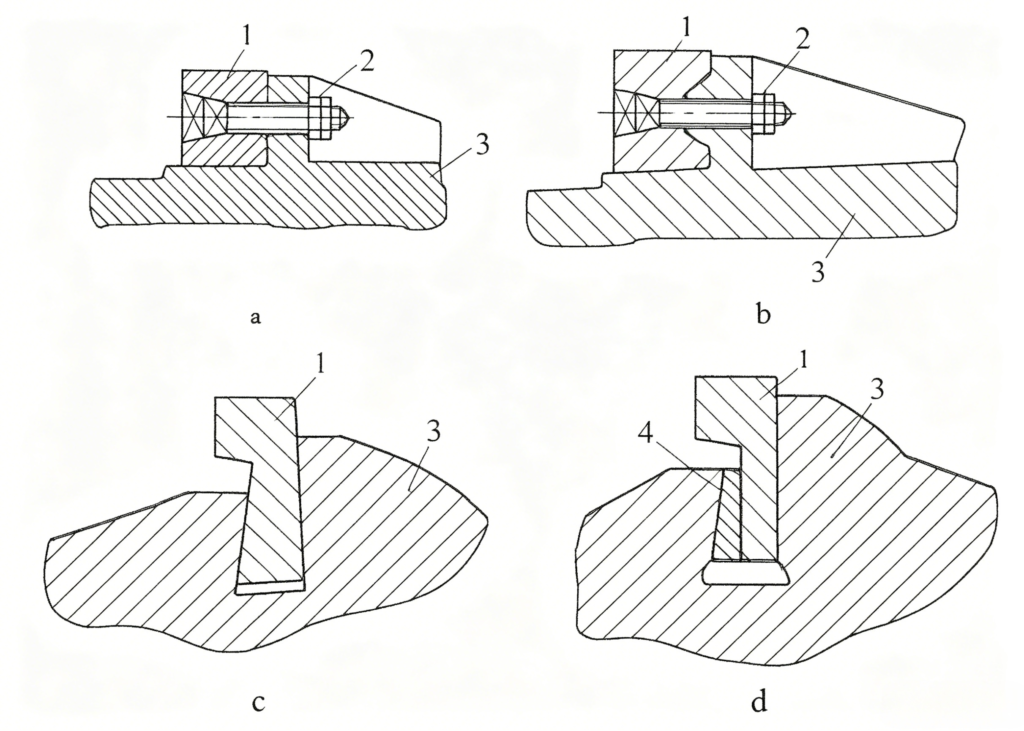
Figure 6-5 Structure and fixing of blow bars (a–d)
1—Blow bar; 2—Countersunk screw; 3—Rotor; 4—Wedge block
In some crushers, the blow bars are inserted laterally into the rotor grooves. Both sides of the groove have a slope of 1:5, and the blow bars are tightened by the centrifugal force generated during operation (Figure 6-5c). The ends of blow bars of this structure also need to be pressed with clamping plates to prevent movement. This fixing method is not very reliable, is unsafe during operation (the blow bar may fly out), and is best avoided.
Another method uses wedge irons to fix the blow bars (Figure 6-5d). The blow bar is placed into the rotor groove, and wedge irons with slopes on both sides are driven in from the side of the rotor to tighten the blow bar. After pre-tightening, under the action of centrifugal force during operation, the blow bar, wedge iron, and rotor become increasingly tighter, making the fixation reliable. However, disassembly and assembly are difficult, so this method is rarely used today.
During manufacturing, the weight accuracy of blow bars must be strictly ensured. The weight difference shall not exceed ±0.5 kg. After the blow bars are installed on the rotor, a static balance test shall be performed. When the rotor stops rotating, it shall not turn back more than 1/10 of a circumference at any position.
The impact plate is the second most wear-prone part after the blow bars, subject to high impact loads. It is generally made of cast high manganese steel. Medium carbon steel bars are also used; when crushing coal, ordinary steel plates may be welded together. According to an investigation of a φ500 mm × 400 mm impact crusher, the service life of impact plates made of cast high manganese steel is relatively low. Research on wear-resistant materials for impact plates is needed.
Some foreign factories use wear-resistant plastic to wrap the impact plate, or embed crushed stones into the grooves of the impact plate to replace the metal surface, both of which have improved the service life of impact plates. Based on the wear pattern of impact plates, one chemical plant in China adopted partial zone installation and replacement according to the degree of wear in different areas, more than doubling the service life.
In addition to improving the wear resistance of the impact plate material, the shape of the impact plate is also worth attention. The φ500 mm × 400 mm and φ1000 mm × 700 mm impact crushers both use polygonal (broken-line) impact plates. Although simple in structure and easy to manufacture, this shape does not ensure the most effective impact crushing of the material, and often reduces the crushing chamber size; the corners of the impact plate also wear quickly. Because the material does not strike the impact plate perpendicularly, shear forces are often generated, accelerating impact plate wear. Moreover, fines or wet material tend to adhere at the corners, further reducing the crushing chamber volume and affecting crushing efficiency.
The φ1250 mm × 1000 mm impact crusher and the PFD series impact crusher for coal crushing use impact plates approximately involute in shape (see Figure 6-4). This shape ensures that material arriving from any direction after being struck by the blow bar hits any point on the impact plate at a perpendicular angle, i.e., the material always impacts the impact plate surface perpendicularly, thereby eliminating shear forces. This reduces impact plate wear, prevents powder accumulation, maintains sufficient crushing chamber space, and improves crushing efficiency. However, the involute-shaped impact plate is more complicated to manufacture. Therefore, in the φ1250 mm × 1250 mm double-rotor impact crusher, the first impact plate is approximated by two circular arcs (R = 1300 mm and R = 2680 mm), and the second impact plate by one circular arc (R = 1300 mm) and one straight line segment.
During assembly, operation, and maintenance of the impact crusher, special attention shall be paid to the static balance of the rotor. When turning blow bars around or replacing them, all blow bars on the rotor shall be changed simultaneously to avoid static imbalance that would cause severe vibration and bearing overheating. When turning blow bars around or replacing them with new ones, weigh them and install blow bars of equal weight or with very small weight difference (±0.5 kg) symmetrically around the circumference to keep the entire rotor in static balance. If any imbalance remains, it may be corrected by temporarily adding balancing weights to the rotor.
During machine operation, monitor the temperature rise of the rotor main bearings. Under normal conditions, it shall not exceed 60°C, and the maximum temperature shall not exceed 75°C. If the temperature rise exceeds this limit, stop the machine immediately for inspection and take effective measures. The rolling bearings at both ends of the rotor may be lubricated with grease or molybdenum disulfide grease, adding a small amount of lubricant regularly each shift (2–3 times).
The impact crusher generates considerable dust during operation. In addition to properly sealing all parts of the crusher, ventilation and dust collection equipment shall be installed in the workshop.
For a double-rotor impact crusher, the drive parts of the two rotors shall be started separately. The starting sequence for the complete crushing equipment shall be: dust collector → conveyor → crusher → feeder; the stopping sequence shall be the reverse.