Molino de barras
Construction of a Rod Mill Wet rod mills can be classified into…

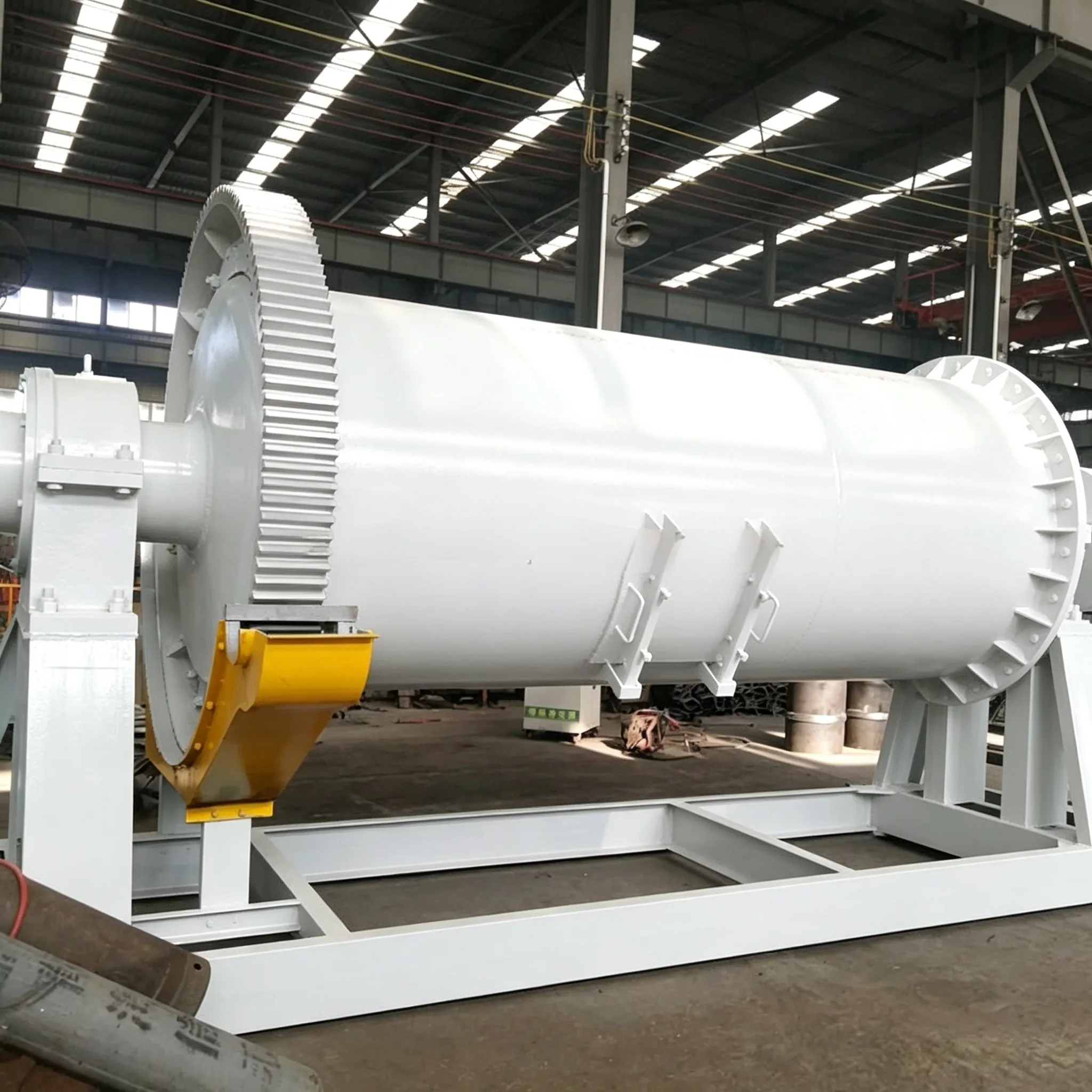
Normal shutdown refers to a planned shutdown of the grinding mill under normal operation, for example, when the concentrator has completed its production plan and needs equipment maintenance, or when problems in the concentration or dewatering sections require a shutdown. Upon receiving the shutdown instruction, first stop the feeder. When the belt no longer carries ore, stop the belt conveyor, thus interrupting the feed to the grinding mill. After stopping the feed, the grinding mill shall continue to run for 10–20 minutes to empty the material inside the mill before stopping, so as to avoid starting the mill under heavy load next time. After the material inside the mill has been emptied, stop the grinding mill, turn off the front and rear water, stop the oil pump, and then stop the classifier. If it is a spiral classifier, after stopping, raise the lower part to prevent the classifier from being started under heavy load next time, which could twist the main shaft, damage the spiral, or damage the motor. If the grinding mill bearings are water-cooled, the cooling water must also be turned off. Finally, turn off the cooling water to the lubricating oil cooler. For a grinding mill started with manual reduced-voltage starting, after the mill stops rotating, return the handwheel of the oil-immersed rheostat to the zero position. If the equipment will be idle for a relatively long period, pull the concealed switch in the switch cabinet to the “open” position to prevent the control elements in the cabinet from remaining in a triggered state for an extended time.
When equipment malfunctions or there are faults in the oil or electrical circuits that cannot be rectified under running conditions, the grinding mill or other equipment must be stopped immediately. This is called emergency shutdown.
Emergency shutdown shall be performed immediately under any of the following circumstances:
(1) The spoon head of the feeder falls off;
(2) The feeder collides with the feed chute, producing a loud noise;
(3) The gear emits a periodic loud sound due to broken teeth;
(4) The motor or reducer bearing temperature rises sharply, exceeding 80°C;
(5) An anchor bolt breaks, causing vibration of the grinding mill;
(6) A liner falls off inside the mill, producing a loud noise;
(7) The main shaft of the spiral classifier twists off, or the transmission mechanism fails, or the bearing wears out and seizes the main shaft;
(8) The motor or electrical equipment sparks, smokes, or emits abnormal sounds that do not disappear for a prolonged period;
(9) Sudden oil starvation occurs, but the bearings are not yet overheated;
(10) There is oil in the tank but the circulation flow is very small, and the cause cannot be identified immediately, etc.
During an emergency shutdown, immediately stop the feed, stop the classifier, and turn all electrical switches to the off position. Turn off the supplementary water, and raise the spiral classifier (if the classifier itself is not faulty). In the case of a sudden shutdown due to power failure, check whether the magnetic starter has automatically disengaged; the knife switch must be opened to prevent automatic startup when power is restored.
After an emergency shutdown, the mill is generally started under heavy load. Special attention must be paid to the motor, electrical equipment, and equipment during startup.
After the emergency has been handled, to start the equipment smoothly, the following work shall be done:
(1) Check whether there is ore in the feed box below the feeder. If a large amount of ore is present, open the discharge port at the bottom of the box to remove the ore; otherwise, the large amount of ore in the box will create excessive resistance to the feeder, making startup difficult;
(2) Bar the mill before starting to fully agitate the ore and media inside the shell and reduce eccentricity;
(3) Conduct a thorough inspection of the machinery and electrical system before starting. If necessary, measure the motor insulation resistance with a megohmmeter;
(4) If the machinery, motor, and electrical equipment are normal but the mill still fails to start, it indicates excessive load. In this case, open the manhole cover and remove some ore or balls. After the mill starts and runs normally, return the ore or balls to the mill.