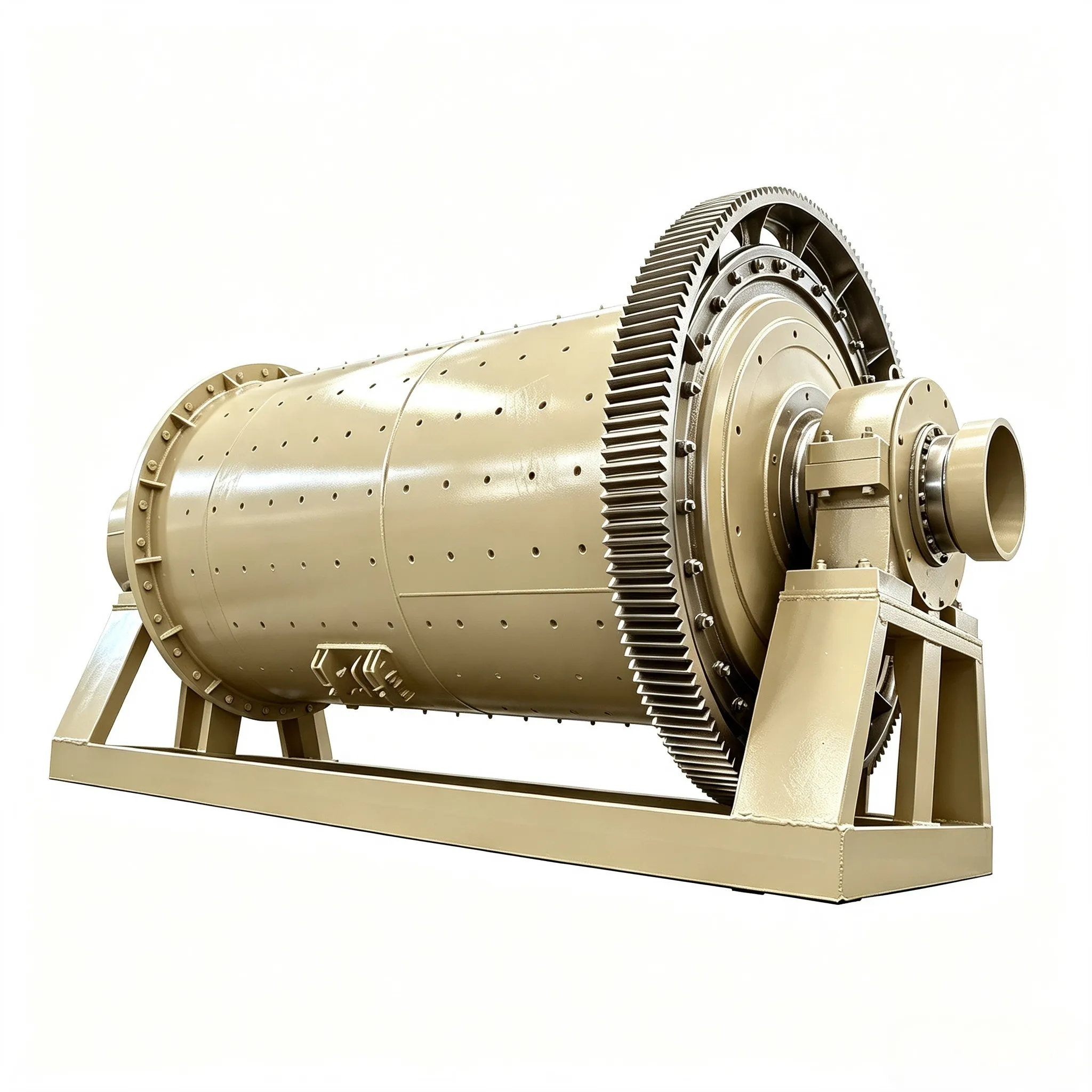
Molino de guijarros
Construcción de un molino de bolas. En algunos sectores industriales, como el químico,…

A. Mina de cobre de Anqing: recuperación de cobre y hierro
Los tipos de mineral de la mina de cobre de Anqing se dividen en cuatro categorías: mineral de cobre de tipo diorita, mineral de cobre de tipo skarn, mineral de cobre de tipo magnetita y mineral de hierro de tipo skarn. Los minerales que componen estos yacimientos son todos endógenos. Los principales minerales metálicos son la calcopirita, la magnetita, la pirrotita y la pirita. Tras la flotación y la separación magnética para recuperar el cobre, el hierro y el azufre, queda una pequeña cantidad de calcopirita que no se ha liberado por completo en los residuos totales. La pirrotita contiene hierro y azufre, y su magnetismo solo es superado por el de la magnetita. Durante la desulfuración del concentrado magnético preliminar mediante flotación, debido a su fuerte magnetismo, es inevitable que parte de la magnetita fina acabe en los residuos.
Los residuos totales procedentes de la planta de concentración se clasifican: la fracción de +20 μm se envía bajo tierra para rellenar los silos de almacenamiento de arena; la fracción de -20 μm se vierte en el embalse de residuos. El análisis químico de los residuos se muestra en la tabla 4-28.
Tabla 4-28: Resultados del análisis químico de los residuos (%)
| Producto | Cu | S | Fe |
|---|---|---|---|
| Residuos gruesos (+20 μm) | 0.143 | 2.36 | 9.76 |
| Residuos finos (-20 μm) | 0.07 | 1.67 | 13.45 |
| Total de residuos de minería | 0.119 | 2.13 | 11.00 |
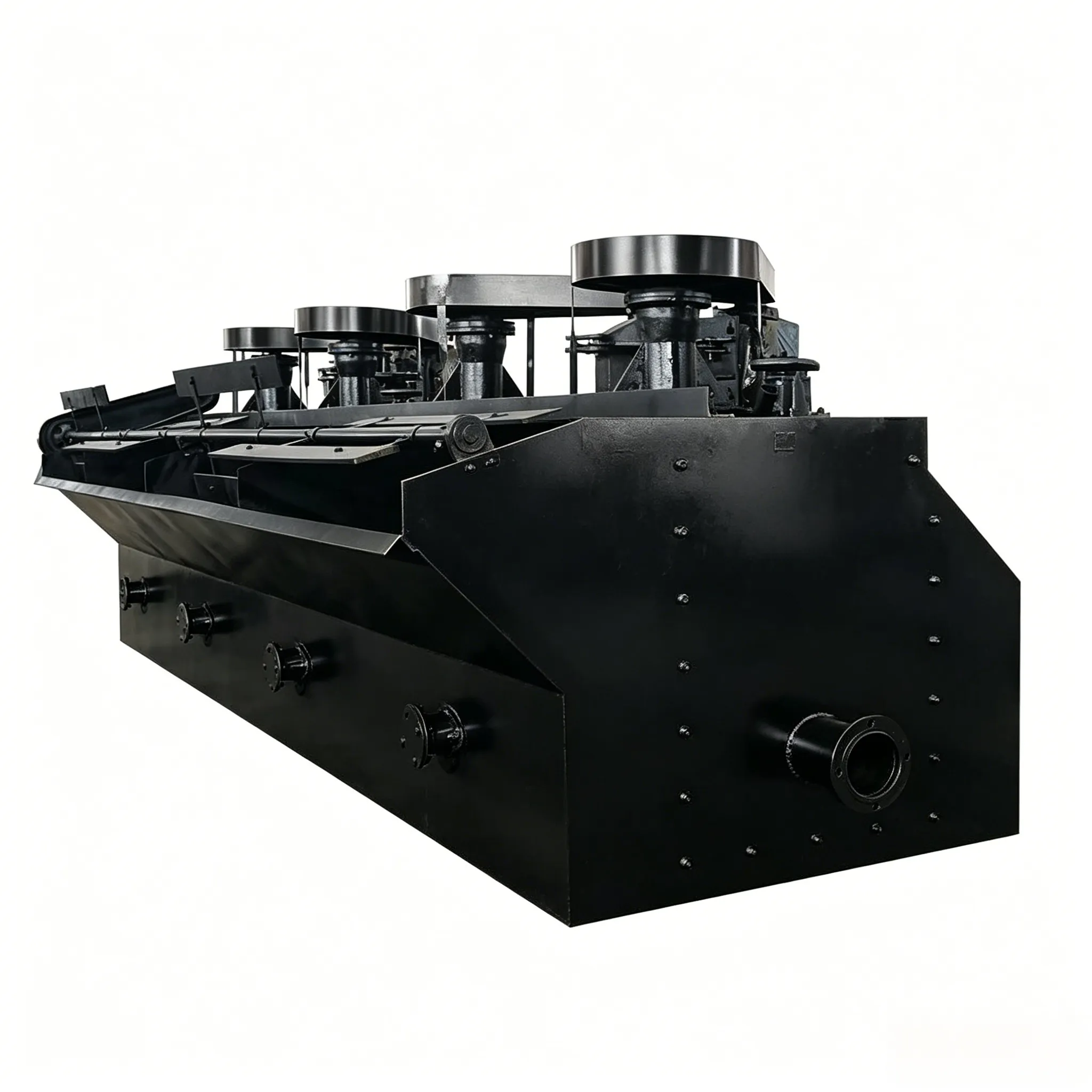
Para recuperar de forma integral los recursos de cobre y hierro de los residuos de mineral, la mina de cobre de Anqing aprovechó al máximo los equipos en desuso y construyó una planta de recuperación integral de cobre y otra de hierro a partir de los residuos de mineral, adaptadas a las condiciones locales. Los minerales de cobre se concentran principalmente en los residuos de grano grueso, por lo que la recuperación de cobre a partir de estos residuos es el objetivo principal. Los residuos del concentrador contienen reactivos residuales, lo que provoca la acumulación natural de espuma que contiene cobre y azufre en la parte superior de los silos de almacenamiento de mineral. La planta de cobre fabricó una máquina industrial de flotación por aire forzado que se instaló en la parte superior del silo de almacenamiento. El concentrado bruto de flotación se volvió a moler y, a continuación, se sometió a un circuito de limpieza compuesto por una etapa de desbaste, dos de limpieza y tres de purga, produciendo finalmente un concentrado de cobre apto con una ley de 16,941 TP3T de Cu. Con una inversión de 300 000 yuanes, se construyó una planta de cobre de 25 t/d en el emplazamiento, cerca de la estación de mezcla de relleno.
Los datos de la tabla 4-28 también indican que el hierro se concentra principalmente en los residuos finos. Los estudios de laboratorio muestran que el hierro presente en los residuos finos es, en su mayor parte, magnetita y pirrotita de grano fino. La planta de recuperación de hierro se centra en la magnetita y la pirrotita de grano fino presentes en los residuos finos. Utilizando tres separadores magnéticos de baja intensidad del modelo CTB718, sustituidos del sistema principal, y con una inversión de 100 000 yuanes, se estableció una planta de recuperación de hierro en el punto situado antes de que los residuos finos entraran en el espesador, aprovechando el desnivel del terreno. Se adoptó un proceso de separación magnética de un paso de desbaste y otro de limpieza para recuperar el hierro. Con el fin de recuperar aún más los recursos de hierro perdidos en la concentradora, se recogieron en la planta integral de hierro diversas aguas residuales que contenían hierro, lodos y los residuos de limpieza de la planta de concentrado de cobre. Finalmente, se obtuvo un concentrado de hierro con una ley de 63,001 TP3T Fe. Los diagramas de flujo de producción de la planta de cobre y de la planta de hierro se muestran en la figura 4-19. Las dos plantas alcanzaron un valor de producción anual de 4,9195 millones de yuanes, con un beneficio anual estimado, antes de impuestos, de 4,2145 millones de yuanes, lo que generó buenos beneficios económicos y sociales.
B. Mina de cobre de Tonglüshan: extracción de cobre, oro, plata y hierro
La mina de cobre de Tonglüshan es un gran yacimiento sinérgico de cobre y hierro de tipo skarn, con altas leyes de cobre y hierro, grandes reservas y oro y plata asociados. Los minerales se dividen en mineral de cobre y hierro oxidado y mineral de cobre y hierro sulfurado. Ambos tipos de mineral se procesan en la planta de concentración mediante dos sistemas independientes. La planta de concentración utiliza un proceso de flotación, separación magnética de baja intensidad y separación magnética de alta intensidad para producir concentrado de cobre y concentrado de hierro. Los residuos magnéticos de alta intensidad ascienden a un total de aproximadamente 3 millones de toneladas, que contienen 25 000 toneladas de cobre metálico y 1,32 millones de toneladas de hierro. Los minerales de cobre presentes en los residuos de separación magnética de alta intensidad incluyen malaquita, pseudomalaquita, calcopirita, una pequeña cantidad de cobre nativo, calcocita, bornita y cantidades muy pequeñas de azurita y covelita; los minerales de hierro incluyen principalmente magnetita, hematita, limonita y siderita; los minerales no metálicos incluyen principalmente calcita, calcedonia, cuarzo, mica y sericita, con pequeñas cantidades de granate, epidota, diópsido, apatita y topacio. Los análisis multielementales y de fases de los residuos se muestran en las tablas 4-29 a 4-32.
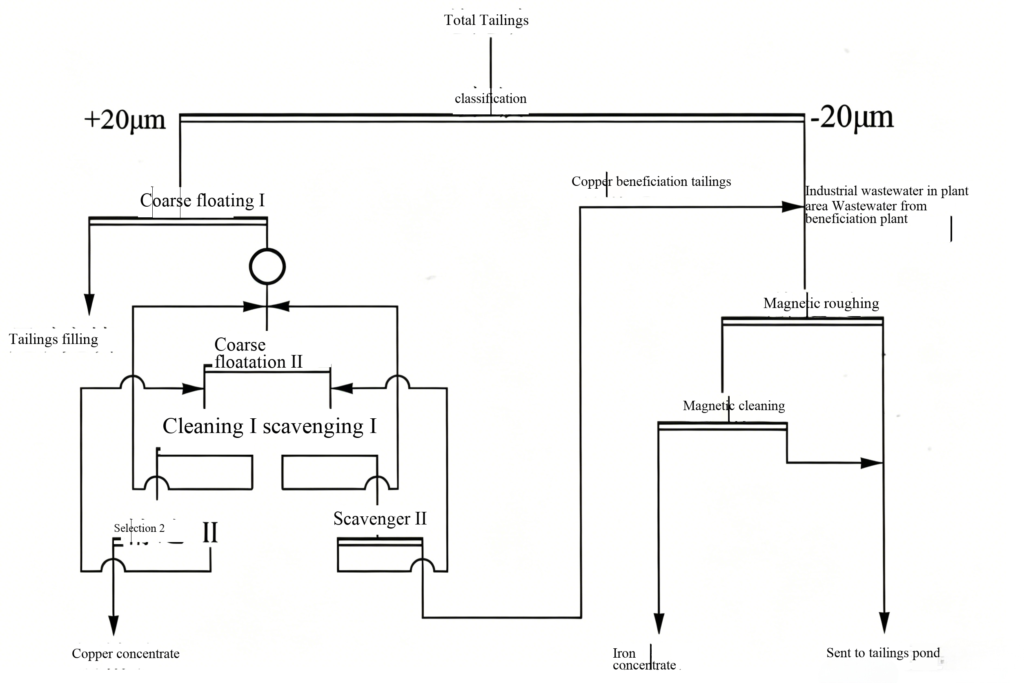
Figura 4-19: Esquema del proceso de producción de la planta integral de recuperación de relaves de cobre y de la planta de hierro
Tabla 4-29: Resultados del análisis multielemental de los residuos magnéticos de alta intensidad (%)
| Cu | Fe | CaO | MgO | SiO₂ | Al₂O₃ | Lun | Au/g·t⁻¹ | Ag/g·t⁻¹ |
|---|---|---|---|---|---|---|---|---|
| 0.83 | 22.59 | 13.73 | 2.32 | 33.99 | 3.74 | 0.24 | 0.97 | 11 |
Tabla 4-30: Análisis de las fases del cobre (%)
| Artículo | Óxido de cobre libre | Sulfuro de cobre primario | Sulfuro de cobre secundario | Óxido de cobre combinado | Cobre total |
|---|---|---|---|---|---|
| Fracción másica | 0.25 | 0.10 | 0.18 | 0.26 | 0.79 |
| Distribución | 31.65 | 12.66 | 22.78 | 32.91 | 100.00 |
Tabla 4-31: Análisis de las fases del hierro (%)
| Artículo | Hierro magnético | Siderita | Hematita y limonita | Pirita | Silicato de hierro insoluble | Hierro total |
|---|---|---|---|---|---|---|
| Fracción másica | 7.38 | 2.39 | 11.95 | 0.10 | 0.51 | 22.53 |
| Distribución | 32.76 | 11.50 | 53.04 | 0.44 | 2.26 | 100.00 |
Tabla 4-32: Análisis de las fases del oro y la plata (%)
| Artículo | Oro gratis | Oro en el interior | Oro total | Sulfuro de plata libre | Plata asociada a la pirita | Plata en ganga | Plata total |
|---|---|---|---|---|---|---|---|
| Fracción másica | 0.26 | 0.62 | 0.88 | 3.0 | 7.0 | 1.0 | 11.0 |
| Distribución | 29.56 | 70.43 | 100.00 | 27.27 | 63.64 | 9.09 | 100.00 |
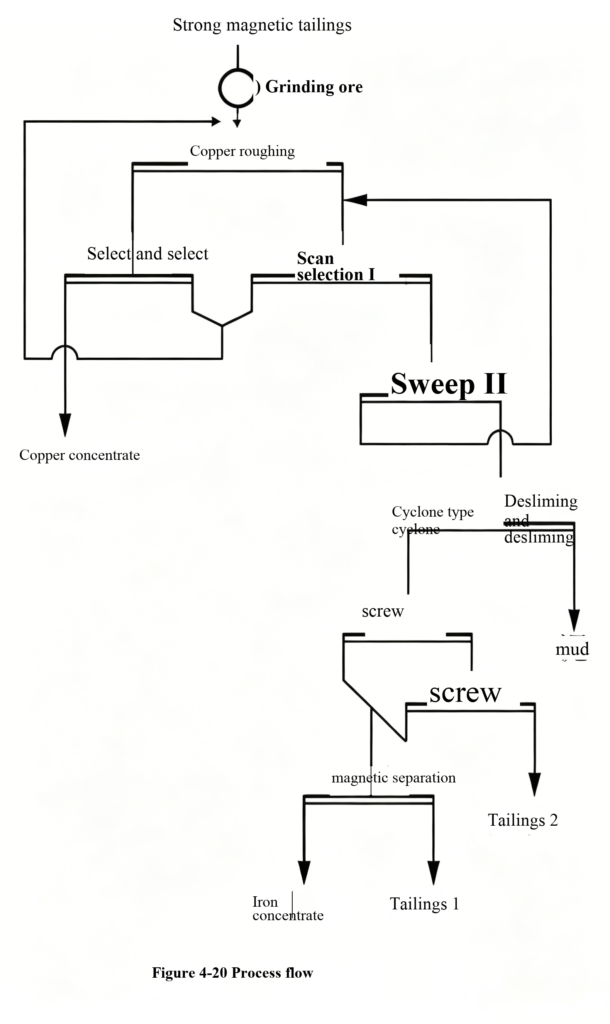
A partir de los resultados experimentales, se diseñó y construyó en la planta de concentración una instalación de aprovechamiento integral con capacidad para tratar 1000 t/d de residuos magnéticos de alta intensidad. Se utiliza un proceso combinado convencional de flotación, gravedad y separación magnética para recuperar cobre, oro, plata y hierro. Tras la molienda, los residuos magnéticos de alta intensidad se someten a una flotación por sulfuración utilizando sulfuro de sodio como agente sulfurante, xantato de butilo y ácido hidroxámico como colectores, y aceite n.º 2 como espumante para recuperar cobre, oro y plata. A continuación, los residuos de flotación se tratan en una rampa en espiral para la concentración preliminar de hierro, y el concentrado preliminar de hierro se purifica mediante separación magnética para producir un concentrado de hierro (véase la figura 4-20). Las condiciones del proceso son: finura de molienda de 60% que pasa por 0,074 mm, Na₂S 2000 g/t, xantato de butilo 175 g/t, ácido hidroxámico 36 g/t y aceite n.º 2 20 g/t. Finalmente, se obtiene un concentrado de cobre con 15,4% de Cu, 18,5% de Au y 109 g/t de Ag, y un concentrado de hierro con 55,24% de Fe. Las recuperaciones de cobre, oro, plata y hierro son de 70,56%, 79,33%, 69,34% y 56,68%, respectivamente. Partiendo de una capacidad de tratamiento de 900 t/d de residuos magnéticos de alta intensidad y 300 días de funcionamiento al año, la recuperación total anual es de 1435,75 t de cobre, 171,26 kg de oro, 1055,92 kg de plata y 33 757 t de hierro. Las estimaciones económicas preliminares indican un valor de producción anual de 10,82 millones de yuanes y un beneficio anual de aproximadamente 10 millones de yuanes, lo que demuestra importantes beneficios económicos y sociales.
C. Mina de cobre de Ashele, en Xinjiang: Recuperación de cobre
La mina de cobre de Ashele, en Xinjiang, es un yacimiento polimetálico de cobre y zinc de tipo pirítico, de origen sedimentario derivado de una erupción volcánica. Desde su puesta en marcha en septiembre de 2004, el proceso de beneficio se ha optimizado continuamente, aumentando la recuperación de cobre de 79% en la fase inicial de producción a 91,93%, con una ley del concentrado de cobre que supera los 18%. Para aprovechar al máximo el potencial técnico y maximizar la recuperación de los recursos minerales, se ha puesto en marcha una reflotación a escala industrial del cobre procedente de los residuos de la separación de zinc y azufre del proceso de producción actual.
En el proceso de separación actual, el contenido de cobre en los residuos del circuito de separación de zinc y azufre sigue siendo relativamente elevado. El cobre se encuentra principalmente en forma de tennantita, seguida de la calcopirita. La mayor parte de los minerales de cobre se encuentran liberados; entre los que no lo están, la gran mayoría forma intercrecimientos simples con pirita o está encerrada en pirita. La composición mineral de esta muestra de residuos se muestra en la Tabla 4-33, y el análisis químico multielemental y el análisis de las fases de cobre de los residuos se muestran en las Tablas 4-34 y 4-35, respectivamente.
Tabla 4-33: Composición mineral de los residuos de la separación de zinc y azufre
| Contenido | Minerales metálicos | Minerales no metálicos |
|---|---|---|
| Mayor | Pirita 93.5% | |
| Menor | (Arsénico) tennantita 0,9% | Quartz 3% |
| Trace | Calcopirita, esfalerita | Carbonato (ocasionalmente) |
Tabla 4-34: Análisis químico multielemento de los residuos (%)
| Elemento | Cu | Zn | S | SiO₂ | CaO | C | Fe |
|---|---|---|---|---|---|---|---|
| Fracción másica | 0.98 | 1.08 | 45.99 | 5.99 | 0.28 | 0.10 | 39.81 |
| Elemento | Pb | Como | Al₂O₃ | Sb | Na₂O | Au/g·t⁻¹ | Ag/g·t⁻¹ |
|---|---|---|---|---|---|---|---|
| Fracción másica | 0.12 | 0.40 | 1.84 | 0.05 | 0.09 | 0.35 | 48.1 |
Tabla 4-35: Análisis de las fases del cobre (%)
| Fase del cobre | Cobre en forma de sulfuro | Cobre en forma de óxido libre | Cobre en óxido mixto | Otros | Cobre total |
|---|---|---|---|---|---|
| Fracción másica | 0.72 | 0.12 | 0.02 | 0.02 | 0.88 |
| Distribución | 81.82 | 13.64 | 2.27 | 2.27 | 100.00 |
Basándose en una investigación experimental activa sobre la recuperación de cobre a partir de los residuos de la separación de zinc y azufre, la mina llevó a cabo una investigación mediante ensayos industriales sobre el reprocesamiento de los residuos. La prueba industrial se llevó a cabo entre enero y julio de 2010 en el sistema de beneficio independiente 650 de la mina de cobre de Ashele. Los resultados de la prueba se muestran en la tabla 4-36, y el diagrama de flujo de la prueba se muestra en la figura 4-21.
Tabla 4-36: Resultados de las pruebas industriales de recuperación de cobre a partir de residuos de separación de zinc y azufre (%)
| Año | Residuos de la separación de zinc y azufre (mineral en bruto de alimentación) | Ley del concentrado de cobre | Índice de recuperación de cobre mediante la reconcentración de residuos de zinc | |||
| Cu | Zn | Cu | Zn | Cu | Zn | |
| Enero de 2010 | 0.89 | 1.15 | 6.34 | 10.73 | 48.65 | 63.46 |
| Febrero de 2010 | 1.12 | 1.31 | 9.09 | 11.04 | 61.56 | 64.04 |
| Marzo de 2010 | 1.00 | 1.14 | 8.33 | 9.84 | 51.75 | 53.72 |
| Abril de 2010 | 0.84 | 0.87 | 8.02 | 8.91 | 53.75 | 57.44 |
| Mayo de 2010 | 0.91 | 0.95 | 9.31 | 10.74 | 57.81 | 64.23 |
| Junio de 2010 | 0.89 | 1.07 | 5.81 | 8.69 | 57.81 | 64.23 |
| Julio de 2010 | 0.66 | 0.84 | 6.02 | 6.92 | 53.30 | 48.26 |
| Media | 0.90 | 1.05 | 7.56 | 9.55 | 54.95 | 59.34 |
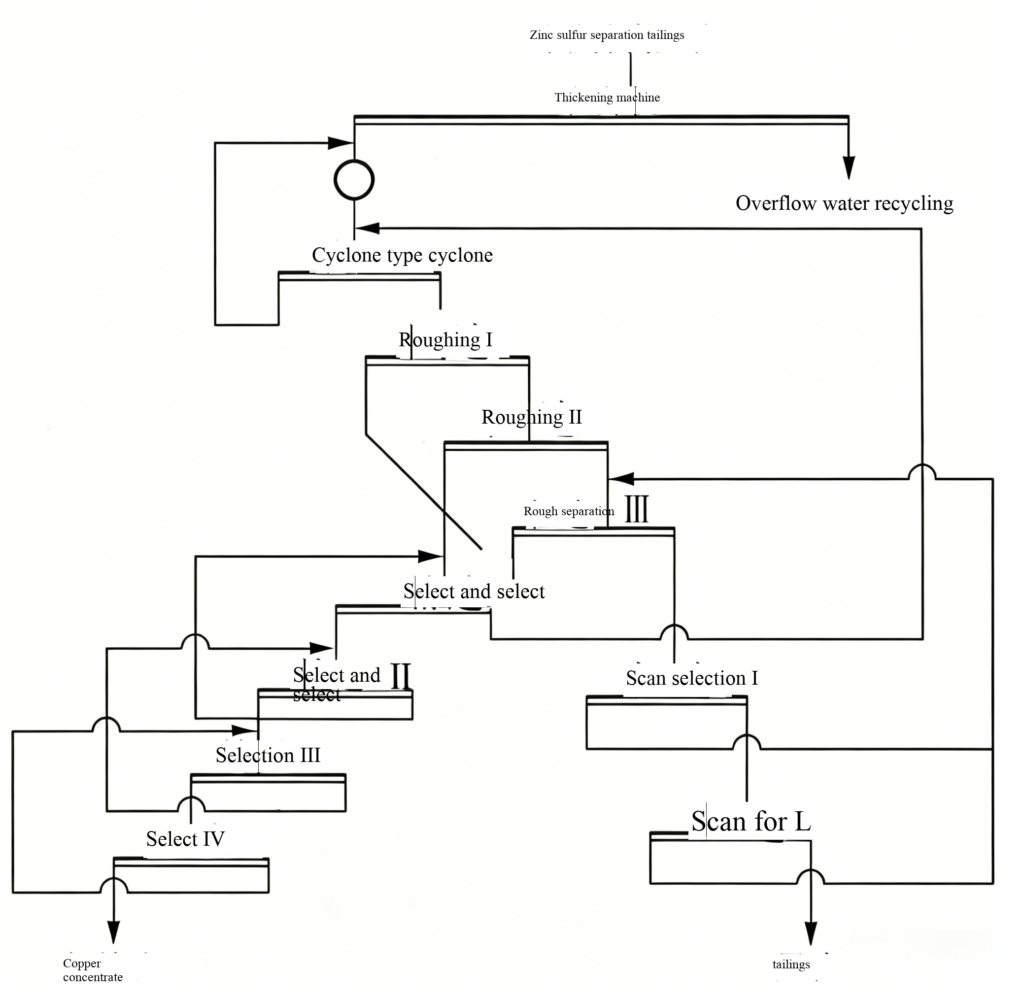
Figura 4-21: Esquema de proceso industrial para la recuperación de cobre a partir de residuos de separación de zinc y azufre
Los resultados de la prueba industrial de siete meses mostraron que, para la reselección de cobre a partir de los residuos de la separación de zinc y azufre, la ley media de la materia prima fue de 0,90% de Cu y 1,05% de Zn. La ley del concentrado de cobre fue de 7,56% de Cu y 9,55% de Zn, con una recuperación de cobre del 54,95%. La recuperación de zinc en el concentrado de cobre alcanzó el 59,34%. Durante la reselección del cobre a partir de los residuos de la separación de zinc-azufre, la relación de enriquecimiento del zinc fue elevada, lo que dio lugar a un contenido excesivo de zinc en el concentrado de cobre. Incluso con la adición de grandes cantidades de depresores de zinc durante la prueba industrial, resultó difícil reducir el contenido de zinc en el concentrado de cobre, lo que también afectó a la recuperación del cobre. Sin embargo, una adición adecuada de Na₂S ayudó a reducir el contenido de zinc. Durante la prueba industrial, basándose en la calidad real del concentrado de cobre producido, el concentrado de cobre procedente de la reselección de los residuos de la separación de zinc-azufre se mezcló con el concentrado de cobre procedente del beneficio del mineral en bruto en un espesador de φ38 m. De este modo se garantizó que el concentrado de cobre final destinado a la venta contuviera 18% o más de Cu, con un contenido de zinc que oscilaba generalmente entre 3% y 4%. Esto no solo aumentó la recuperación global de cobre, sino que también cumplió los requisitos de venta.
Según las estadísticas, entre enero y julio de 2010, el sistema de beneficio independiente 650 procesó residuos de la separación de zinc y azufre para la recuperación de cobre. Desde el inicio de la prueba industrial, la recuperación media mensual de cobre metálico fue de 62,17 t, lo que generó un beneficio mensual adicional de más de 1,76 millones de yuanes.
D. Mina de cobre de Fengshan: recuperación de cobre
La mina de cobre de Fengshan, perteneciente a Daye Nonferrous Metals Group Holding Co., Ltd., está situada en el condado de Yangxin, en la provincia de Hubei. A finales de 2010, las reservas probadas de cobre metálico ascendían a casi 180 000 t. Teniendo en cuenta la producción anual actual de cobre, que ronda las 5 000 t, la mina puede seguir explotándose durante más de 30 años. La planta de concentración adoptó inicialmente un circuito de flotación compuesto por un concentrador de primera etapa, dos concentradores de recuperación, un concentrador de limpieza, una etapa de remolienda del concentrado de primera etapa y una etapa de separación de cobre y azufre.
Para mejorar la recuperación del cobre, se optimizó el proceso añadiendo una etapa de recuperación de los residuos originales; es decir, se modificó el proceso original para incluir tres etapas de recuperación. En la producción real, se utilizó una combinación de xantato y ditirofosfato (agente negro) como colectores. Para la recuperación adicional de los residuos, se seleccionó el xantato como colector y el aceite de pino como espumante. El pH de la pulpa era de 8,5, sin añadir modificadores. El circuito de recuperación original in situ utilizaba celdas de flotación de 8,0 m³. Por lo tanto, se seleccionaron celdas de flotación del mismo modelo. Teniendo en cuenta un tiempo de flotación adicional de 6 minutos, se añadieron tres celdas de flotación por serie. Para cada serie, se añadieron tres celdas de flotación KYF de 8,0 m³ como tercera etapa de recuperación. De acuerdo con el principio de retorno secuencial, la espuma se transportaba mediante una bomba de espuma a la primera celda de la segunda etapa de separación, mientras que los residuos fluían por gravedad hacia el canal de residuos. Tras la optimización del proceso, el diagrama de flujo de flotación se muestra en la figura 4-22.
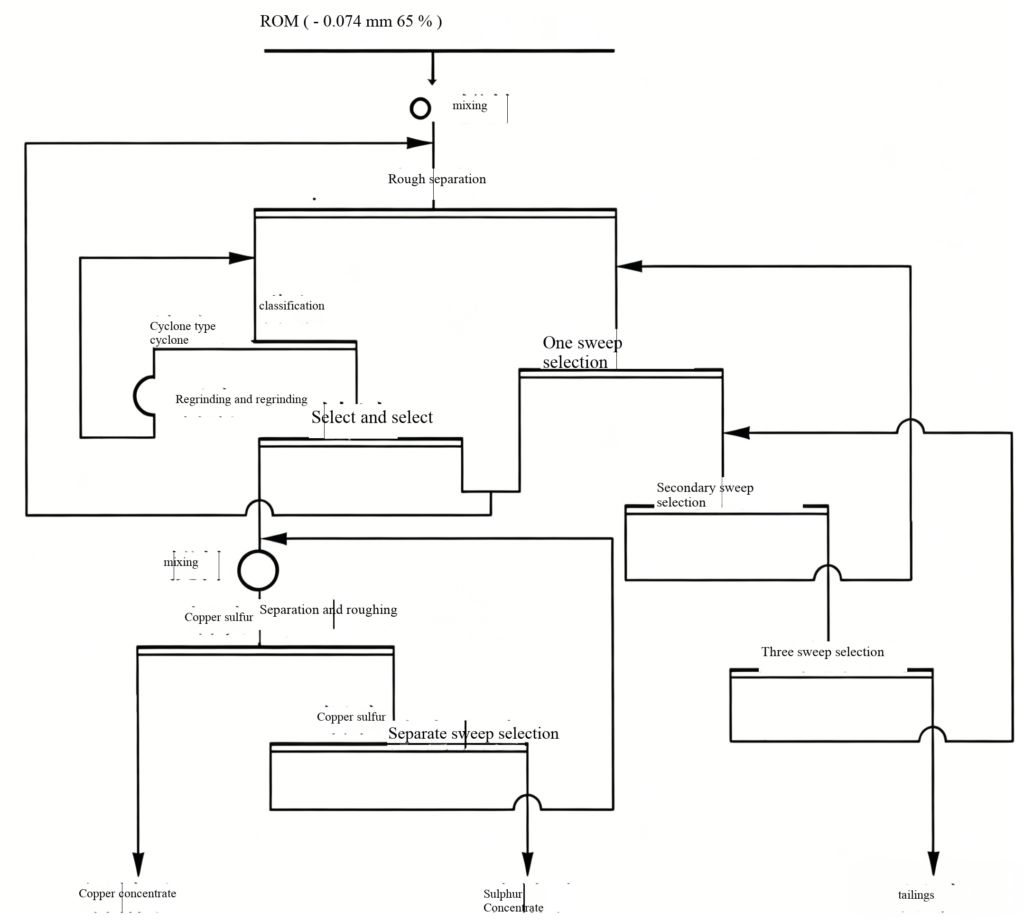
Figura 4-22: Nuevo diagrama de flujo del proceso de la mina de cobre de Fengshan tras añadir etapas de depuración
Tras la optimización del proceso, el proceso de enriquecimiento pasó a ser más razonable, produciendo un concentrado de cobre con una ley de 22,15% y una recuperación del 91,06%, mientras que la ley de los residuos se redujo a 0,058%. En comparación con la situación anterior a la modificación, la recuperación aumentó en 1,8 puntos porcentuales y el valor de la producción anual se incrementó en más de 4 millones de yuanes.
E. Mina de cobre de Dexing: extracción de cobre y oro
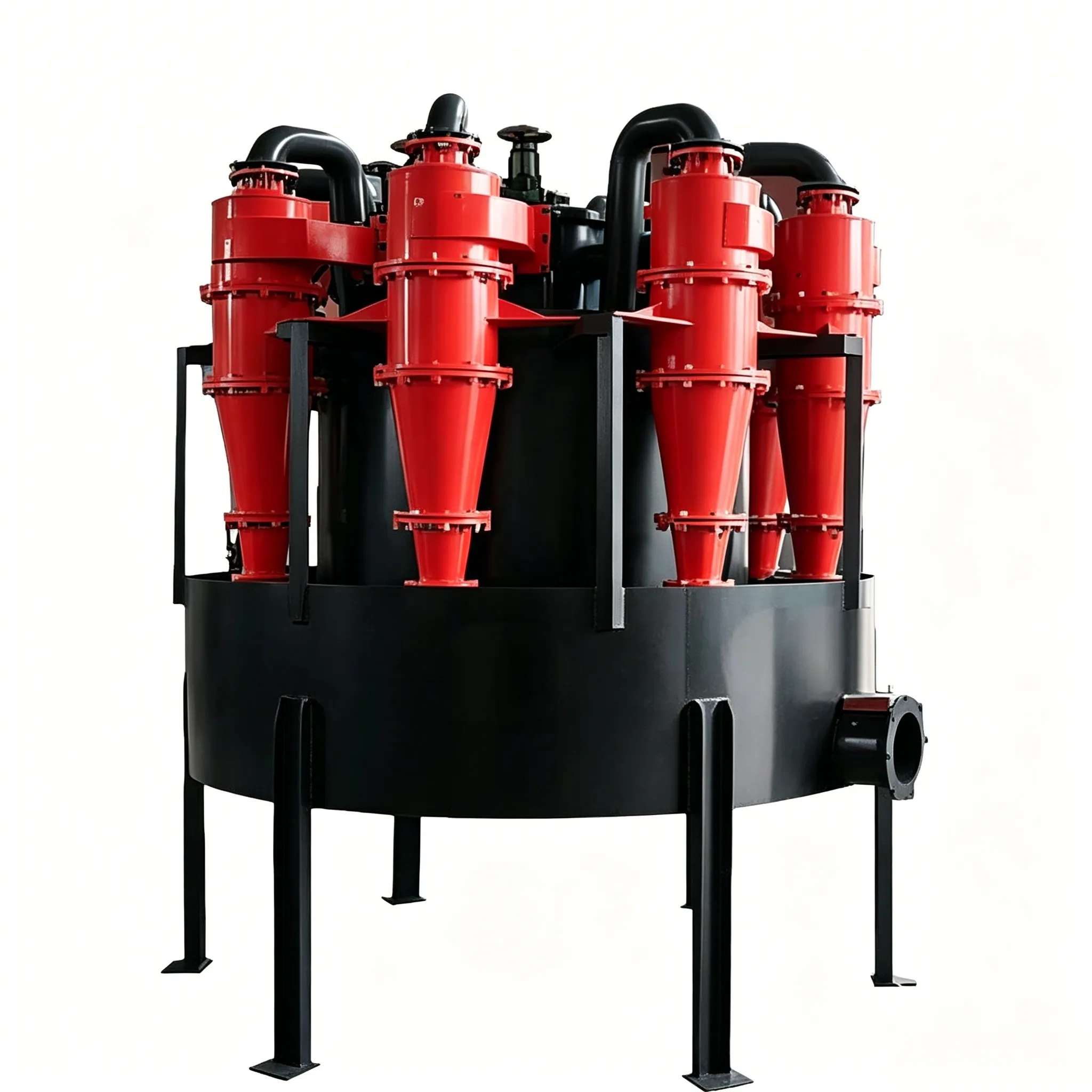
La mina de cobre de Dexing es una mina de cobre porfídico a cielo abierto a gran escala situada en China. Además del cobre, que es el metal principal, el mineral contiene componentes valiosos como oro, plata, molibdeno y azufre. Los principales minerales del yacimiento son la calcopirita, la pirita y la molibdenita; los minerales de ganga son principalmente cuarzo, sericita, clorita y biotita. La capacidad diaria de extracción y procesamiento alcanza las 100 000 toneladas, con un rendimiento de residuos de 97%. Para recuperar componentes valiosos de los residuos, la planta de concentración utiliza la separación por gravedad (hidrociclones) para recuperar la pirita. Los residuos se bombean directamente a hidrociclones de φ350 mm. La pirita, al ser densa y relativamente gruesa, se enriquece en el flujo inferior y se convierte en concentrado de azufre. Cuando la ley de la materia prima supera el 25%, se puede alcanzar una ley del concentrado de azufre de entre 35% y 40% y una recuperación operativa de aproximadamente el 60%. La recuperación anual de concentrado de azufre equivalente supera las 300 000 toneladas, lo que reduce las emisiones de residuos sólidos en más de 1 millón de toneladas al año. Para recuperar el concentrado de cobre, la mina de cobre de Dexing ha instalado placas de recogida de espuma en el canal abierto de residuos. La espuma mineralizada gruesa que contiene cobre procedente de los residuos se retira mediante raspado y, a continuación, se somete a clasificación, trituración y múltiples etapas de limpieza. Con la adición adecuada de xantato y aceite n.º 111, se puede obtener un concentrado de cobre de baja ley con una ley superior a 13%. Se ha establecido una capacidad de procesamiento de 20 000 t/d, lo que permite producir anualmente 5 000 t de concentrado de cobre de baja ley, que contienen 650 t de cobre y 30 kg de oro.
F. Una mina de cobre en la provincia de Guangdong: recuperación de cobre y hierro
Por razones históricas y técnicas, una mina de cobre de la provincia de Guangdong aplicaba un método de aprovechamiento sencillo. Del mineral solo se extraía y aprovechaba el cobre, y ni siquiera la recuperación de este era completa, lo que dejaba en los residuos elementos valiosos recuperables, como el cobre y el hierro. Con el desarrollo de la tecnología de tratamiento de minerales y metalurgia, especialmente gracias a la innovación en la hidrometalurgia moderna del cobre, los recursos de cobre que antes no se podían aprovechar se han transformado, pasando de ser mineral inservible a una gran fuente de riqueza. En la actualidad, un proceso que combina lixiviación, extracción con disolvente y electrolisis (L-SX-EW) para la extracción de cobre, seguido de la separación magnética de los residuos de lixiviación para la recuperación de hierro, permite recuperar eficazmente metales valiosos de los residuos, alcanzando recuperaciones de 55% de Cu y 40% de Fe.
Los residuos proceden de un proceso de segregación por cloración y flotación del siglo XX. Son pulverulentos, de color gris-negro, y parecen húmedos cuando contienen arcilla pesada. Debido al contenido de arcilla, la materia prima es de color marrón, marrón-rojo o marrón-amarillo. Antes de la segregación, el mineral era un yacimiento que contenía cobre y hierro. Tras la segregación, la mayor parte del cobre se recuperó mediante flotación, mientras que el hierro y otros minerales quedaron principalmente en los residuos de flotación. Los minerales metálicos presentes en los residuos incluyen magnetita, pirita, limonita, cobre nativo, cuprita, tenorita y calcopirita. Los minerales de ganga son principalmente feldespato, cuarzo, feldespato teñido de hierro, cuarzo y minerales arcillosos, junto con pequeñas cantidades de residuos de coque. El análisis multielemental y el análisis de la fase de cobre de la muestra de residuos se muestran en las tablas 4-37 y 4-38.
Tabla 4-37: Resultados del análisis químico multielemento de los residuos (%)
| Elemento | Cu | Fe | Al₂O₃ | Ca | Mg | SiO₂ |
|---|---|---|---|---|---|---|
| Fracción másica | 0.75 | 22.93 | 6.20 | 3.48 | 2.75 | 44.57 |
| Elemento | Pb | Zn | Mn | Como | Au/g·t⁻¹ | Ag/g·t⁻¹ |
|---|---|---|---|---|---|---|
| Fracción másica | 0.11 | 0.094 | 0.62 | 0.01 | 0.22 | 6.2 |
Tabla 4-38: Resultados del análisis de las fases del cobre (%)
| Fase del cobre | Cobre en forma de sulfuro | Cobre en forma de óxido libre | Cobre en óxido mixto | Cobre total |
|---|---|---|---|---|
| Fracción másica | 0.02 | 0.42 | 0.31 | 0.75 |
| Distribución | 2.67 | 56.00 | 41.33 | 100.00 |
Los resultados del análisis muestran que el contenido de cobre es de 0,75%, de los cuales el cobre soluble en ácido es de 0,42%, lo que representa el 56,00% del cobre total, presente principalmente en forma de óxidos de cobre. El contenido de cobre insoluble en ácido es de 0,33%, lo que representa el 44,00% del cobre total. Este cobre insoluble en ácido consiste principalmente en calcopirita de grano fino encerrada en ganga, así como en cuprita y tenorita mezcladas con limonita e impregnadas en los minerales de la ganga (es decir, el denominado óxido de cobre combinado en la ganga), además de una pequeña cantidad de cobre nativo. Tras el proceso de lixiviación, queda algo de cobre, principalmente en forma de óxido de cobre combinado y calcopirita, junto con una pequeña cantidad de cobre nativo no lixiviado.
Basándose en el flujo de proceso principal recomendado por la investigación experimental y aprovechando la experiencia práctica en la producción hidrometalúrgica de cobre tanto a nivel nacional como internacional, la recuperación de metales valiosos a partir de los residuos adopta un proceso de lixiviación – extracción con disolvente – electrolisis (L-SX-EW) para extraer el cobre, seguido de una separación magnética del residuo de lixiviación para recuperar el hierro. El proceso de producción de cobre consiste principalmente en lixiviación con agitación, separación sólido-líquido, extracción con disolvente, stripping y electrolisis. El diagrama de flujo del proceso de producción se muestra en la figura 4-23.
(1) Lixiviación por agitación. Durante el cribado, la materia prima se lava con agua y se convierte en una suspensión. A continuación, la pulpa pasa a un depósito de agitación para su lixiviación.
El proceso de lixiviación se divide en dos líneas paralelas, cada una de las cuales consta de tres tanques agitados, y se lleva a cabo mediante lixiviación en corriente paralela de tres etapas. La lixiviación se lleva a cabo a temperatura y presión normales, con una relación líquido-sólido de 2:1 y una concentración de lixiviante de 35-40 g/L, durante 2 horas.
(2) Separación sólido-líquido. La pulpa agitada se envía a un espesador. Se utiliza un circuito de lavado en dos etapas y de clasificación sólido-líquido en contracorriente, que conecta el espesador y las bombas. La solución de lixiviación rica en minerales se bombea a la planta de extracción por disolvente, mientras que el residuo de lixiviación se envía a un proceso de separación magnética para recuperar el concentrado de hierro.
(3) Extracción con disolvente. La solución de lixiviación entra en el equipo de extracción. Se lleva a cabo una extracción en contracorriente en dos etapas con un agente extractor. El extracto se lava y el refinado fluye por gravedad hacia un estanque de refinado para su uso como agua de reposición en la suspensión de alimentación y el lavado del espesador.
(4) Desmontaje. La fase orgánica lavada entra en el equipo de separación. La solución de separación se envía a las celdas de electroobtención. Tras la separación, la fase orgánica se preequilibra y la fase orgánica regenerada se devuelve al circuito de extracción para su reciclaje.
(5) Electroobtención. La solución de separación se introduce en celdas de electroobtención. Los ánodos están fabricados con aleaciones insolubles. Se hace pasar corriente eléctrica entre los electrodos, y los iones de cobre captan electrones y se depositan en los cátodos, produciendo cobre obtenido por electroobtención. El electrolito usado se recicla como agente de separación.
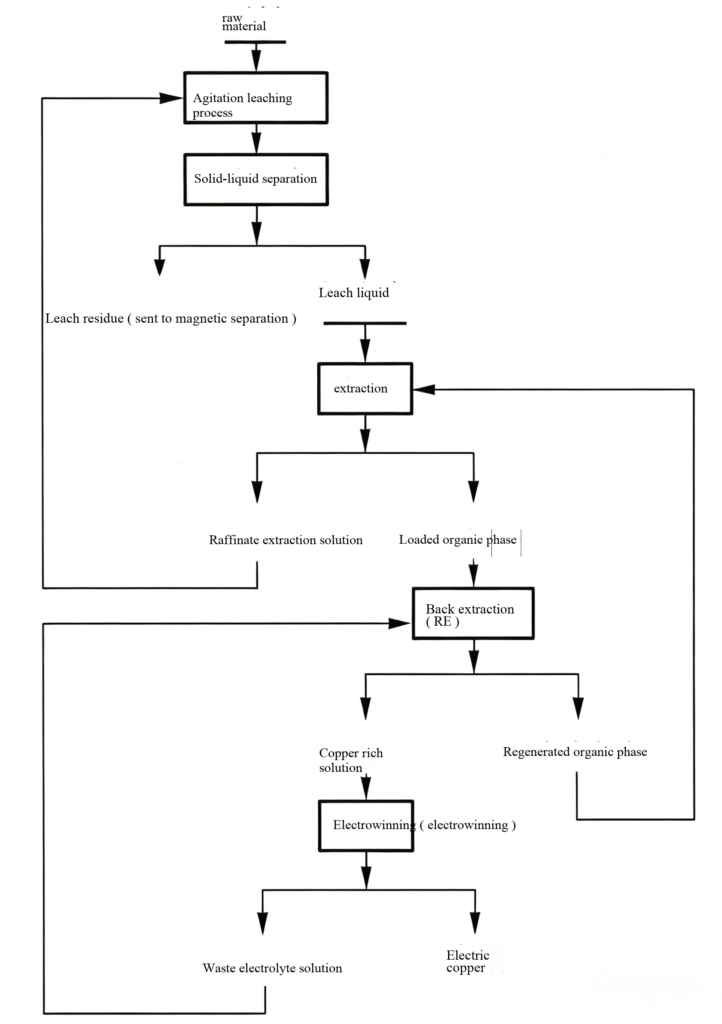
Figura 4-23: Esquema de principio del proceso de recuperación de cobre y oro
Figura 4-24: Diagrama de flujo del proceso de recuperación de hierro
El proceso de recuperación de hierro utiliza un único método de separación magnética. El flujo del proceso consta de una etapa de concentración preliminar, una etapa de purga y, tras la remolienda del concentrado preliminar, dos etapas de limpieza. Dado que la arena de los residuos tiene un alto contenido en arcilla, lo que afecta significativamente a la recuperación de hierro, se añade una operación de lavado a contracorriente antes de la concentración preliminar. Según el análisis granulométrico de los residuos en bruto, el hierro se distribuye principalmente en la fracción de tamaño inferior a 0,038 mm. Teniendo en cuenta las condiciones reales de producción, se ha determinado que la finura de remolienda del concentrado bruto debe ser de 90% con un tamaño de paso de 0,074 mm. El flujo del proceso para la recuperación de hierro se muestra en la figura 4-24.
Los resultados muestran que la ley del cobre obtenido por electrolysis puede alcanzar el 99,91 TP3T, con una recuperación del 551 TP3T. En cuanto al hierro recuperado de los residuos de lixiviación mediante separación magnética, su ley es de 551 TP3T y su recuperación, de 401 TP3T.
G. Casos internacionales de reprocesamiento de residuos de cobre
La planta de cobre de Morenci, en Arizona (EE. UU.), utiliza ácido sulfúrico para tratar los residuos de óxido de cobre almacenados, con lo que consigue una recuperación de cobre del 73,8% y produce 50 000 toneladas de cobre catódico al año, lo que representa el 13% de la producción de cobre de la planta.
La mina de Chuquicamata, en Chile, utiliza un proceso de lixiviación en grandes tanques con ácido sulfúrico, seguido de electrólisis. A un ritmo de 52 500 toneladas de cobre al año, se han recuperado un total de 900 000 toneladas de cobre a partir de grandes volúmenes de residuos antiguos acumulados durante muchos años.
Rusia y España también han obtenido buenos resultados en la recuperación de cobre a partir de residuos mineros mediante la tecnología de lixiviación bacteriana.
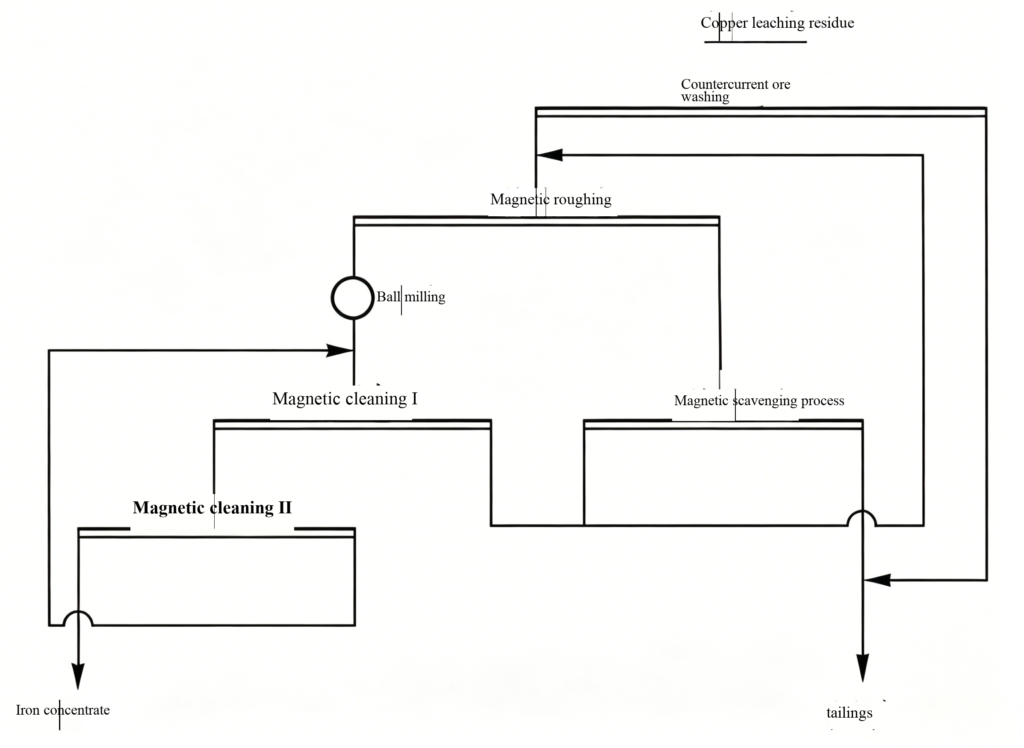
Figura 4-24: Diagrama de flujo del proceso de recuperación de hierro
En el extranjero, también se utilizan procesos combinados de beneficio y metalurgia para el retratamiento de los residuos de cobre. En Míchigan (EE. UU.), los residuos de cobre se vuelven a triturar y se someten a flotación (o lixiviación con amoníaco). Con un volumen de procesamiento de 82 millones de toneladas, se producen 338 000 toneladas de cobre. En EE. UU. también se utiliza otro proceso similar al de «carbono en lixiviación» (CIL) para la recuperación de oro: se añaden partículas de carbón impregnadas con un extractante a la pulpa de residuos de cobre para recuperar este metal. La clave es que el extractante debe ser económico. En la planta de concentración de Almalyk, en Rusia, los residuos se trituran hasta alcanzar un tamaño aproximado de 50% con un tamaño de partícula inferior a 74 μm y, a continuación, se someten a flotación, lo que permite obtener una recuperación adicional de 80% de cobre a partir de los residuos. En la planta de concentración de Balkhash, en Kazajistán, se recuperan el cobre y el molibdeno de los residuos de bornita de baja ley mediante etapas de flotación, remolienda y limpieza.

 English English
  Spanish
 Russian
 Arabic
 Swahili
 French
 Turkish
 Portuguese
 Korean
 Japanese
 German
 Italian