Trituradoras de mandíbulas
Tipos de trituradoras de mandíbulas Las trituradoras de mandíbulas se han utilizado en la producción industrial...

A. Wushan Copper Mine
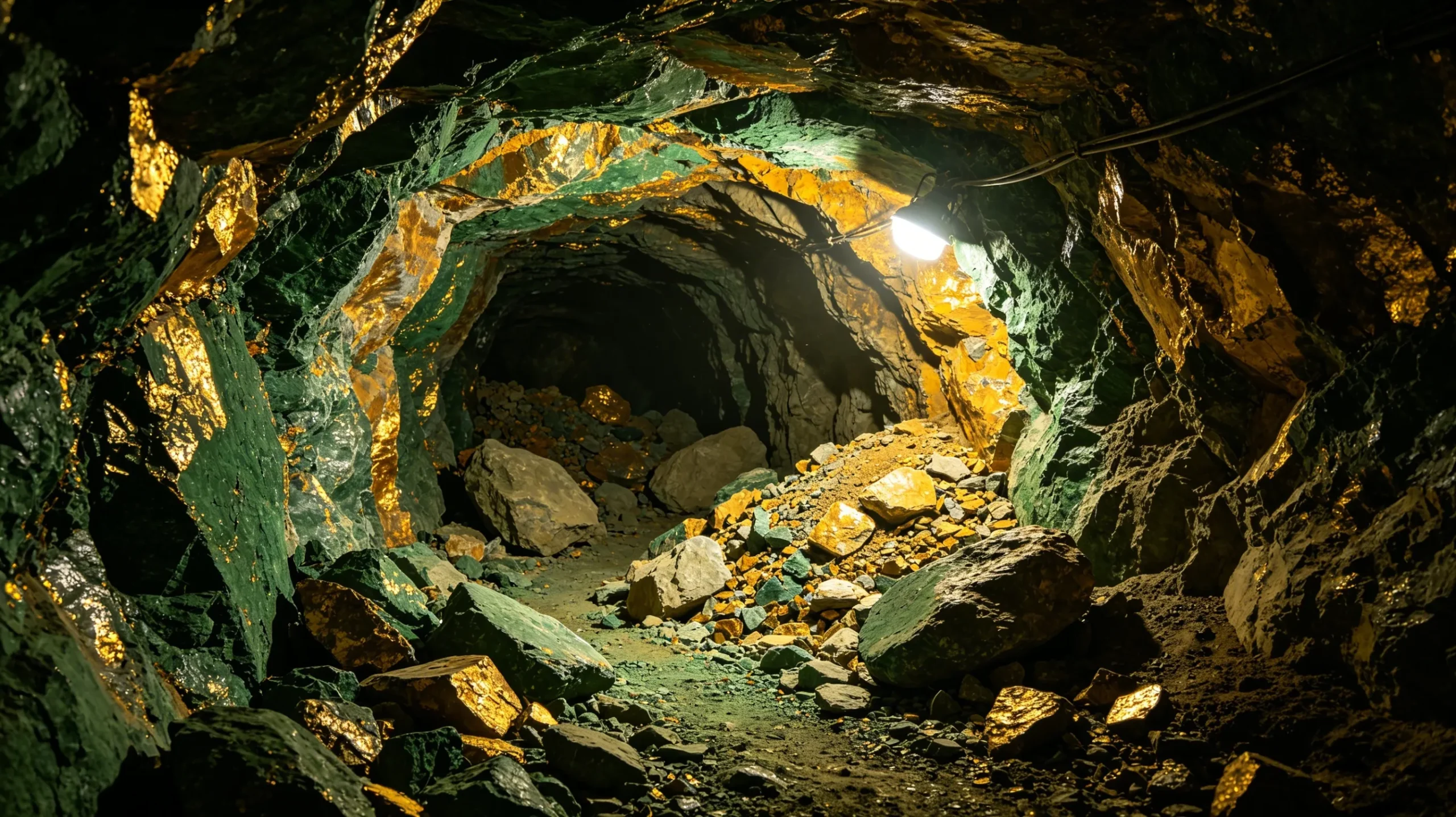
Wushan Copper Mine is a pyrite‑type high‑sulfur deposit, with an average raw ore sulfur content of over 25%. The concentrator processes ore transitioning from the secondary enrichment zone to the primary zone. The copper minerals in the raw ore are mainly secondary copper sulfides such as digenite and chalcocite (approximately 55%–60%). These secondary copper minerals are prone to over‑grinding and oxidation, producing copper ions that strongly activate pyrite. Although washing is carried out, the removal rate of copper ions is generally only about 50%; the remainder enters the grinding circuit with the washed ore and pulp, causing significant difficulties in copper‑sulfur separation and directly affecting beneficiation performance. In the original design and production, a process of depressing sulfur and floating copper was adopted. To inhibit pyrite activated by copper ions and ensure the grade of the preferentially floated copper concentrate, 15 kg/t of lime is added during grinding, raising the pH of copper rougher flotation to 12. Under the action of strong alkali and high calcium, pyrite is strongly depressed (copper minerals with poor floatability are also affected to varying degrees). Moreover, the low aeration and agitation efficiency of the A‑type flotation machine makes it difficult to recover coarser particles, which are lost to the tailings. As a result, the copper and sulfur separation indices are not high, and the flotation tailings still contain 22%–26% sulfur.
Based on site conditions, through bench‑scale tests, equipment selection, industrial tests, and production practice, a gravity separation process was adopted to recover pyrite from the flotation tailings. The production flow is as follows: pulp is drawn from the last flotation cell of the sulfur flotation circuit, wood chips are screened out, and the pulp is pumped by a No. 3 Warman pump to a fixed pulp distributor, which then evenly distributes the pulp via a rotary distributor to 20 spiral concentrators. The gravity tailings flow by gravity to the tailings sampling and conveying system; the sulfur concentrate is pumped by a No. 2 rubber‑lined pump to the sulfur concentrate sampling and dewatering system of the main production line; the middlings are returned to the No. 3 Warman pump. The gravity sulfur recovery system was officially put into operation in June 1989, recovering 16,000–17,000 tons of sulfur concentrate annually from the flotation sulfur tailings, increasing the overall sulfur recovery by 6.23–12.24 percentage points.
B. A Copper Mine in Qinghai
A copper mine in Maqên County, Golog Tibetan Autonomous Prefecture, Qinghai Province, is a polymetallic complex sulfide deposit discovered in the mid‑to‑late 1960s. It contains various valuable elements such as copper, cobalt, zinc, iron, sulfur, gold, and silver. The deposit is large in scale and classified as a large‑sized orebody. The original mine design only recovered copper minerals, so the tailings still contain many valuable elements. A process mineralogy study of the tailings revealed high sulfur and iron contents that can be comprehensively recovered. The chemical multi‑element analysis and mineral composition analysis of the tailings sample are shown in Tables 4-39 and 4-40.
To fully utilize resources and reduce tailings discharge, direct flotation tests were conducted on the tailings under both weakly acidic and weakly alkaline conditions. After comprehensive consideration, a weak‑alkaline flotation process was adopted in production to recover sulfur and iron minerals from the tailings. The process flow sheet is shown in Figure 4-25.
Table 4-39 Multi‑element chemical analysis results of tailings (mass fraction / %)
| Element | Cu | Zn | TFe | TS | Co | Pb | SiO₂ | Al₂O₃ | CaO |
|---|---|---|---|---|---|---|---|---|---|
| Content | 0.31 | 0.98 | 40.40 | 35.60 | 0.012 | 0.017 | 2.80 | 0.032 | 4.38 |
| Element | MgO | Como | F | P | K₂O | Na₂O | Au/g·t⁻¹ | Ag/g·t⁻¹ |
|---|---|---|---|---|---|---|---|---|
| Content | 1.96 | 0.013 | n.d. | 0.014 | 0.038 | 0.036 | 0.16 | 11.20 |
Table 4-40 Mineral composition and relative content (%)
| Metallic minerals | Relative content | Gangue minerals | Relative content |
|---|---|---|---|
| Pyrite | 75.06 | Carbonate minerals | 18.46 |
| Magnetite | 1.83 | Chlorite | 0.62 |
| Chalcopyrite | 0.43 | Quartz | 0.92 |
| Pyrrhotite | 0.31 | Sericite | 1.54 |
| Sphalerite | 0.50 | Actinolite, diopside | 0.36 |
| Apatite | <0.1 |
Figure 4-25 Process flow sheet for recovering sulfur and iron from tailings
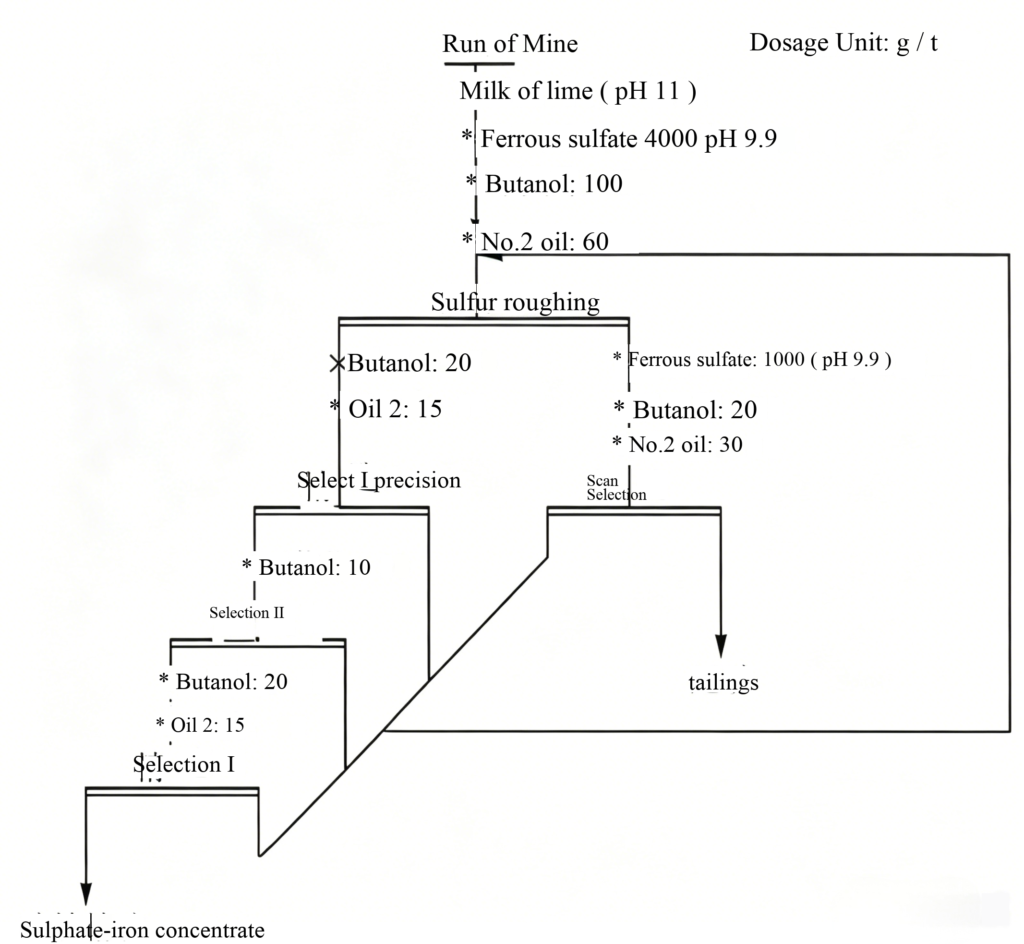
Figure 4-25 Process flow sheet for weak‑alkaline flotation
Production practice shows that using alkaline flotation to recover sulfur and iron minerals from the copper tailings of this mine is entirely feasible, and a high‑quality sulfur‑iron concentrate has been obtained. The production indices are shown in Table 4-41.
Table 4-41 Average indicators of weakly alkaline flotation production (in percentage)
| Product Name | Yield rate | Grade | recovery rate | ||
| S | Fe | S | Fe | ||
| Concentrate | 52.91 | 46.50 | 44.30 | 70.50 | 60.26 |
| Residuos | 47.09 | 21.86 | 32.83 | 29.50. | 39.74 |
| Raw ore | 100.00 | 34.90 | 38.90 | 100.00 | 100.00 |