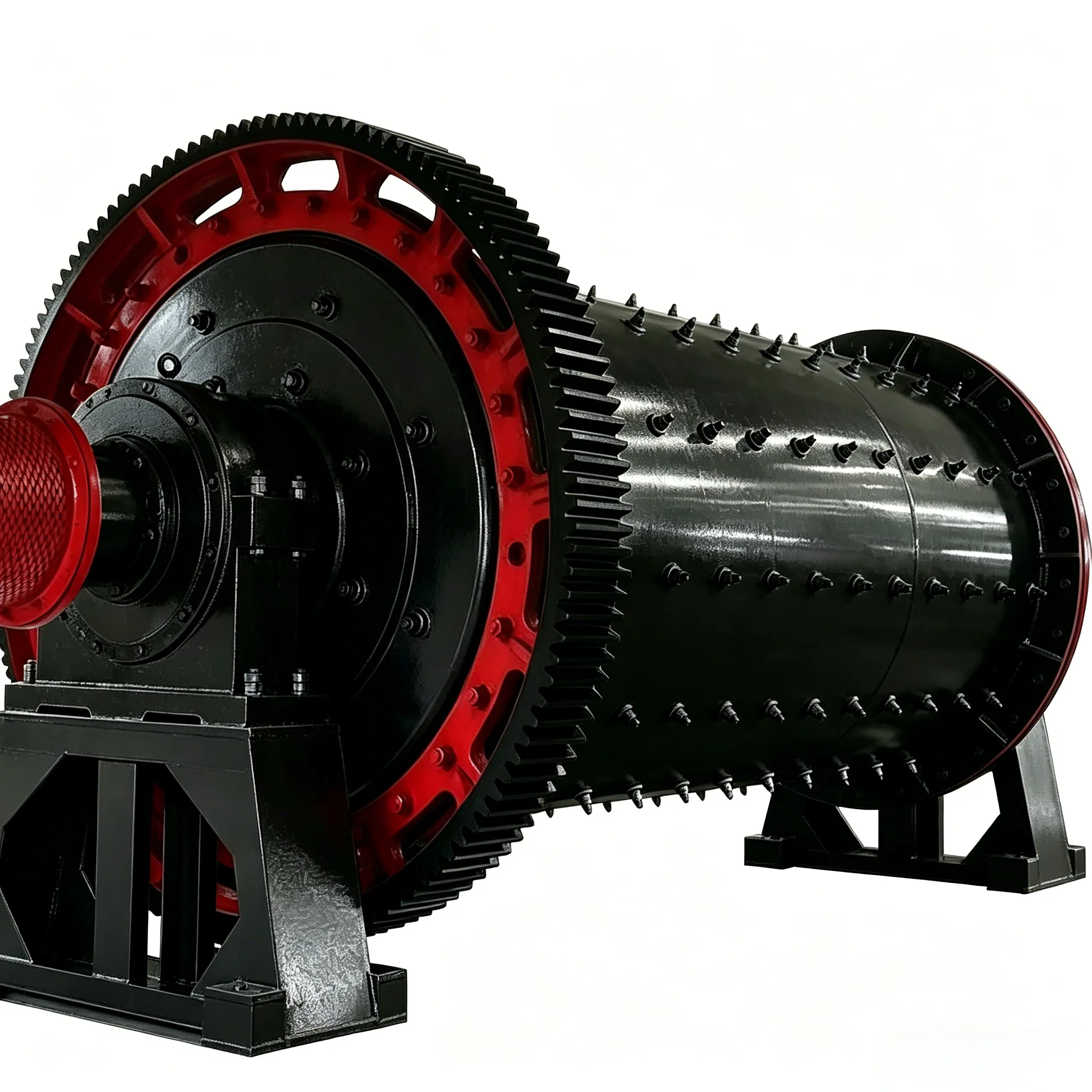
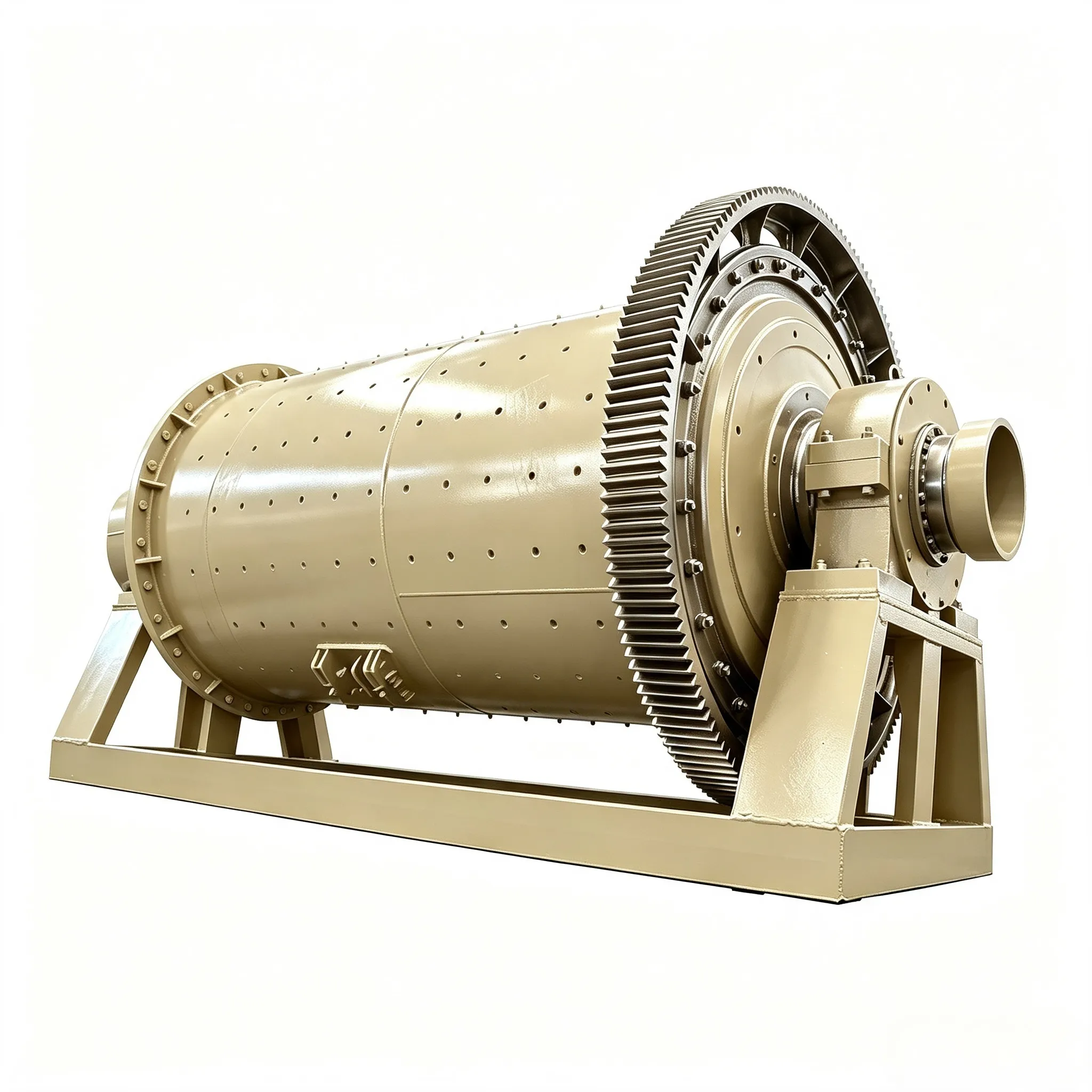
Шаровая мельница с решетчатой разгрузкой
Конструкция шаровой мельницы с решетчатым выходом. Отличие решетчатого…

1. A full‑flotation beneficiation method for simple siderite ore, characterized in that it is carried out by the following steps: after crushing and grinding the siderite feed, one stage of roughing and three stages of cleaning are performed;
2. The full‑flotation beneficiation method for simple siderite ore according to claim 1, characterized in that said crushing and grinding comprises crushing the siderite feed to below 3 mm, homogenizing it, and grinding it in a ball mill at a liquid‑to‑solid weight ratio of 1:2 to a fineness such that the –0.074 mm fraction accounts for 75%–95% and the –0.100 mm fraction accounts for 100%.
3. The full‑flotation beneficiation method for simple siderite ore according to claim 1, characterized in that said dewatering and drying comprises drying the froth product until the moisture content by weight is below 5%.
I. Техническая область
The present invention relates to a full-flotation beneficiation method for simple siderite ore, belonging to the technical field of mineral processing engineering for iron ores. It is particularly applicable to the beneficiation of ores in which siderite is the main mineral, associated with hematite–limonite, pyrrhotite, pyrite, etc.
II. Искусство в контексте
Among proven iron ore reserves, although siderite (including simple siderite, hematite, limonite, siderite–limonite associations, etc.) accounts for less than 10% of the world’s reserves, forecasts indicate that in potential world iron ore resources, siderite accounts for more than 40%. China has relatively abundant siderite resources, with reserves ranking among the top in the world, totalling about 1.834 billion tonnes. Because siderite has a very fine dissemination size, complex composition, and low grade, iron mainly occurs in carbonate form. Part of the siderite, due to the substitution of Fe²⁺ by Mg²⁺ and Mn²⁺, forms magnesium–manganese siderite as isomorphous mixtures, and is hosted in hematite–limonite and magnetite. Limonite has low grade and is complex and refractory, making it difficult to improve iron grade and recovery; moreover, it tends to produce slime during grinding, which affects the beneficiation index. At present, siderite, limonite, and associated complex low‑grade iron ores are widely recognized as difficult beneficiation challenges. To fully develop low‑grade siderite resources dominated by siderite, abroad, conventional physical beneficiation processes such as gravity separation, high‑intensity magnetic separation, flotation, roasting, etc., either singly or in combination, are often used. In the 1950s and 1960s, several Eastern European countries built semi‑industrial siderite concentrators, but all suffered from generally low techno‑economic indices. For example, the Bakal concentrator in Ukraine, which used a roasting process, could only achieve a concentrate grade of up to 53%; another example is the Czech Děčín concentrator, which used a magnetic‑flotation combined flowsheet and produced an iron concentrate grade of only about 35%. In Germany, the Siegerland plant treated manganese‑bearing siderite and obtained an iron concentrate grade of 50% with a recovery of 62.8% (see “Beneficiation technology for carbonate iron ores containing magnesium oxide,” Обогащение импортных металлических руд, 1975, 7: 4652). На сегодняшний день ни в стране, ни за рубежом не существует промышленной практики добычи простых сидеритовых руд. Несмотря на то что часть сопутствующего сидерита может быть полностью извлечена в технологических схемах переработки железной руды на железорудных рудниках Дайе и Цзюцюань, получаемый сидеритовый концентрат содержит лишь около 35% железа.
Siderite is a carbonate‑type mineral, and after roasting its iron grade increases significantly. Although the roasting process can yield an iron concentrate with a relatively high grade, it involves two roasting stages (one magnetizing roasting and one sintering), resulting in very high costs. If conventional physical beneficiation methods can enrich the iron grade to about 39%, and then the product is pelletized and sintered, the iron grade can be raised to about 55%, thereby eliminating one roasting step and reducing roasting costs, with correspondingly improved economic benefits. Similarly, high‑intensity magnetic separation consumes large amounts of electricity and water, has high costs, and is difficult to industrialize. At present, there is no successful practical experience with full‑flotation for siderite, mainly due to difficulties in selecting effective siderite collectors.
III. Краткое описание изобретения
The present invention provides a full‑flotation beneficiation method for simple siderite ore. For simple siderite ores with small amounts of associated hematite–limonite, pyrrhotite, pyrite, etc., a full‑flotation flowsheet is adopted, which can yield a siderite concentrate with a grade of TFe ≥ 38% and an iron recovery of 75–86%. The full‑flotation flowsheet provided by the present invention uses a siderite collector that causes strong physicochemical adsorption on the surface of siderite, thereby achieving effective separation of siderite from other minerals.
The full‑flotation flowsheet for siderite according to the present invention comprises the following steps:
(1) Дробление и измельчение кормов: The siderite feed is crushed to below 3 mm and homogenized. It is then ground in a ball mill at a liquid‑to‑solid ratio (by weight) of 1:2. The grinding fineness is such that the –0.074 mm fraction accounts for 75–95% and the –0.100 mm fraction accounts for 100%.
(2) Flotation stages: One stage of roughing and three stages of cleaning are carried out for siderite.
Коллектор типа SP описан в патентной заявке № 200810058134.3; его состав и процесс изготовления следующие:
Сырье:
Соотношения масс:
Чистота додециламина составляет ≥96%, смешанного амина — ≥95%, концентрация соляной кислоты — ≥35% по массе; концентрация серной кислоты составляет ≥95% по массе, чистота каустической соды составляет ≥96%, чистота эфирного амина составляет ≥98%, чистота нафтеновой кислоты составляет ≥98%.
Коллектор SP готовят в соответствии с приведенной выше формулой следующим образом:
Compared with known technologies, the present invention has the following advantages and positive effects: For simple siderite ores with small amounts of associated hematite–limonite, pyrrhotite, pyrite, etc., the full‑flotation flowsheet can yield a siderite concentrate with TFe ≥ 38% and an iron recovery of 75–86%. The full‑flotation flowsheet provided by the present invention uses a siderite collector that allows strong physicochemical adsorption on the siderite surface, enabling effective separation of siderite from other minerals.
IV. Краткое описание чертежей
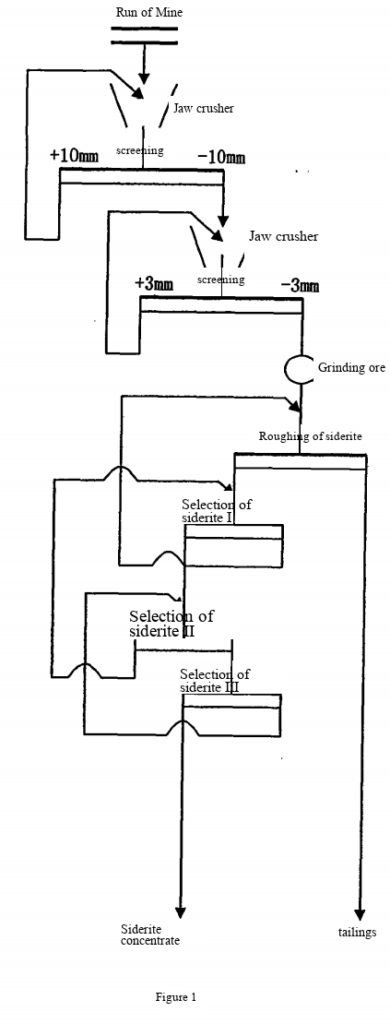
На рисунке 1 представлена технологическая схема настоящего изобретения.
V. Подробное описание вариантов реализации
Пример 1
The siderite sample came from a certain area in Yunnan Province. The raw ore did not exceed the limits for sulfur, phosphorus, or arsenic. The main recoverable element was iron, and other elements did not reach values for comprehensive recovery. The mineral content and chemical composition of the raw ore are shown in Tables 1 and 2, respectively. Using the full‑flotation flowsheet shown in Figure 1, the siderite was crushed to below 3 mm and homogenized. It was ground in a ball mill at a liquid‑to‑solid ratio of 1:2 to a fineness of –0.074 mm occupying 85.38%. The flotation reagent scheme was:
(1) Siderite roughing: sodium hexametaphosphate 300 g/t, stirring for 4 min; sulfuric acid to pH 5–6, stirring for 4 min; SP collector 600 g/t, stirring for 3 min; starch 600 g/t, stirring for 3 min; No. 2 oil 40 g/t, stirring for 3 min; aeration and froth scraping.
(2) Siderite cleaning I: starch 300 g/t, stirring for 3 min; No. 2 oil 20 g/t, stirring for 3 min; aeration and froth scraping.
(3) Siderite cleaning II: sulfuric acid to pH 5–6; starch 200 g/t, stirring for 3 min; No. 2 oil 15 g/t, stirring for 3 min; aeration and froth scraping.
(4) Siderite cleaning III: sulfuric acid to pH 5–6; starch 100 g/t, stirring for 3 min; No. 2 oil 6 g/t, stirring for 3 min; aeration and froth scraping.
The froth product was dewatered and dried to a moisture content below 5% by weight to obtain the siderite concentrate. The achieved indices are shown in Table 3.
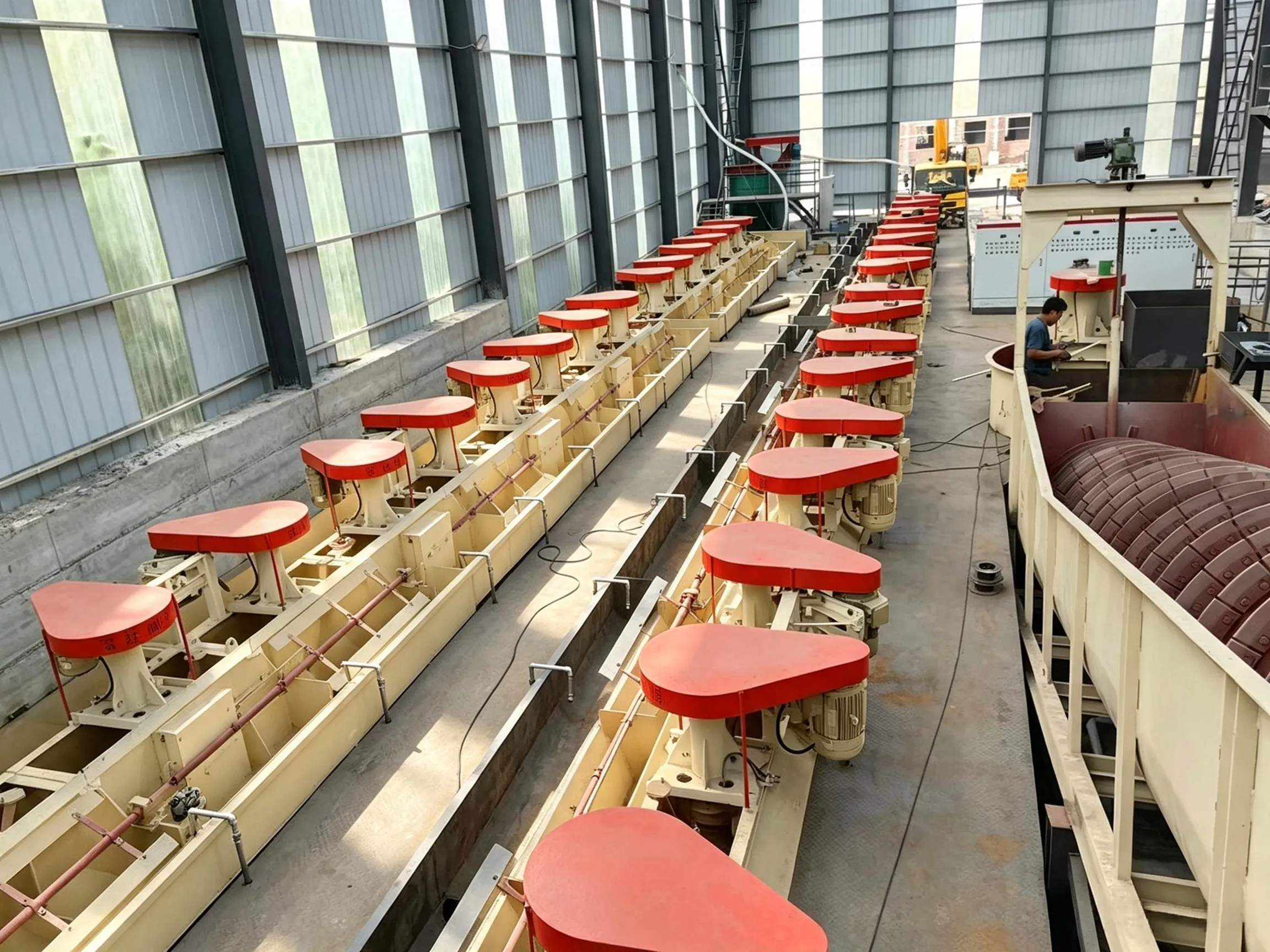
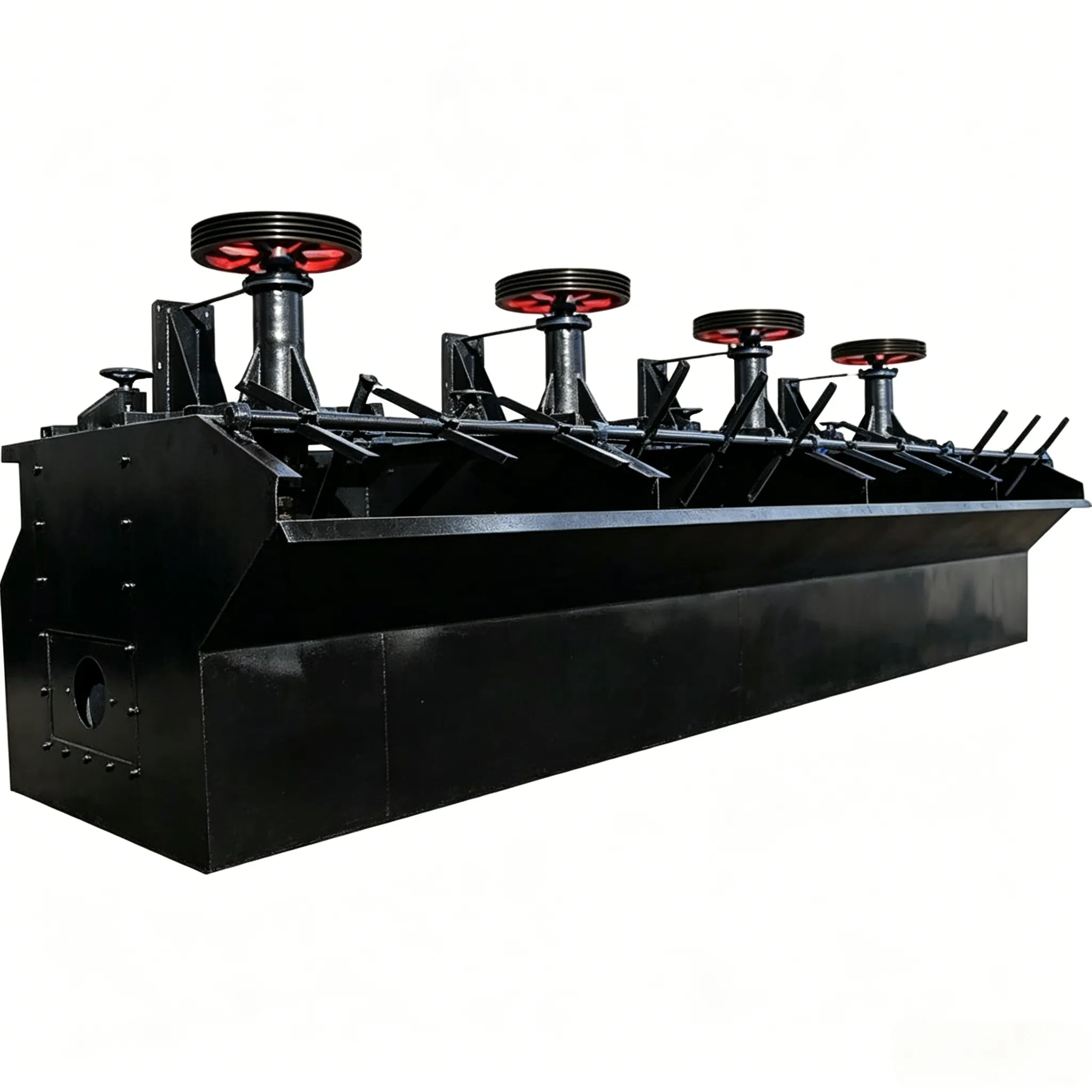
Используемое оборудование: шаровая мельница Φ900×1800 мм, щековые дробилки Φ10×50 мм и Φ3×30 мм, самоаэрируемые флотационные ячейки (объем одной ячейки — 3 м³) производства Куньминского завода горнодобывающего оборудования «Ciba», спиральный классификатор Φ2000 мм, гидроциклон Φ150 мм.
Таблица 1 Минеральный состав сырой руды
| Минерал | Сидерит | Гематит–лимонит | Магнетит | Силикат железа | Ганге и др. |
|---|---|---|---|---|---|
| Содержание (%) | 52.17 | 2.64 | 0.42 | 1.98 | 42.99 |
Таблица 2 Химический анализ сырой руды
| Компонент | Fe | S | P | Как | SiO₂ |
|---|---|---|---|---|---|
| Содержание (%) | 26.89 | 0.02 | 0.031 | 0.002 | 18.12 |
Таблица 3 Показатели обогащения технологической схемы
| Продукт | Доходность (%) | Iron grade (%) | Iron recovery (%) |
|---|---|---|---|
| Siderite concentrate | 57.23 | 39.01 | 83.00 |
| Хвосты | 42.77 | 10.69 | 17.00 |
| Корм | 100.00 | 26.90 | 100.00 |
Пример 2
The siderite sample came from a certain area in Yunnan Province. The raw ore did not exceed the limits for sulfur, phosphorus, or arsenic. The main recoverable element was iron, and other elements did not reach values for comprehensive recovery. The mineral content and chemical composition of the raw ore are shown in Tables 4 and 5, respectively. Using the full‑flotation flowsheet of Figure 1, the grinding fineness was –0.074 mm occupying 88.78%. The reagent scheme was:
(1) Siderite roughing: sodium hexametaphosphate 400 g/t; sulfuric acid to pH 5–6; SP collector 700 g/t; starch 600 g/t; No. 2 oil 40 g/t; aeration and froth scraping.
(2) Siderite cleaning I: starch 400 g/t; No. 2 oil 20 g/t; aeration and froth scraping.
(3) Siderite cleaning II: sulfuric acid to pH 5–6; starch 200 g/t; No. 2 oil 15 g/t; aeration and froth scraping.
(4) Siderite cleaning III: sulfuric acid to pH 5–6; starch 200 g/t; No. 2 oil 6 g/t; aeration and froth scraping.
The indices are shown in Table 6.
Таблица 4 Минеральный состав сырой руды
| Минерал | Сидерит | Гематит–лимонит | Магнетит | Силикат железа | Ганге и др. |
|---|---|---|---|---|---|
| Содержание (%) | 55.22 | 1.88 | 0.21 | 3.99 | 38.70 |
Таблица 5 Химический анализ сырой руды
| Компонент | Fe | S | P | Как | SiO₂ |
|---|---|---|---|---|---|
| Содержание (%) | 28.96 | 0.032 | 0.028 | 0.006 | 23.99 |
Таблица 6 Показатели обогащения технологической схемы
| Продукт | Доходность (%) | Iron grade (%) | Iron recovery (%) |
|---|---|---|---|
| Siderite concentrate | 60.17 | 40.02 | 83.15 |
| Хвосты | 39.83 | 12.35 | 16.85 |
| Корм | 100.00 | 28.96 | 100.00 |
Пример 3
The siderite sample came from a certain area in Gansu Province. The raw ore did not exceed the limits for sulfur, phosphorus, or arsenic. The main recoverable element was iron, and other elements did not reach values for comprehensive recovery. The mineral content and chemical composition of the raw ore are shown in Tables 7 and 8, respectively. Using the full‑flotation flowsheet of Figure 1, the grinding fineness was –0.074 mm occupying 81.68%. The reagent scheme was:
(1) Siderite roughing: sodium hexametaphosphate 400 g/t; sulfuric acid to pH 5–6; SP collector 700 g/t; starch 600 g/t; No. 2 oil 40 g/t; aeration and froth scraping.
(2) Siderite cleaning I: starch 400 g/t; No. 2 oil 20 g/t; aeration and froth scraping.
(3) Siderite cleaning II: sulfuric acid to pH 5–6; starch 200 g/t; No. 2 oil 15 g/t; aeration and froth scraping.
(4) Siderite cleaning III: sulfuric acid to pH 5–6; starch 200 g/t; No. 2 oil 6 g/t; aeration and froth scraping.
The beneficiation indices are shown in Table 9.
Таблица 7 Минеральный состав сырой руды
| Минерал | Сидерит | Гематит–лимонит | Магнетит | Силикат железа | Ганге и др. |
|---|---|---|---|---|---|
| Содержание (%) | 56.18 | 2.13 | 0.98 | 3.67 | 37.04 |
Таблица 8 Химический анализ сырой руды
| Компонент | Fe | S | P | Как | SiO₂ |
|---|---|---|---|---|---|
| Содержание (%) | 29.98 | 0.012 | 0.038 | 0.0052 | 21.88 |
Таблица 9 Показатели обогащения технологической схемы
| Продукт | Доходность (%) | Iron grade (%) | Iron recovery (%) |
|---|---|---|---|
| Siderite concentrate | 60.66 | 41.06 | 82.99 |
| Хвосты | 39.34 | 12.97 | 17.01 |
| Корм | 100.00 | 30.01 | 100.00 |

 English English
 Spanish
 Russian
 Arabic
 Swahili
 French
 Turkish
 Portuguese
 Korean
 Japanese
 German
 Italian