
Example of Nickel Ore Beneficiation
The Jinping Baimazhai Nickel Mine belongs to the kenex group. This mine…


The Bayan Obo iron ore deposit in Baotou is a unique plowshare-type iron deposit in my country, a sedimentary-hydrothermal metamorphic deposit, and a large polymetallic symbiotic deposit dominated by iron, rare earth elements, and niobium. Based on its material composition and ore beneficiation properties, the ore can be classified into rich iron ore, magnetite, fluorite-type medium-lean oxide ore, and mixed-type (including pyroxene, amphibole, mica, and dolomite-type) medium-lean oxide ore. Rich iron ore and magnetite are easily beneficiated. Iron oxide ore is difficult to beneficiate due to its fine mineral distribution, complex symbiotic relationships, and similar physicochemical properties of valuable minerals and gangue. Mixed-type oxide ores contain a relatively large amount of iron-bearing silicate minerals, such as pyroxene, amphibole, and biotite. With the increase of iron-bearing silicate minerals such as pyroxene, the proportion of dispersed iron also increases. Iron existing in a dispersed state within iron-bearing silicate minerals is unrecoverable. If this portion of iron minerals enters the concentrate, it will lower the iron grade of the concentrate and significantly increase the K₂O and Na₂O content. Therefore, effective separation of iron minerals from iron-bearing silicate minerals is crucial during the beneficiation process.
Separating weakly magnetic iron minerals from iron-bearing silicate minerals during the beneficiation process is relatively difficult, primarily due to their physicochemical properties. Their densities, magnetic properties, and floatability are quite similar, making separation challenging regardless of whether gravity separation, strong magnetic separation, or flotation is employed.
The Baogang Beneficiation Plant currently uses a weak magnetic-strong magnetic-reverse flotation process to process oxide ores. The disadvantage is that the iron-bearing silicate minerals, which account for approximately 15.00% of the total mineral content in the strong magnetic concentrate, as well as quartz and other minerals, have similar floatability to hematite. In reverse flotation, these minerals are difficult to separate from the valuable iron minerals, causing the grade of the strong magnetic concentrate after reverse flotation to hover around 52%, making further improvement difficult. Through ore property analysis, beneficiation condition experiments, and process experiments, the Ma’anshan Mining Research Institute of China Steel Group finally developed a process for treating Bayan Obo oxide ore using weak magnetic concentrate reverse flotation alone, followed by strong magnetic concentrate-reverse flotation-direct flotation (alkaline reverse flotation, acidic direct flotation). The experimental process flow is shown in Figure 4-10.
After systematic experimental research, good indicators were achieved. A new process for oxide ores, namely, separate reverse flotation of weakly magnetic concentrate and reverse-direct flotation of strongly magnetic concentrate, can achieve an iron concentrate grade of 66% and an iron concentrate recovery rate of 68.78%. The contents of F, (K₂O+Na₂O), and SiO₂ in the iron concentrate are 0.482%, 0.243%, and 3.25%, respectively. The new process first separates easily floatable minerals such as fluorite, rare earth elements, barite, and carbonates from weakly magnetic iron minerals and silicate minerals through reverse flotation. Then, under weakly acidic conditions, the surface electrical properties of the minerals are changed to achieve positive flotation of iron, thus achieving the separation of silicon and iron.
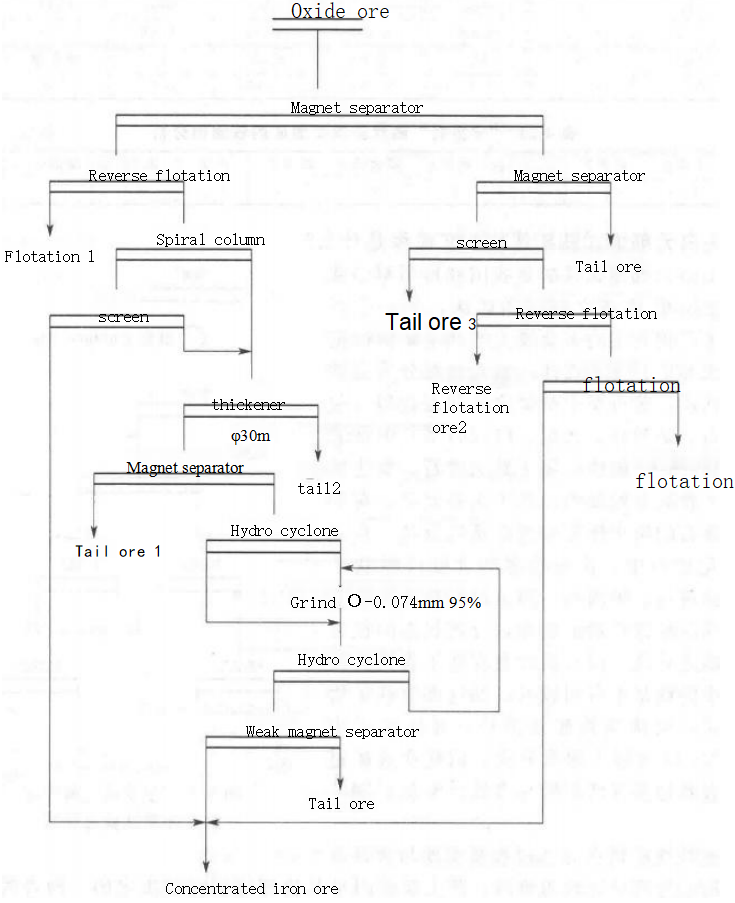
Figure 4-10 Flowchart of the new process for Bayan Obo oxide ore