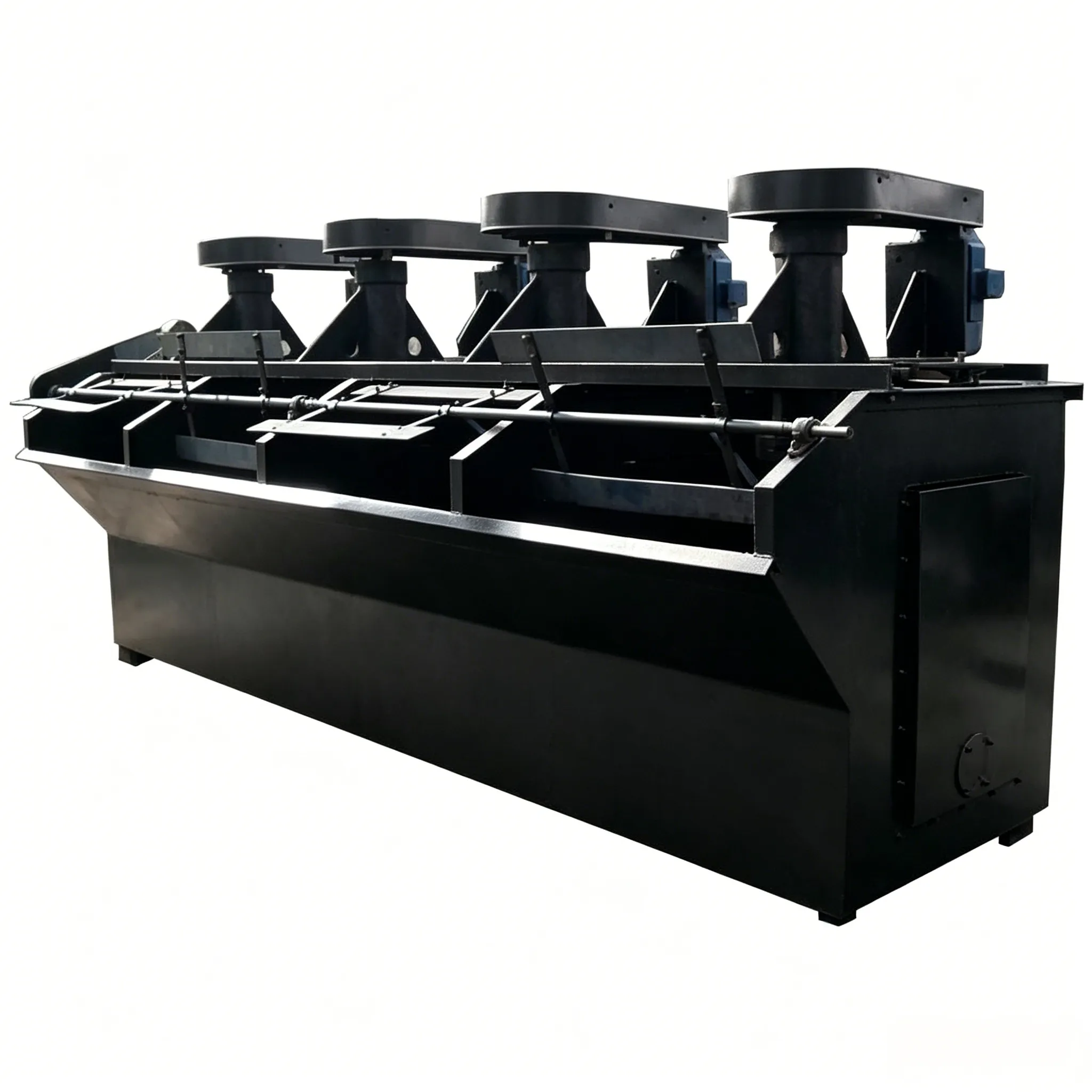
XJ Flotation Machine
XJ Flotation Machine (also known as Type A or XJK) This machine…

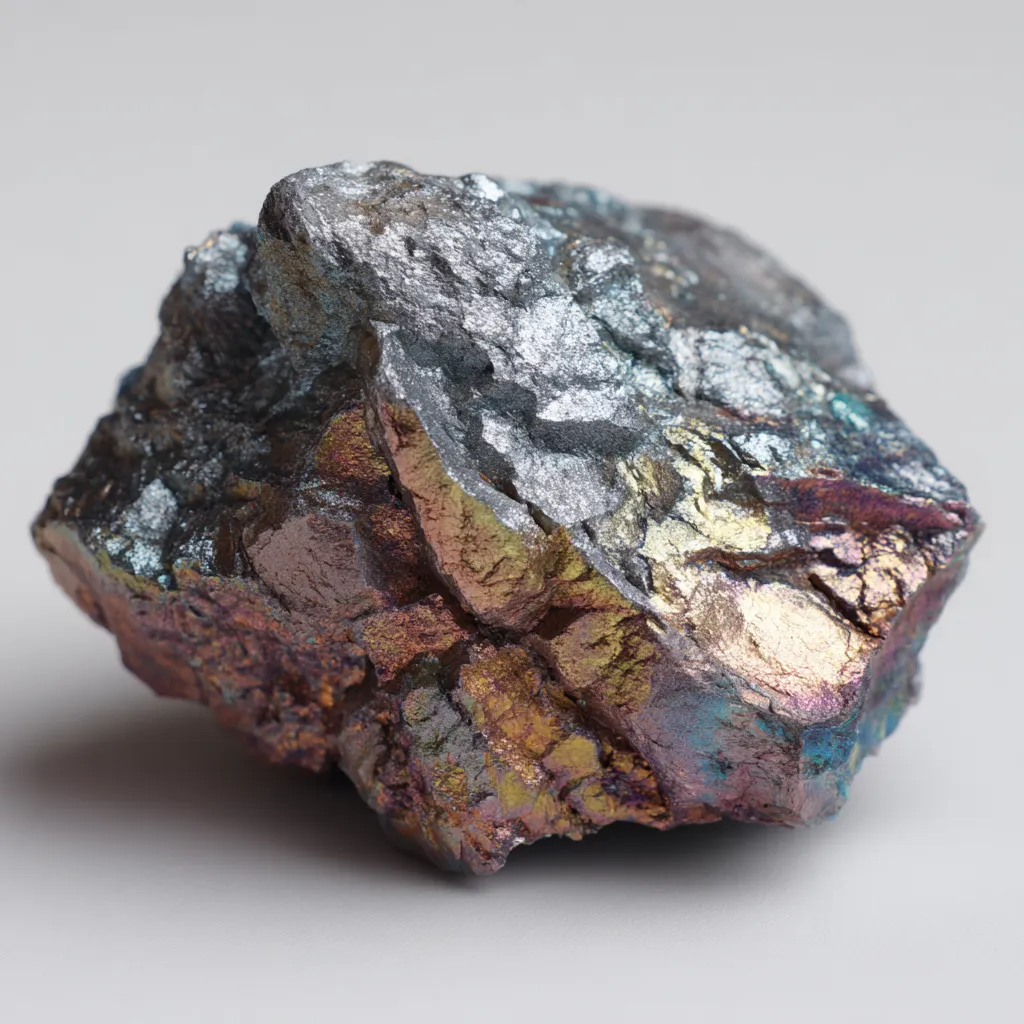
Nickel laterite ore, a type of nickel oxide ore, is high in iron, low in silicon and magnesium, and contains 1%–2% nickel; while nickel silicate ore is low in iron, high in silicon and magnesium, and contains 1.6%–4.0% nickel. Currently, the development and utilization of nickel oxide ore mainly focuses on nickel laterite ore. Because nickel in nickel oxide ore is often isomorphously dispersed in gangue minerals and has a very fine particle size, direct mechanical beneficiation methods are difficult to achieve good results. While roasting the ore to alter its mineral structure can yield better technical indicators, the cost is high and it has not yet been used in industrial production.
Currently, nickel oxide ore processing often involves crushing and screening to pre-remove large, weakly weathered bedrock ore blocks with low nickel content, resulting in low enrichment. In recent years, due to the continuous development of nickel smelting technology, the increase in nickel consumption, and the continuous depletion of rich sulfide nickel ore resources, the development and utilization of nickel oxide ore has received increasing attention. Nickel oxide deposits are generally shallow, suitable for large-scale open-pit mining, and can also be selectively mined. Due to their lower mining costs, they are competitive with nickel sulfide ores.
Methods for smelting and enriching nickel oxide ores can be broadly classified into pyrometallurgical and hydrometallurgical processes. Pyrometallurgical smelting can be further divided into matte smelting, ferronickel leaching, and pellet leaching. Hydrometallurgical smelting includes reduction roasting-atmospheric pressure ammonia leaching and high-pressure acid leaching. The rotary kiln pellet milling method in pyrometallurgical smelting is an old method, but its disadvantages include a complex process, low nickel content in the pellets, low nickel recovery rate, and inability to recover cobalt. Electric furnace smelting is characterized by a high nickel recovery rate; some nickel is incorporated into the ferronickel leaching process and can be recovered during refining. This method is suitable for processing nickel ferrosilicon ore. However, when used for laterite ores with high iron content, the iron recovery rate is low, and energy consumption is high. Atmospheric pressure ammonia leaching in hydrometallurgical smelting has the disadvantage of low cobalt recovery rate. High-pressure acid leaching is suitable for processing nickel oxide ores with low magnesium silicate content.
Currently, the electric furnace smelting of nickel oxide is the most common method for processing nickel oxide; while the rotary kiln granulation method is rarely used. Hydrometallurgical methods, such as ammonia leaching and acid leaching, are already in industrial application. Other new nickel oxide smelting methods, such as high-temperature chlorination and sulfuric acid roasting extraction processes, are still in the research stage, but some progress has been made.