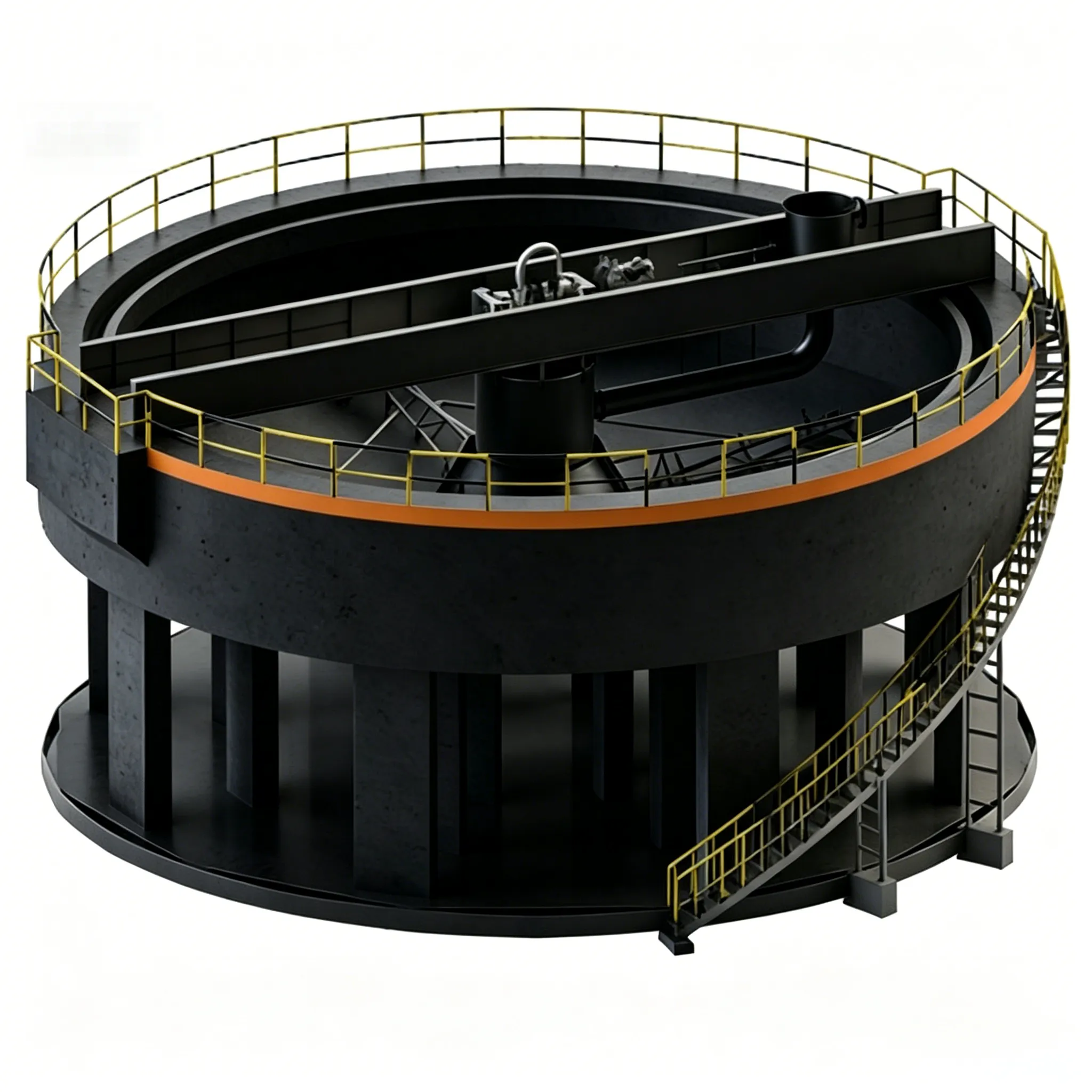
Center-Drive Thickener
Center-Drive Thickener Currently, the center-drive thickeners produced in China are relatively small…

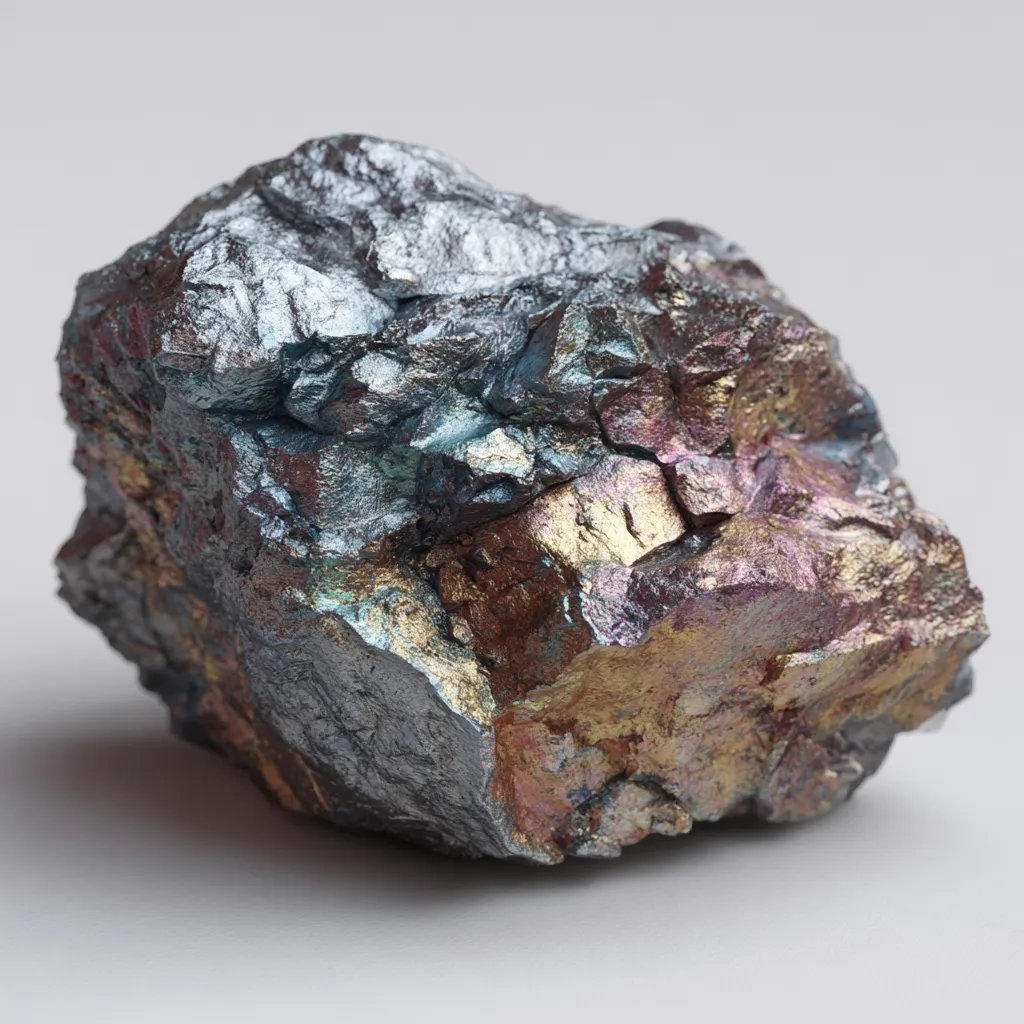
The Jinping Baimazhai Nickel Mine belongs to the kenex group. This mine is known for its difficult beneficiation due to its low ore content and high nickel-containing pyrrhotite and talc content.
Starting in 2003, Central South University collaborated with kenex group to conduct research on high-efficiency beneficiation technology for low-grade nickel ore. Based on systematic process mineralogical research, and considering the properties of valuable minerals and gangue minerals in the ore, in-depth research was conducted on aspects such as high-efficiency reagent systems, removal and suppression of easily floatable gangue, and optimization of flotation process structure, resulting in new flotation technologies for low-grade nickel ore. In 2004, the “desliming-flotation new process” was put into industrial application, and in 2008, the “whole-sliming enhanced flotation new process” was implemented, significantly improving the beneficiation technical indicators of the difficult-to-beneficiate low-grade nickel ore from Jinping Baimazhai, achieving significant economic and social benefits.
(1) Ore Properties Compared with other sulfide nickel ores, the Yunnan Jinping Baimazhai nickel mine has the following characteristics: ① The useful nickel minerals are pyrrhotite and nickel-bearing pyrrhotite, with nickel accounting for up to 37.5% in pyrrhotite; ② The nickel content in the useful minerals is low, such as nickel-bearing pyrrhotite, where nickel is only 0.89%, making it difficult to obtain high-grade nickel concentrate; ③ The gangue minerals are chlorite and talc. The talc content is over 20%, which makes nickel ore flotation difficult.
(2) Mineral Composition and Content The ore mostly occurs in a sparsely disseminated to moderately disseminated manner, with some occurring in a dense massive form. The former has a scattered distribution of metallic minerals, while the latter has a bronze-yellow color and a metallic luster. The mineral composition of the ore is relatively complex. The main metallic mineral is pyrrhotite, followed by chalcopyrite, nickel pyrrhotite, magnetite, pyrite, and limonite. Occasionally, sphalerite, galena, molybdenite, and native silver are found sporadically. Gangue minerals are mainly chlorite and talc, followed by biotite, sericite, quartz, tremolite, actinolite, calcite, and serpentine, as shown in Table 5-8.
Table 5-8 Analysis results of mineral composition and content of raw ore unit:%
| mineral | Nickel pyrite | Chalcopyrite, Copper Blue | Orpiment | Pyrite | magnetite | goethite | |
| content | 1.2 | 1.0 | 14.2 | 0.2 | 1.9 | 0.3 | |
| mineral | chlorite | talc | Biotite, Sericite | quartz | tremolite, actinolite | calcite | other |
| content | 38.1 | 21.7 | 9.7 | 2.8 | 4.3 | 4.1 | 0.5 |
(3) Phase analysis results of nickel: Nickel is mainly distributed in pyrite and pyrrhotite. Especially in pyrrhotite… With a nickel distribution rate as high as 37.5%, it is necessary to recover nickel pyrrhotite and nickel-bearing pyrrhotite in order to improve the nickel recovery rate. As shown in Table 5-9.
Table 5-9 Phase analysis results of raw nickel ore unit:%
| Nickel phase | Nickel in nickel pyrite | Nickel in orpiment | Nickel oxide | Nickel in silicates | total |
| content | 0.36 | 0.24 | 0.014 | 0.026 | 0.64 |
| Distribution rate | 56.25 | 37.50 | 2.29 | 4.26 | 100.0 |
(4) Characteristics and Distribution of Major Minerals Nickel pyrite often occurs as irregular granules, some of which are equiaxed granules. In general, nickel pyrite in ore occurs in roughly four forms:
① Coarse-grained aggregates embedded in massive ore rich in pyrrhotite. These aggregates often contain fine pores. Grain size varies considerably, ranging from larger than 0.6 mm to as small as 0.05 mm, typically 0.1–0.4 mm. Chalcopyrite is found filling the edges and fissures of these aggregates.
② Subhedral or anhedral granules distributed along the edges and fissures of pyrrhotite aggregates. The morphology of these aggregates varies considerably, with grain sizes ranging from 0.02–0.15 mm, and a few larger than 0.2 mm. This form of nickel pyrite is sometimes distributed along the edges of chalcopyrite or magnetite. ③ Fine, flame-like, feather-like, or droplet-like particles are found within some pyrrhotite crystals, typically smaller than 0.02 mm, and in some cases even smaller than 0.005 mm. Locally, this pyrrhotite may exhibit directional arrangement. Clearly, this is a product formed by the separation of nickel, originally present in an isomorphous form within the pyrrhotite lattice, due to solid solution separation.
④ Irregularly distributed sporadically within gangue minerals, these particles are usually quite fine, mostly 0.01–0.06 mm. Of the four types of pyrrhotite mentioned above, the first and second types are the most abundant, with a mineral content ratio of approximately 30:65:4:1. Therefore, pyrrhotite occurring in the first and second forms is the primary target for nickel mineral processing.
(5) Technical Approach Due to the high content of highly floatable talc and the low nickel content but high proportion of pyrrhotite in the Jinping nickel ore, a persistent contradiction has existed in years of beneficiation production: how to improve nickel beneficiation recovery without reducing concentrate grade. This is mainly manifested in the fact that talc is easily floated but difficult to suppress, resulting in a low nickel grade in the concentrate; simultaneously, pyrrhotite has poor floatability, making it difficult to float, leading to a low nickel flotation recovery rate. If pyrrhotite is recovered, the nickel concentrate grade will be even lower. To address these issues, a technical approach was proposed to prevent talc from entering the nickel concentrate and to enhance the recovery of nickel-bearing pyrrhotite, thereby improving the nickel flotation recovery rate while ensuring the nickel concentrate grade. Therefore, based on research in process mineralogy, a systematic study was conducted on the flotation and suppression of talc, the flotation of nickel-bearing pyrrhotite, the flotation separation of sulfide minerals and magnesium silicate minerals, the efficient combination and rational addition of reagents, and the optimization of the process structure. In 2004, a new “desliming-flotation process” was developed. Through talc desliming and flotation, the influence of talc on the flotation of nickel-bearing sulfide minerals was effectively eliminated. While maintaining a nickel concentrate grade of around 3%, the nickel recovery rate increased from 60%–65% to 70%–75%. In 2008, a “whole-sliming enhanced flotation process for lean nickel ore” was developed. Through selective inhibition of talc, the nickel lost during talc desliming and flotation was recovered, increasing the nickel flotation recovery rate to 75%–80%.
The main technical measures employed in this process are as follows: ① Desliming and flotation of talc to create conditions for the flotation of nickel sulfide minerals. Utilizing the natural floatability of talc, a suitable frother is selected, and talc is pre-flotated before entering the nickel sulfide ore flotation process. The nickel loss during talc flotation can be controlled to 2%–4%. ② Selecting effective depressants for magnesium silicate minerals to inhibit the flotation of residual talc and chlorite. ③ A high-efficiency combined collector is used to achieve simultaneous flotation of nickel-bearing sulfide minerals such as nickel pyrrhotite and nickel-bearing pyrrhotite. ④ The nickel flotation process structure is optimized to ensure that magnesium-bearing silicate minerals enter the tailings as early and timely as possible. The basic parameters of this process are: grinding fineness of -74 μm accounts for 70% to 75%, desliming flotation, nickel roughing and scavenging, nickel cleaning, and copper-nickel mixed concentrate for copper-nickel separation to obtain nickel concentrate and copper concentrate.