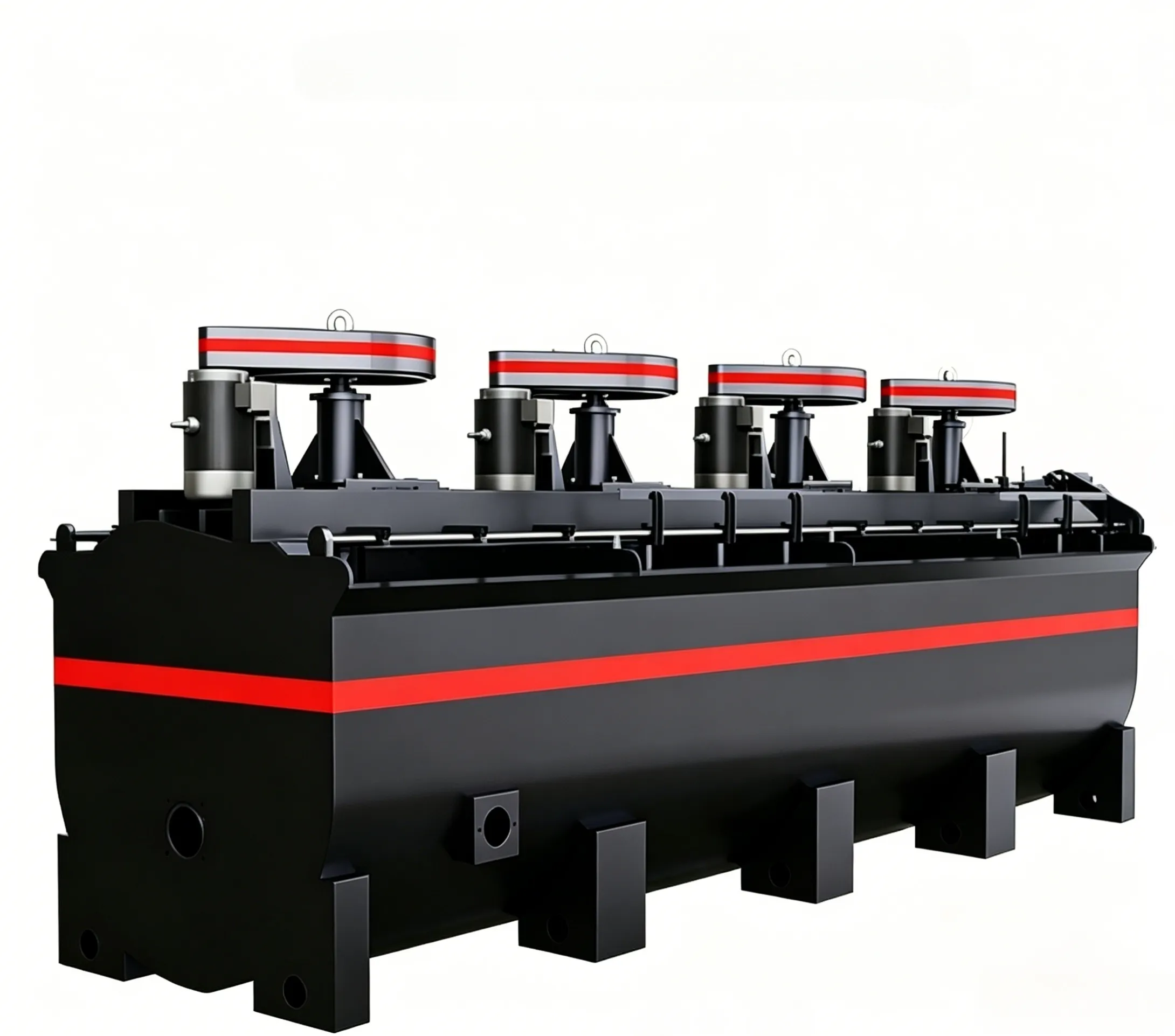
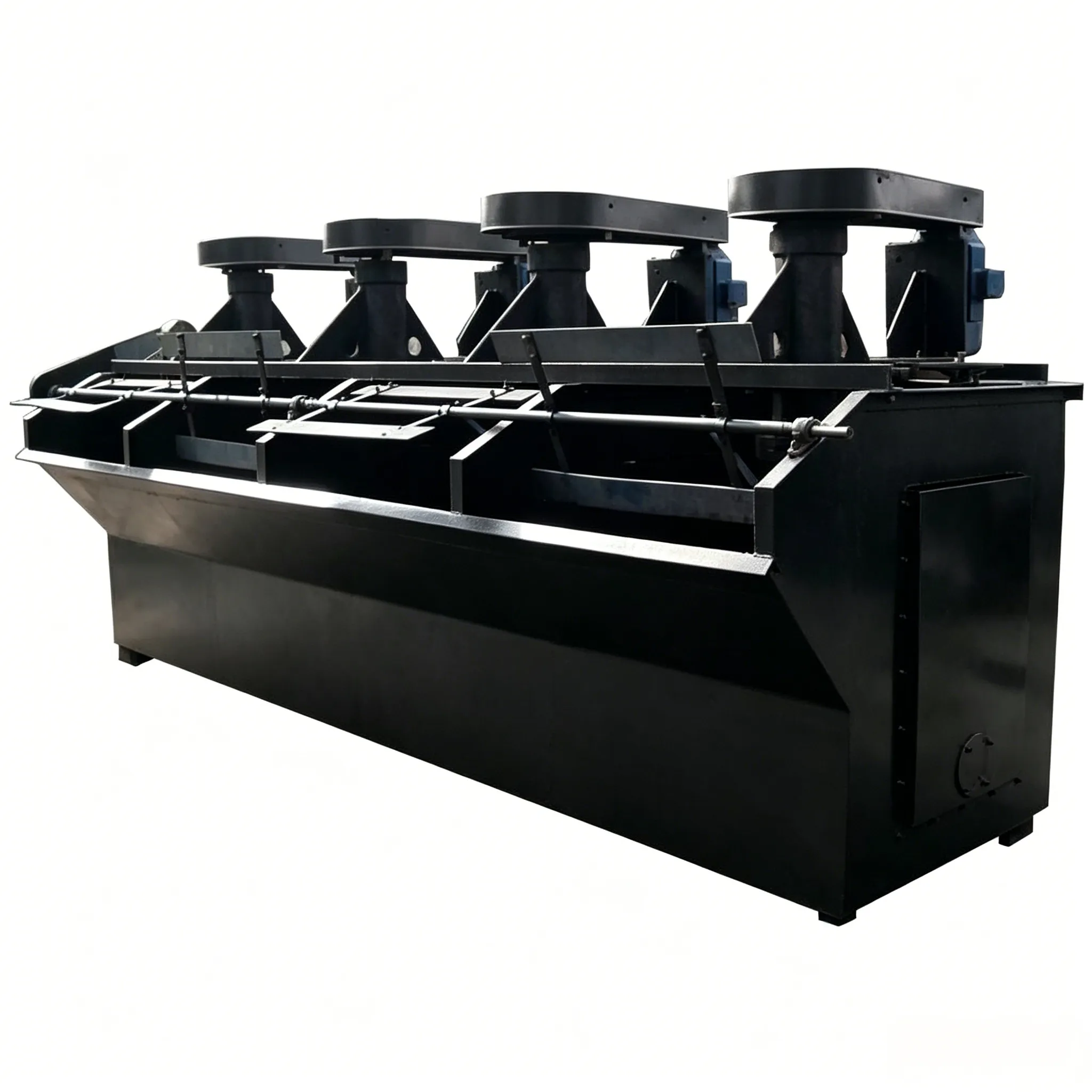
Máquina de flotación GF
Máquina de flotación GF Esta máquina de flotación está diseñada para partículas gruesas y...


Esta solución está diseñada para talco (dureza 1 en la escala de Mohs, excelente capacidad de pulido) utilizando una línea de producción con un molino Raymond con una capacidad de 10 toneladas por hora (10 TPH). El talco es un material naturalmente blando y fácil de moler, lo que lo convierte en uno de los materiales más adecuados para los molinos Raymond.
La finura requerida del talco en polvo varía según la aplicación: los rellenos plásticos suelen requerir aproximadamente malla 400, los recubrimientos suelen exigir de 800 mallas o más fina, y los productos de grado cosmético necesitan ≥800 mesh. Esta solución está diseñada para un grado de finura de uso general de Malla 400 (D97) , y la velocidad del clasificador se puede ajustar para obtener mallas de distintos tamaños según sea necesario.
| Artículo | Requisito / Parámetro |
|---|---|
| Materia prima | Mineral de talco, tamaño de los trozos ≤30 mm |
| Contenido de humedad | ≤6 % (el talco tiene por naturaleza un bajo contenido de humedad, por lo que suele cumplir este requisito) |
| Finesse final | Malla 400 (D97), ajustable de 80 a 400 mallas |
| Resultado | ≥10 t/h |
| Alimentación | Trifásica, 380 V / 50 Hz; potencia total instalada: entre 350 y 450 kW aproximadamente |
Para alcanzar una producción de 10 t/h, se dispone de las siguientes opciones:
| Modelo | Capacidad | Tamaño del pienso | Rango de finura | Observaciones |
|---|---|---|---|---|
| T145 Molino Raymond | 8-15 t/h | ≤30 mm | Malla de 40-400 | Recomendado – margen suficiente para 10 tph |
| Molino Raymond T130 | 6-10 t/h | ≤25 mm | Malla de 40-400 | Apenas alcanza el objetivo: no recomendado (sin margen) |
| Molino Raymond grande de 5R / 6R | 5-20 t/h | ≤30 mm | Malla de 80-400 | Opción alternativa |
Recomendación: T145 Molino Raymond con una capacidad de entre 8 y 15 t/h puede satisfacer holgadamente el requisito de 10 tph, dejando un margen para las variaciones en la materia prima.
Nota especial: Algunas fuentes indican que, para proyectos de producción de talco en polvo que requieran más de 10 T/H, un molino de rodillos vertical puede ofrecer mejores ventajas generales. Si el presupuesto lo permite y los requisitos de eficiencia energética y medioambientales son elevados, se podría considerar un molino de rodillos vertical de la serie LM (con una capacidad de 10-40 T/H). Esta solución se basa en un molino Raymond tradicional a modo de referencia y comparación.
| No. | Equipamiento | Cantidad | Función |
|---|---|---|---|
| 1 | Trituradora de mandíbulas | 1 | Tritura los trozos grandes de talco hasta un tamaño ≤30 mm |
| 2 | Elevador de cangilones | 1 | Introducir el material triturado en el silo de almacenamiento |
| 3 | Caja de almacenamiento | 1 | Material de reserva para garantizar una alimentación continua |
| 4 | Alimentador vibratorio electromagnético | 1 | Alimentación uniforme y cuantitativa al molino |
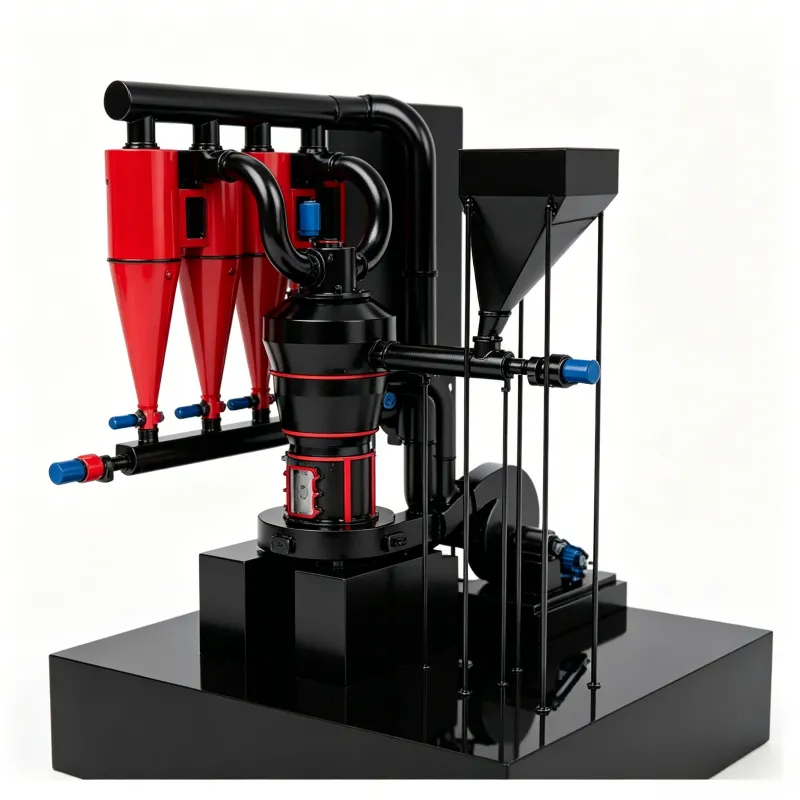
| 5 | Molino Raymond T145 (unidad principal) | 1 | Equipos de trituración (rodillos trituradores, anillos, palas, etc.) |
| 6 | Clasificador de aire | 1 | Control de la finura del producto final |
| 7 | Ventilador de soplado | 1 | Proporcionar un flujo de aire para transportar el polvo |
| 8 | Colector ciclónico | 1-2 | Recoger el polvo resultante |
| 9 | Filtro de mangas por impulsos | 1 juego | Depuración de gases de escape para el cumplimiento de la normativa medioambiental |
| 10 | Sistema de control eléctrico | 1 juego | Control centralizado; puede funcionar sin supervisión |
| 11 | Máquina de envasado (opcional) | 1 | Embalaje automático del producto terminado |
Mineral de talco → Trituradora de mandíbulas (trituración primaria) → Elevador de cangilones → Depósito de almacenamiento →
Alimentador vibratorio electromagnético → Molino Raymond (molienda) → Polvo transportado por aire →
Clasificador neumático (clasificación) →
    ├─ Polvo grueso → devuelto a la cámara de molienda para volver a molerlo
    └─ Polvo fino apto → Colector ciclónico → Descarga de polvo acabado → Envasado y almacenamiento
 ↓
    Filtro de mangas pulsante (limpieza de los gases de escape antes de la descarga)
(1) Trituración: Los trozos de talco en bruto (≤300 mm) se trituran en una trituradora de mandíbulas para ≤30 mm para cumplir con los requisitos de alimentación de la fábrica.
(2) Alimentación: El talco triturado se transporta mediante un elevador de cangilones hasta el silo de almacenamiento y, a continuación, se alimenta de manera uniforme, cuantitativa y continua a la cámara de molienda a través de un alimentador vibratorio electromagnético. Una alimentación uniforme es fundamental para garantizar el rendimiento y la calidad del producto.
(3) Esmerilado: Los rodillos de molienda se presionan con fuerza contra el anillo de molienda bajo la acción de la fuerza centrífuga. Las palas recogen el material y lo introducen entre los rodillos y el anillo, donde el talco se pulveriza mediante compresión y cizallamiento. El talco tiene una dureza según la escala de Mohs de tan solo 1, lo que hace que sea extremadamente fácil de moler.
(4) Clasificación: El polvo molido es arrastrado hacia arriba por la corriente de aire procedente del soplador y entra en el clasificador de aire. Polvo fino cualificado (malla 400) pasa a través del clasificador hasta el colector ciclónico; polvo grueso sin clasificar se devuelve a la cámara de molienda para volver a molerlo. Ajustando la velocidad del clasificador, se puede controlar libremente el grado de finura final dentro del rango de 80 a 400 mesh.
(5) Recaudación: El polvo fino que cumple los requisitos se recoge en el separador ciclónico y se descarga por la salida. Los gases de escape se purifican mediante un filtro de mangas por impulsos antes de ser liberados a la atmósfera, con lo que se consigue producción respetuosa con el medio ambiente.
El talco en polvo presenta buenas propiedades de aislamiento eléctrico, resistencia al calor, estabilidad química, lubricidad, absorción de aceite, poder cubriente y mecanizabilidad. En cada ámbito se utilizan distintos grados de finura.
| Solicitud | Usos principales | Finenza recomendada |
|---|---|---|
| Plásticos | Relleno funcional para PP, nailon, PVC, PE, etc. | Alrededor de 400 mallas |
| Recubrimientos / Pinturas | Extensor y relleno para recubrimientos al agua, al aceite y a base de resina | ≥800 mesh |
| Papel | Relleno para papel y cartón; pigmento de recubrimiento para papel artístico; mejora el brillo y la receptividad a la tinta | Ultrafino |
| Caucho / Cables | Relleno para caucho, agente antiadherente, agente reforzante y agente desmoldeante para compuestos de cable | Malla de 325 a 1250 |
| Cerámica | Materia prima y esmaltes para porcelana eléctrica, cerámica para radio, cerámica para la construcción y cerámica de uso cotidiano | Malla de 325 a 800 |
| Cosméticos | Polvos corporales, polvos faciales, talco, etc. | ≥800 mesh |
| Productos farmacéuticos / Alimentación | Excipiente para comprimidos, aditivo alimentario, agente desmoldante, etc. | Ultrafino |
| Otros | Vehículo para el transporte de pesticidas y fertilizantes, materiales impermeabilizantes, lubricantes textiles, agentes desmoldeantes, etc. | Depende del uso |
(1) Industria del plástico (mercado objetivo principal de esta solución)
El talco es un importante relleno funcional para plásticos, con un diseño único estructura laminar (en forma de placas). Añadir talco a los plásticos puede:
Se utiliza especialmente en polipropileno (PP) sistemas de modificación y es un importante material de relleno para componentes de automoción. También se puede utilizar como material de relleno reforzante en el PVC.
(2) Industria de los recubrimientos
El talco en polvo se dispersa bien tanto en matrices polares como no polares, es químicamente inerte y presenta una elevada capacidad de absorción de aceite. El talco modificado ultrafino puede mejorar significativamente la resistencia a la corrosión de recubrimientos, y puede sustituir parcialmente a los agentes mateantes más caros para reducir los costes de formulación.
(3) Industria del papel
El talco mejora el papel brillo, capacidad de absorción de la tinta, opacidad y la facilidad de impresión.
(4) Cerámica y materiales refractarios
Como ingrediente cerámico, controla eficazmente el expansión térmica del cuerpo; como ingrediente de los esmaltes, constituye una fuente económica de óxido de magnesio.
| Punto de control | Contenido | Método |
|---|---|---|
| Materia prima | Tamaño de los grumos ≤30 mm, humedad ≤6 % | Tamizado, análisis de humedad |
| Alimentación | Uniforme y continuo | Ajustar el alimentador vibratorio electromagnético |
| Finesse | Malla 400 (D97) | Ajustar la velocidad del clasificador |
| Blancura | ≥90 % | Selección de materias primas + control de procesos |
| Artículo | Presupuesto |
|---|---|
| Inversión total en equipamiento | Entre 0,8 y 1,5 millones de RMB aproximadamente (juego completo; varía según la marca y la configuración) |
| Potencia instalada | Entre 350 y 450 kW aproximadamente |
| Superficie construida | Entre 200 y 300 m² (estructura vertical compacta) |
| Operadores | 2-3 personas por turno |
| Precio de venta del producto (talco de malla 400) | Entre 600 y 1.200 RMB por tonelada (dependiendo del grado de blancura y la pureza) |
| Valor de la producción anual (basado en 10 t/h, 300 días al año y 16 h al día) | Entre unas 28 800 y 57 600 toneladas × precio de venta |

 English English
  Spanish
 Russian
 Arabic
 Swahili
 French
 Turkish
 Portuguese
 Korean
 Japanese
 German
 Italian