Molino de guijarros
Construcción de un molino de bolas. En algunos sectores industriales, como el químico,…

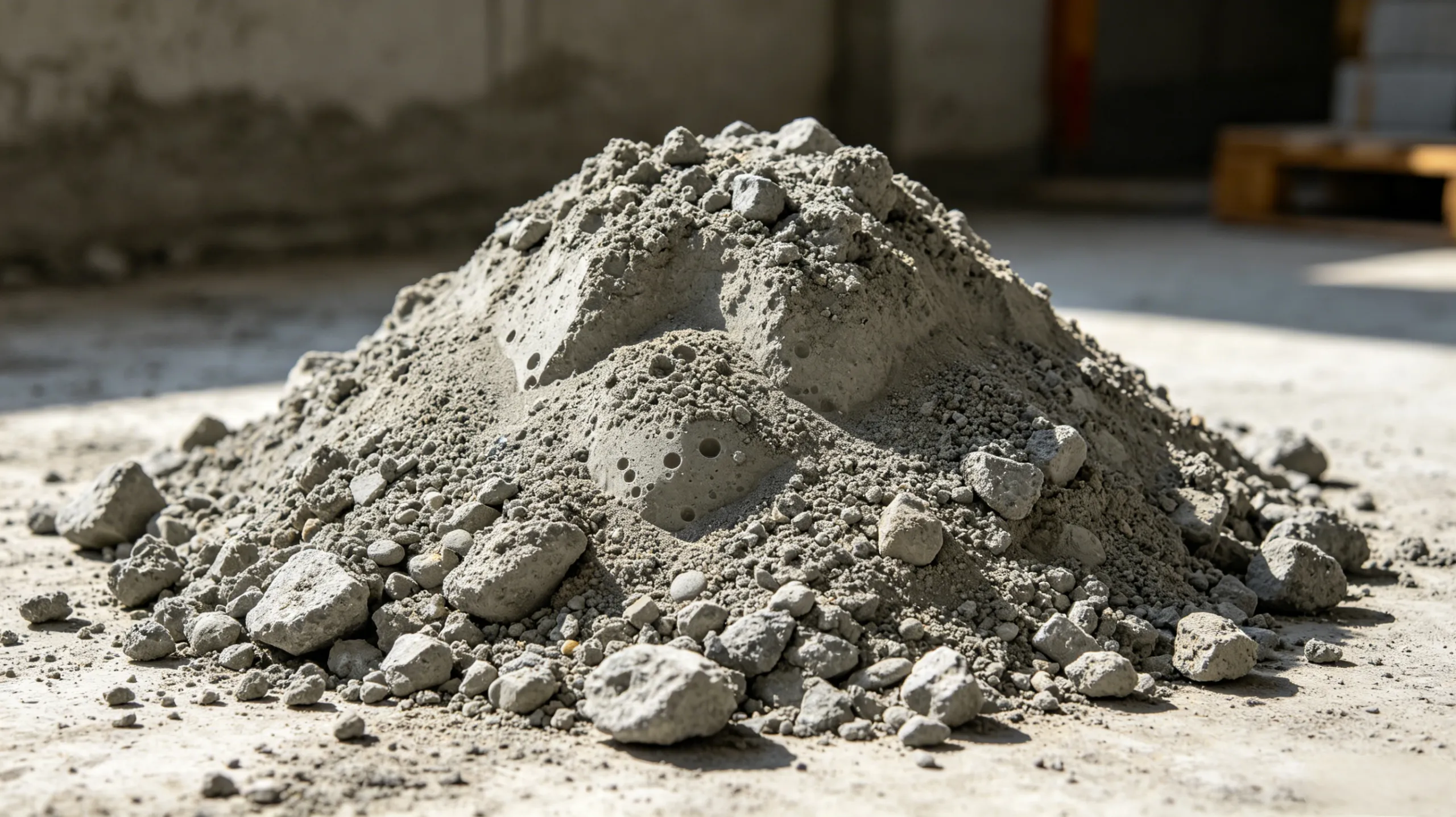
Currently, most aerated concrete products fall into the categories of hydrated building materials and cementitious building materials, with a hardening principle essentially the same as that of tailings bricks. Aerated concrete is a lightweight, micro-porous silicate artificial stone made from siliceous and calcareous materials as the main raw materials, with the addition of a foaming agent and other additives, followed by mixing with water, casting, pre-curing cutting, and autoclave curing. It is a new type of lightweight wall material that integrates thermal insulation, fire resistance, sound insulation, and convenient construction. The sand used for producing aerated concrete generally requires a mass fraction of SiO₂ greater than 70% and a quartz mass fraction greater than 40%.
Iron tailings can be used to produce aerated concrete. The main raw materials are iron tailings, water-quenched slag, and cement, along with a foaming agent (aluminum powder), a foam stabilizer, and regulators. The requirements for iron tailings in aerated concrete production are as follows: SiO₂ > 65%, free SiO₂ > 40%, Na₂O < 1.5%–2%, K₂O < 3%–3.5%, Fe₂O₃ < 18%, loss on ignition < 5%, clay content < 10%. A portion of the SiO₂ in iron tailings exists as quartz, known as free SiO₂, which reacts with available calcium oxide under autoclave curing conditions. Another portion of SiO₂ exists in feldspar or other mineral components; this combined SiO₂ cannot participate effectively in the reaction with available calcium oxide. Therefore, the requirement for SiO₂ content in iron tailings mainly refers to the quartz fraction. Although the quartz content cannot be measured directly, because the quartz content has a certain relationship with the total SiO₂ content, the approximate quartz content in iron tailings can be estimated. For example, when the SiO₂ content in iron tailings is 75%, approximately 40% is pure quartz.
The use of iron tailings to produce aerated concrete, as well as aerated concrete blocks, floor slabs, roof panels, wall panels, insulation blocks, and other materials, has been successfully applied in industry. Angang Slag Brick Plant uses tailings from the Dagu Mountain concentrator mixed with cement, lime, and other raw materials to produce aerated concrete. The product is lightweight and has good thermal insulation properties. The plant has an annual output of 100,000 m³ of aerated concrete, consuming about 30,000 tons/year of tailings. The raw material proportions are: tailings 66%, quicklime 25%, cement 8%, gypsum 1%, aluminum powder 0.08%–0.12%. The production process is shown in Figure 5-10.
On August 13, 2013, the new industrial transformation project of Mingli Iron Mine in Daixian County, Shanxi Province – the trial production of tailings sand standard bricks and aerated concrete blocks – was put into operation, with an investment of 180 million yuan. It can process 1.2 million m³ of tailings sand annually, provide 150–200 jobs, and produce 120 million iron tailings sand standard bricks and 300,000 m³ of tailings sand aerated concrete blocks per year, with an output value of over 100 million yuan and tax profits exceeding 30 million yuan.
Wang Yan et al. conducted experimental research on the preparation of aerated concrete using tailings from the Chengchao Iron Mine of Wuhan Iron and Steel Corporation. Composition analysis of the tailings showed that the SiO₂ content was about 50%, existing mainly as feldspar, with quartz content less than 10%, and containing about 10% gypsum-like minerals. Because the tailings had low SiO₂ and quartz contents but a high gypsum content, it was decided to add cement (425# ordinary Portland cement) to increase the siliceous material content, with lime (available CaO 85%) as the calcareous material. Due to the high gypsum content in the tailings, it was not necessary to add extra gypsum when developing the aerated concrete. The raw materials for producing aerated concrete from iron tailings are iron tailings, lime, cement, and aluminum powder. The preparation process flow is shown in Figure 5-11. Experimental verification showed that the optimal raw material proportion is: added siliceous material 11%–20%, ratio of calcareous material to siliceous material 3:7, aluminum powder dosage 0.08%. This can produce grade 600 aerated concrete with an average compressive strength of about 3.5 MPa and a minimum of 2.8 MPa, meeting national standard requirements.
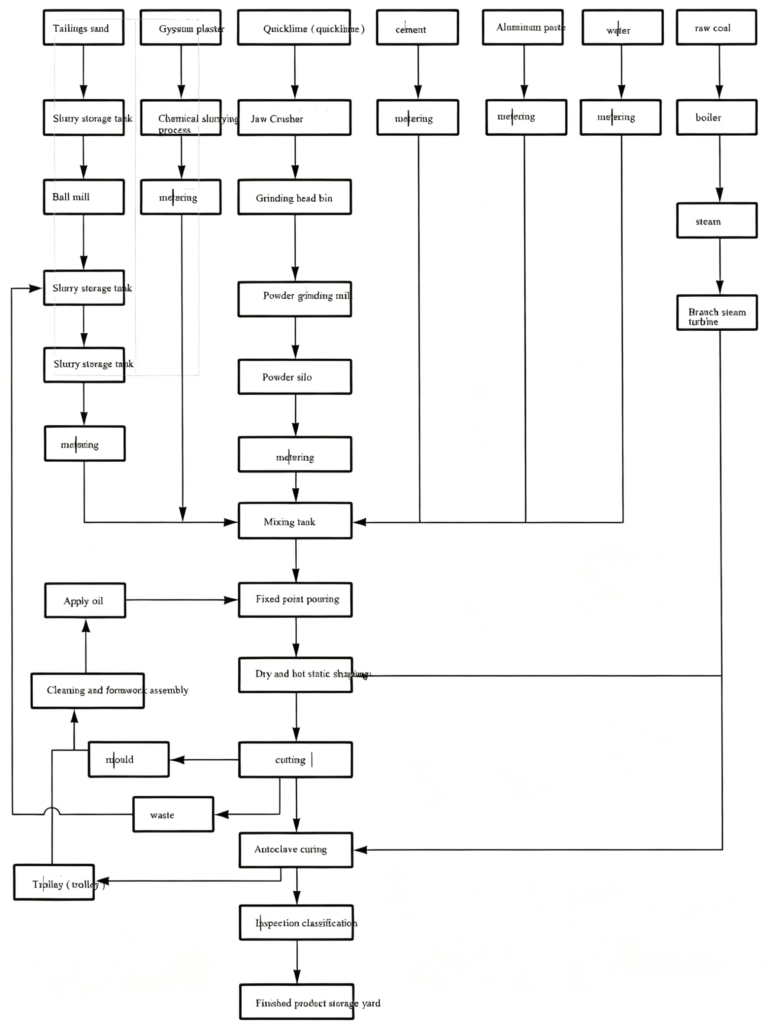
Figure 5-10 Process flow of aerated concrete block production
Han Chen et al. from Wuhan University of Science and Technology conducted experimental research on the preparation of aerated concrete using iron tailings from Jinshandian, Huangshi, Hubei Province as the main raw material. Because the SiO₂ content in the iron tailings used was low (35.43%), quartz powder with a SiO₂ content of 98% was added as a high-silicon material. Other raw materials included lime (commercially available quicklime, ground to a fineness with a residue on a 200-mesh (0.074 mm) sieve of less than 15%), cement (commercially available grade 32.5 cement), a foaming agent (aluminum powder, analytically pure), and regulators (gypsum, sodium hydroxide).
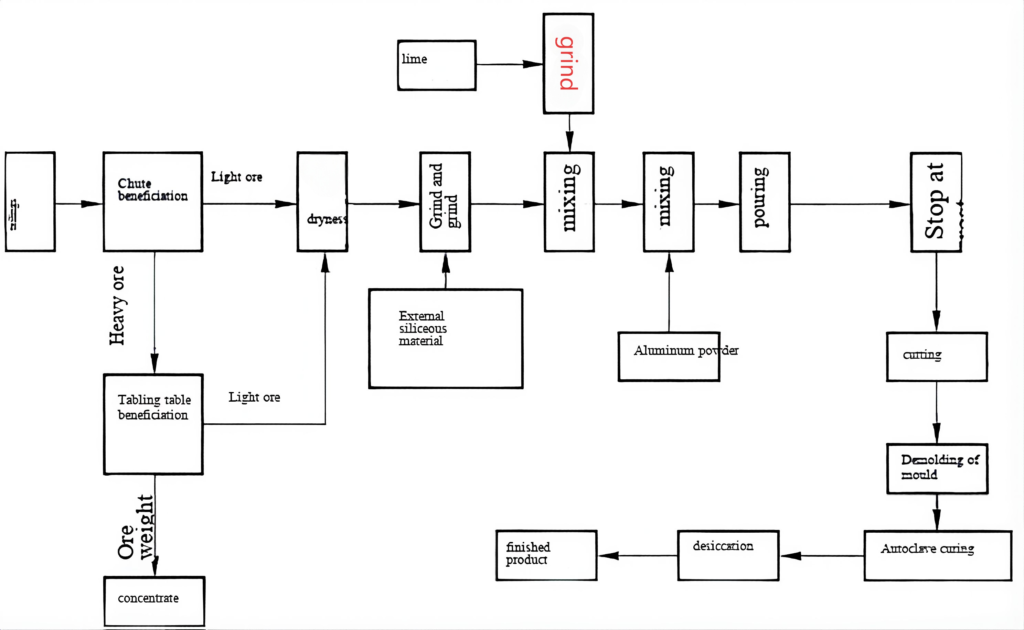
Figure 5-11 Process flow for the preparation of aerated concrete from Chengchao Iron Mine tailings
The preparation process for aerated concrete is as follows: Iron tailings, quicklime, cement, gypsum, and other raw materials are weighed in a certain proportion and mixed uniformly. Water and additives are added, and the mixture is stirred for 5 minutes. Aluminum powder is dissolved in a small amount of water and then added. After uniform mixing, the slurry is poured into 10 cm × 10 cm × 10 cm triple molds, which are then placed in a drying oven and pre-cured at 70°C for 2 hours. After pre-curing, the blocks are cut, demolded, and sent into an autoclave for autoclave curing under a saturated steam pressure of 1.2 MPa for 6 hours. After autoclaving, the finished products are placed in a drying oven and dried at 105°C to constant weight, followed by performance testing and microscopic analysis. The specific process flow is shown in Figure 5-12.
The results show that under the conditions of a mass ratio of tailings : quartz powder : lime : cement : gypsum = 50 : 20 : 18 : 10 : 2, with an aluminum powder content of 0.1% and a sodium hydroxide content of 0.4%, and after grinding the tailings to a fineness of 95.35% passing 0.074 mm, the prepared aerated concrete has a density of 637 kg/m³ and a compressive strength of 4.31 MPa. These values meet the requirements of grade A3.5, B07 qualified aerated concrete products specified in the national standard Autoclaved Aerated Concrete Blocks (GB11968—2006). XRD and SEM analyses show that the product contains large amounts of tobermorite and C-S-H gel. The hydration products overlap with each other, forming a compact structure, which plays an important role in improving the strength of the product.
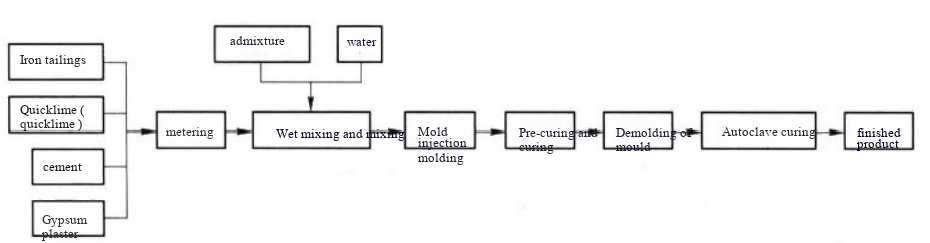
Figure 5-12 Process flow for the preparation of aerated concrete blocks from Jinshandian iron tailings
The Guangdong Provincial Institute of Building Materials explored the feasibility of using tailings from a local pyrite concentrator to produce autoclaved aerated concrete blocks. They obtained the optimal mix proportion and optimal autoclaving regime for producing autoclaved aerated concrete blocks from tailings. The prepared tailings-based autoclaved aerated concrete products had an average density of 716 kg/m³ and an average compressive strength of 5.20 MPa, meeting the requirements of grade A5.0, B07 autoclaved aerated concrete blocks specified in the standard Autoclaved Aerated Concrete Blocks (GB/T 11968—2006).
Xia Ronghua et al. from Qingdao University of Technology used natural-graded gold tailings from a gold mine in Shandong to produce aerated concrete. The optimal mix proportion was determined as: tailings 63%, lime 25%, cement 10%, gypsum 2%, with an optimal admixture dosage of 40 g/m³ and an optimal water-to-solid ratio of 0.58. The optimal fineness of the tailings was 1.75% residue on a 0.074 mm sieve. The optimal autoclaving regime was: heating time 3 h, constant temperature time 8 h, maximum autoclave temperature 205°C, cooling time 2.5 h. The prepared tailings aerated concrete had an average density of 697.8 kg/m³ and an average demolding compressive strength of 6.32 MPa, meeting the requirements for grade A5.0, B07 qualified aerated concrete products.
Shandong Jiaojia Gold Mine invested over 17 million yuan to build an aerated concrete production line with an annual output of 300,000 m³. This production line adopts advanced domestic aerated concrete block cutting machines and advanced autoclaves, with a computer-controlled batching system. The product uses advanced cement-lime-sand aerated concrete block technology, with tailings sand, cement, lime, phosphogypsum, and aluminum powder as the main raw materials. These are automatically batched, mixed, poured, formed, cut, and cured under high temperature and high pressure. The produced aerated concrete blocks are lightweight, thermal insulating, soundproof, waterproof, flame-retardant, non-radioactive, and convenient for construction, making them a preferred building material for civil and public buildings.
The project “Comprehensive utilization of ceramic tailings and gold tailings to produce aerated concrete blocks,” jointly completed by Fujian Normal University, Fujian Provincial Modified Plastics Technology Development Base, and Fujian Wanqi Non-metallic Materials Co., Ltd., successfully passed the appraisal organized by the Fujian Provincial Department of Construction. This project comprehensively utilizes the three leading products of Wanqi Company, using industrial waste residues such as gold tailings, ceramic tailings (waste slag), and low-grade limestone generated during production to produce lightweight aerated concrete blocks, thus establishing a circular economy park for mining, which is highly innovative. The planned total scale of the project is an annual output of 500,000 m³ of aerated concrete blocks, to be implemented in three phases. The first production line with an annual output of 100,000 m³ of aerated concrete blocks was put into operation in early 2007, with a total investment of 11.8279 million yuan, of which construction investment was 9.8837 million yuan. Based on a selling price of 200 yuan/m³, the average annual output value can reach 20 million yuan, with an average annual total profit of 3.2595 million yuan, tax payments of 1.0756 million yuan, and net profit of 2.1839 million yuan, showing good economic prospects.
After extensive investigation and evaluation, Shandong Jinzhou Mining Group Co., Ltd. invested over 30 million yuan in a comprehensive tailings utilization project. This project includes a tailings heap leaching production line, a 150,000 m³ aerated concrete block production line, and a 60 million piece autoclaved brick production line. First, heap leaching technology is used to recover gold and silver from the tailings, and the recovered tailings are then used to produce aerated concrete blocks and autoclaved bricks, utilizing 150,000 tons of tailings annually and increasing annual benefits by 13 million yuan. The mass ratio of main raw materials for producing aerated concrete blocks is m(tailings) : m(cement) : m(quicklime) : m(gypsum) : m(aluminum powder) = 68 : 8 : 22 : 2 : 0.07, with a water-to-solid ratio of 0.6. The product curing uses high-temperature, high-pressure saturated steam as the medium. The autoclaving regime is: vacuum: 0 to -0.06 MPa for 0.5 h; heating and pressurization: -0.06 to 1.3 MPa for 1.5 h; constant temperature and pressure: 1.3 MPa for 8.0 h; cooling and depressurization: 1.3 to 0 MPa for 1.5 h. The performance of the produced aerated concrete blocks meets the quality requirements specified in Autoclaved Aerated Concrete Blocks (GB 11968—2006). In 2008, the project of Shandong Jinzhou Mining Group Co., Ltd. for producing aerated concrete blocks and autoclaved bricks from gold tailings was awarded the title “Top Ten Demonstration Projects for Circular Economy in Shandong Province.”
Qingdao Shuangda New Building Materials Co., Ltd. in Shandong Province introduced advanced equipment and technology to build a gold tailings resource utilization project, with a total investment of over 16 million yuan. The first phase mainly produces aerated concrete blocks, which has already entered trial production, with an annual output of 500,000 m³ of aerated concrete blocks (equivalent to 17.36 million standard bricks), capable of processing 220,000 tons of gold tailings. The second phase is reserved for panel products.
The aerated concrete block production line with an annual output of 100,000 m³, built and invested by Laizhou Development and Construction General Company in Shandong Province, was put into trial operation in June 2004, successfully producing aerated concrete using gold tailings sand. The block products have been applied in development projects undertaken by the company.
Some lead-zinc tailings can be used as a siliceous material with high silicon content, replacing fly ash and sand in the production of aerated concrete. Li Fangxian et al. conducted research on using high-silica lead-zinc tailings (provided by Zhejiang Suichang Gold Mine Co., Ltd.) to replace river sand in the preparation of aerated concrete. The study showed that the optimal scheme for producing aerated concrete using lead-zinc tailings (SiO₂ mass fraction >62%) involves a casting temperature of 40–45°C, with mass ratios of cement : mixed lime : lead-zinc tailings : aluminum powder : admixture : soda ash = 1.0 : 1.5 : 3.06 : 0.005 : 0.005 : 0.0047 or 1.0 : 1.0 : 2.0 : 0.0036 : 0.0036 : 0.0034, and a bentonite content of 2%. The compressive strength and frost resistance of the prepared aerated concrete meet the requirements for B06 grade qualified products, and the thermal conductivity and drying shrinkage values meet national standards. Zhao Junping et al. used industrial desulfurized high-silica lead-zinc tailings to produce aerated concrete; the strength, frost resistance, and stability of this aerated concrete met national standards, and it contained no naturally occurring radionuclides.
After nearly a year of research and development, the Tailings Company of East China Nonferrous Metals Geological Exploration Bureau of Fujian Province successfully used lead-zinc tailings as raw materials in March 2013 to produce three types of autoclaved products: cement tiles, autoclaved silicate bricks, and aerated concrete. The performance indicators of the products met national standards, and one patent was applied for.
Qian Jiawei et al. conducted experimental research on producing aerated concrete using low-silicon copper tailings. The copper tailings used were from Shouwangfen Copper Mine in Chengde City, Hebei Province. The original tailings were ground to a fineness of 98.9% passing 0.074 mm. Because the copper tailings contained about 44% SiO₂ (mass fraction, same below) with very little quartz-form SiO₂, failing to meet the general requirement for SiO₂ content in raw materials for aerated concrete (sand used for aerated concrete generally requires SiO₂ >70% and quartz >40%), silica sand with SiO₂ content over 80% was selected to provide part of the siliceous material. Lime and cement (P·O 42.5 cement) were used as calcareous materials; the foaming agent was hydrophilic aluminum powder, and the regulator was natural gypsum. The process flow for preparing aerated concrete from copper tailings is shown in Figure 5-13. The process conditions were: stirring with 55°C hot water (slurry casting temperature about 44°C), and constant temperature curing at 45°C.
Through experimental research, the optimal mix proportion for preparing aerated concrete was determined as: copper tailings 32%, silica sand 34%, lime 20%, cement 8%, natural gypsum 6%, aluminum powder 0.057%, and water-to-solid ratio 0.53. The test results showed that the formed aerated concrete specimens (100 mm × 100 mm × 100 mm) prepared according to the above optimal mix proportion had an average density of 619.1 kg/m³ and an average compressive strength of 4.5 MPa, meeting the requirements for grade A3.5, B06 qualified aerated concrete products specified in Autoclaved Aerated Concrete Blocks (GB 11968—2006).