小型移動式砕石機
はじめに ミニ移動式ジョークラッシャーは、極めてコンパクトな、クローラー式破砕機であり…

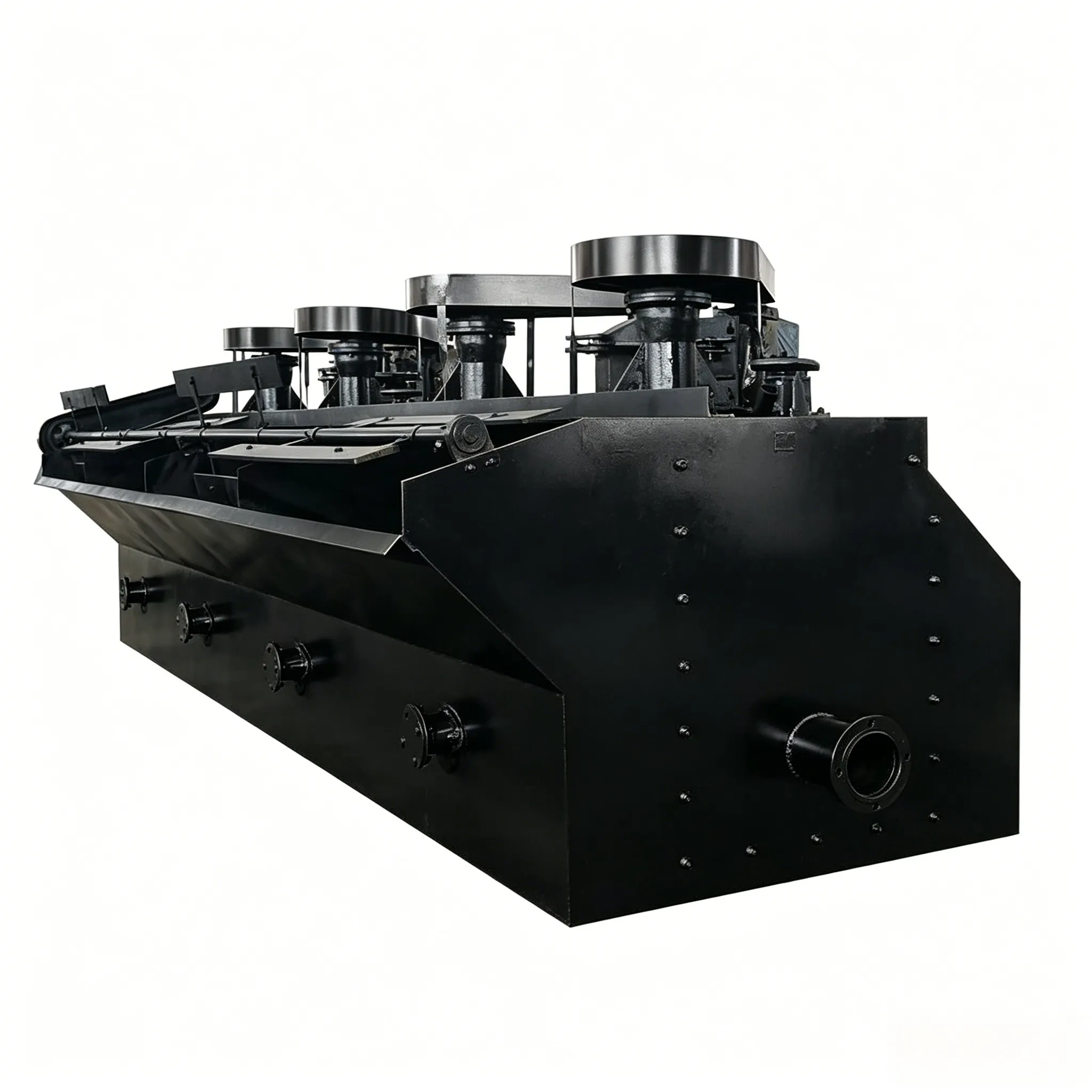
Using a more concentrated pulp is advantageous, provided it doesn’t compromise good selectivity and operating conditions. The more concentrated the pulp, the smaller the flotation machine volume required on-site, and the less reagent needed. Most flotation separations in production are carried out with pulps of 25% and 40% by mass fraction; in special cases, the pulp concentration can range from a maximum of 55% to a minimum of 8%. Generally, a thinner pulp should be used for ores with a high degree of muddy texture, while a more concentrated pulp is preferable for coarser-grained ores.
During small-scale flotation tests, as solids are scraped off with the froth, water is added to maintain the pulp level, causing the pulp concentration to decrease. This change also affects the mass fraction of all reagents and the properties of the froth product.
Flotation is generally conducted at room temperature, between 15 and 30°C. When using fatty acid collectors to float non-sulfide ores (such as iron ore, fluorite, and scheelite), steam or hot water heating is often used. In recent years, heated flotation has sometimes been used to separate mixed sulfide concentrates to improve separation efficiency. In these cases, it is necessary to conduct tests on the flotation pulp temperature.
The flotation time can generally be measured during various condition tests; therefore, the flotation time should be recorded for each test. However, after the flotation conditions are selected, a test to check the flotation time can be conducted. At this time, the flotation can be skimmed in stages at different times. The skimming times can be 2 minutes, 3 minutes, 5 minutes, …, and so on, until the end of flotation. The test results are plotted as a curve, with the flotation time (min) on the x-axis and the recovery rate (cumulative) and metal grade (cumulative) on the y-axis. The flotation time required to obtain a certain recovery rate can be determined from the curve. Simultaneously, the roughing and scavenging times can be divided based on the cumulative grade curve, with the point where the grade significantly decreases serving as the dividing point.
Further cleaning of the rough concentrate from the roughing process requires a small-volume flotation machine. The number of refining operations is usually 1-2 times, but sometimes up to 7 times, such as in the refining of fluorite and graphite. Collectors and frothers are generally not added during refining, but the pH of the pulp must be carefully controlled. In some cases, inhibitors, desorbers, or even special treatment of the pulp before refining are required; the refining time depends on the specific circumstances.
If the mass fraction of the refining product is excessively diluted, or if the pulp volume exceeds the flotation machine’s capacity, the frothing product can be allowed to settle beforehand. Excess water can be extracted using a medical syringe, and the removed water can be collected in a wash bottle for use as washing water for the rough concentrate entering the flotation machine and as makeup water for flotation.
 English English
 Spanish
 Russian
 Arabic
 Swahili
 French
 Turkish
 Portuguese
 Korean
 Japanese
 German
 Italian