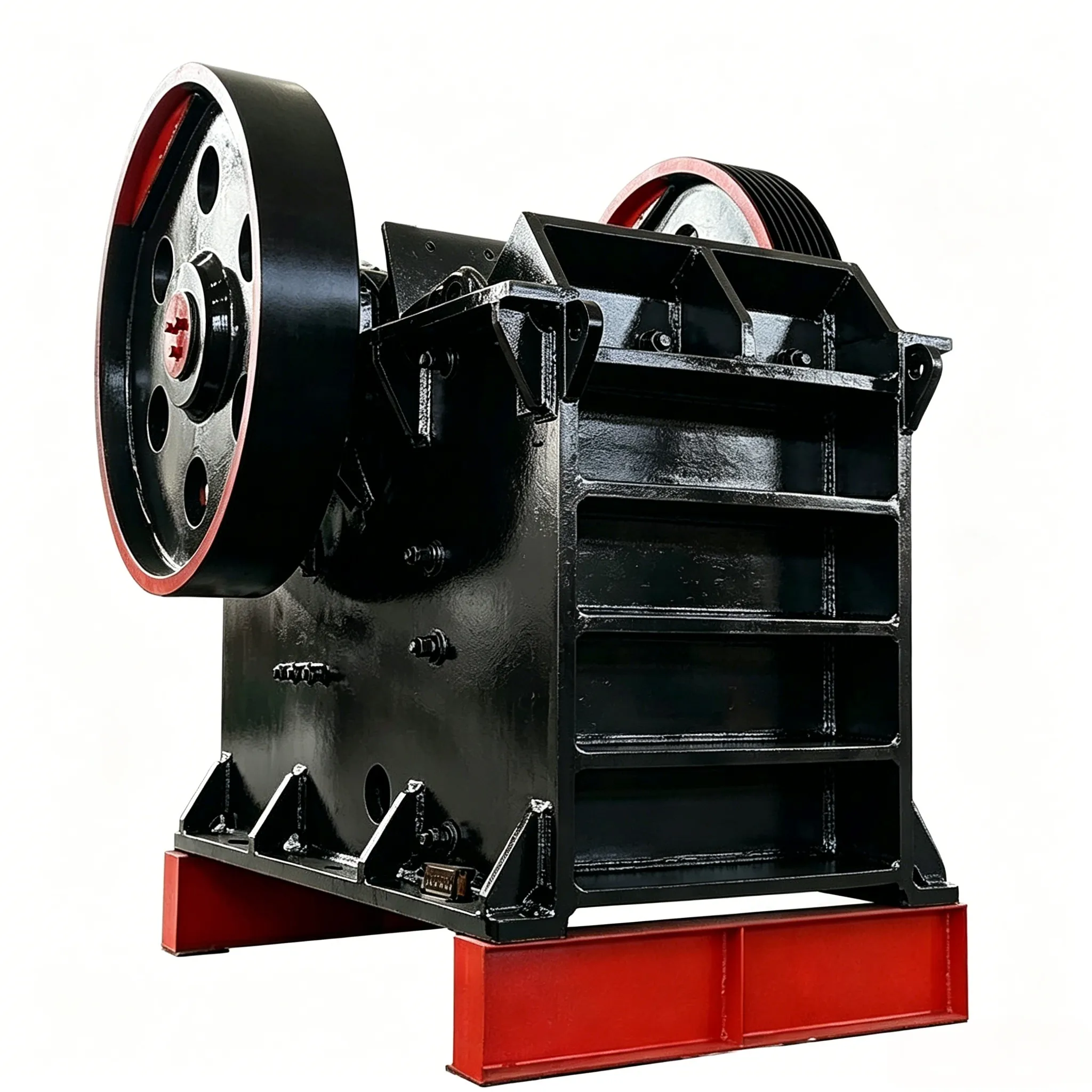
ジョークラッシャー
ジョークラッシャーの種類 ジョークラッシャーは、工業生産において古くから使用されてきました…


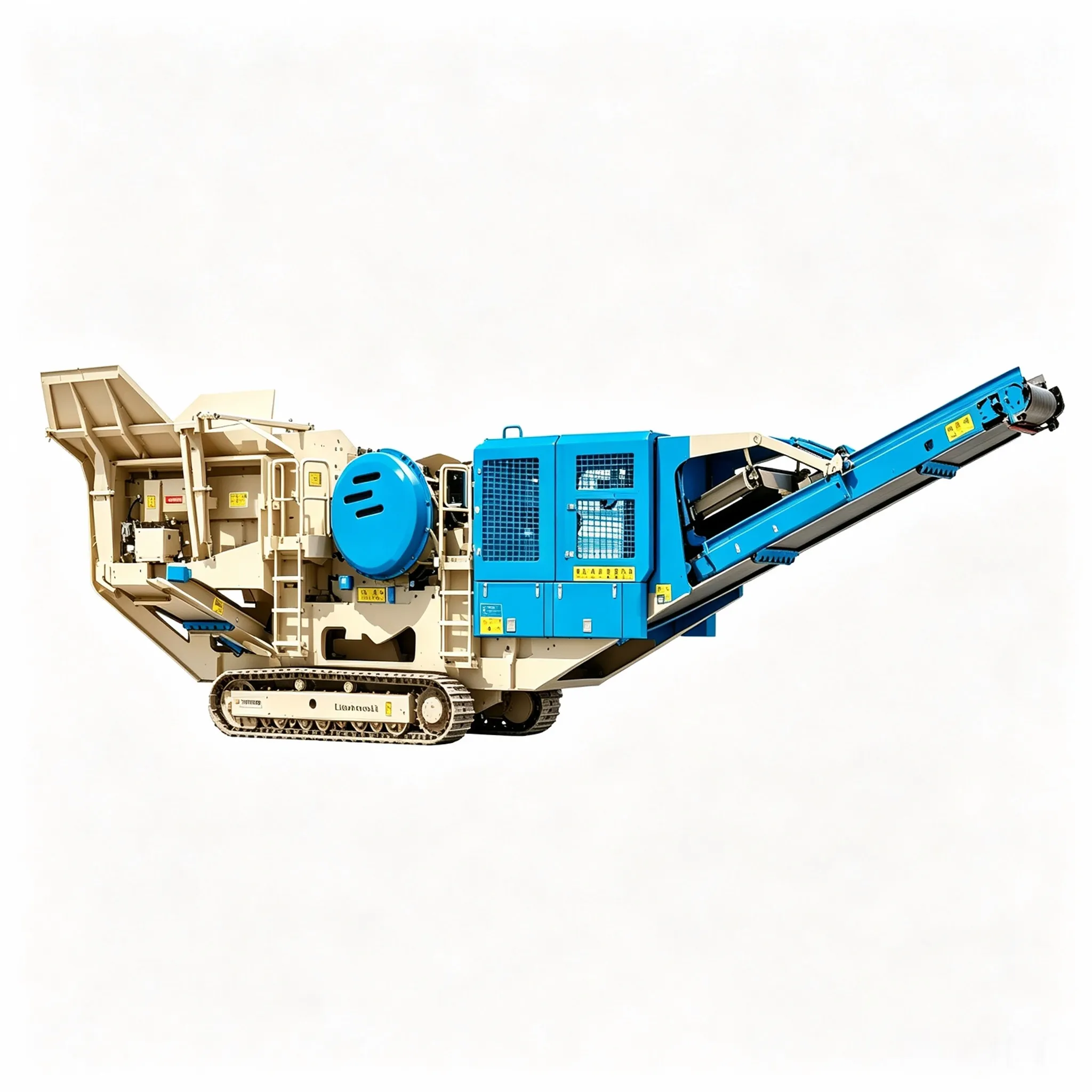
A ジョークラッシャー is one of the most common and important primary crushers used in mining, quarrying, and aggregate industries. Its main purpose is to reduce large rocks and ore into smaller pieces before further processing.
A jaw crusher works like a mechanical jaw: one fixed jaw and one moving jaw crush materials between them by applying strong compressive force.
Typical applications:
A typical mining process is:
Run-of-Mine (ROM) Ore
          ↓
     Jaw Crusher
          ↓
   Secondary Crusher
          ↓
 Grinding Mill (Ball Mill / Wet Pan Mill)
          ↓
 Mineral Separation
          ↓
Final ProductA jaw crusher mainly consists of the following parts:
The top opening where raw ore enters.
例:
enter through the feed opening.
The size of the opening determines the maximum rock size the crusher can accept.
例:
PE 600 × 900 jaw crusher
means:
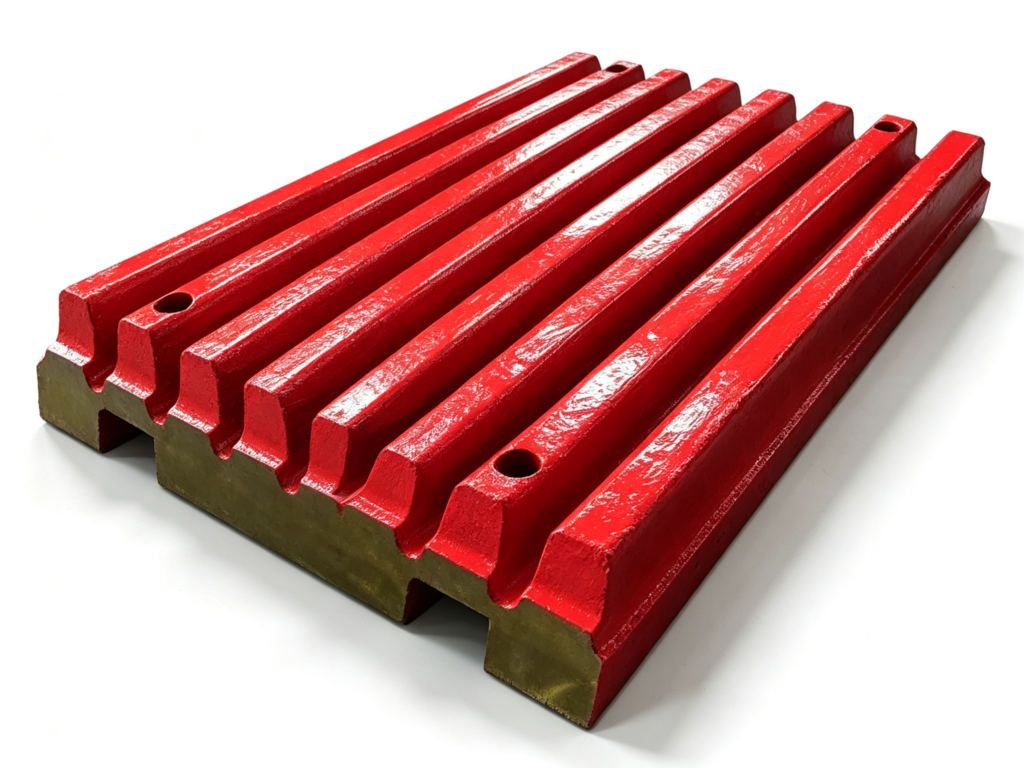
The fixed jaw is attached to the crusher frame.
Its function:
The jaw plate is usually made from:
because it experiences severe wear.
The moving jaw is connected to the eccentric shaft.
It moves back and forth.
Movement:
Open position:

Fixed Jaw        Moving Jaw

|               /
|              /

     Rock


Closed position:

|             |
|  Crushed    |
|    Rock     |
When the moving jaw approaches the fixed jaw, the rock is compressed and crushed.

The eccentric shaft is the heart of the jaw crusher.
It converts rotary motion from the motor into the reciprocating motion of the moving jaw.
The shaft center is offset:
Normal shaft:

     O
     |
     |
     O


Eccentric shaft:

      O
       \
        O
When it rotates, the moving jaw moves forward and backward.
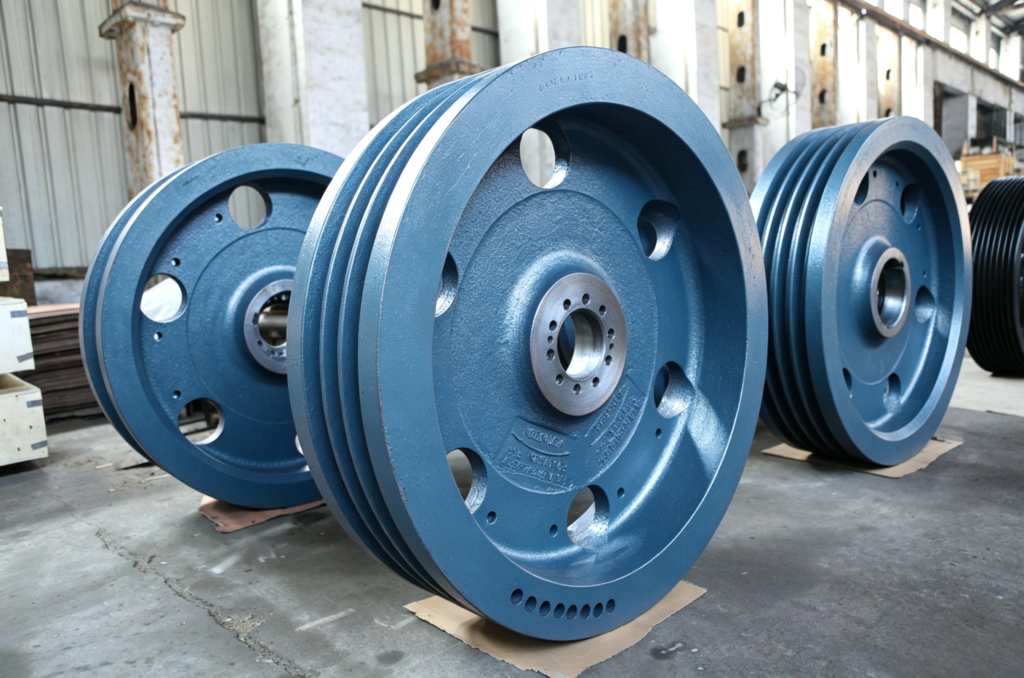
A large flywheel stores rotational energy.
Functions:
Because crushing is intermittent:
Crush → Release → Crush → Releasethe flywheel helps maintain continuous movement.
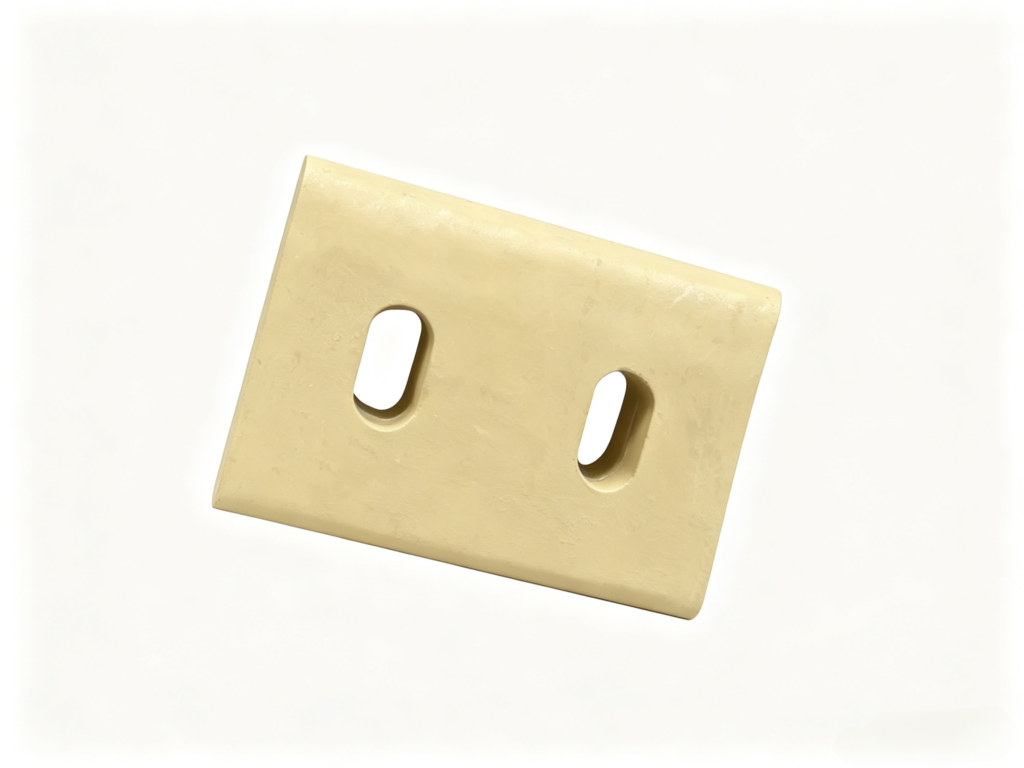
The toggle plate is located between the moving jaw and the crusher frame.
Functions:
It pushes the moving jaw toward the fixed jaw.
If uncrushable material enters:
例:
the toggle plate can break first, protecting expensive components.
The crushing process has four main stages:
Large rocks enter from the top.
例:
Raw rock size:
800 mm
The rock falls into the crushing chamber.
The motor rotates the eccentric shaft.
The moving jaw moves toward the fixed jaw.
The rock is squeezed:
Moving Jaw →  ROCK  ← Fixed Jaw

        ↓

     Crushing
The applied force exceeds the rock’s strength.
The rock breaks.
The crushing action mainly uses compressive pressure:
The rock fails internally and fractures.
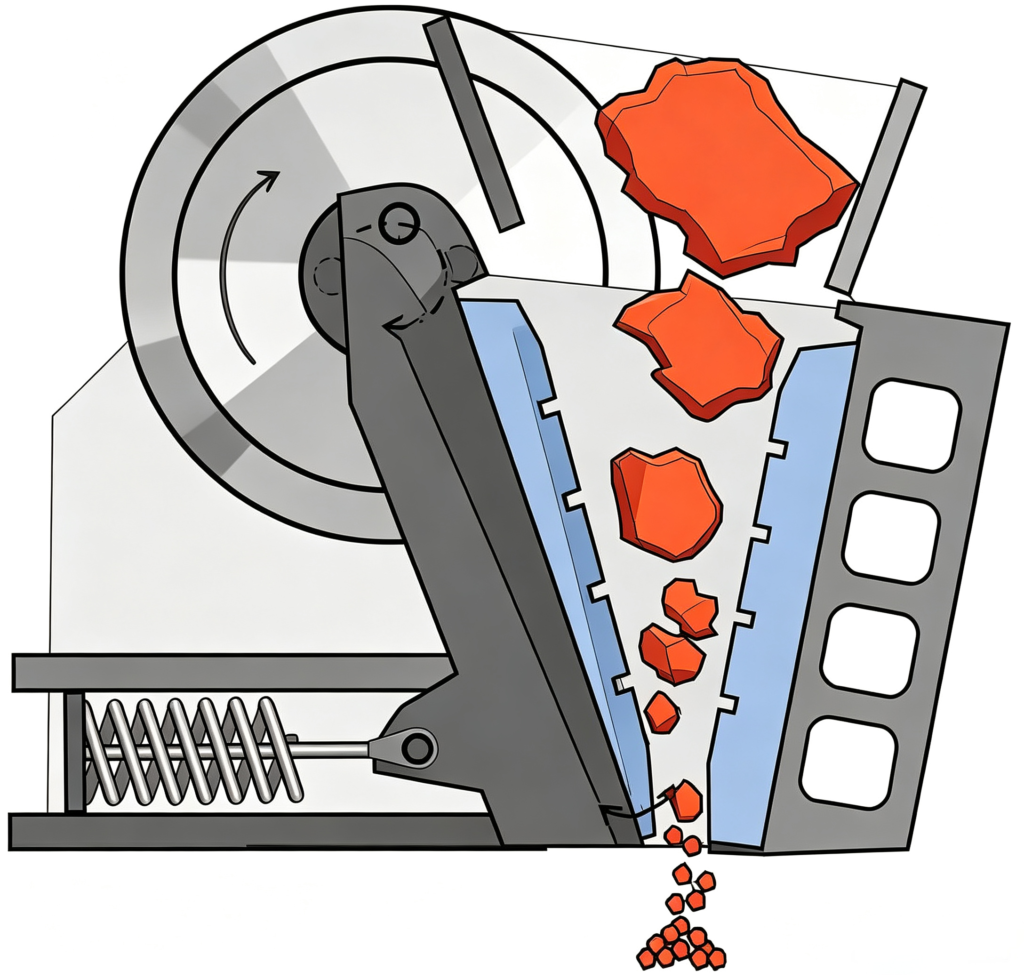
After crushing, the moving jaw moves away.
The crushed material falls downward.
The discharge opening controls the final size.
例:
If CSS (Closed Side Setting):
CSS = 100 mmthen the product is approximately:
<100 mmThe cycle repeats:
Feed
 ↓
Compress
 ↓
Crush
 ↓
Release
 ↓
Discharge
 ↓
Repeat
Thousands of cycles occur per hour.
There are two main designs:
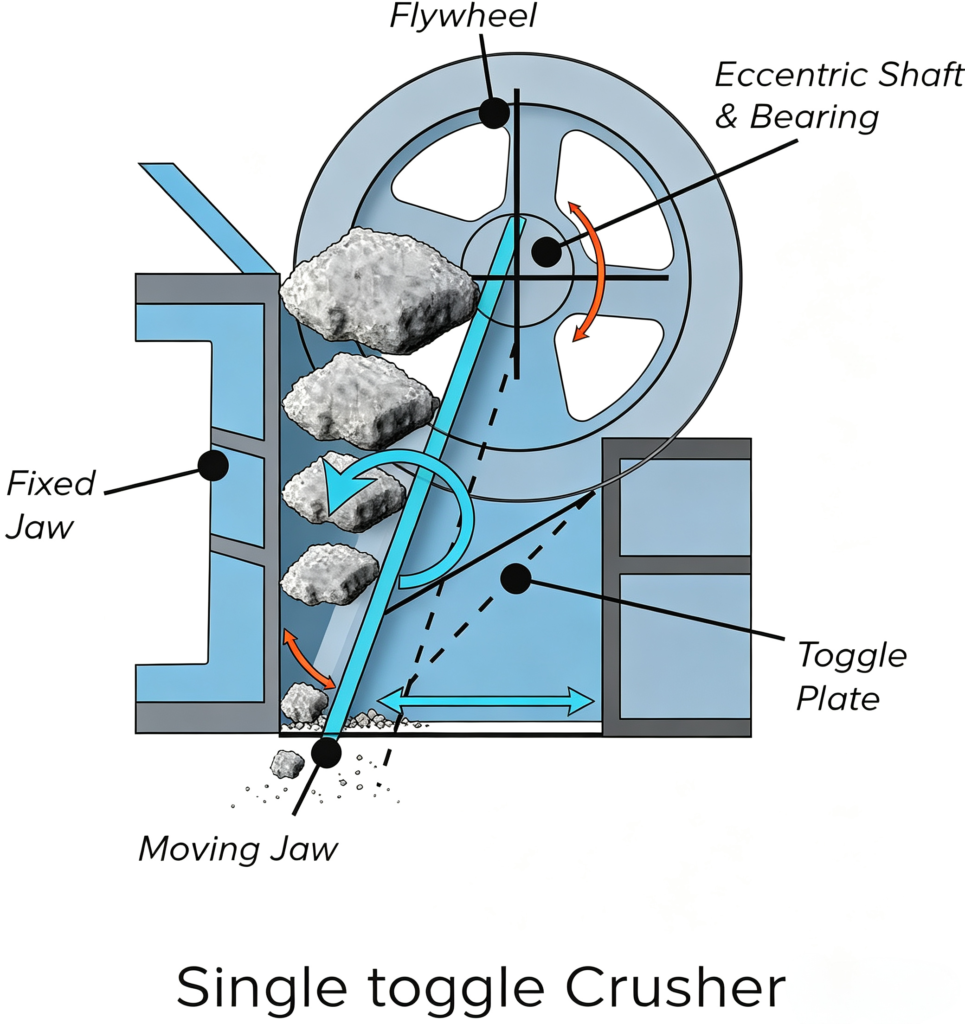
Most common type.
Structure:
Motor
 |
Eccentric Shaft
 |
Moving Jaw
 |
Toggle Plate
Characteristics:
メリット:
デメリット:
Common use:

Uses two toggle plates.
Structure:
          Moving Jaw

             |
          Toggle
          Toggle

             |
          Frame
メリット:
デメリット:
Used for:
A jaw crusher uses three main crushing actions:
The dominant force.
例:
A rock squeezed between two plates.
Plate → Rock ← Plate

Rock breaksThe rock bends until it fractures.
Sliding movement between jaw plates creates additional breaking force.
Maximum rock size entering the crusher.
例:
Feed size:
<750 mmDistance between jaws at the bottom.
Smaller CSS:
→ smaller product
Larger CSS:
→ larger product
Measured in:
例:
Small crusher:
10–50 t/hLarge crusher:
500–2000 t/hThe ratio between feed size and product size.
Formula:
Reduction Ratio =
Feed Size / Product Size
例:
Feed:
600 mmProduct:
100 mmReduction ratio:
600 ÷ 100 = 6:1Typical jaw crusher:
3:1 to 8:1✅ Simple structure
✅ High reliability
✅ Low operating cost
✅ Handles very large rocks
✅ Suitable for hard materials
✅ Easy maintenance
✅ Good energy efficiency
❌ Product shape can be irregular
❌ Cannot produce very fine powder
❌ Wear parts require replacement
❌ Produces vibration
❌ Not suitable for wet sticky clay materials
| 特集 | Jaw Crusher | Cone Crusher |
|---|---|---|
| Crushing stage | Primary | Secondary/Tertiary |
| Crushing method | Compression | Compression + squeezing |
| フィードサイズ | Very large | 中 |
| Product size | Coarse | Fine |
| Cost | Lower | Higher |
| メンテナンス | Simple | More complex |
| こんな方に最適 | First crushing | Final shaping |
A typical gold plant:
Large Gold Ore
       |
       ↓
 Jaw Crusher
(800 mm → 100 mm)
       |
       ↓
 Cone Crusher
(100 mm → 20 mm)
       |
       ↓
 Wet Pan Mill / Ball Mill
(20 mm → fine powder)
       |
       ↓
 Gravity Separation
       |
       ↓
 Gold Concentrate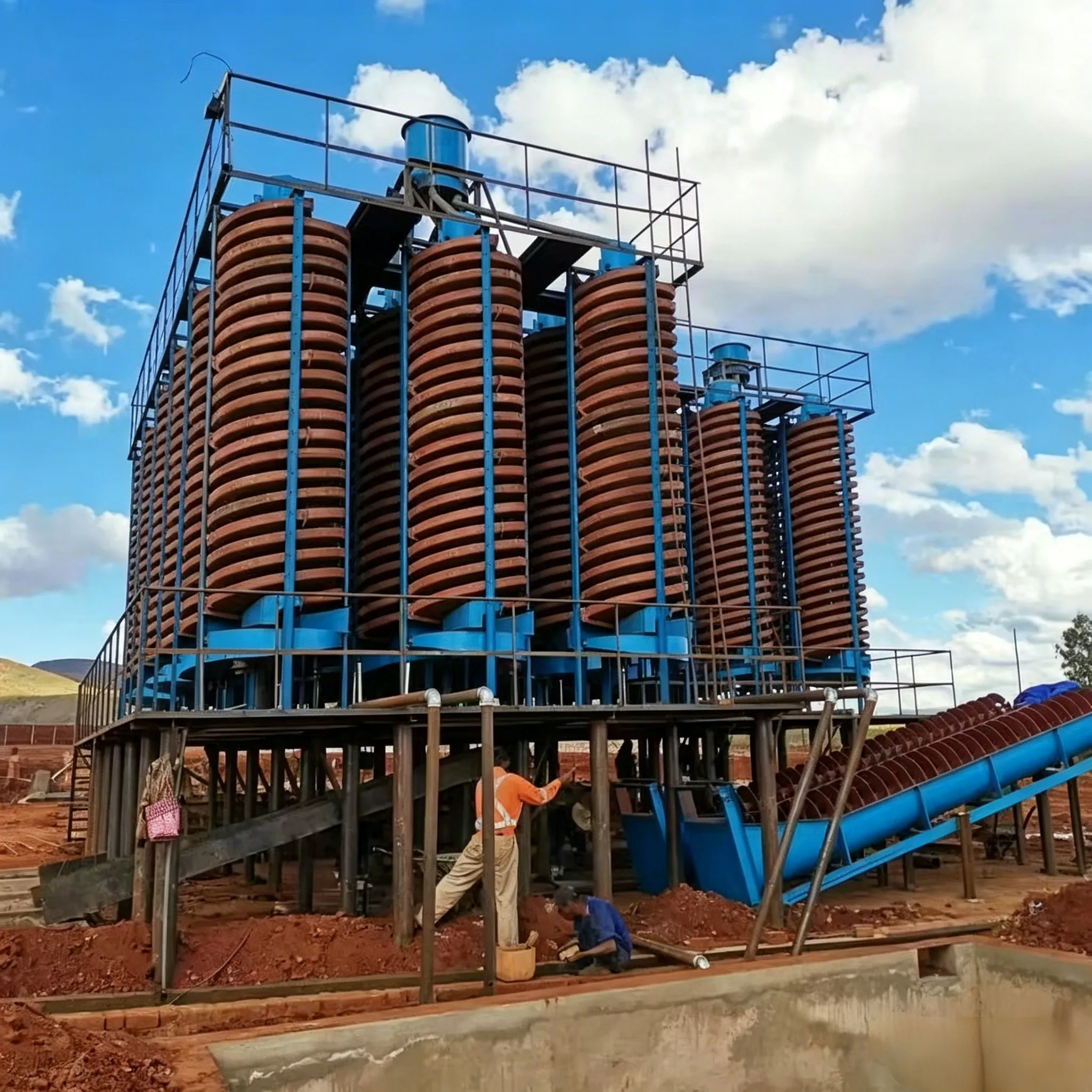
 English English
 Spanish
 Russian
 Arabic
 Swahili
 French
 Turkish
 Portuguese
 Korean
 Japanese
 German
 Italian