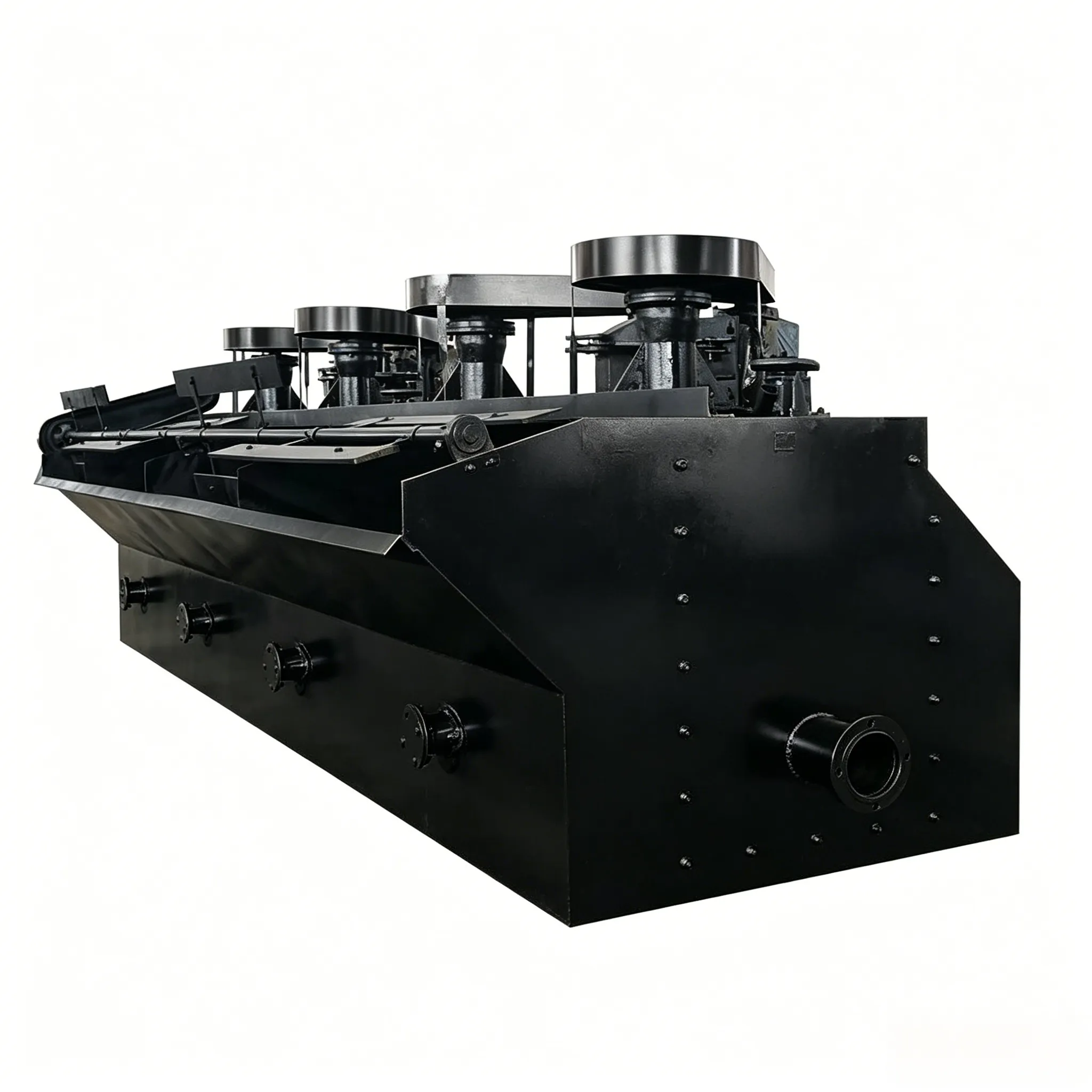
Máquina de flotación XJZ
Máquina de flotación XJZ Hay miles de máquinas de flotación XJ de tipo antiguo en...

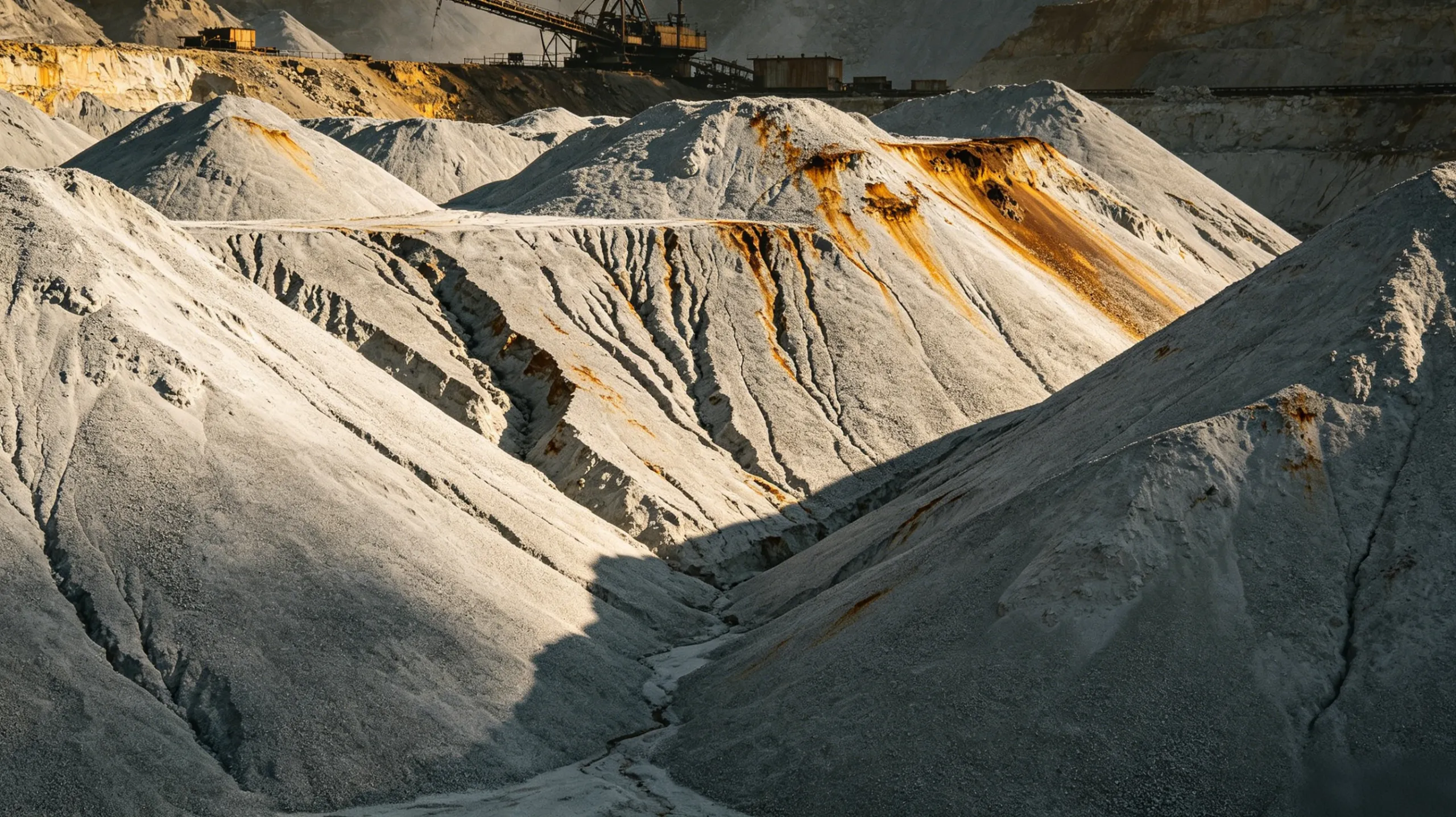
Preparación de ceramsita biológica a partir de residuos de tungsteno
Feng Xiujuan, de la Universidad de Ciencia y Tecnología de Huazhong, llevó a cabo un estudio experimental sobre la preparación de medios filtrantes biológicos porosos de ceramsita mediante el método de calcinación, utilizando como materia prima principal los residuos de la mina de tungsteno de Daxiao Longxia, en Jiangxi, y como materiales auxiliares escoria de horno, cenizas volantes y arcilla. La composición química principal de los residuos utilizados se muestra en la Tabla 8-1. Otros materiales auxiliares fueron el ácido clorhídrico concentrado, la escoria de horno, las cenizas volantes, la arcilla, los materiales formadores de poros (serrín o espuma plástica), un aglutinante (almidón modificado), un recubrimiento blanco a base de resina acrílica, el disolvente xileno, etc.
Tabla 8-1: Composición química principal de los residuos de tungsteno (wt%)
| Componente | SiO₂ | Al₂O₃ | CaO | K₂O | Na₂O | Fe₂O₃ | Otros |
|---|---|---|---|---|---|---|---|
| Contenido (%) | 79.6 | 8.5 | 0.11 | 1.43 | 1.02 | 1.75 | 6.31 |
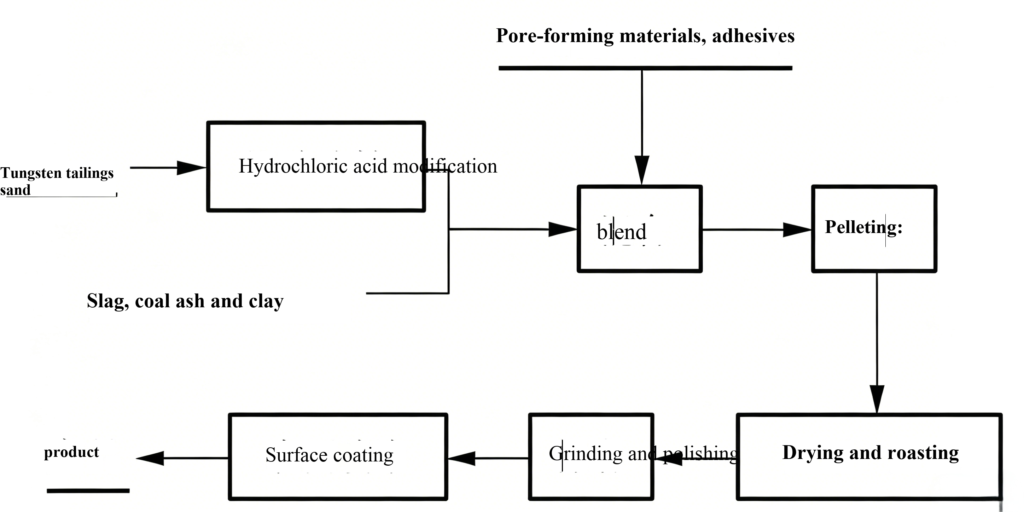
Figura 8-1: Diagrama de flujo del proceso de preparación de la ceramsita biológica
En la figura 8-1 se muestra el proceso de preparación de la ceramsita biológica a partir de residuos de tungsteno. En primer lugar, los residuos mineros se modificaron con una solución de ácido clorhídrico 20% para crear un gran número de poros. A continuación, los residuos modificados se mezclaron y se agitaron uniformemente con escoria de horno, cenizas volantes y arcilla en una proporción determinada, añadiéndose una pequeña cantidad de material porógeno y aglutinante. La mezcla se moldeó en gránulos esféricos de ceramsita en bruto utilizando un granulador. Los gránulos en bruto se colocaron en un horno eléctrico de secado a temperatura constante a 120 °C durante 1 h, y a continuación se transfirieron a un horno de mufla. La temperatura se elevó gradualmente hasta los 500 °C en el plazo de 1 h, se mantuvo a esa temperatura durante 10 min y, a continuación, se aumentó hasta 800–1200 °C para el tostado durante 30 min. Tras el tostado, se extrajo el producto y se dejó enfriar de forma natural hasta alcanzar la temperatura ambiente. El producto tostado se introdujo en un molino de bolas y se pulió mediante automolienda. A continuación, se pulverizó sobre la superficie, mediante una pistola pulverizadora, un recubrimiento blanco a base de resina acrílica diluido con xileno. Tras el secado a temperatura ambiente, se obtuvo el producto final de ceramsita biológica. Durante el proceso de pulverización, la presión del compresor de aire se mantuvo entre 0,2 y 0,5 MPa, el ángulo de atomización de la pistola pulverizadora fue de 30° a 50°, la distancia entre la boquilla y la ceramsita fue de 15–50 cm, el tiempo de secado a temperatura ambiente fue de 0,5–1,5 h, y el espesor de la película seca del recubrimiento fue de 20–30 μm.
Los resultados experimentales mostraron que, cuando la relación volumétrica entre los residuos de tungsteno, la escoria de horno, las cenizas volantes y la arcilla era de 4 : 1,5 : 1,5 : 1 y la temperatura de calcinación era de 1100 °C, la ceramsita biológica obtenida presentaba una densidad de partículas de 1,61 g/cm³, una densidad aparente de 1,10 g/cm³, una superficie específica de 9,7 m²/g, una solubilidad ácida de 0,17%, una solubilidad alcalina de 0,33% y una resistencia a la compresión cilíndrica de 8,1 MPa. Cuando se utilizó esta ceramsita biológica para tratar aguas residuales reales con una demanda química de oxígeno (DQO₍Cr₎) de 817 mg/L, mostró una rápida formación de biopelícula, una elevada adhesión microbiana y un fácil retrolavado. La tasa de eliminación de la DQO₍Cr₎ superó el 93% en un plazo de 20 días.
Preparación de ceramsita biológica a partir de residuos de hierro
Zhang Xuedong y otros, de la Universidad de Tangshan, llevaron a cabo un estudio sobre la preparación de medios filtrantes biológicos de ceramsita utilizando residuos de hierro como materia prima principal, con la adición de materiales auxiliares como escoria de horno, cenizas volantes, piedra caliza y aditivos.
8.2.1 Materias primas
En la tabla 8-2 se muestran las composiciones químicas de las principales materias primas.
Tabla 8-2: Composición química principal de las materias primas de la ceramsita (wt%)
| Material | Contenido de humedad | Pérdida por calcinación | SiO₂ | Al₂O₃ | Fe₂O₃ | CaO | MgO | K₂O | Na₂O |
|---|---|---|---|---|---|---|---|---|---|
| Residuos de hierro | 4.32 | 2.85 | 57.56 | 10.77 | 13.73 | 4.43 | 4.10 | 2.58 | 2.11 |
| Escoria de horno | 1.56 | 0.16 | 4.04 | 15.47 | 19.93 | 38.21 | 11.60 | 0.74 | 1.05 |
| Cenizas volantes | 3.93 | 1.58 | 52.33 | 32.52 | 4.96 | 3.65 | 1.42 | 0.96 | 0.34 |
| Piedra caliza | 0.80 | 42.12 | 2.15 | 0.42 | 0.27 | 53.04 | 1.32 | 0.20 | 0.19 |
8.2.2 Proceso de preparación
Las materias primas se pesaron con precisión según una proporción especificada y se introdujeron en una mezcladora de pasta de cemento. Se añadió agua del grifo 27% y se mezcló de forma homogénea. Se obtuvieron gránulos en bruto de 3 a 5 mm de diámetro mediante peletización manual. Los gránulos se secaron a 105 ± 5 °C durante 3 h para eliminar el agua libre y, a continuación, se introdujeron en un horno resistente a altas temperaturas. La temperatura se elevó, siguiendo un programa de calentamiento preestablecido, hasta los 1100 °C y se procedió a la calcinación durante 30 minutos. Tras la calcinación, los productos de ceramsita se enfriaron de forma natural hasta alcanzar la temperatura ambiente, con lo que se obtuvo la ceramsita biológica a partir de residuos de hierro.
Mediante experimentos de tratamiento de aguas residuales, se determinó que la proporción óptima de materias primas era la siguiente: residuos de hierro 86%, escoria de horno 7%, cenizas volantes 5%, piedra caliza 1% y aditivo 1%. A una temperatura de calcinación de 1100 °C, la ceramsita preparada presentaba una superficie rugosa, un tamaño de partícula de 3–5 mm, una absorción de agua de 14,01%, una porosidad de 31,07%, una densidad aparente de 1,12 kg/m³ y una densidad aparente de 1,92 kg/m³. La tasa de eliminación de la turbidez de las aguas residuales domésticas alcanzó el 64,02% en un plazo de 30 h, y la tasa de eliminación de la DQO₍Cr₎ llegó al 79,48%, lo que demuestra una eficacia significativa.
Wang Demin y otros, de la Universidad de Ciencia y Tecnología de Wuhan, prepararon ceramsita porosa con una proporción de adición de residuos de hasta 77%, utilizando residuos de hierro con bajo contenido en silicio como materia prima principal. Se investigó el rendimiento de tratamiento de la ceramsita preparada en aguas residuales domésticas simuladas utilizando un filtro biológico aireado (BAF) a escala de laboratorio. Los resultados mostraron que la ceramsita presentaba una superficie rugosa y abundantes poros internos, con una densidad aparente, una porosidad aparente y un diámetro medio de los poros de 1,33 g/cm³, 54% y 19,80 μm, respectivamente. Las concentraciones de metales pesados en el lixiviado obtenido en el ensayo de lixiviación de metales pesados cumplían las normas nacionales de calidad de las aguas superficiales. El BAF que utilizaba esta ceramsita como medio filtrante obtuvo buenos resultados en el tratamiento de aguas residuales simuladas, con tasas de eliminación de DQO₍Cr₎, NH₄⁺‑N y TN que alcanzaron el 84,26%, 84,01% y 25,87%, respectivamente. Los microorganismos adheridos a la ceramsita en la columna de filtración presentaban una gran diversidad de especies, y el fósforo de la biomasa total por unidad de masa de ceramsita en el extremo de entrada alcanzó los 371,63 nmol/g, con 90,791 TP3T distribuidos en la superficie y 9,211 TP3T en el interior de la ceramsita.
8.3 Preparación de ceramsita biológica a partir de residuos de plomo y zinc
Wang Shuncai y otros, de la Universidad de Hohai, utilizaron residuos de flotación de plomo y zinc como materia prima, junto con silicato de sodio y lignina como aditivos, para preparar ceramsita para el tratamiento de aguas mediante calcinación a alta temperatura, y llevaron a cabo estudios experimentales sobre su capacidad de adsorción de aguas residuales procedentes del procesamiento de minerales.
Los residuos utilizados en el experimento procedían de la flotación de la empresa Nanjing Yinmao Lead‑Zinc Mining Co., Ltd. Los principales minerales presentes en los residuos eran silicatos, junto con algunos óxidos de Fe, Mn y Al, y la pérdida por ignición fue de 18,93%. El proceso de preparación de la ceramsita fue el siguiente: se pesaron 30 g de residuos sin triturar en un vaso de precipitados, se añadió un determinado volumen de agua destilada y se mezcló uniformemente. La mezcla se moldeó en pequeñas bolas de 5-10 mm de diámetro utilizando una peletizadora de disco. Los gránulos se secaron en un horno eléctrico de secado por aire a 105 °C durante 2 h y, a continuación, se colocaron en un horno eléctrico de tipo caja de alta temperatura y se calcinaron a una temperatura determinada durante 2 h. A continuación, se apagó el horno y se dejó enfriar la ceramsita en su interior durante 12 h antes de extraerla.
Los resultados experimentales mostraron que la ceramsita preparada a partir de residuos mineros sin triturar calcinados a 800 °C presentaba un buen rendimiento de adsorción del COD₍Cr₎ en las aguas residuales del proceso de beneficio. El tiempo de adsorción óptimo fue de 30 min, la temperatura óptima fue la temperatura ambiente, la dosis óptima fue de 2 g/100 mL y el pH óptimo fue de aproximadamente 8. La tasa de eliminación de COD₍Cr₎ y la capacidad de adsorción alcanzaron el 87,11 % y los 17,85 mg/g, respectivamente. Para reducir el desprendimiento de residuos y aumentar la resistencia de la ceramsita, también se llevaron a cabo experimentos con la adición de aglutinantes. Tras realizar ensayos sobre el efecto de diferentes aglutinantes en el rendimiento de adsorción, se eligieron como aglutinantes el silicato de sodio y la lignina, con una cantidad añadida de silicato de sodio (2,5 g) + lignina (2,5 g) por cada 30 g de residuos mineros. La ceramsita para el tratamiento de aguas, preparada mediante calcinación a 800 °C durante 2 h, presentaba una resistencia suficiente para soportar la erosión provocada por el flujo de agua, y su capacidad de adsorción alcanzó los 22,84 mg/g.
 English English
  Spanish
 Russian
 Arabic
 Swahili
 French
 Turkish
 Portuguese
 Korean
 Japanese
 German
 Italian