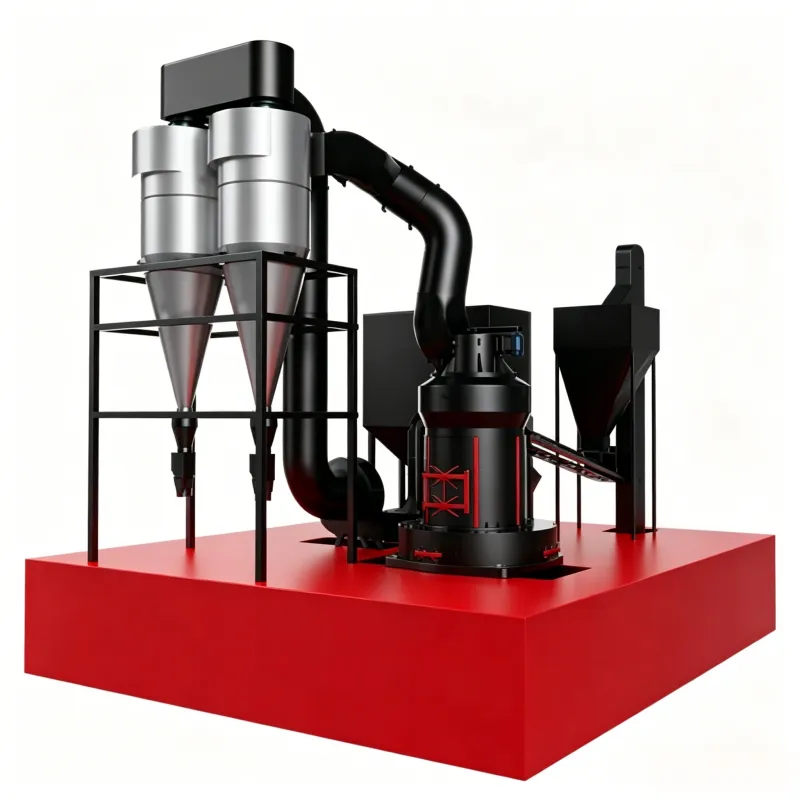
Broyeur à carbure de silicium (SiC)
Présentation du broyeur à carbure de silicium (SiC) Le carbure de silicium présente des propriétés extrêmement…


In mineral processing production, the fact that equipment has not shut down does not mean the process is operating stably; the fact that the PLC has not issued an alarm does not mean the concentrate grade and recovery rate are not fluctuating.
To truly judge whether a mineral processing process is stable, it is necessary to combine equipment operating parameters, process parameters, and production indices for analysis.
1. Check whether key parameters are continuously fluctuating
For the grinding system, focus on the feed rate, mill load, pulp density, and cyclone pressure; for the flotation system, focus on the pulp level, pH value, reagent flow rate, and air input.
If parameters frequently deviate from the normal operating range, it indicates that there may be fluctuations in the system. However, it is also necessary to distinguish between normal process adjustments, instrument errors, and equipment abnormalities.
2. Check whether the parameters are coordinated with each other
For example, after the mill feed rate increases, if the water addition, pump sump level, and cyclone operating status are not reasonably coordinated, the grinding and classification performance may change.
Therefore, one cannot only look at whether a certain parameter is stable, but must also analyze the changing relationships among related parameters.
3. Check whether production indices are stable
Grinding fineness, concentrate grade, recovery rate, and tailings grade are the important bases for verifying the process effectiveness.
An automation system can record parameter trends, but production indices still need to be confirmed in combination with online analysis or regular sampling and assaying.
4. Check whether alarms and manual interventions are frequent
If the system frequently issues alarms and operators frequently switch to manual control, it may indicate that the instruments, control logic, or process conditions require further inspection.
 English English
 Spanish
 Russian
 Arabic
 Swahili
 French
 Turkish
 Portuguese
 Korean
 Japanese
 German
 Italian