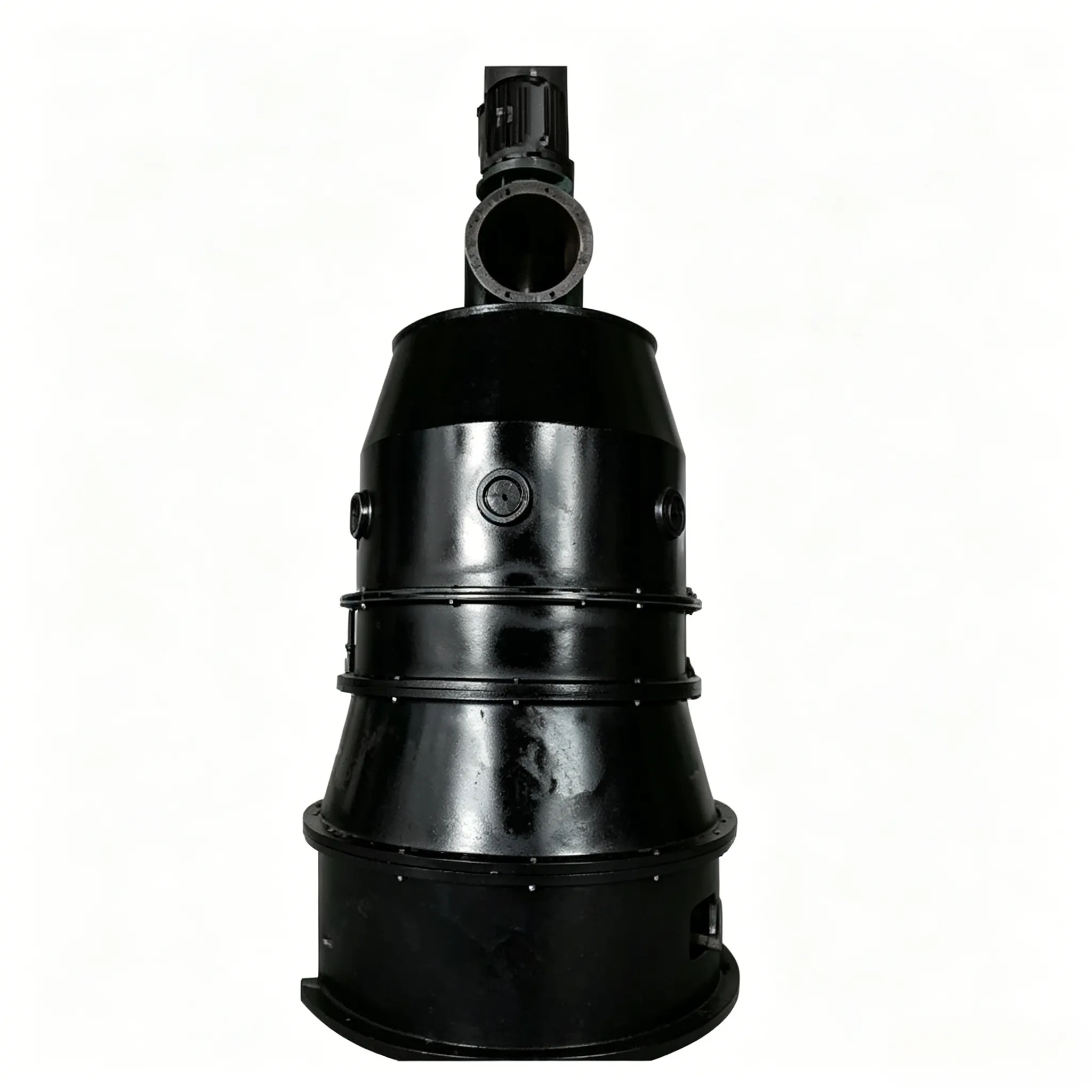
Trituradora de impacto guiada SUM
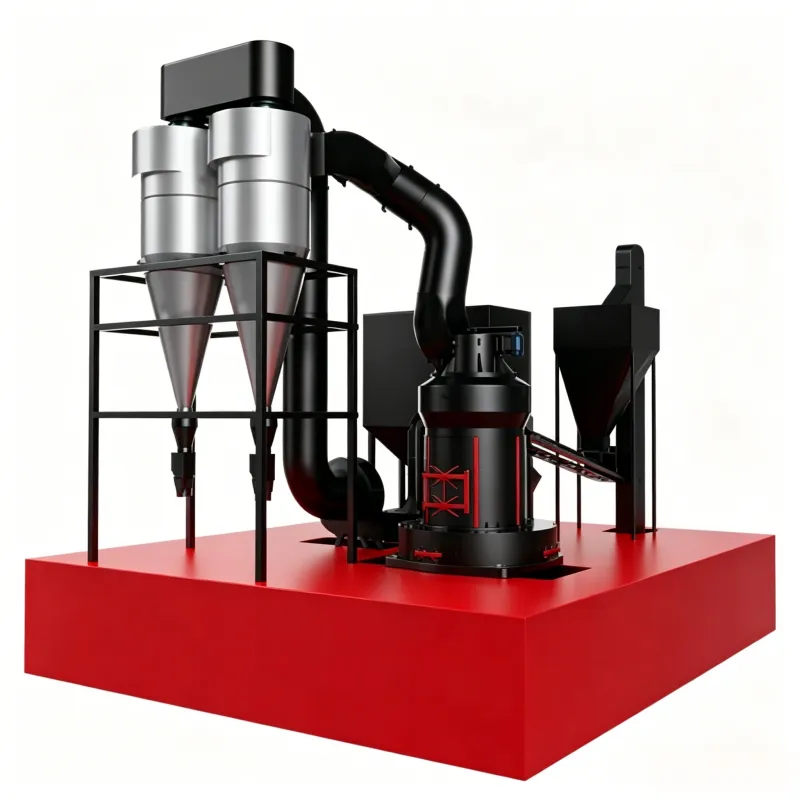
Trituradora de impacto con guía SUM La trituradora de la serie SUM es una trituradora de impacto en seco con guía por ciclón…


The present invention belongs to the field of mineral engineering, specifically a flotation separation process for rare earth minerals.
The separation of bastnaesite and monazite is conventionally carried out by flotation. The key to flotation lies in the selection of flotation reagents and the pH value of the pulp. In 1984, Mukai Shigeru et al. (Japan) used sulfosuccinate as a collector, sodium silicate and aluminium chloride as depressants, and No. 5 pine oil as a frother, under the conditions of pulp pH 2.89–3.88, pulp temperature 53–59°C, and pulp density 7.5%. They conducted a bench‑scale test on low‑grade ore from the Bayan Obo deposit [Ce+La+Pr+Nd = 9.21%], obtaining a bastnaesite concentrate containing 59.76% Ce+La+Pr+Nd with a recovery of 18.68%. However, they did not carry out continuous pilot tests, nor did they obtain a monazite concentrate. (Refer to Flotación, Japan, Vol. 31, No. 3, pp. 220–221, 1984.)
The object of the present invention is to solve the separation problem of bastnaesite and monazite, and to find a flotation process that is simple in technology, low in cost, high in separation efficiency, and suitable for industrial production.
The gist of the present invention is:
(1) Using a hydroxamic acid collector, sodium silicate, and a common frother (such as 210 ketone alcohol oil, etc.), with low‑grade bastnaesite, monazite and other minerals as feed, the separation of rare earth minerals from gangue minerals is carried out at a pulp pH of 8.5–9.5 and at ambient temperature, obtaining a high‑grade mixed concentrate of bastnaesite and monazite in a ratio of approximately 3:2.
(2) Using phthalic anhydride heated hydrolysis or a half‑saponified product of phthalic acid (with a saponification pH of 3.5–5) as a collector for bastnaesite, and aluminium salts (alum, aluminium sulfate or aluminium chloride) as a depressant for monazite, the separation of bastnaesite and monazite is carried out at a flotation pulp pH of 4–5.5 and ambient temperature, using the high‑grade rare earth concentrate from step (1) as feed.
According to point (1), sodium silicate is primarily used to depress gangue minerals, but an excess also depresses rare earth minerals; if the flotation temperature is too high, the floatability of apatite increases, which affects the concentrate grade; the best separation efficiency is achieved at a pulp pH of 8.5–9.5.
According to point (2), the heated hydrolysis of phthalic anhydride or the half‑saponification of phthalic acid, with the saponification pH controlled at 3.5–5, is intended to utilise the collecting action of the hydrogen phthalate ion on bastnaesite, ensuring that the content of hydrogen phthalate ions in the saponified product exceeds 75%; the dosage of aluminium salts must be appropriate, as an excess also depresses bastnaesite and affects the separation efficiency; if the flotation pulp pH is too high or too low, the separation effect deteriorates.
Compared with the prior art, the present invention features a simpler process, fewer and cheaper reagents, and better separation efficiency. Moreover, it can simultaneously produce both a bastnaesite concentrate and a monazite concentrate in which the target rare‑earth minerals account for more than 95% of the total rare earth content. The economic and social benefits are remarkable, and the content of harmful elements in the tailings water is lower than the discharge standard for wastewater.
The inventors have conducted the following tests:
Using Bayan Obo ore as feed, with a rare earth grade (REO) of 29.18%, a particle size of –0.074 mm accounting for 95.52%, and a liberation degree of rare‑earth minerals of 77.05%. The mineral composition of the feed was: bastnaesite 23.71%, monazite 17.38%, fluorite 22.23%, apatite 7.09%, barite 10.00%, magnetite 2.62%, hematite‑limonite 10.86%, dolomite and calcite 2.94%, aegirine, aegirine‑augite, feldspar and quartz 2.89%, and others 0.28%.
For the separation of rare‑earth minerals from gangue, a hydroxamic acid collector, sodium silicate and 210 frother were used at pH 8.5–9.5, pulp density 40–45%, temperature 30–35°C. In 2A and 1A flotation cells, after one roughing and three cleaning stages, the rare earth grade (REO) was upgraded to 65%, with a bastnaesite‑to‑monazite ratio of 3:2. Then, using a heated hydrolysis saponification product of phthalic anhydride (saponification pH 3.5–5) and alum, at pH 4.5–5 and ambient temperature, a 12‑litre flotation cell was used for a separation circuit consisting of one rougher, two cleaners and two scavengers. As a result, a bastnaesite concentrate with a grade of 69.68% REO and a bastnaesite content of 95.59% with respect to total rare‑earth minerals was obtained, together with a monazite concentrate with a grade of 66.03% REO and a monazite content of 96.47% with respect to total rare‑earth minerals. In the open‑circuit configuration, the respective separation stage recoveries were over 60%.
The bastnaesite and monazite concentrates produced by the present invention fully meet the quality requirements for rare‑earth concentrate smelting and for applications such as the production of bastnaesite polishing powders.
 English English
 Spanish
 Russian
 Arabic
 Swahili
 French
 Turkish
 Portuguese
 Korean
 Japanese
 German
 Italian