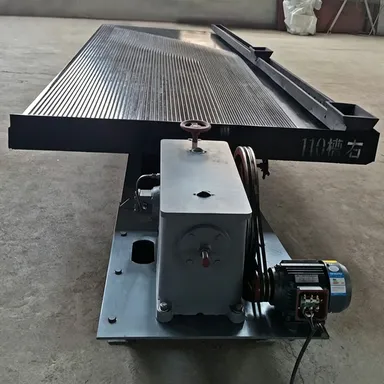
Mesa vibratoria
Mesa vibratoria – Concentrador por gravedad de alta precisión. Descripción general del producto. La mesa vibratoria (también…

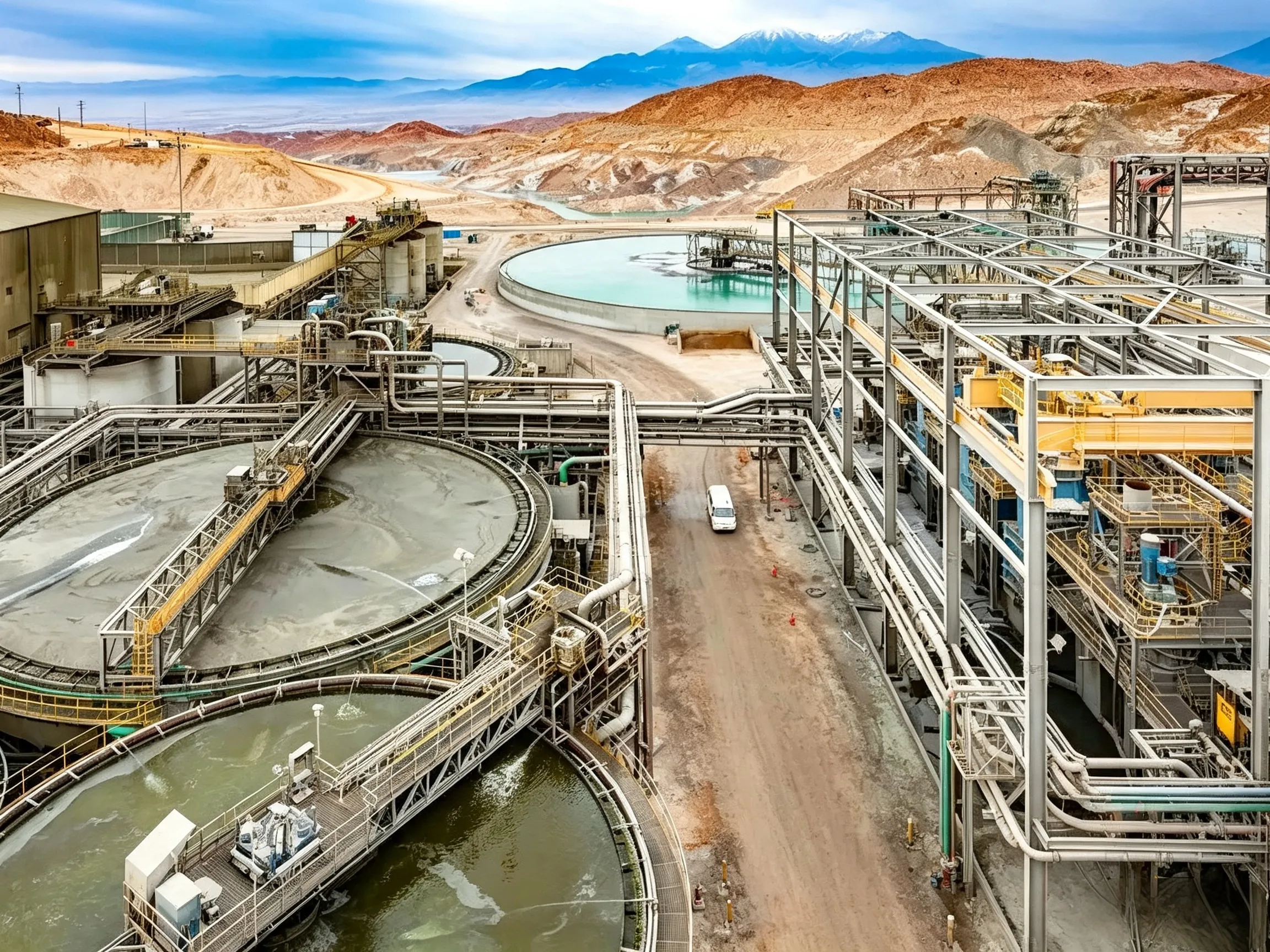
1. A new copper extraction smelting process from copper dressing tailings, que se caracteriza por gypsum and sulfuric acid are used to mix and granulate the tailings; after curing and air drying, the granules are placed into a tank and leached several times with dilute acid or industrial water until the leachate becomes colourless; the leached solution obtained can be used in the subsequent solvent extraction and electrowinning step for copper recovery.
2. The new process according to claim 1, que se caracteriza por the gypsum dosage is 0.5–3% of the tailings weight; the sulfuric acid used is high‑concentration acid at a ratio of 1:4, and the dosage is 1–3% of the tailings weight; the dilute acid can be prepared by mixing water with concentrated acid, with the preparation method being: add 120–240 litres of water to 24 ml of the high‑concentration acid (at the 1:4 ratio); the amount of dilute acid used in each leaching cycle is 400–600 times the weight of the tailings.
Ámbito técnico:
The present invention relates to a new process for extracting copper from tailings generated after copper dressing of converter slag from copper smelting.
Imagen de fondo:
The tailings from the flotation of converter slag in flash smelting contain about 0.5% copper, of which about 50% is acid‑soluble copper. Due to the low copper content in the tailings, the agitation leaching process for copper extraction consumes high power and is uneconomical. Moreover, more than 70% of the tailings are fine particles of –325 mesh, with poor permeability, making heap leaching or tank leaching infeasible.
Resumen de la invención:
The object of the present invention is to provide a new copper extraction smelting process from copper dressing tailings.
The object of the present invention can be achieved through the following scheme:
Gypsum and sulfuric acid are used to mix and granulate the tailings. After curing and air drying, the granules are placed into a tank and leached several times with dilute acid or industrial water until the leachate becomes colourless. The leached solution can then be used in the subsequent solvent extraction and electrowinning step for copper recovery.
The gypsum forms porous cured slag during granulation, and the maximum particle size can be about 7 cm without affecting the copper leaching rate. The gypsum dosage is 0.5–3% of the tailings weight.
The sulfuric acid used is high‑concentration acid at a ratio of 1:4, and the dosage is 1–3% of the tailings weight.
During the leaching process, multiple leaching cycles may be employed, generally 2 to 3 times, until the leachate is colourless. The dilute acid can be prepared by mixing water with concentrated acid. The preparation method is: add 120–240 litres of water to 24 ml of the high‑concentration sulfuric acid (at the 1:4 ratio). The amount of dilute acid used in each leaching cycle is 400–600 times the weight of the tailings.
The present invention has the advantages of simple process, short reaction time, convenient operation, reasonable reagent consumption, low impurity content in the leached solution, effective suppression of iron, clear solution, and suitability for subsequent solvent extraction and electrowinning for copper recovery.
Ejemplo 1:
240 kg of tailings, 7.2 kg of gypsum, plus 4800 ml of concentrated acid and 24 kg of water (prepared as 400 g/l concentrated acid) were mixed and granulated. The granules were air‑dried for 11 days, then placed into a tank for leaching. In the first leaching cycle, 120 litres of water and 240 ml of concentrated acid were added, and the leaching time was 5–10 hours. In the second leaching cycle, 120 litres of water and 240 ml of concentrated acid were added, and the leaching time was 5–10 hours. The leachates from the two cycles were combined.
Ejemplo 2:
1000 kg of tailings, 30 kg of gypsum, plus 20,000 ml of concentrated acid and 100 kg of water (prepared as 360 g/l concentrated acid) were mixed and granulated. The granules were air‑dried for 7 days, then placed into a tank for leaching. In the first leaching cycle, 400 litres of water and 400 ml of concentrated acid were added, and leaching proceeded for 3.5 hours before discharging the solution. In the second leaching cycle, 330 litres of water and 300 ml of concentrated acid were added, and leaching proceeded for 3.5 hours before discharging. In the third leaching cycle, 300 litres of water and 300 ml of concentrated acid were added, and leaching proceeded for 19 hours before discharging. The leachates from the three cycles were combined.

 English English
 Spanish
 Russian
 Arabic
 Swahili
 French
 Turkish
 Portuguese
 Korean
 Japanese
 German
 Italian