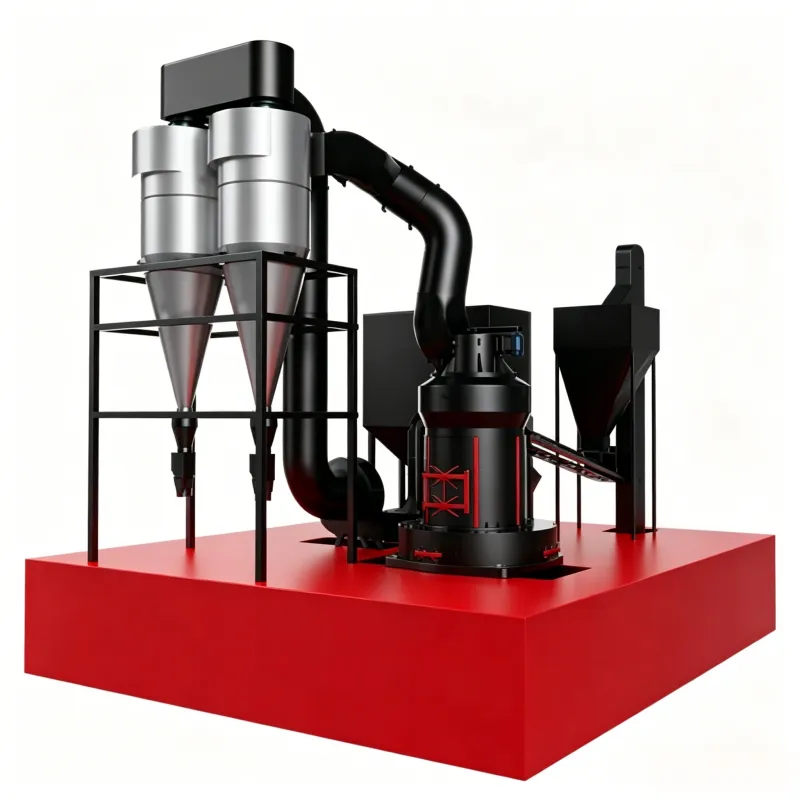
Molino de carburo de silicio (SiC)
Introducción al molino de carburo de silicio (SiC) El carburo de silicio tiene...

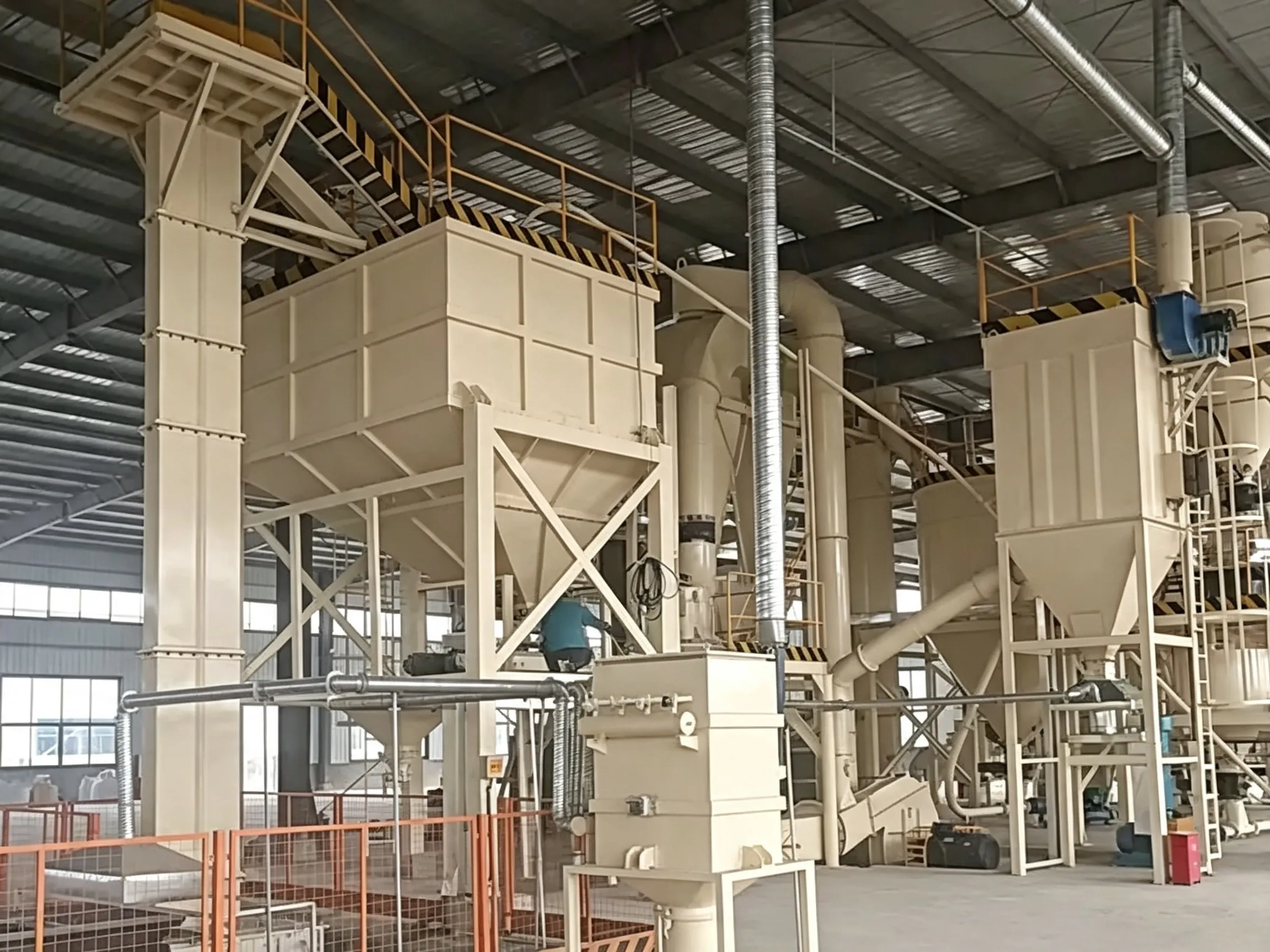
Did you know that the mountains of waste slag from steel plants can be transformed into a “golden raw material” for high‑strength concrete? Behind this remarkable conversion lies the sophisticated ultra‑fine grinding process for water granulated slag.
Water granulated slag, or blast furnace granulated slag, is the primary solid waste generated during ironmaking. China produces approximately 1.5 to 1.6 billion tons of industrial waste, including slag, each year. Massive stockpiles of water slag not only occupy valuable land but also pose potential environmental hazards. However, through ultra‑fine grinding, water slag can be converted into highly reactive ground granulated blast furnace slag (GGBFS), an indispensable core admixture for high‑performance concrete and low‑carbon cement.
With the deepening of China’s “dual carbon” strategy and the continued strengthening of industrial solid waste resource utilisation policies, the water slag ultra‑fine grinding industry is entering an unprecedented period of opportunity. This article provides a comprehensive analysis of raw material characteristics, core processes, equipment selection, application scenarios, and market prospects for water slag ultra‑fine grinding.
Water slag refers to blast furnace slag generated during ironmaking. In its molten state, the liquid blast furnace slag is rapidly quenched with water, forming granulated foam‑shaped particles that are milky white in colour. It is lightweight, friable, porous, and easy to grind into fine powder. Water slag is primarily produced by two methods: pit water quenching y front‑of‑furnace water quenching.
The chemical composition of water slag mainly includes SiO₂, Al₂O₃, CaO, MgO, etc., and it possesses latent hydraulic properties—that is, when ground to a sufficient fineness, it can undergo hydration reactions in the presence of water and develop strength. This is the fundamental reason why water slag can serve as an excellent cement additive and concrete admixture.
Although water slag has latent reactivity, this reactivity can only be fully released with sufficient fineness. Research shows that when water slag is ground to a specific surface area above 420 m²/kg, its reactivity is fully realised. The higher the specific surface area, the greater the activity index.
Through ultra‑fine grinding, the mineral crystal lattice of water slag undergoes dislocation, bond breakage, and recrystallisation, forming an amorphous surface structure that is readily soluble in water. This allows water molecules to penetrate more easily, accelerating hydration reactions and significantly increasing the activity index. This characteristic makes ultra‑fine grinding a paso decisivo in the high‑value utilisation of water slag.
Water slag is a relatively difficult material to grind. The main challenges include:
These characteristics mean that water slag grinding cannot simply adopt conventional grinding equipment; requiere soluciones de proceso específicas y maquinaria especializada.
Processing water slag into ultra‑fine powder delivers multi‑dimensional value:
| Value Dimension | Specific Benefits |
|---|---|
| Environmental | Consumes industrial solid waste, reduces land occupation and pollution |
| Economic | Converts low‑cost waste into high‑value‑added GGBFS |
| Construction performance | Improves concrete density, durability, and service life |
| Carbon reduction | Replaces cement clinker, significantly reducing cement production carbon emissions |
The application of ultra‑fine water slag powder is supported by a well‑established standards framework. GB/T 18046 “Ground Granulated Blast Furnace Slag Used for Cement, Mortar and Concrete” specifies the technical requirements for GGBFS, with Grade S95 being the core admixture for high‑performance concrete.
In 2022, the China Building Materials Federation issued T/CBMF194‑2022 “Ultra‑Fine Composite Mineral Admixtures” , which clearly defines the technical requirements for such materials. At the policy level, eight ministries including the Ministry of Industry and Information Technology jointly issued the “Implementation Plan for Accelerating Industrial Resource Comprehensive Utilisation,” aiming for a comprehensive utilisation rate of bulk industrial solid waste of 57% by 2025. “Directrices para la evaluación integral de la valorización de los residuos sólidos en las empresas siderúrgicas” came into effect on July 1, 2025. These policies provide solid institutional support for the water slag ultra‑fine grinding industry.
En molino de rodillos vertical (VRM) is currently the most widely used core equipment in the water slag grinding field. It integrates trituración, secado, molienda, clasificación y transporte in one unit. The VRM has become the mainstream choice due to its following key advantages:
Bajo consumo de energía: El VRM incorpora el principio de molienda en lecho de material—rollers directly compact and grind material on the grinding table without metal‑to‑metal contact. This principle reduces system power consumption by 20%–30% compared with ball mills, and the energy saving increases with higher feed moisture.
High throughput: La capacidad de una sola unidad oscila entre 6 to 80 t/h, suitable for 50,000 to 600,000 tons per year medium‑to‑large‑scale GGBFS production lines. Large VRMs can even meet annual capacities exceeding 1 million tons of slag powder.
Tamaño compacto: The vertical structure is space‑saving, occupying only about 50% de la superficie ocupada por un sistema de molino de bolas, lo que reduce considerablemente los costes de construcción.
Calidad superior del producto: Can stably produce Grade S95 GGBFS with a specific surface area above 420 m²/kg.
For ultra‑fine powder requirements in the Malla de 400 a 3250 range, the Molino vertical ultrafino LUM is an ideal choice. This equipment integrates ultra‑fine grinding, classification, and conveying, featuring an intelligent PLC control system and a multi‑head classifier, with fineness adjustable from 650 to 3250 mesh.
En Molino vertical ultrafino HLMX represents an even higher level of technology, employing advanced processes and intelligent controls to help enterprises achieve ultra‑fine grinding of water slag.
En MW ring roller micro‑powder mill also focuses on ultra‑fine grinding in the Malla de 400 a 3250 range, with adjustable and controllable fineness, breaking through the capacity bottleneck of ultra‑fine powder production. It is equipped with a hydraulic roller turning device, allowing the grinding rollers to be swung out for maintenance without disassembly, making it convenient and fast.
En HGM ultra‑fine grinding mill is a new‑generation grinding device with significant advantages over traditional ball mills and Raymond mills. Compared with ball mills, it consumes less energy, is easy to operate, and can produce powder in a single pass without the need for drying or calcining equipment. Finished fineness can reach 3000 mesh, whereas a conventional Raymond mill can only achieve about 300 mesh.
| Aspecto comparativo | Molino de rodillos vertical | Molino vertical ultrafino (LUM/HLMX) | Ring Roller Mill | HGM Ultra‑Fine Mill |
|---|---|---|---|---|
| Finess del producto | Grade S95 (SA ≥420 m²/kg) | 650–3250 mesh | Malla de 400 a 3250 | Up to 3000 mesh |
| Capacity Scale | 6–80 t/h, 50k–600k t/y | 3–18 t/h | Moderado | Moderado |
| Funciones integradas | Molienda + secado + clasificación + transporte | Grinding+classification+conveying | Molienda y clasificación | Molienda y clasificación |
| Escenario de aplicación | Large‑scale GGBFS lines | Premium ultra‑fine powder needs | Flexible ultra‑fine production | One‑step powder projects |
Selection advice:
A standard water slag ultra‑fine grinding production line typically includes the following stages:
Water slag is first fed into a receiving hopper, accurately weighed by a weighing belt conveyor, and then conveyed by a elevador de cangilones to the storage silo. During conveying, the water slag passes through magnetic separators y cribas vibratorias for iron removal and screening to remove ferrous impurities and oversized particles.
Water slag generally contains some moisture and must first be dried in a dryer. For production lines equipped with a VRM, drying can be performed simultaneously with grinding—a sistema de gas caliente supplies hot air to the mill, enabling secado en línea durante el rectificado.
The dried water slag is uniformly fed into the mill via a screw conveyor o feeder. In a VRM, the water slag spreads outward on the grinding table under centrifugal force while being subjected to high‑pressure compaction and shearing by the rollers for pulverisation.
El material molido es transportado hacia arriba por la corriente de aire hasta el clasificador. Coarse particles fall back onto the grinding table for re‑grinding, while qualified fine particles are carried by airflow to the dust collection system. By adjusting the classifier rotor speed, the finished fineness can be precisely controlled.
El gas cargado de polvo pasa primero a través de un colector ciclónico for product recovery, and then through an electrostatic precipitator o bag filter as the final dust removal device. The collected GGBFS is conveyed via an air chute y elevador de cangilones to the silo de producto acabado for storage.
Water Slag → Receiving Hopper → Weighing Belt Conveyor → Bucket Elevator → Drying → Iron Removal → Vertical Roller Mill (Grinding + Drying + Classification) → Cyclone Collector → Bag Filter → Air Chute → Bucket Elevator → Finished Product Silo
GGBFS is a stable, high‑quality new concrete admixture, suitable not only for general industrial and civil construction but also for water conservancy, roads, ports, undersea tunnels, nuclear power projects, and other special engineering applications. It improves concrete durability and extends the service life of concrete structures.
Ultra‑fine composite mineral admixtures prepared from fly ash, GGBFS, and other solid wastes can partially replace clinker in low‑carbon cement production. Practice has shown that replacing 20% of cement clinker with ultra‑fine composite mineral admixture in P·O42.5 cement can increase 28‑day compressive strength by 3%–4.7%.
Water slag mixed with a certain proportion of cementitious materials, after mixing, forming, and steam curing, can be made into slag bricks. By mixing water slag and activators in a pan mill with water, and then combining with coarse aggregate, wet‑mixed slag concrete can be produced.
Water slag powder can replace diatomaceous earth as a thermal insulation filler, saving costs while achieving resource utilisation of solid waste.
With technological advances, the application areas of ultra‑fine water slag powder continue to expand. Current research includes the use of finely ground blast furnace slag as a flue gas absorbent for SO₂ treatment.
In August 2013, Dahu Group successfully applied an ultra‑large water slag VRM in Qian’an, Hebei. As a core equipment integrating drying, grinding, classification, and conveying, the VRM provided reliable technical support for large‑scale GGBFS production.
A GGBFS project in Shandong has an annual output of 400,000 tons, processing water slag at a rate of 55–60 t/h with a feed size of 5 mm to 1 cm. The finished product meets Grade S95 (specific surface area ≥420 m²/kg).
With the maturation and scaling‑up of VRM grinding systems, 1 millón de toneladas al año slag grinding systems have gradually become mainstream in the market. Loesche’s large‑scale slag grinding systems represent the international advanced level in water slag ultra‑fine grinding.
In recent years, China’s comprehensive utilisation level of industrial solid waste has continued to improve. The national target for bulk industrial solid waste comprehensive utilisation rate is 57% . The “National Catalogue of Advanced and Appropriate Process Technology and Equipment for Industrial Resource Comprehensive Utilisation (2025 Edition)” includes 8 items of technology and equipment for comprehensive utilisation of iron and steel metallurgical slag. The cement industry consumes over 80% of the total solid waste utilised nationwide.
From the market side, GGBFS ex‑factory prices vary by region. In Shandong, GGBFS is quoted at around RMB 80–110/ton; in Hebei, the price is around RMB 38–75/ton. The ex‑factory price of raw water slag is only RMB 4–17/ton.
En value leap from raw material to finished product is evident—after ultra‑fine grinding, water slag can increase in value by several times to dozens of times.
With the continued implementation of policies such as the “Implementation Guidelines for Energy‑Saving Upgrades in the Cement Industry” y el “Carbon Peak Implementation Plan for the Building Materials Industry” , demand for ultra‑fine water slag powder as a core raw material for low‑carbon cement and green concrete will continue to grow. Intelligent, large‑scale, and ultra‑fine grinding equipment will become key development directions for the industry.
Water slag ultra‑fine grinding is a golden pathway that transforms industrial solid waste into high‑value green building materials. Through scientific process design and appropriate equipment selection—whether the high‑efficiency large‑scale vertical roller mill o el premium ultra‑fine LUM/HLMX series—enterprises can turn problematic “waste slag” into value‑creating “treasure.”
From high‑performance concrete to low‑carbon cement, from slag bricks to thermal insulation fillers, the application scenarios for ultra‑fine water slag powder are increasingly diverse, and the market space continues to expand. Driven by el apoyo normativo, el progreso tecnológico y la demanda del mercado , the water slag ultra‑fine grinding industry is entering a golden development period.
For both steel and building‑material enterprises, building a scientifically designed water slag ultra‑fine grinding production line is not only una opción inevitable para cumplir con las responsabilidades medioambientales pero también una medida estratégica para reducir costes, mejorar la eficiencia y abrir nuevas vías de crecimiento.
 English English
 Spanish
 Russian
 Arabic
 Swahili
 French
 Turkish
 Portuguese
 Korean
 Japanese
 German
 Italian