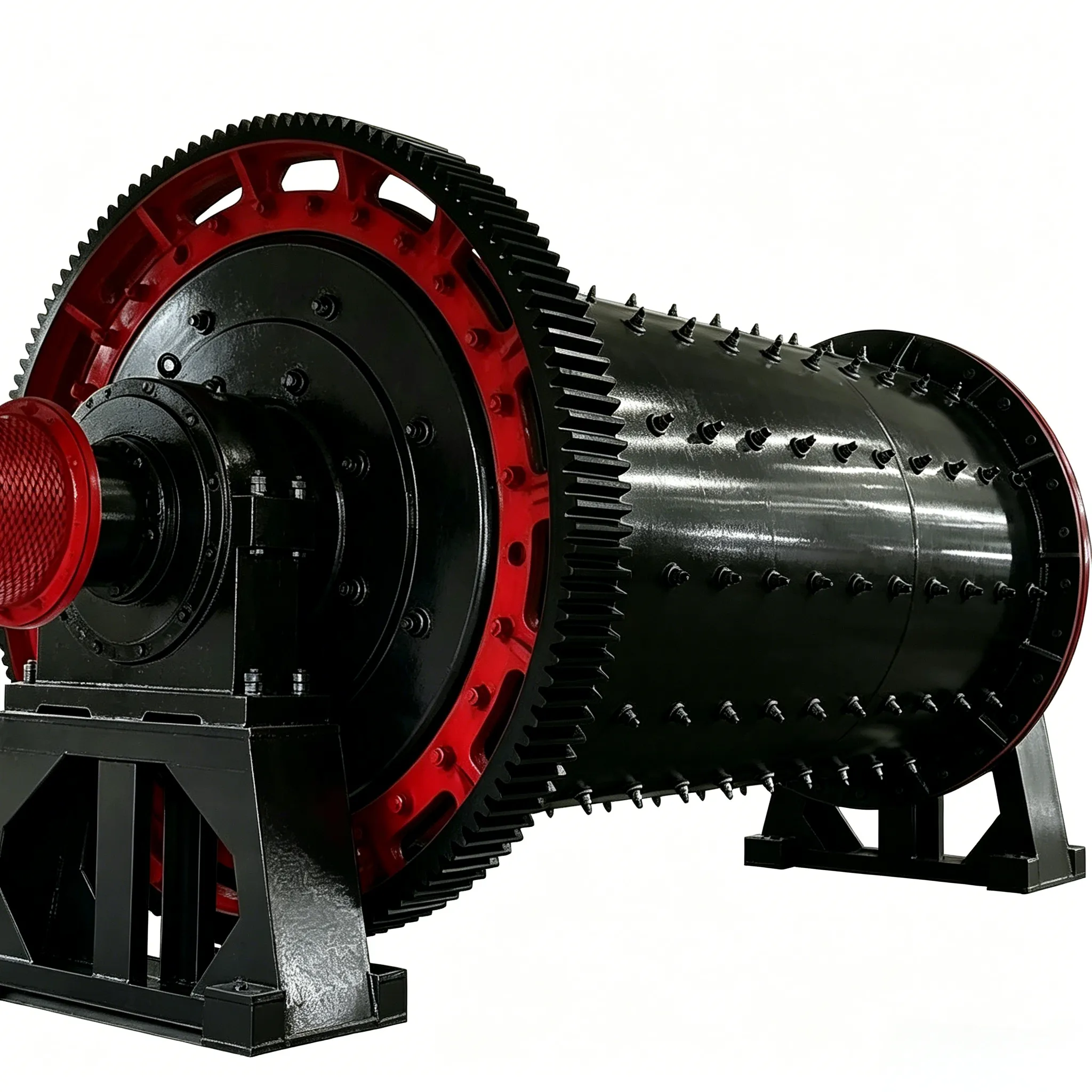
Molino de bolas de descarga de parrilla
Construcción de un molino de bolas con descarga por rejilla. La diferencia entre una rejilla…

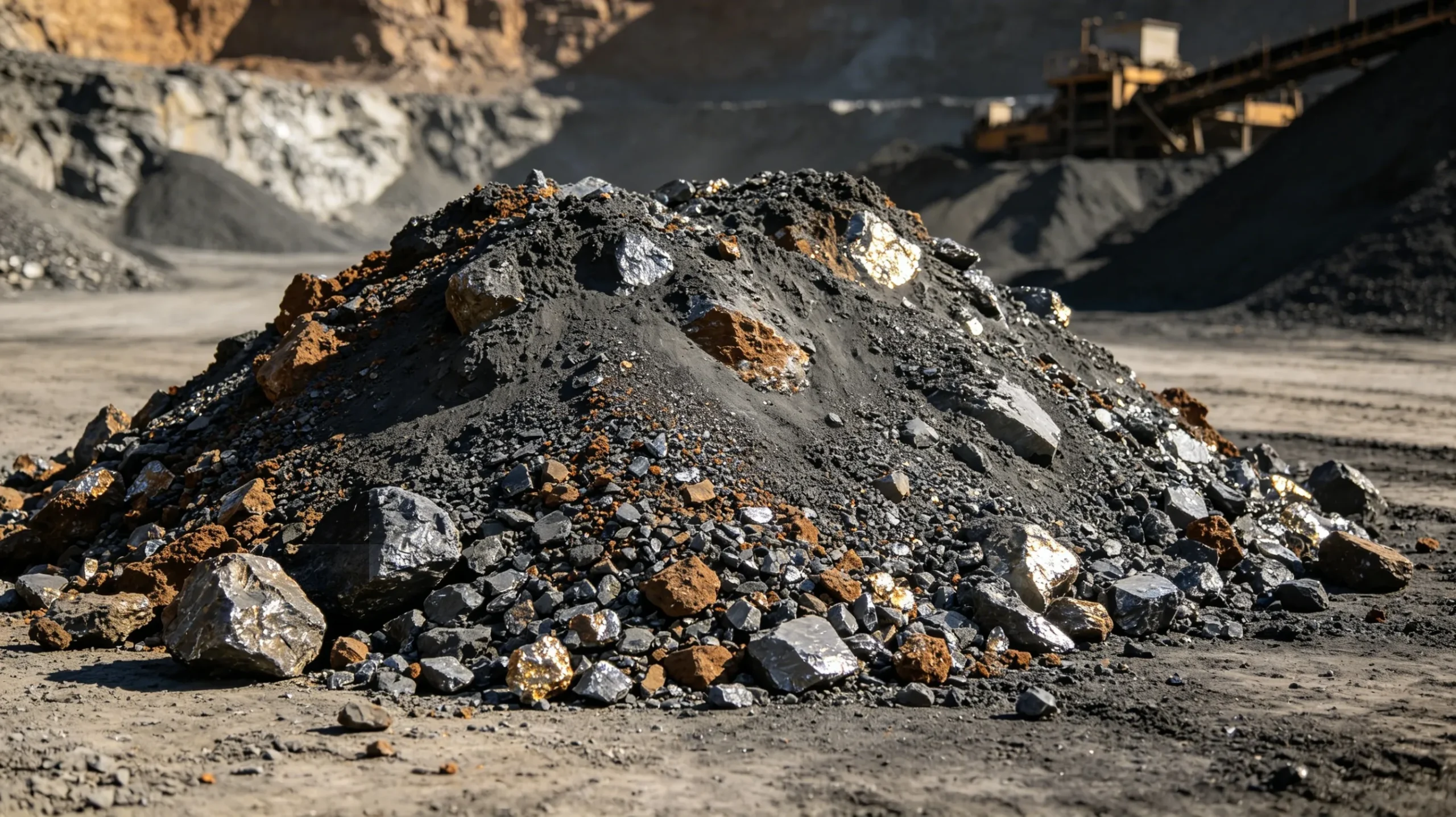
La mina de plomo, zinc y plata de Baoshan es un yacimiento complejo. El mineral procesado por la planta de concentración procede tanto de yacimientos primarios como de yacimientos alterados. Los principales minerales valiosos presentes en el mineral son la calcopirita, la molibdenita, la galena, la esfalerita, la bismutinita, la pirita, la scheelita y la wolframita. Los principales minerales de ganga son la grossularia, la andradita, el cuarzo, la calcita, el piroxeno, la hornblenda y la caolinita, entre otros. Los residuos de flotación de los minerales sulfurosos en la planta de concentración contienen minerales de tungsteno de baja ley, principalmente scheelita. Los residuos del mineral primario tras la flotación de plomo-zinc contienen 0,127% de WO₃, de los cuales la scheelita representa aproximadamente el 81%, la wolframita el 16% y la tungstita el 3%. El tamaño de partícula de la scheelita es de 80%, concentrado en el intervalo de -0,074 mm a +0,037 mm; el tamaño de las partículas de wolframita es de 65%, concentradas en el intervalo de -0,037 mm a +0,019 mm. El contenido mineral principal y la composición granulométrica de los residuos de flotación del mineral primario se muestran en la Tabla 4‑53 y la Tabla 4‑54, respectivamente.
Tabla 4-53: Contenido mineral principal de los residuos de flotación del mineral primario (%)
| Mineral | Grossularia | Andradita | Hedenbergita | Calcita | moscovita | Cuarzo | Limonita | Marcasita | Hematita | Otros |
|---|---|---|---|---|---|---|---|---|---|---|
| Fracción másica | 39.2 | 7.1 | 13.1 | 12.5 | 11.4 | 8.2 | 3.2 | 0.06 | 0.3 | 4.98 |
Tabla 4-54: Composición granulométrica y distribución de metales en los residuos de flotación de mineral primario
| Tamaño de las partículas / mm | Rendimiento / % | Calidad WO₃ / % | Distribución del WO₃ / % |
|---|---|---|---|
| +0.074 | 31.74 | 0.12 | 30.23 |
| -0.074+0.037 | 22.61 | 0.13 | 23.32 |
| -0.037+0.019 | 8.34 | 0.13 | 8.60 |
| -0.019+0.010 | 12.97 | 0.12 | 12.35 |
| -0.010 | 24.34 | 0.13 | 25.50 |
| Total | 100.00 | 0.126 | 100.00 |
Las propiedades de los residuos de flotación del mineral meteorizado son similares a las del mineral primario, con una fracción másica de WO₃ de 0,134%, pero la fracción másica de wolframita es ligeramente superior a la del mineral primario, representando aproximadamente el 25%. El tamaño de las partículas de scheelita es relativamente fino, y la mayoría se concentra en el intervalo de -0,074 mm a +0,019 mm. Los minerales de ganga son principalmente hedenbergita, junto con cantidades considerables de feldespato y minerales de hierro.
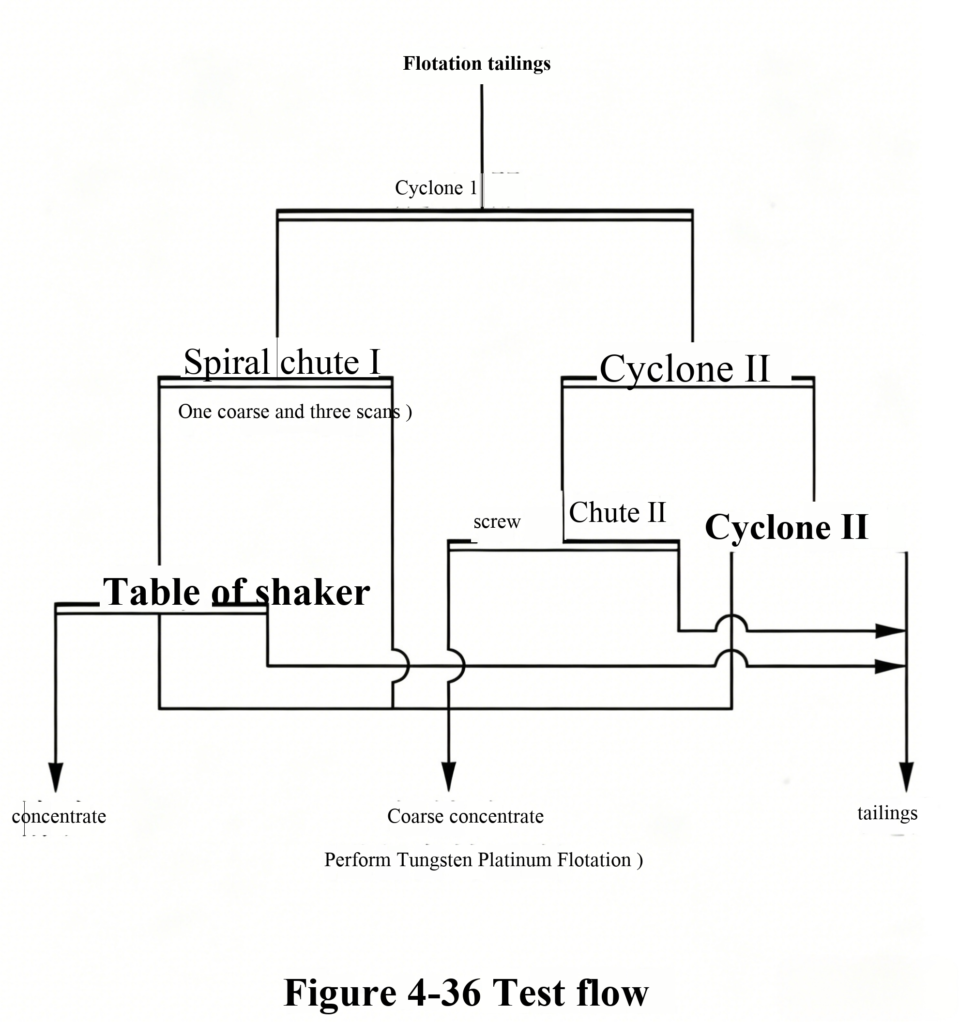
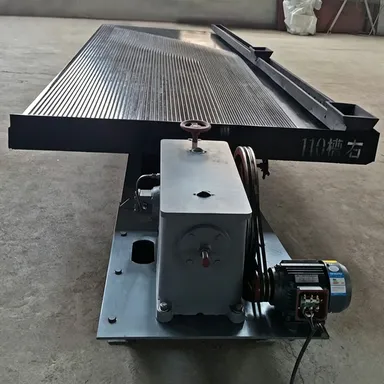
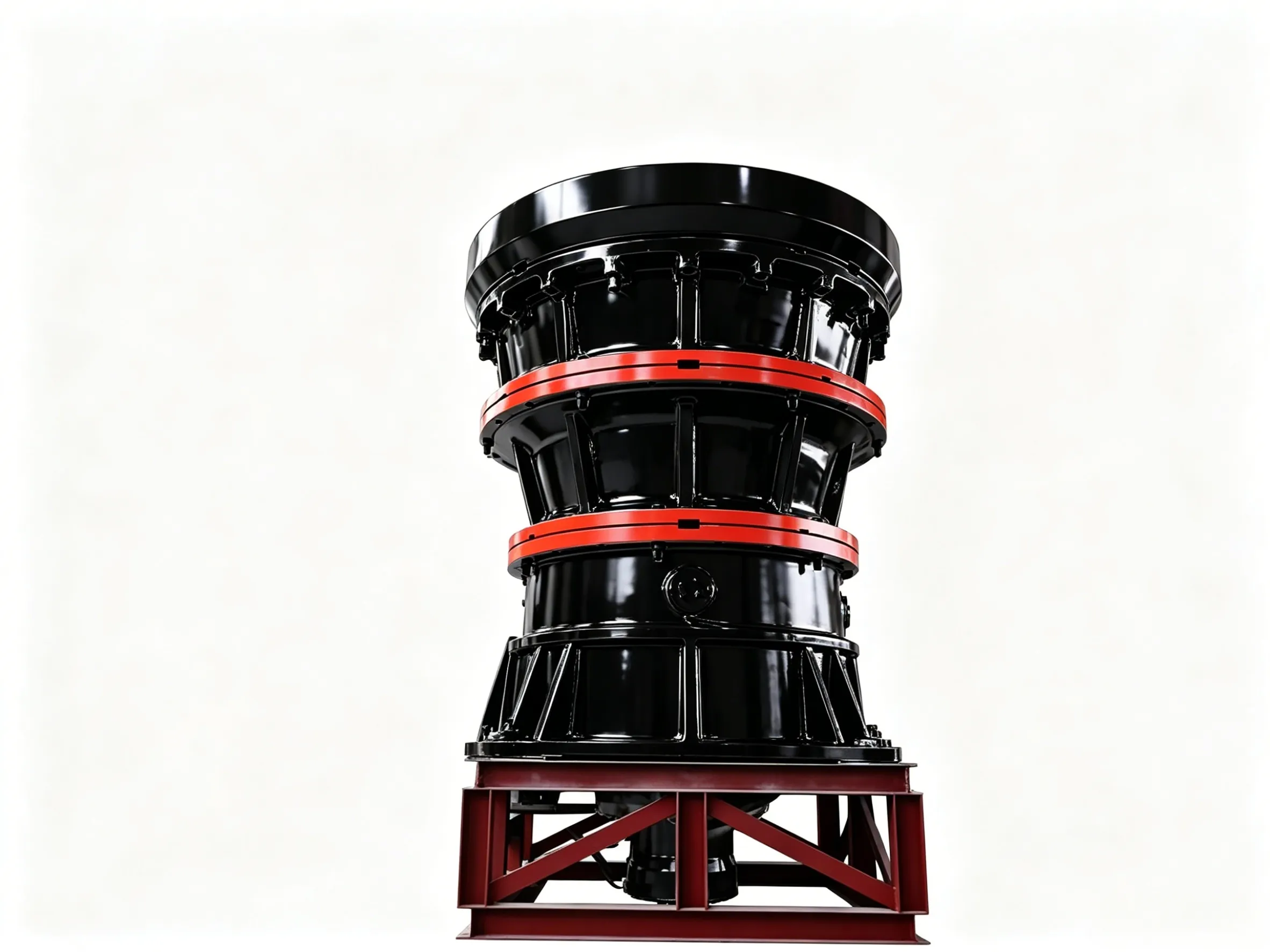
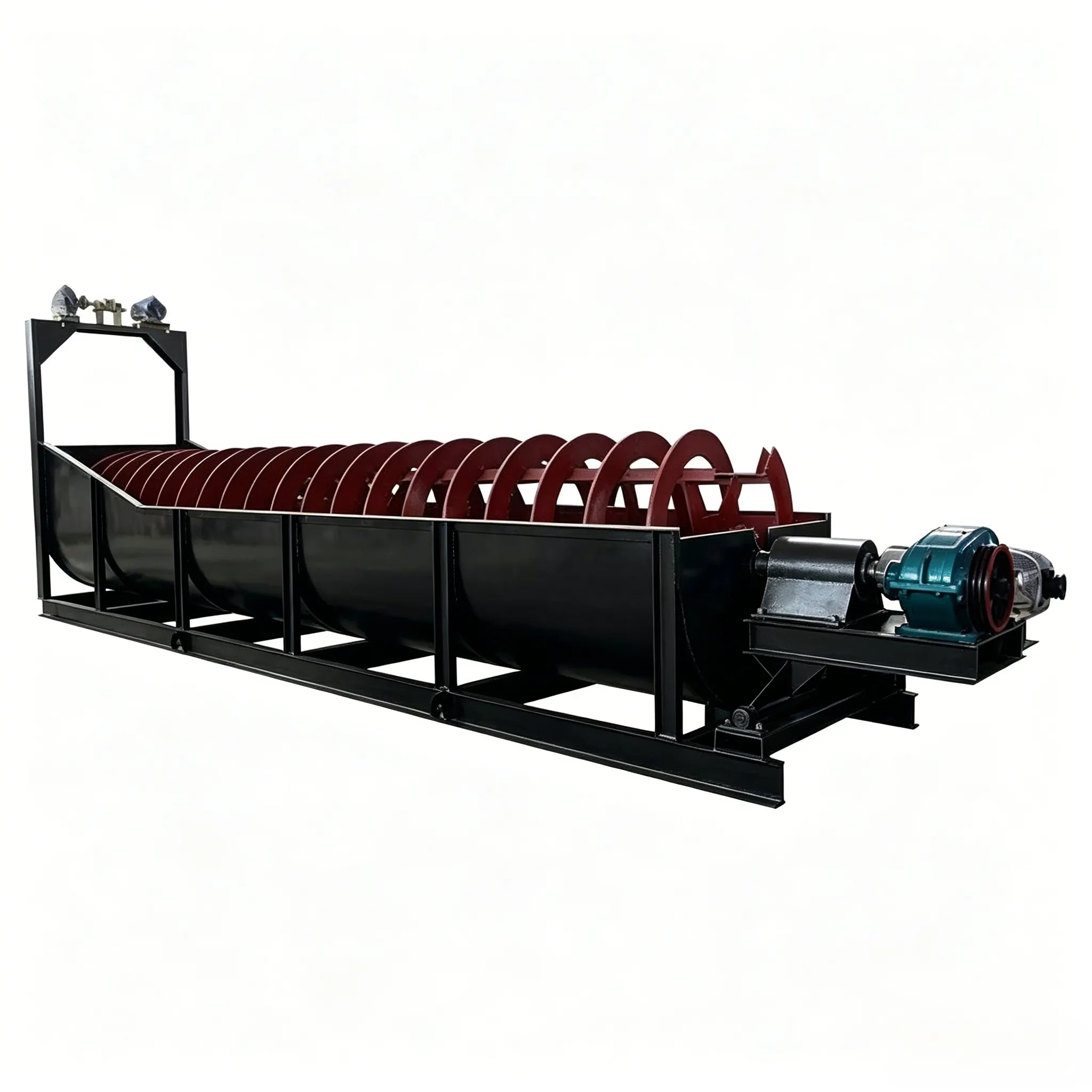
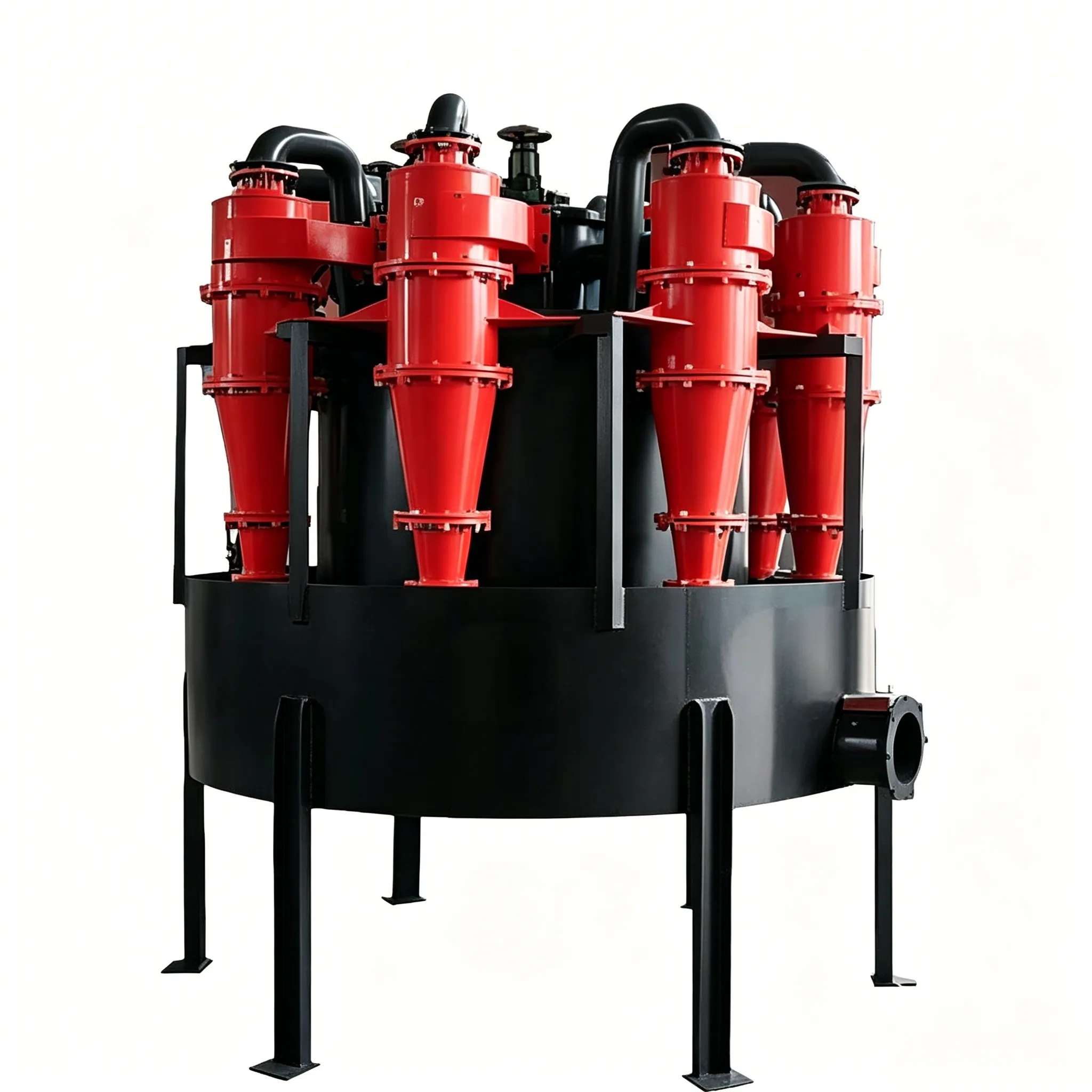
Las investigaciones experimentales demuestran que el uso de un hidrociclón, una rampa en espiral y una mesa vibratoria para preconcentrar los minerales de tungsteno presentes en los residuos de flotación puede reducir el consumo de reactivos en la flotación de la scheelita y permitir la recuperación temprana de la wolframita. Concretamente, los residuos se clasifican primero mediante un hidrociclón de cono corto; a continuación, el material clasificado se procesa a través de una rampa en espiral para producir un concentrado bruto. Posteriormente, el concentrado bruto se trata en una mesa vibratoria para recuperar la wolframita, tras lo cual se lleva a cabo la flotación de la scheelita (véase la figura 4-36). Este proceso produce un concentrado con una ley de WO₃ de 47,29%–50,56% y una recuperación de 18,62%–20,18%. Al mismo tiempo, se obtiene un concentrado bruto (rendimiento del 26,95% al 34,02%) que requiere una flotación adicional de scheelita. En comparación con la flotación simple, la cantidad de material que requiere flotación de scheelita se reduce entre un 73,05% y un 65,97%, lo que supone un ahorro significativo en el consumo de reactivos y una reducción de los costes de enriquecimiento.
 English English
  Spanish
 Russian
 Arabic
 Swahili
 French
 Turkish
 Portuguese
 Korean
 Japanese
 German
 Italian