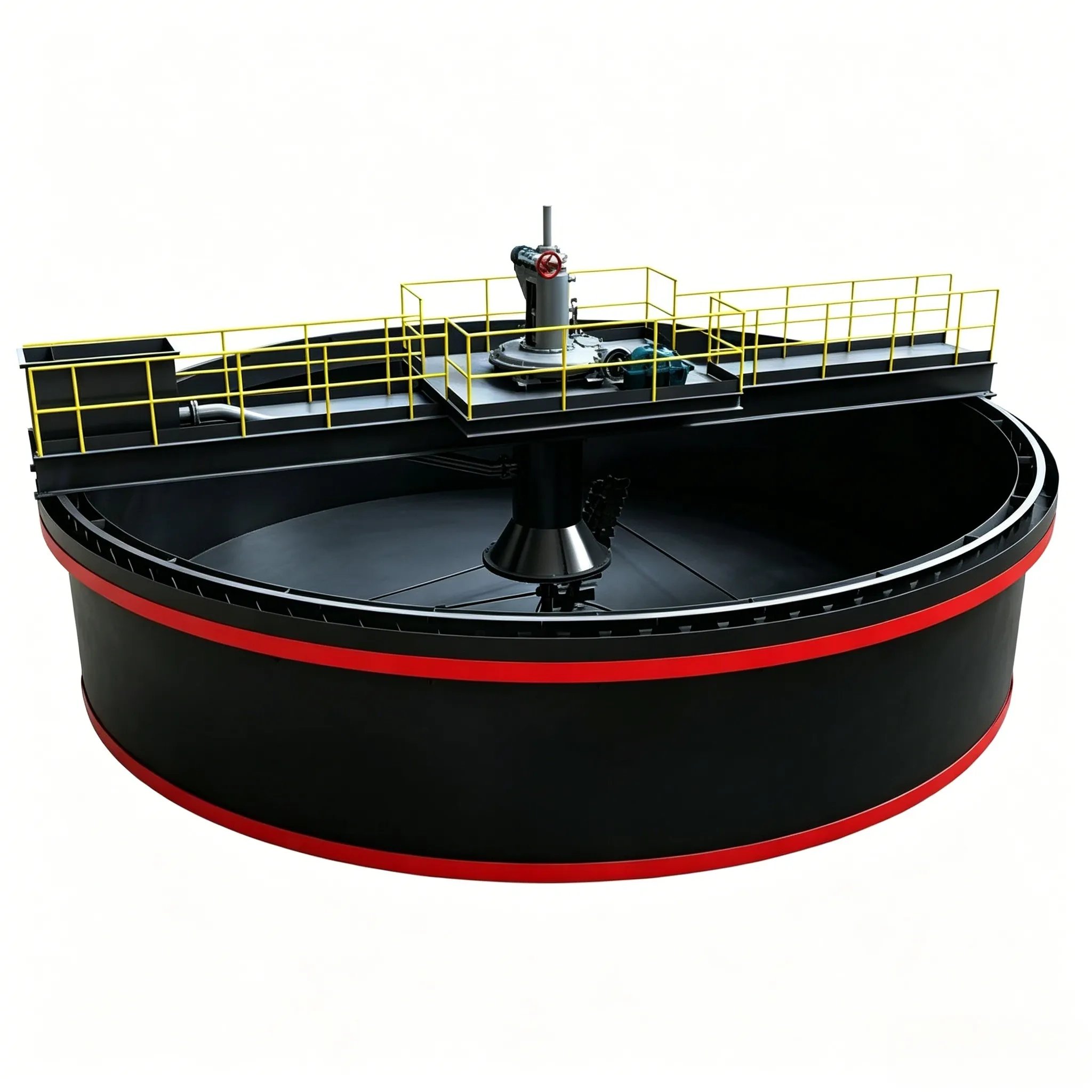
High-Efficiency Thickener
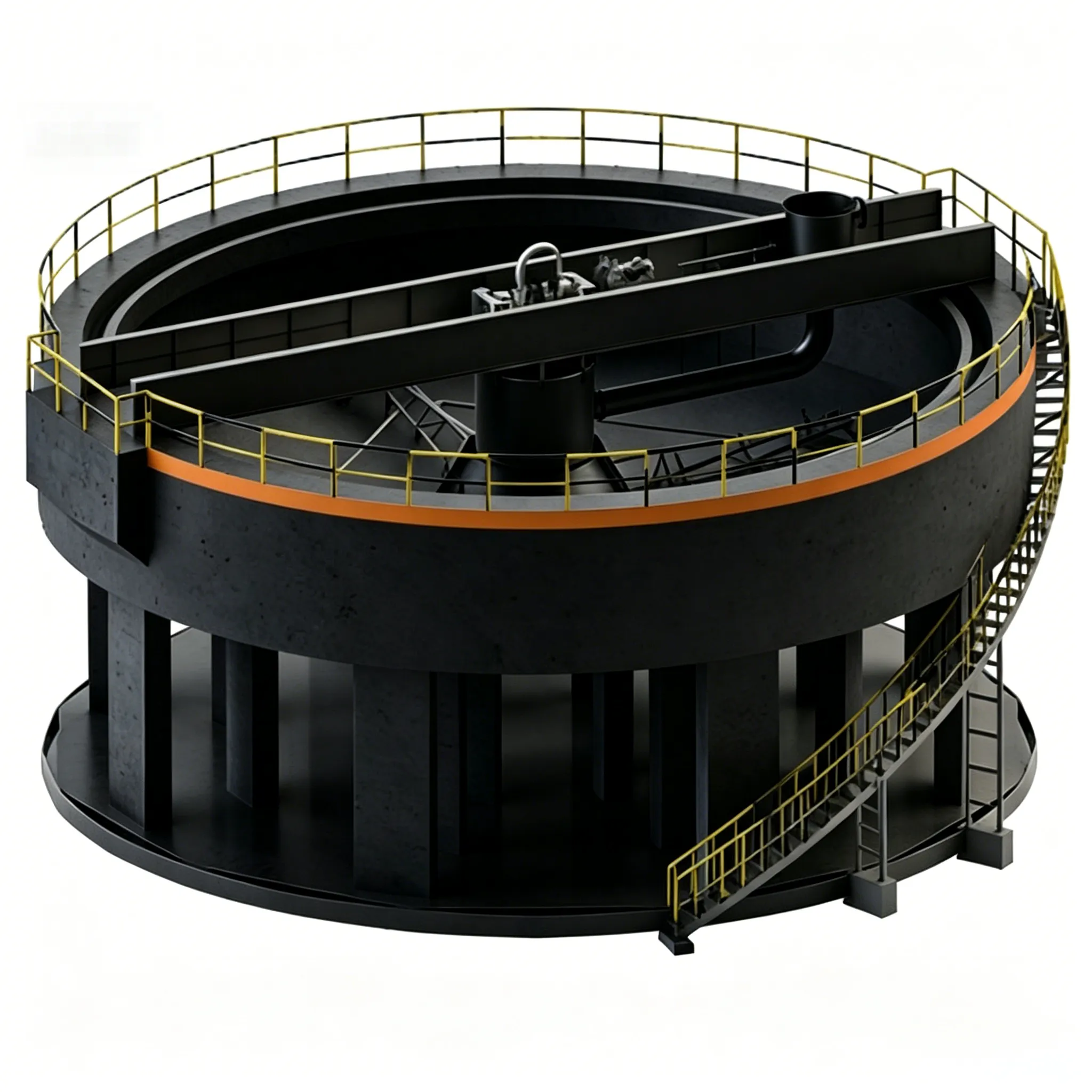
High-Efficiency Thickener The high-efficiency thickener is a new type of thickening equipment…

Recovering tungsten from tungsten tailings by scavenging is an effective way to improve the overall tungsten recovery. Lu Youzhong et al. used a combined beneficiation‑metallurgy process to recover tungsten from tungsten tailings and fine slimes, achieving a WO₃ recovery of up to 82.6%. This process consists of rough flotation followed by direct alkaline decomposition of the tungsten rough concentrate from the tailings, fine slimes, and leaching residue. The flotation method originally used for tungsten raw ore was extended to tailings, fine slimes, and leach residue, while simplifying heating, gravity separation, and other steps. A tungsten rough concentrate assaying 18% WO₃ is obtained and then directly subjected to alkaline decomposition. A comparison between conventional leaching and microwave leaching showed that, under the same effect, the microwave leaching time is only 25% of that of conventional leaching, significantly improving leaching efficiency.
Huang Guangyao et al. used microbubble technology to recover fine scheelite from scheelite flotation tailings. They developed a CMPT microbubble flotation column with an expert control system to maintain the column in a favorable industrial state. Industrial tests showed an average concentrate grade of 24.52% WO₃ at a recovery of 43.41%. Size‑by‑size analysis indicated that the recovery in the 5–38 μm fraction reached 65%.
Zhou Xiaotong et al. used high‑gradient magnetic separation to recover wolframite from scheelite flotation tailings. After one roughing stage, one scavenging stage, and high‑intensity magnetic separation, a wolframite magnetic concentrate grading 0.43% WO₃ was obtained from a magnetic feed containing 0.20% WO₃, with a tungsten recovery of 73.26%.
Yang Binqing applied a branch‑series bulk flotation followed by separation flotation to treat tungsten tailings containing 0.018% Mo and 0.029% Bi, obtaining a molybdenum concentrate grading 46.33% Mo with a recovery of 67.12%, and a bismuth concentrate grading 14.80% Bi with a recovery of 86.70%.
Based on a survey of tailings resources at tungsten mines under Jiangxi Tungsten Industry Group Co., Ltd., Ganzhou Nonferrous Metallurgy Research Institute conducted comprehensive utilization beneficiation tests on tailings from 13 tungsten concentrators belonging to the Group. Using combined flotation‑gravity separation and flotation‑magnetic separation‑gravity separation flowsheets, a tungsten rough concentrate averaging over 20% WO₃ was obtained at recoveries of 17%–37%. From the sulfide concentrate, a molybdenum concentrate averaging 4.19% Mo at a recovery of 67.60% and a bismuth concentrate averaging 2.78% Bi at a recovery of 41.36% were obtained. These results provide technical support and reserves for the protection, rational development, and utilization of tungsten tailings as secondary resources.
Miantuwo Tungsten Mine is a polymetallic deposit dominated by tungsten, also containing copper, bismuth, and molybdenum. The magnetic separation tailings produced after tungsten processing (the tailings from table flotation desulfurization and magnetic separation of the rough tungsten sand obtained from the concentrator’s shaking tables) contain Bi 20%, WO₃ 10%–20%, Mo 1.45%, and SiO₂ 30%–40%. Bismuth minerals occur as native bismuth, bismuth oxide, bismuthinite, and small amounts of wittichenite and emplectite, with bismuth oxide accounting for 70%. The tungsten minerals are mainly wolframite and scheelite. Other minerals include chalcopyrite, pyrite, molybdenite, limonite, quartz, and topaz. Microscopic examination shows that tungsten and bismuth minerals are frequently intergrown; tungsten minerals are also intergrown with chalcopyrite, limonite, and gangue. Bismuthinite is sometimes enclosed in wolframite grains, making liberation extremely difficult. The particle size distribution and liberation degree of the tailings samples are shown in Tables 4‑59 and 4‑60. The tables indicate that the +0.074 mm fraction still accounts for 75.55% of the sample, and the three main minerals are also mainly distributed in the +0.074 mm size fraction.
Based on batch test results, the concentrator adopted a combined gravity separation‑flotation‑hydrometallurgy flowsheet (see Figure 4‑43) in industrial practice to comprehensively recover tungsten, bismuth, and molybdenum from the magnetic separation tailings. Considering that the magnetic tailings contain 30%–40% silica, far exceeding the bismuth concentrate specification (<8% SiO₂), a shaking table is first used for desilication before bismuth recovery. The table concentrate is ground and classified, then sent to flotation, where readily floatable molybdenum and bismuth sulfide are floated first, followed by the more difficult‑to‑float bismuth oxide. To further recover fine bismuth minerals and bismuth‑bearing intergrowths from the flotation tailings, the flotation tailings (tungsten rough concentrate) are leached at ambient temperature, followed by cementation to obtain a qualified bismuth product and the remaining tungsten rough concentrate. Production practice shows that this process yields a bismuth sulfide concentrate grading 36% Bi and a bismuth oxychloride product grading 71% Bi, with a total bismuth recovery as high as 95%. A tungsten rough concentrate assaying 36% WO₃ at a recovery of 90% is also obtained, increasing the overall recovery of the tungsten concentrator by 2 percentage points.
Table 4-59 Particle Size Analysis Results of Test Samples
| Particle size/mm | Yield /% | Grade / % | Market share /% | |||||
| individual | Cumulative | Bi | WO₃ | Mo | Bi | WO₃ | Mo | |
| -0.63+0.32 | 18.63 | 18.63 | 23.54 | 20.84 | 1.27 | 19.10 | 18.47 | 17.76 |
| -0.32+0.16 | 34.25 | 56.88 | 22.58 | 19.61 | 1.39 | 33.67 | 31.95 | 35.73 |
| -0.16+0.074 | 24.67 | 77.55 | 22.03 | 21.00 | 1.37 | 23.66 | 24.65 | 25.37 |
| -0.074+0.04 | 9.46 | 87.01 | 23.95 | 23.03 | 1.33 | 9.87 | 10.37 | 9.44 |
| -0.04 | 12.99 | 100.00 | 24.22 | 23.56 | 1.20 | 13.70 | 14.56 | 11.70 |
| Raw ore | 100.00 | 22.96 | 21.02 | 1.33 | 100.00 | 100.00 | 100.00 | |
Table 4-60 Determination of monomer dissociation degree of test sample
| Particle size/mm | Degree of dissociation | |
| Wolframite | Bismuth mineral | |
| -0.63+0.32 | 59.9 | 69.4 |
| -0.32+0.16 | 62.8 | 71.5 |
| -0.16+0.074 | 82.2 | 82.0 |
| -0.074+0.04 | 91.5 | 89.8 |
| -0.04 | 98.5 | 96.4 |
KENEX group Tungsten Co., Ltd. processes raw ore from a high‑temperature hydrothermal vein‑filled quartz vein type tungsten deposit. The main metallic mineral is wolframite, accompanied by pyrite, scheelite, molybdenite, bismuthinite, native bismuth, pyrrhotite, chalcopyrite, cassiterite, galena, sphalerite, arsenopyrite, xenotime, etc. The gangue minerals are mainly quartz, followed by feldspar, fluorite, calcite, beryl, apatite, mica, tourmaline, etc. In the current processing flowsheet, there are two types of tailings: gravity tailings and fine slime tailings. The gravity tailings are discarded after the qualified ore (following hand sorting) is ground and subjected to gravity separation. These tailings have a pulp density of about 10%, a coarse particle size (maximum <1.5 mm), and low metallic mineral content, being mainly quartz. The fine slime tailings are discarded after primary and secondary slimes are treated by shaking tables. They are essentially <0.074 mm in size, with low density and fine particle size. The multi‑element analysis results of the two tailings are shown in Tables 4‑61 and 4‑62.
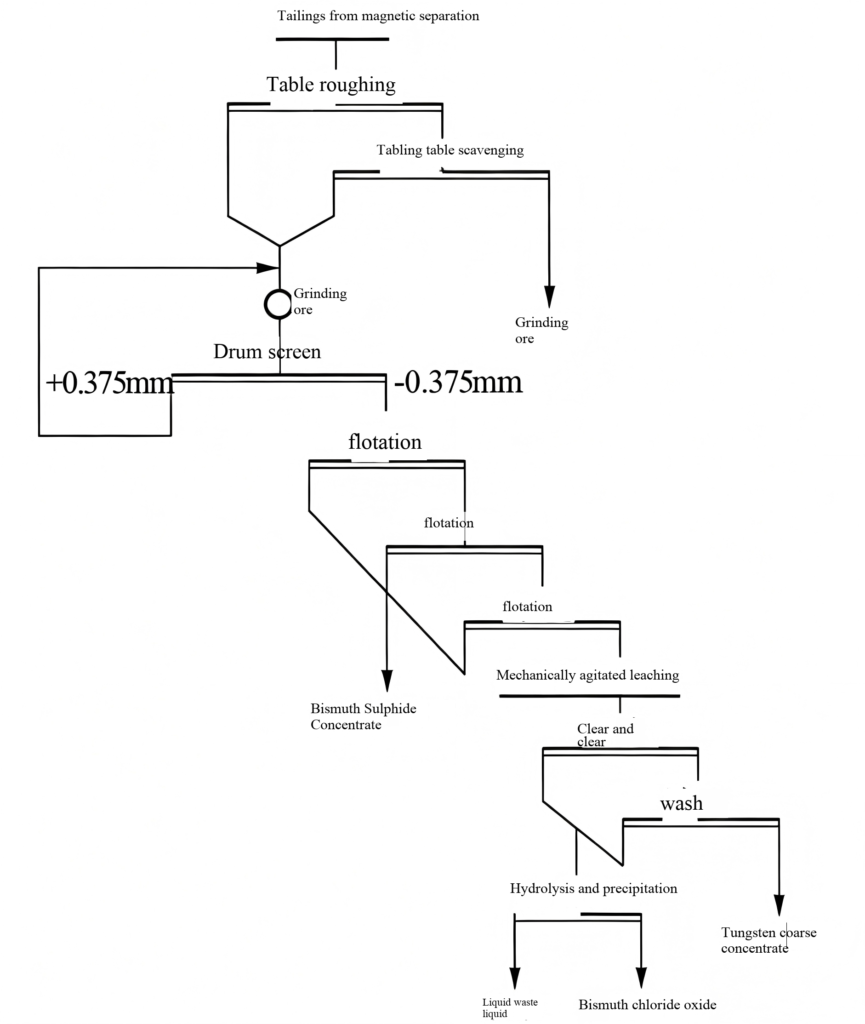
Figure 4-43 Comprehensive recovery process for bismuth and tungsten
Table 4-61 Multi-element analysis results of gravity tailings (mass fraction / %)
| WO₃ | Mo | Bi | S | Sn | Cu | Pb | Zn | Fe | SiO₂ |
|---|---|---|---|---|---|---|---|---|---|
| 0.092 | 0.024 | 0.019 | 0.076 | 0.049 | 0.004 | 0.008 | 0.005 | 2.28 | 78.65 |
Table 4-62 Multi-element analysis results of fine slime tailings (mass fraction / %)
| WO₃ | Mo | Bi | S | Sn | Cu | Pb | Zn | Fe | SiO₂ |
|---|---|---|---|---|---|---|---|---|---|
| 0.28 | 0.056 | 0.044 | 0.12 | 0.020 | 0.006 | 0.005 | 0.008 | 3.87 | 66.55 |
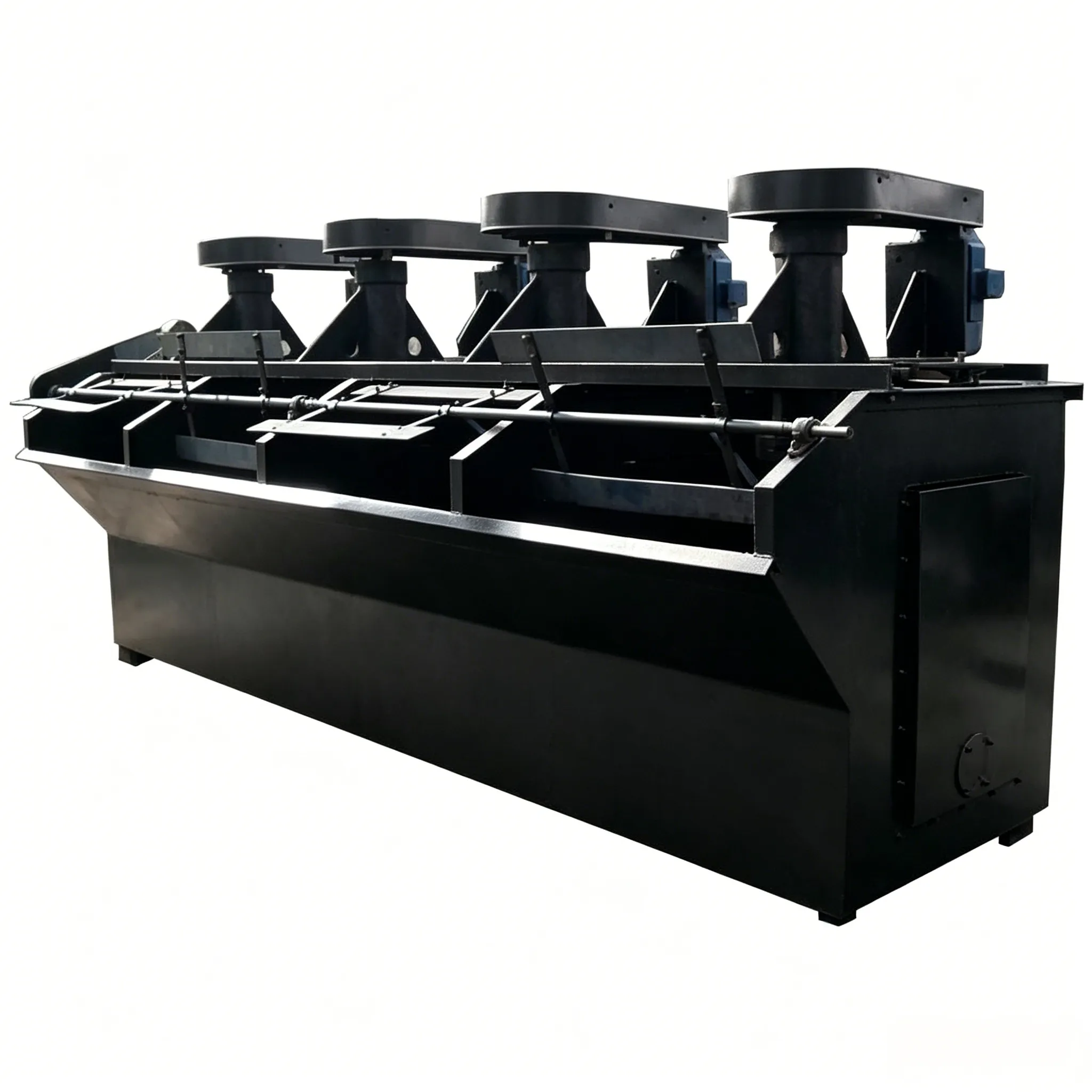
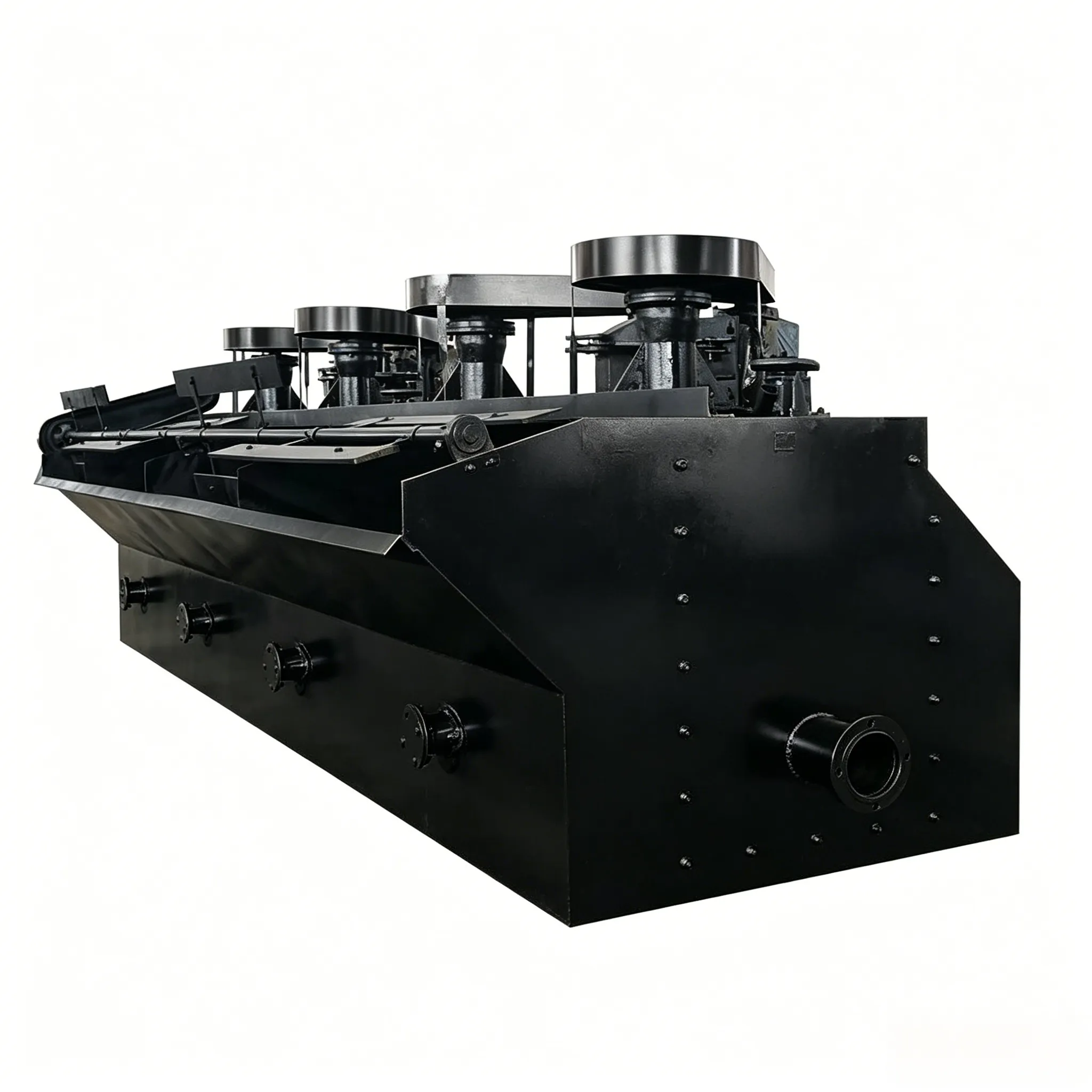
To effectively recover molybdenum and bismuth from the tungsten tailings, based on the properties of the gravity tailings and fine slime tailings in the beneficiation flowsheet and considering site conditions, the concentrator adopted a production process using conventional XJK-type flotation machines to directly float molybdenum and bismuth from the gravity tailings. The process flowsheet and operating conditions are shown in Figure 4‑44.
After commissioning of this molybdenum‑bismuth recovery process, preliminary commissioning showed that the technical indices basically met the target expectations. The overall stage recoveries achieved were:
Based on the technical indices estimated from commissioning, the expected production of molybdenum and bismuth concentrates recovered from the tailings is shown in Table 4‑63.
Calculated at market prices of 460,000 RMB/t of Mo metal and 40,000 RMB/t of Bi metal, the annual sales revenue from molybdenum and bismuth concentrates totals 3,834,680 RMB. Annual material consumption and labor costs are 1,123,700 RMB, yielding an annual profit of 2,710,980 RMB (including tax).
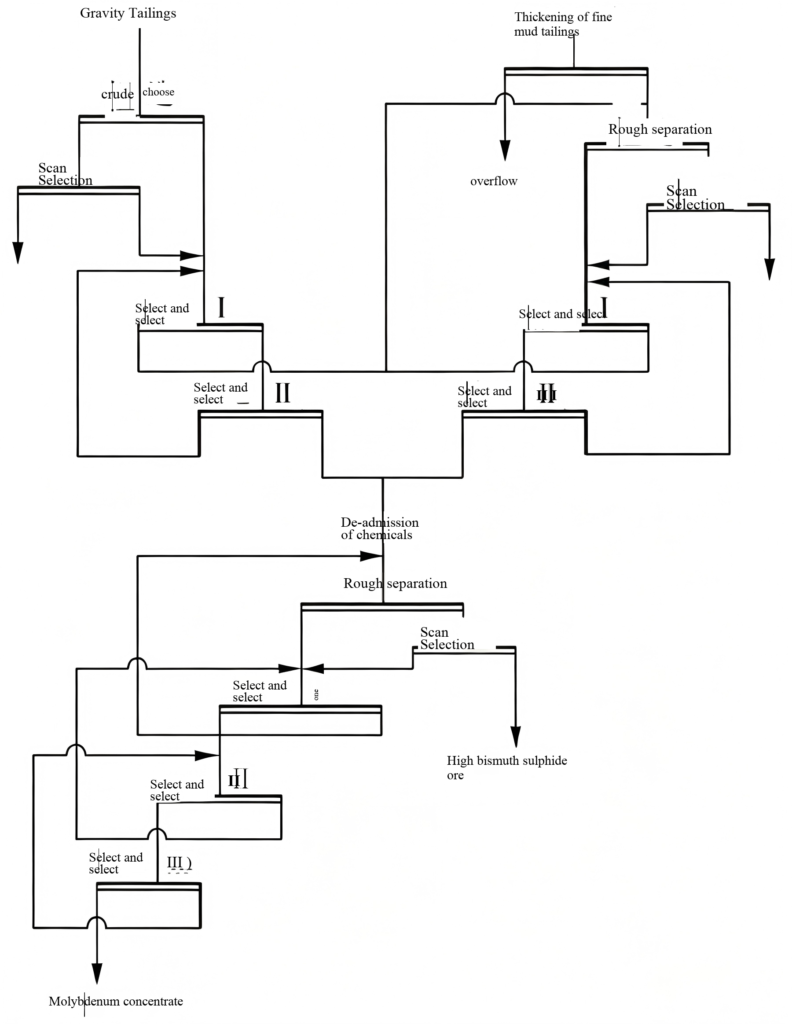
Figure 4-44 Process flow for molybdenum and bismuth recovery from gravity separation and fine slime tailings
Operating conditions:
Reagent scheme:
pH values:
Flotation equipment:
Table 4-63: Prediction of Molybdenum-Bismuth Concentrate Production in the Molybdenum-Bismuth Recovery Project
| Raw material name | Processing capacity /t ·a-¹ | Grade / % | Recovery rate /% | Concentrate grade /% | Concentrate metal content / t · a-¹ | ||||
| Mo | Bi | Mo | Bi | Mo | Bi | Mo | Bi | ||
| Gravity tailings | 65000 | 0.024 | 0.019 | 39.83 | 30.82 | 46.85 | 23.05 | 6.213 | 3.806 |
| Fine-grained tailings | 6300 | 0.056 | 0.044 | 48.04 | 40.01 | 46.85 | 23.05 | 1.695 | 1.109 |
| Total | 71300 | 0.027 | 0.021 | 41.34 | 32.50 | 46.85 | 23.05 | 7.908 | 4.915 |

 English English
  Spanish
 Russian
 Arabic
 Swahili
 French
 Turkish
 Portuguese
 Korean
 Japanese
 German
 Italian