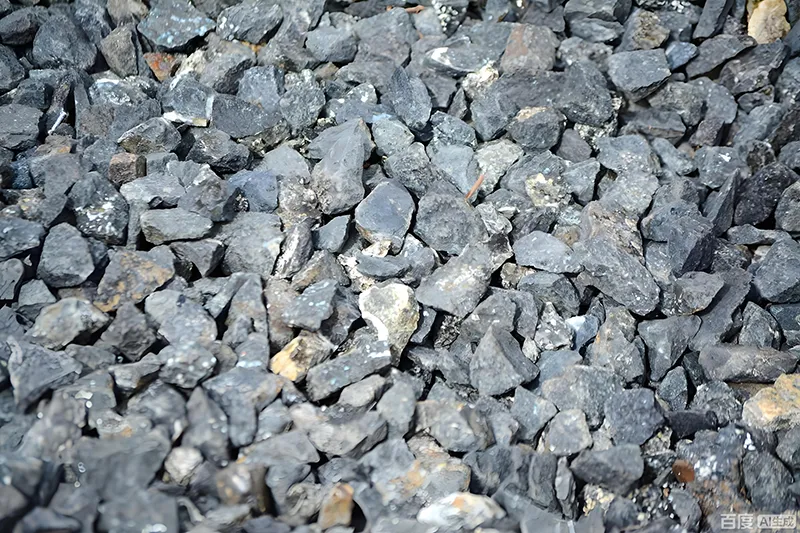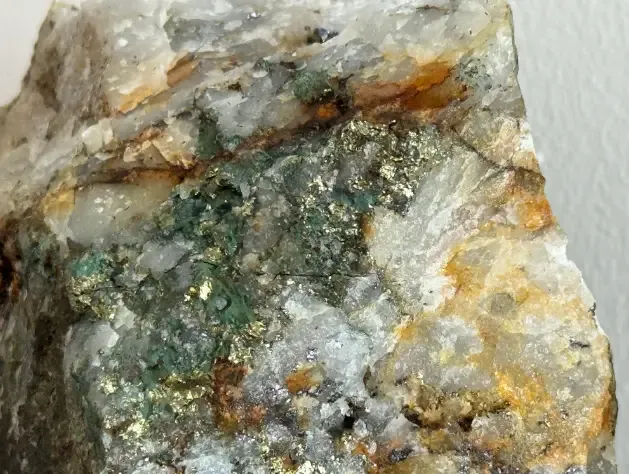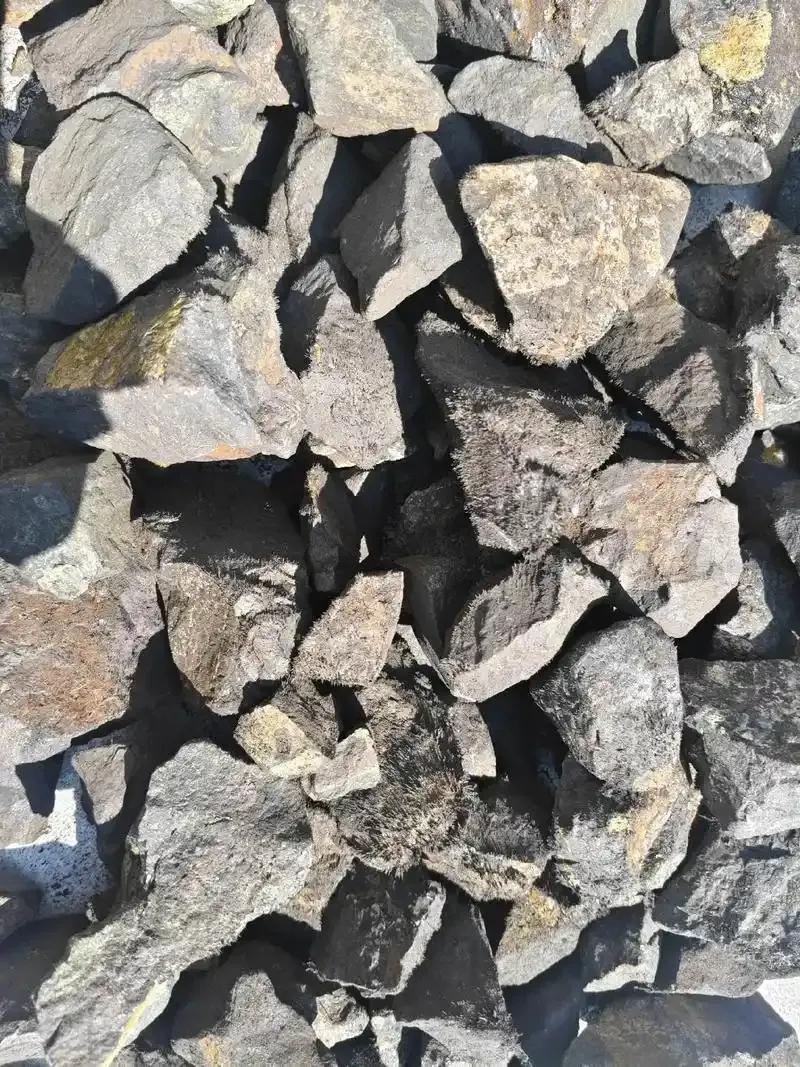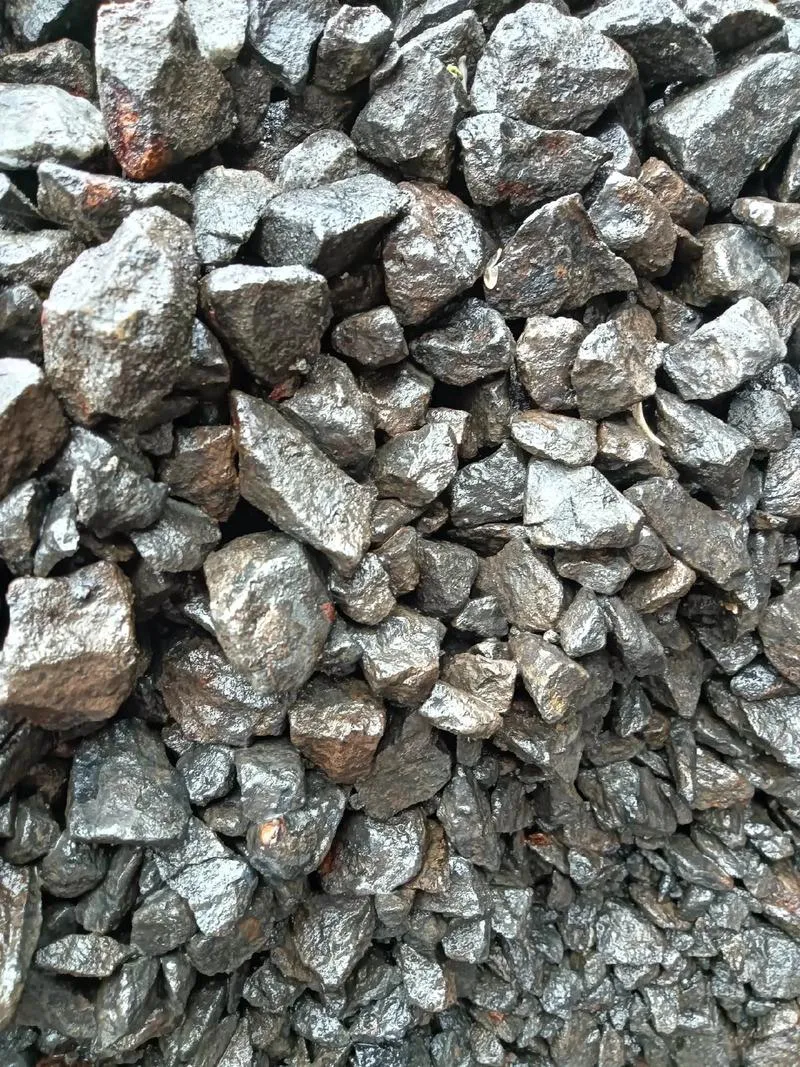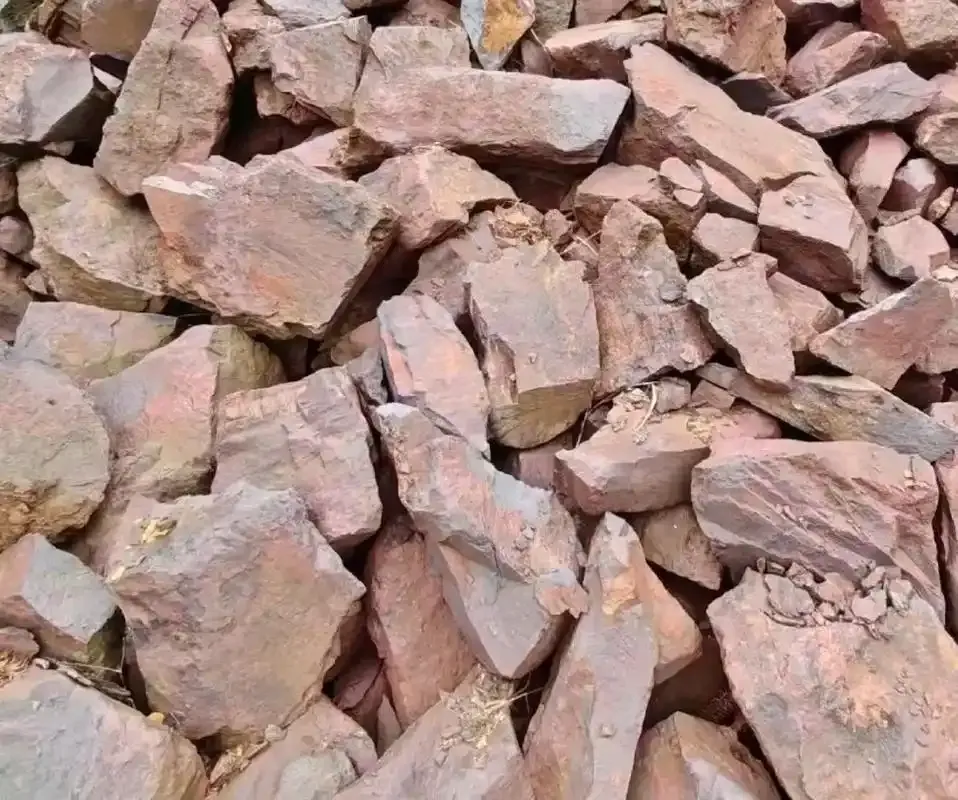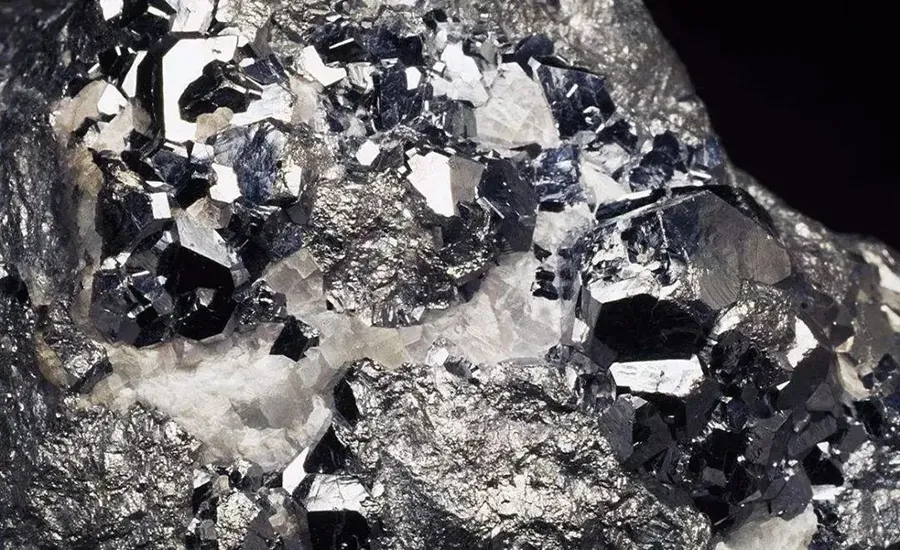


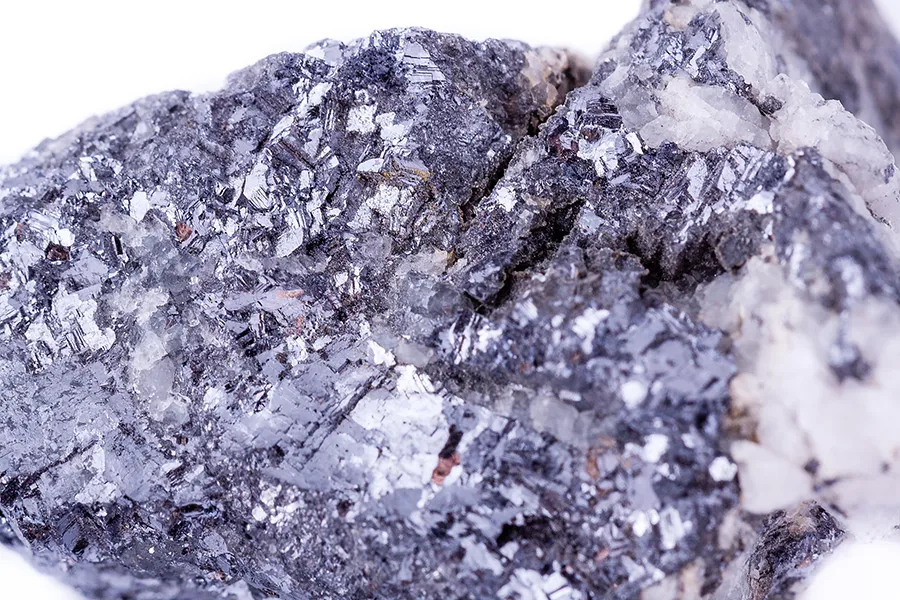
There are about 250 minerals that contain REOEs, but only a few of these minerals are of any economic value. Most of them contain uranium, titanium, tantalum and niobium. Based on the composition of the REOE minerals, they are classified into two main groups:
(1) The cerium group of REOEs, in which loparite, bastnaesite, parisite, monazite and orthite are included.
(2) The yttrium group of REOEs, this group includes ytroparisite, fergusonite, samarskite, priorite, gadolinite, amongst others.
Table 7.23 lists the major REO minerals of economic value. REO minerals are also divided into two sub-groups, complex and selective complex minerals, all containing lantanoids (from cerium to lutecium). The selective group contains elements from onto or the other group. Most of the products that come from REOEs are monazite, bastnaesite and euxenite. Monazite belongs to the phosphate group of REOEs, with low magnetic properties and bright yellow colour. Usually it is found in pegmatites and granites and also entrained in zircon, magnetite and ilmenite. During decomposition of hard rock ores, monazite, due to its chemical stability, is contained in sand deposits together with ilmenite, zircon, magnetite and other minerals. The minimum content of monazite found in a sand deposit is about 1%. Bastnaesite belongs to the carbonatite group of minerals that contain REOEs. Beside the cerium group of elements, bastnaesite also contains yttrium and europium. Typically, it contains 65%-75% REOE. Bastnaesite is usually found in pegmatites, carbonatite and hydrothermal ore bodies in alkaline gangue minerals. Because it is chemically inert and stable, it is not found in mineral sand deposits. Euxenite is a titanotantalum/niobium-containing mineral and has a complex formula (Table 7.23) with variable chemical composition. It is usually found in sand deposits together with monazite, xenotime, zircon, beryl, columbite and other minerals.
The major minerals that contain REOE include apatite, phosphates, perovskite, eudialyte, pyrochlore and orthite, some of which contain significant quantities of REOE. Loparite (Nb-mineral) contains, for example, three times more REOE than niobium. It represents titanotantalo-niobium REOE ore. Loparite is found in pegmatites and nepheline-containing ores. Monazite, bastnaesite and loparite contain exclusively cerium group of REOEs. Other minerals containing REOE, such as fergusonite, priorite and samarskite are usually accessory minerals that contain tantalum, niobium, uranium and thorium.
| Mineral | Formula | Relative REOE content | Specific gravity | Hardness |
| Monazite | (Ce,La,..)PO₄ | 50%-68%(Ca,La,…)₂0₃,22%-31% P₂Os,4%-12%ThO₂,~7%ZrO₂,~6%SiO₂ | 4.9 | 5.5 |
| Bastnaesite | (Ce,La,Pr)[CO₃]F | 36%-40%Ce₂O₃,36%(La,…,Pr)₂O₃, 19%-20%CO₃,6%-8%F | 4.5 | 4.5 |
| Xenotime | YPO₄ | 52%-62%Y₂O₃,Ce,Er as impurities,Th, ~5%U,3%ZrO₂,~9%SiO₂ | 4.6 | 4.5 |
| Parisite | Ca(Ce,Ia,…)2[CO₃]3F₂ | 11%CaO,26%-31%Ce₂O₃,27%-30% (La,Nd)₂O₃,24%CO₂,6%F | 4.3 | 4.5 |
| Yttrocerite | (Ca,Y,Ce,Er)F₂-3H₂O | 19%-32%Ca,8%-11%Ce,14%-37%Y,37%- 42%F | 3.8 | 4.5 |
| Gadolinite | (Y,Ce₂)Fe,BeSi₂O10 | 10%-13%Fe0,30%-46%YO₃,25%SiO₂,5% (Ce,La,…)₂O₂,9%-10%BeO | 4-4.5 | 6.5-7 |
| Orthite | (Ca,Ce)₂ (Al,Fe)₃SiO₂ [0,OH] | 6%Ce₂O₃,7%(La,…)O₃,4%Be0, 8%Y₂O₃ | ||
| Loparite | (Na,Ca,Ce,Sr)₂ (Ti, Ta,Nb)₂0₆ | 39%-40%TiO₂,34%(Ce,La,.….)₂O₃,8%-11%(Ta,Nb)₂O₅,5%CaO,Cr,Th as impurities | 4.8 | 6 |
| Euxenite | (Y,Ce,Ca,U,Th)(Ti, Nb,Ta)20₆ | 18%-28%(Y,Er)₂O₃,0.2%-3%(Ce,La,…)2O₃,16%-30%TiO₂,4%-47%Nb₂O₅, 1.3%-33%Ta₂Os,0.4%-12%U₃O₈ | 4.9 | 5.5 |
| Fergusonite | (Y,Sr,Ce,U)(Nb,Ta, Ti)0₄ | 46%-57%(Nb,Ta)₂Os,31%-42%Y₂O₃, 14%Er₂O₃,1%-4%ThO₂,1%-6%UO₂ | 5.6-6.2 | 5.5-6.5 |
| Samarskite | (Y,Er,U,Ce,Th)4 (Nb,Ta)₆O₂1 | 6%-14%Y₂O₃,2%-13%Er₂O₃,3%Ce₂O₃,0.7%-4%(Pr,Nd)₂O₃,27%-46%Nb₂Os,1.8%-27%Ta₂Os,Sn,U,Fe as impurities | 5.6-5.8 | 5-6 |
| Priorite(aeschynite) | (Y,Er,Ca,Th)(T,Nb)20₆ | 21%-28%(Y,Er)₂O₃,3%-4%Ce₂O₃,21%- 34%TiO₂,15%-36%Nb₂Os,0.6%-7%ThO₂, 0-5%UO₂ | 5-7.8 | 5.6 |
| Eschynite(aeschynite) | (Ce,Ca,Th)(T,Nb)₂0₆ | 15%-19%Ce0,0.9%-4.5%(Y,Er)₂O₃,21%-24%TiO₂,23%-32%Nb₂Os,0-7%Ta₂Os, 11%-17%ThO₂ | 4.9-5.4 | 5-6 |
7.6.2 Flotation Properties of REOE Minerals
7.6.2.1 Flotation Properties of Monazite and Bastnaesite
From disseminated ores contained in mineral lenses, the recovery of bastnaesite and monazite is accomplished using flotation. The flotation properties of bastnaesite and monazite are similar to the gangue minerals contained in the bastnaesite and monazite, such as calcite, barite, apatite, tourmaline, pyrochlore and others, which represent difficulties in selective flotation. However, in recent years, significant progress has been made in the flotation of both monazite and bastnaesite.
Fig.7.22 shows the effect of pH and Na₂S on flotation of monazite, pyrochlore and zircon. Monazite is readily floatable using anionic collectors such as oleic acid and sodium oleate in the pH region of 7-11. Monazite does not float readily using, for example, laurel amine or cationic collectors. Adsorption of the sodium oleate on the monazite increases with an increase in pH, indicating that monazite does not float in acid pH, while pyrochlore is readily floatable and is depressed at a pH greater than 10. It was found that Na₂S·9H₂O is a selective regulating agent during monazite flotation. At additions of 2-3 kg/t Na₂S, both zircon and pyrochlore are depressed while monazite floatability remains unchanged or, in the case of some ores, improves.
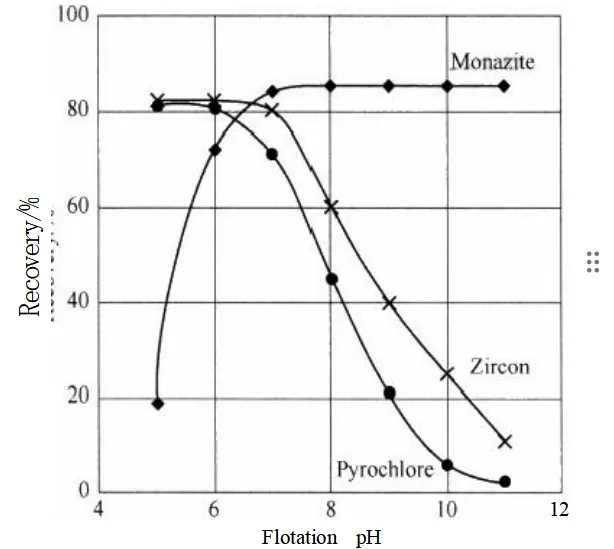
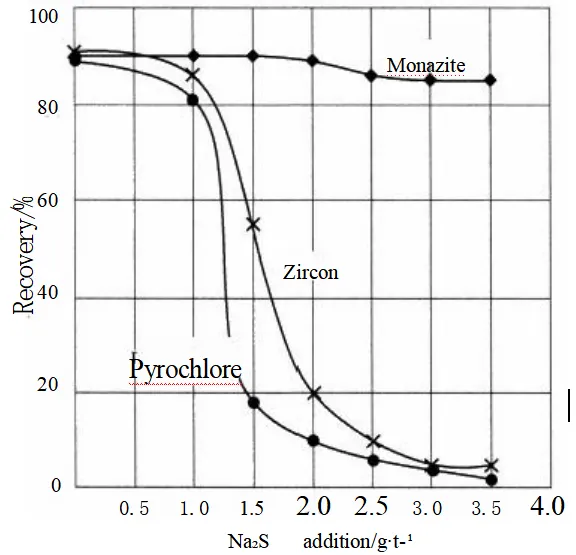
Fig.7.22 Effect of pH and Na₂S on flotation of monazite,zircon and pyrochlore
Flotation properties of bastnaesite depend largely on the gangue composition of the ore and the impurities present in the mineral itself.Bastnaesite found in a carbonatite ore is recovered using fatty acid collector after heat pretreatment of the flotation feed.The effect of heat temperature on bastnaesite grade-recovery is illustrated in Fig.7.23.
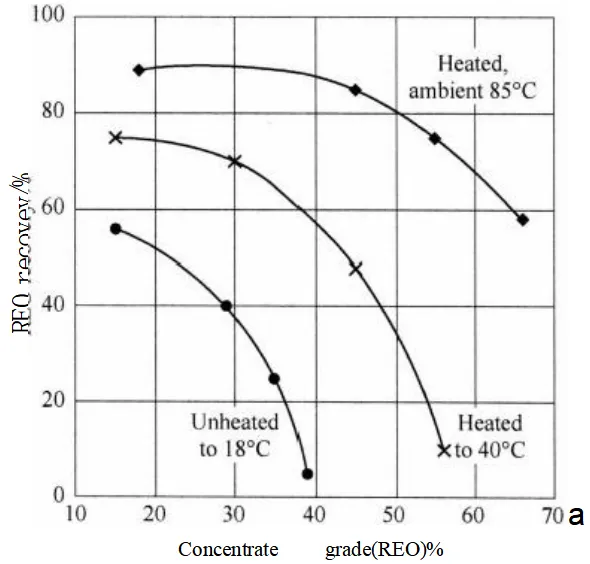
Fig.7.23 Effect of heat temperature on bastnaesite grade-recovery relationship
Floatability of bastnaesite found in barite-fluorite ores is extremely poor using either fatty acid flotation or sodium oleate. Research work conducted on an ore from Central Asia showed that the floatability of bastnaesite improved significantly after barite preflotation.
The flotation of bastnaesite from a carbonatite ore improved with the use of oleic acid modified with phosphate ester. The flotation of bastnaesite from deposits of pegmatitic origin can be successfully accomplished with several types of collectors, including tall oil modified with secondary amine, and tall oil modified with petroleum sulphonate-encompassing group. The effect of the tall oil modification on bastnaesite metallurgical results is presented in Table 7.24. Data shown in this table indicates that the use of a modified tall oil resulted in significant improvement in the metallurgical results of bastnaesite.
Table 7.24 Effect of tall oil modifications on bastnaesite flotation from pegmatitic ores
| Collector | Product | Weight/% | Total REO assays/% | REO recovery/% |
| Tall oil fatty acid | REO concentrate | 10.77 | 48.5 | 73.8 |
| REO combined tail | 89.23 | 2.07 | 26.2 | |
| Feed | 100.00 | 7.08 | 100.0 | |
| Tall oil modified with Secondary amine(amine acctate) | REO concentrate | 10.59 | 60.1 | 90.5 |
| REO combined tail | 89.41 | 0.74 | 9.5 | |
| Feed | 100.00 | 7.02 | 100.0 | |
| Tall oil modified with Petroleum sulphonate | REO concentrate | 10.45 | 62.2 | 92.3 |
| REO combined tail | 89.55 | 0.61 | 7.7 | |
| Feed | 100.00 | 7.05 | 100.0 |
7.6.2.2 Flotation Properties of REO-containing Yttrium
Yttrocerite, gadolinite, fergusonite and priorite are often found in relatively complex ores containing quartz, chlorite and sericite. Two or all of the above minerals are found together in some deposits. Some of the complex deposits of hydrothermal origin contain zircon together with REO from yttrium groups. Usually the ores that contain yttrium group minerals belong to disseminated ores where liberation occurs at <74 μm size, so the only method available for beneficiation of these ores is flotation.
Limited research studies show that the minerals from the yttrium groups can be recovered using alkyl hydroxamate collectors which form complex reactions with REO. It has been found that yttrocerite and gadolinite readily float with hydroxamic acid at a pH of 9-10. The proposed treatment flowsheet for beneficiation of REO-containing yttrium is presented in Fig.7.24. Using the flowsheet shown in Fig.7.24, a concentrate grade of 65% REO+Y₂O₃ at a 72%-75% Y₂O₃ recovery can be achieved on some ores. Research work has shown that the efficiency of alkyl hydroxamate for flotation of yttrium group REO can be improved by changing the alkyl group to iso-alcohol of fraction C12-C16, for example, iso-dodecyl alcohol.
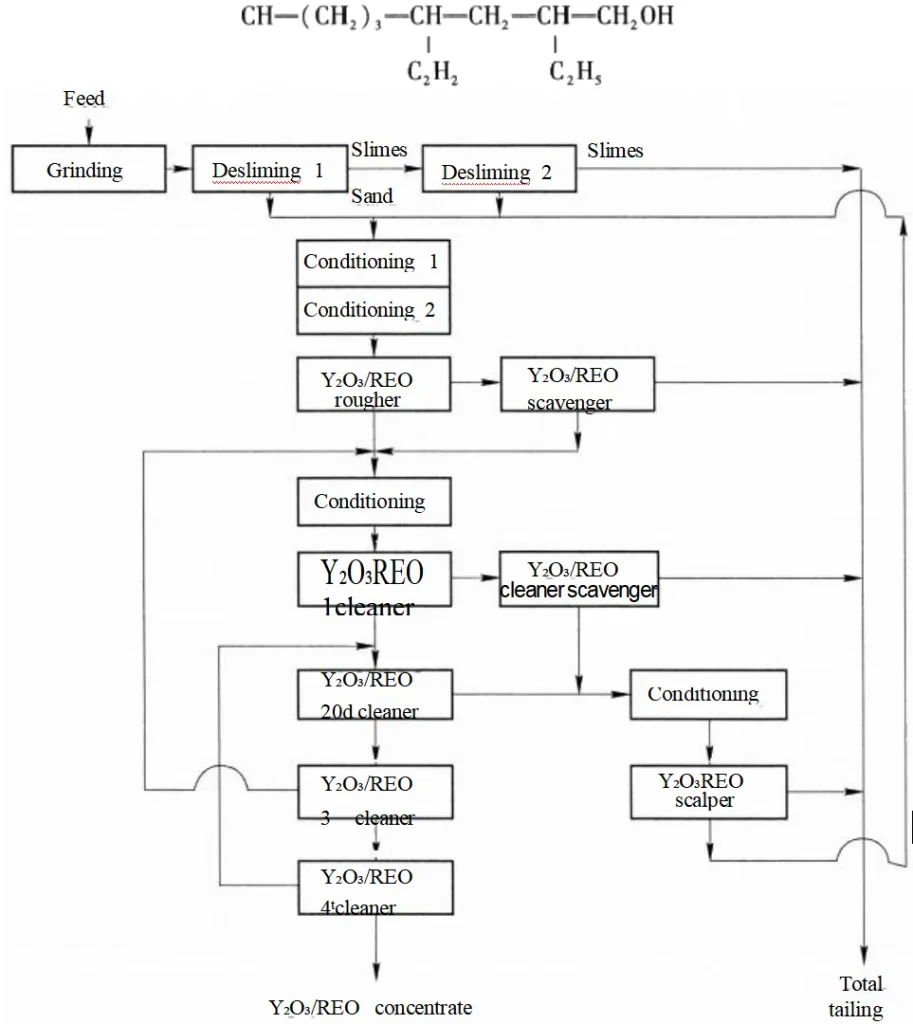
Fig.7.24 Generalized flowsheet for beneficiation of yttrium group of minerals using flotation
(Srdjan M. Bulatovic, 2010)
This hydroxamate is selective towards calcite, fluorite and sericite. The yttrium group minerals that contain zircon also have highly complex mineral compositions. These ores contain fergusonite, euxenite and priorite besides other minerals that contain REO. Such deposits are found in Northern Canada (Thor Lake).
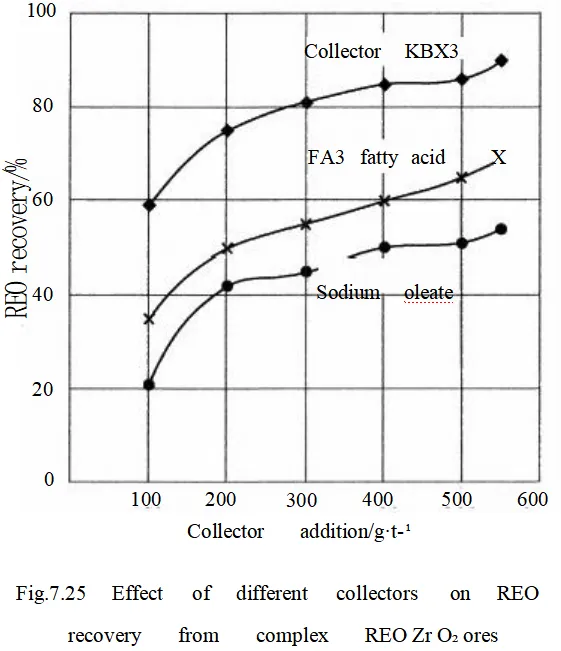
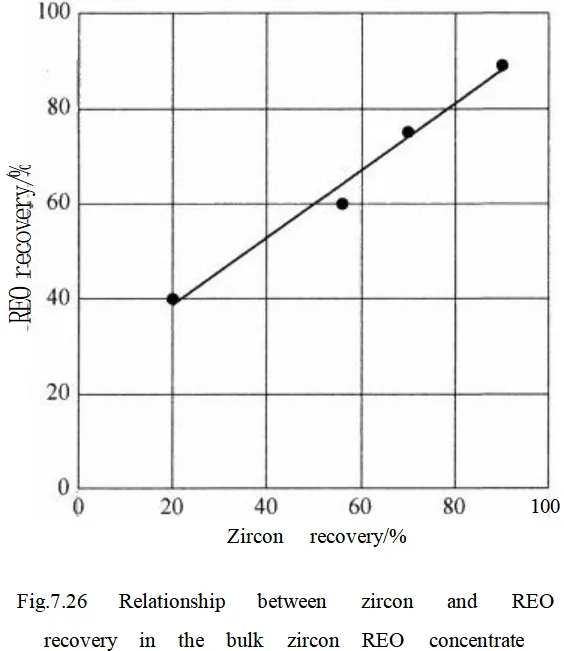
Limited research work has been conducted on these ores, but have indicated that REO cannot be recovered using either fatty acid or sodium oleate. It was, however, found that a mixture of sulpho succinamate and phosphate ester modified with alkylsulphate can recover REO and zircon efficiently. Fig.7.25 shows the effect of above collector mixture (KBX₃) on REO recovery from complex REO-ZrO₂ ores. Oxalic acid and fatty acid (FA₃) were not so effective compared to collector KBX3. As can be seen from the data shown in Fig.7.25, poor results were achieved using either fatty acid or sodium oleate collector. In the case of REO-containing zircon, there is a strong relationship between zircon recovery and the recovery of REO from the yttrium group of REOs. This relationship is illustrated in Fig.7.26. This is due to the fact that zircon present in these ores contains a portion of REO as inclusions in the mineral itself. In a number of cases, the REO from the yttrium group contains significant amounts of pyrochlore and/or tantalum columbite. Both minerals usually float with the zircon and REO minerals.
7.6.3 Flotation Practices and Research Work on Beneficiation of REO Minerals
7.6.3.1 Introduction
A large portion of the REOs are produced from monazite- and bastnaesite-containing ores. In the majority of cases, bastnaesite and monazite ores are relatively complex and contain gangue minerals (calcite, barite, fluorite and apatite) with similar flotation properties as the monazite and bastnaesite.
Monazite is also found in heavy mineral sands, which are usually recovered using physical concentration methods, such as gravity, magnetic and electrostatic separation.
Some deposits in addition to REO contain zircon and titanium minerals. From these ores, REO and zircon can be recovered in bulk concentrate suitable for hydrometallurgical treatment.
7.6.3.2 Flotation Practice in the Beneficiation of Bastnaesite-containing Ores
The Mountain Pass (USA) operation treats a relatively complex ore. The major REO mineral is bastnaesite with minor amounts of synchysite, parisite and monazite. The major gangue minerals are calcite, barite, silicates, and dolomite. The amount of the individual gangue minerals in this ore are variable and change on a yearly basis. There are two major ore types treated at the Mountain Pass concentrator: (1) high calcite ore (35%-45% CaO); (2) a high barite-dolomite ore (so-called brown ore). Barite also contains significant quantities of strontium.
Liberation of the Mountain Pass ore has been extensively studied on the mill feed ore and on the plant product. Grinding the ore to a K₈0 of about 56 μm is required to achieve liberation. Locking between the bastnaesite and calcite above 50 μm is common. Usually calcite/bastnaesite middlings reports to the final concentrate.
Over the past 20 years, extensive studies were conducted in which different reagent schemes were evaluated. The following is a brief summary of the findings:
(1) Hydroxamic acid used as a collector has shown to give better selectivity than fatty acid. However, it has yet to be tested in an operating plant.
(2) Extensive work has been carried out to evaluate different fatty acids. There are contradictory conclusions among different researchers regarding the performance of different fatty acids. Studies performed by the US Bureau of Mines (Reno, NV, USA) confirmed that distilled acid gave results superior to those of linoleic acid or fatty acid containing rosin acid. Studies conducted at the University of New Mexico and at the Molycorp laboratory showed that distilled tall oil containing rosin acid gave results better than those of pure oleic acid. These differences are likely due to different flotation responses related to a variation in the mineralogy.
(3) With respect to different depressant studies, only a limited amount of work has been performed with Quebracho, tannic acid and different lignin sulphonates. Lignin sulphonates with a medium molecular weight were superior.
(4) Flotation temperature was the subject of numerous studies. It was concluded that heating the pulp with collector is the only way to selectively float bastnaesite. Heating the pulp with collector is believed to result in selective aggregation of bastnaesite in the form of repellent droplets, which may result in improved selectivity and in a reduction in slime interference.
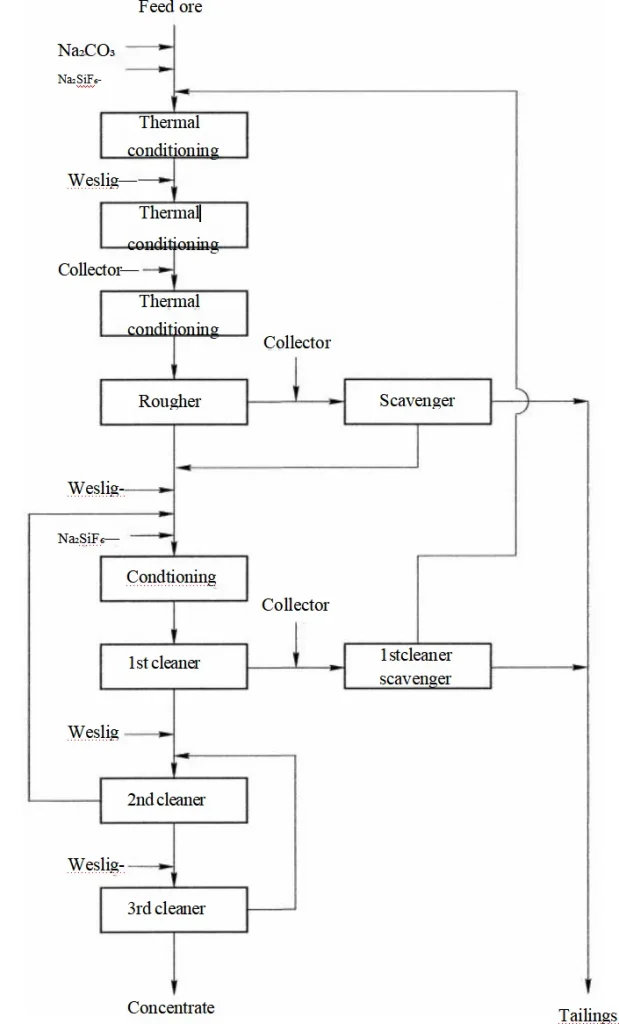
The flowsheet used in the Mountain Pass, with reagent additions, is shown in Fig.7.27. The plant reagent scheme that is currently being used is presented in Table 7.25. Weslig is a lignin sulphonate with a molecular weight of about 20000 and also contains ethylene oxide. Ethylene oxide serves the purpose of reducing the frothing properties of the Weslig and improves the Weslig depression efficiency, in particular, for barite. A typical example of metallurgical results obtained in the plant is shown in Table 7.26.
Table 7.25 Reagent scheme used at the Mountain Pass concentrator
| Reagent | Additions/g ·t⁻¹ | Reagent | Additions/g ·t⁻¹ |
| Soda ash(Na₂CO₃) | 3000-4500 | Lignin sulphonate(Weslig) | 2400-3500 |
| Sodium fluorosilicate(Na₂SiF₆ | 300-600 | Tall oil fatty acid(P25A) | 200-400 |
Table 7.26 Molycorp plant metallurgical results
| Product | Weight/% | Assays/% | Distribution/% | |||||
| REO | Ce₂O₃ | La2O₃ | BaSO₄ | CaO | REO | Ce₂O₃ | ||
| Final bastnaesite concentrate | 9.38 | 64.1 | 31.4 | 22.2 | 2.7 | 3.1 | 75.6 | 75.5 |
| Final bastnaesite tailing | 90.62 | 2.28 | 1.06 | 0.74 | 26.3 | 16.9 | 24.4 | 24.5 |
| Feed | 100.00 | 8.09 | 3.9 | 2.76 | 26.3 | 15.6 | 100.0 | 100.0 |
It should be noted that the plant results are variable and depend on the type of ore being treated.
Typical distributions of REO in the Mountain Pass concentrate are shown in Table 7.27.
Table 7.27 Distribution ofthe REO in the Mountain Pass concentrate
| Element | Total REO content/% | Element | Total REO content/% |
| Lanthanum | 33.2 | Dysprosium | 0.0312 |
| Cerium | 49.1 | Holmium | 0.0051 |
| Praseodymium | 4.34 | Erbium | 0.0035 |
| Neodymium | 12.0 | Thulium | 0.0009 |
| Samarium | 0.790 | Ytterbium | 0.0006 |
| Europium | 0.118 | Lutetium | 0.0001 |
| Gadolinium | 0.166 | Yttrium | 0.0913 |
| Terbium | 0.0159 |
The barite, fluorite and bastnaesite ore from the Dong Pao deposit in Vietnam is heavily weathered ore, with more than 30% of the bastnaesite contained in the -7μm fraction. The major host minerals present in this ore are barite and fluorite. Table 7.28 shows the chemical analyses of the ore used in various research studies. Because this ore was high in barite and fluorite, direct flotation of bastnaesite from the ore was not possible. It should be pointed out that fluorite has similar flotation properties as bastnaesite and depression of fluorite during bastnaesite flotation is difficult.
Table 7.28 Chemical analyses of the Dong Pao ore
| Element | Assays/% | Element | Assays/% | Element | Assays/% |
| Total REO | 8.72 | Alumina(Al₂O₃) | 0.97 | Phosphorus(P₂O₅) | 0.13 |
| Cerium(Ce₂O₃) | 3.76 | Iron(Fe₂O₃) | 2.69 | Manganese(MnO₂) | 0.64 |
| Lanthanum(La₂O₃) | 3.18 | Calcium(CaO) | 0.15 | Chromium(Cr₂O₃) | 0.22 |
| Barite(BaSO₄) | 62.5 | Sodium(Na₂O) | 0.54 | Vanadium(V₂O₅) | 0.03 |
| Fluorite(CaF₂) | 5.54 | Potassium(K₂O) | 0.11 | LOI | 10.6 |
| Silica(SiO₂) | 8.85 | Titanium(TiO₂) | 0.09 |
Extensive research work has been conducted on this ore, aimed at developing a commercial treatment process that would produce a high-grade REO concentrate. As a result, a unique flowsheet and reagent scheme were developed.
It involves sequential barite-fluorite-bastnaesite flotation. The flowsheet is presented in Fig.7.28. The ore was washed and deslimed before grinding. The fines from the washing contained over 30% of the total bastnaesite present in the ore. The ground ore was first subjected to barite flotation followed by fluorite flotation. By floating the barite and fluorite ahead of the bastnaesite, about 70% of the total weight was removed from bastnaesite flotation feed. The bastnaesite flotation feed was upgraded from 8.5% REO to about 30% REO.
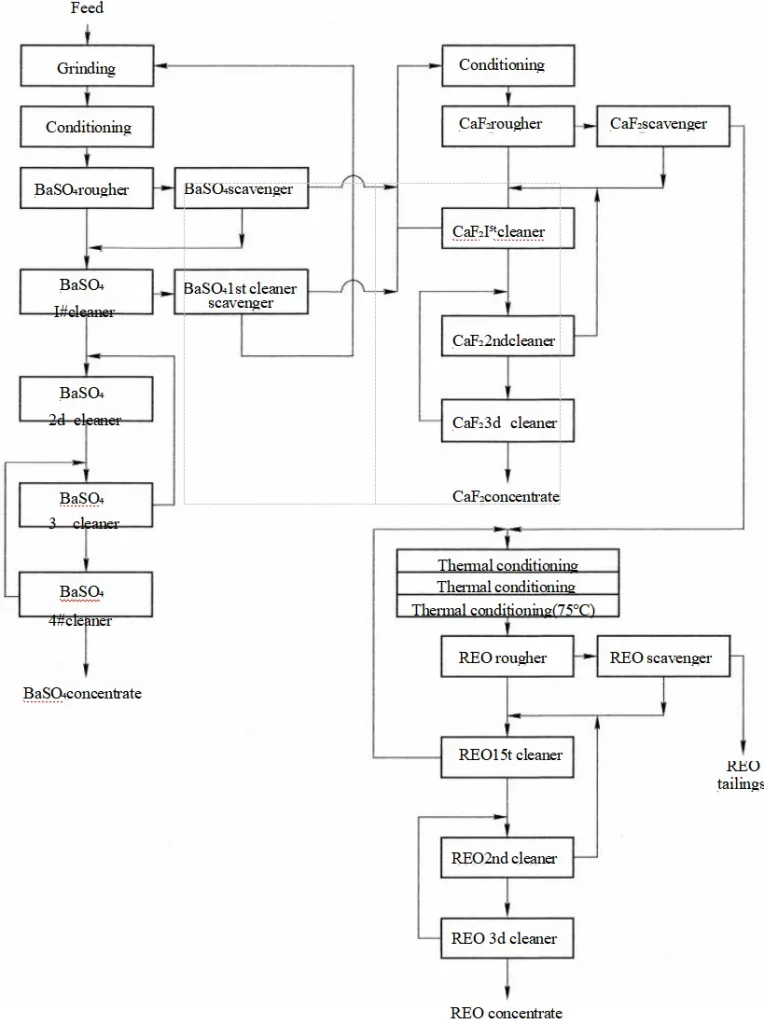
Fig.7.28 Flowsheet developed for beneficiation of the Dong Pao ore(Srdjan M.Bulatovic,2010)
The reagent scheme developed during extensive laboratory testing is presented in Table 7.29. This reagent scheme is unique in such a way that the collector and number of depressants involved are composed of a number of chemicals that provide improved selectivity during sequential flotation of barite and fluorite from bastnaesite.
Table 7.29 Reagent scheme developed for beneficiation of the Dong Pao ore
Additions/g ·t⁻¹
| Reagent BaSO₄circuitRougher Cleaner | CaF₂circuit | REO circuit | ||||
| Rougher | Cleaner | Rougher | Cleaner | |||
| Depressants and modifiers | ||||||
| Na₂SiO₃ | 2500 | 1200 | 1500 | 1100 | ||
| BaCl₂ | 500 | 400 | 一 | 一 | 一 | |
| NaF | 一 | 一 | 300 | 400 | 一 | |
| Al₂ (SO₄)₃ | 一 | 600 | 400 | 一 | 一 | |
| MESB | 一 | 一 | 20 | 200 | 一 | 一 |
| Na₂CO₃ | 一 | 一 | 一 | 一 | 4000 | 1400 |
| Citric acid | 一 | 一 | 一 | 1000 | 3500 | |
| MM4 | 一 | 一 | 1000 | 1300 | ||
| Collectors | ||||||
| SR82 | 850 | 一 | 一 | 一 | ||
| AKF2 | 一 | 一 | 300 | 一 | 一 | 一 |
| KV3 | 一 | 一 | 一 | 一 | 900 | 200 |
| Fuel oil | 一 | 一 | 一 | 一 | 200 | 一 |
For flotation of barite, sodium silicate was used as a depressant and barium chlorite as a barite activator. Barite collector SR82 was composed of petroleum sulphonate, sodium alkyl sulphate and succinamate mixture. The collector was selective towards both fluorite and bastnaesite. Over 96% of the barite was recovered in a relatively high-grade concentrate.
During fluorite flotation, quebracho and lignin sulphonate mixture (MESB) was used with collector composed of a mixture of oleic acid and phosphoric ester. Collectors used for bastnaesite flotation included tall oil fatty acid modified with three ethylene tetra amine. Depressant MM4 was a mixture of lignin sulphonate with a molecular weight ranging from 9000 to 20000. The results obtained from the continuous locked-cycle tests are summarized in Table 7.30. The major contaminant of the bastnaesite concentrate was fluorite. Complete fluorite flotation was not possible without heavy losses of bastnaesite in the fluorite concentrate.
For flotation of barite, sodium silicate was used as a depressant and barium chlorite as a barite activator. Barite collector SR82 was composed of petroleum sulphonate, sodium alkyl sulphate and succinamate mixture. The collector was selective towards both fluorite and bastnaesite. Over 96% of the barite was recovered in a relatively high-grade concentrate.
During fluorite flotation, quebracho and lignin sulphonate mixture (MESB) was used with collector composed of a mixture of oleic acid and phosphoric ester. Collectors used for bastnaesite flotation included tall oil fatty acid modified with three ethylene tetra amine. Depressant MM4 was a mixture of lignin sulphonate with a molecular weight ranging from 9000 to 20000. The results obtained from the continuous locked-cycle tests are summarized in Table 7.30. The major contaminant of the bastnaesite concentrate was fluorite. Complete fluorite flotation was not possible without heavy losses of bastnaesite in the fluorite concentrate.
Table 7.30 Continuous locked-cycle test results
| No. | Product | Weight/% | Assays/% | Distribution/% | |||||
| BaSO₄ | CaF₂ | REO | BaSO₄ | CaF₂ | REO | ||||
| 1 | BaSO₄Cleaner concentrate | 62.83 | 95.8 | 0.67 | 0.61 | 96.8 | 7.3 | 4.6 | |
| CaF₂Cleaner concentrate | 7.36 | 3.11 | 44.4 | 7.57 | 0.4 | 56.3 | 6.7 | ||
| REO Cleaner concentrate | 13.72 | 8.55 | 14.8 | 45.9 | 1.9 | 35.0 | 75.6 | ||
| REO combined tail | 16.09 | 3.47 | 0.50 | 6.79 | 0.9 | 1.4 | 13.1 | ||
| Head(cale) | 100.00 | 62.2 | 5.80 | 8.33 | 100.0 | 100.0 | 100.0 | ||
| 2 | BaSO₄Cleaner concentrate | 62.83 | 95.8 | 0.67 | 0.61 | 97.2 | 7.1 | 4.7 | |
| CaF₂Cleaner concentrate | 7.36 | 3.11 | 44.4 | 7.57 | 1.4 | 54.9 | 6.7 | ||
| REO Cleaner concentrate | 12.97 | 6.55 | 16.6 | 48.4 | 1.4 | 36.2 | 76.1 | ||
| REO combined tail | 16.84 | 4.00 | 0.61 | 6.13 | 1.1 | 1.7 | 12.5 | ||
| Head(cale) | 100.00 | 62.0 | 5.94 | 8.25 | 100.0 | 100.0 | 100.0 | ||
7.6.3.3 Flotation Practices in Beneficiation of Monazte
A large portion of monazite production comes from mineral sand deposits. In the beneficiation of monazite from mineral sand deposits that contain garnet, ilmenite, shell and silicates, the physical concentration and combination of physical preconcentration-flotation is used. Several reagent schemes using flotation were developed throughout various studies and some have been confirmed in continuous pilot plants.
A Flotation of the Indian beach sand (monazite)
India has very large deposits of monazite on the coastal shores of Kerala and Chennai. A typical mineral composition of this type of deposit is 60% ilmenite, 1.2% rutile, 5% zircon, 6.4% garnet, 4% silimanite, 16% quartz, 2.5%-5% monazite and 1%-7% shell. Research work involved different anionic collectors and pH during monazite flotation, along with the level of sodium silicate used as depressant.
Experimental work conducted at different levels of sodium silicate (Table 7.31) indicates that sodium silicate is an excellent depressant for titanium, zircon and other gangue minerals while the monazite flotation is not affected.
The collector used in this experiment was sodium oleate at additions of 300 g/t. In addition to sodium oleate, other fatty acid collectors were examined. The results are given in Table 7.32. From these data, the saturated fatty acid soap was a poor collector for monazite, as well as sodium laurate.
The Acintols (mixture of oleic and linoleic acids) were found to give better results compared to sodium oleate. This can be attributed to the presence of linoleic acid, which has two double bonds. Furthermore, the rate of monazite flotation increased with the Acintol than with the sodium oleate.
The monazite concentrate in these experiments contained some garnet and sillimanite. In conclusion, it can be noted that the effect of pH on flotation of beach sand minerals is critical in selective flotation of monazite from other minerals.
Beneficiation Practice of Non-ferrous Metallic Ores
Table 7.31 Effect of sodium silicate on monazite flotation from Kerala and Chennai beach sand(India)
| Reagent additions/kg ·t⁻ | Flotation pH | Monazite concentrate | Monazite tailings | |||||
| Na₂SiO₃ | NaOH | Weight/% | Grade/% | Recovery/% | Weight/% | Grade/% | Recovery/% | |
| 1 | 2.2 | 9.2 | 3.2 | 23.9 | 13.3 | 96.8 | 2.54 | 33.7 |
| 3 | 3.0 | 9.4 | 10.4 | 33.3 | 37.5 | 89.6 | 0.95 | 62.5 |
| 5 | 5.5 | 9.6 | 8.3 | 66.2 | 88.4 | 91.7 | 0.28 | 11.6 |
| 7 | 6.5 | 9.7 | 6.6 | 76.2 | 92.3 | 93.4 | 0.24 | 8.3 |
| 9 | 9.0 | 9.8 | 5.6 | 84.4 | 85.7 | 94.4 | 0.24 | 5.6 |
| 11 | 8.5 | 9.8 | 4.8 | 94.3 | 83.6 | 95.2 | 0.40 | 4.8 |
Table 7.32 Effect of different collectors on monazite flotation from the Chennai beach sand
| Collector type | Addition/kg ·t- | Monazite concentrate | Monazite tailings | ||||
| Weight/% | Grade/% | Recovery/% | Weight/% | Grade/% | Recovery/% | ||
| Sodium laurate | 11.4 | 5.0 | 21.4 | 20.0 | 95.0 | 4.6 | 80.0 |
| Sodium oleate | 5.5 | 8.3 | 66.2 | 88.4 | 91.7 | 0.28 | 11.6 |
| Neofat 140 | 5.5 | 9.0 | 57.0 | 89.0 | 91.0 | 0.12 | 11.0 |
| Acintol FA1 | 5.0 | 6.1 | 75.5 | 86.4 | 93.9 | 0.23 | 13.6 |
| Acintol FA2 | 5.0 | 5.6 | 81.6 | 89.2 | 94.4 | 0.16 | 10.8 |
| Acintol FAX | 5.0 | 5.8 | 71.0 | 77.0 | 94.2 | 0.16 | 23.0 |
The monazite can be selectively floated from other minerals when using Na₂O:SiO₂ (1:1) at relatively high doses (i.e. 5 kg/t).
B Processing of the black sand monazite at Rosetta
The mineralogy of the Rosetta Nile black sand monazite is relatively complex and contains a variety of different minerals. Table 7.33 shows the chemical analysis of the run-of-mine ore.
The size distributions of the black sand ranged from 80 μm to 100 μm. Development testwork on the black sand included an examination of anionic and cationic collectors. Cationic collectors, such as Amine 22, Armac and Armac T, gave poor results. Selectivity was poor, even when using modified starches as gangue depressants.
Testwork using monazite depression with lactic acid and flotation of the residual minerals with 3-lauril amine hydrochloride achieved a concentrate grading 75.5% monazite at a recovery of about 70%.
Table 7.33 Analyses of the run-of-mine black sand
| Element | Assays/% | Element | Assays/% | Element | Assays/% |
| Silica(SiO₂) | 13.35 | Zircon(ZrO₂) | 3.72 | Sodium(Na₂O) | 0.21 |
| Titanium(TiO₂) | 25.8 | Manganese(MnO) | 2.82 | Potassium(K₂O) | 0.02 |
| Calcium(CaO) | 2.71 | Iron(Fe₂O₃) | 39.84 | Phosphorus(P₂Os) | 0.10 |
| Magnesium(MgO) | 1.75 | Alumina(Al₂O₃) | 9.24 | Monazite(REO) | 2.20 |
C Carboxylic collectors from the carboxylate group
These collectors were examined at a pH of 10 and diluted pulp to about 15% solids. A monazite recovery of over 95% was obtained.
D Monazite activation using oxalate
Experimental work was carried out on black sand in which the effect of sodium oxalate on monazite activation was examined. It should be noted that monazite is essentially a phosphate of cerium and lanthanum, where the possibility exists that sodium oxalate has an activating effect on monazite. The use of sodium oleate as activator was studied with different sulphonate collectors (Table 7.34). It was shown that with the use of sulphonate collectors, sodium oxalate had a positive effect on monazite grade and recovery. Conditioning time with oxalate had a pronounced effect on monazite recovery.
Table 7.34 Effect of different collectors on flotation of monazite using sodium oleate as the activator
| Collector | Additions/g ·t⁻¹ | Monazite concentration/% | Monazite recovery/% |
| Sulphonate 231 | 900 | 91.0 | 90.9 |
| Aeropromoter 710 | 4000 | 92.1 | 98.5 |
| R260 | 600 | 85.1 | 96.5 |
| R376 | 650 | 90.5 | 85.0 |
| R276R | 700 | 85.5 | 90.5 |
| R376 | 900 | 90.2 | 93.3 |
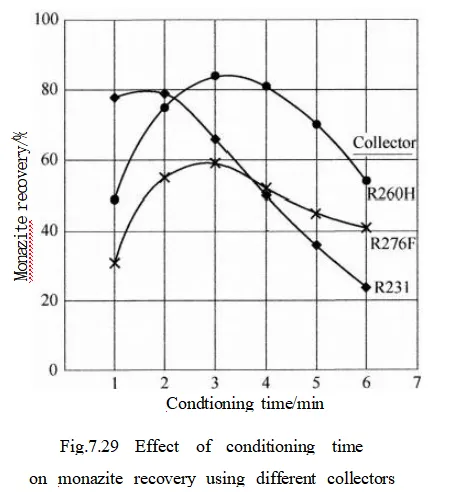
Fig.7.29 shows the effect of conditioning time with oxalic acid on monazite recovery. The data from the figure show that 2-4 min of conditioning time was sufficient to achieve maximum recovery of monazite using different monazite collectors.
E Flotation of Brazilian monazite ore
The Brazilian monazite ore is found as beach sand along rivers in the Sao Goncalodo Sapucai region. As mentioned earlier, the flotation characteristics of monazite, zircon and rutile are similar, and separation of the minerals is difficult. The objective of this research work was to find a reagent scheme that would selectively float the monazite from the associated minerals (zircon) and rutile. Sao Goncalo ore assayed approximately 2.9% total ROE, 36.6% TiO₂, 7.68% ZrO₂, 15.6% SiO₂ and 24.6% TFe.
Experimental testing was performed with hydroxamate and sodium oleate as collectors. The only depressant used was sodium metasilicate. Comparison of results with the different collectors is shown in Table 7.35. Hydroxamate was more selective compared to the results obtained using sodium oxalate. Sodium oxalate, however, gave better recoveries.
Table 7.35 Effect of different collectors on monazite flotation using Brazilian beach sand
| Reagents | Product | Weight/% | Assays/% | Distribution/% |
| RE₂O₃ | RE₂O₃ | |||
| Hydroxamate=140g/t Na₂SiO₃=1200g/t | Feed | 100.00 | 3.15 | 100.0 |
| Rougher conc | 4.90 | 57.69 | 89.77 | |
| Rougher tail | 95.10 | 0.34 | 10.23 | |
| Sodium oleate=525g/t Na₂SiO₃=1398g/t | Feed | 100.00 | 2.92 | 100.0 |
| Rougher conc | 5.66 | 49.07 | 94.98 | |
| Rougher tail | 94.34 | 0.16 | 5.02 |
F Monazite flotation from complex ores
There are several large deposits of complex monazite ores, some of which are located in South Africa and Western Australia. Major research and development testwork has been performed on the Mount Weld ore from Western Australia.
The Mount Weld ore is highly complex with about 50% of the monazite being contained in the -25 μm fines. Hematite, Fe-hydroxides, phosphates and alumosilicates are the principal gangue minerals present in this ore. The head analyses of the ore are shown in Table 7.36.
Table 7.36 Head analyses of the Mount Weld ore
| Element | Assays/% | Element | Assays/% | Element | Assays/% |
| Total REO | 15.50 | Yttrium(Y₂O₃) | 0.30 | Calcium(CaO) | 10.8 |
| Cerium(Ce₂O₃) | 9.54 | Iron(Fe₂O₃) | 60.5 | Phosphorus(P₂Os) | 2.66 |
| Lanthanum(La₂O₃) | 4.21 | Alumina(Al₂O₃) | 15.5 | ||
| Samarium(Sm₂O₃) | 0.39 | Magnesia(MgO) | 4.60 |
G Research studies – Ore preparation
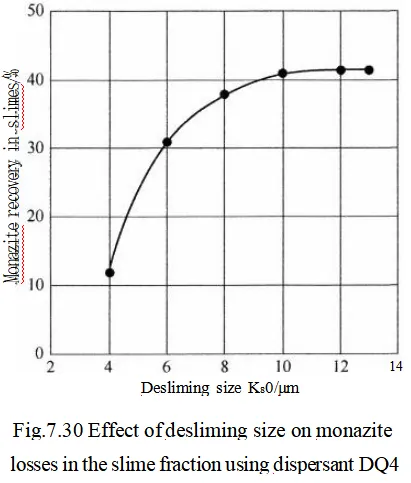
The major task involved during ore preparation is to remove the maximum amount of primary slimes with minimum loss of REO minerals to the slime fraction. The REO losses in the slime fraction are dependent on the desliming size. Minimum loss of REO to the slime fraction occurs when desliming is done at a K₈0 of about 4 μm. Fig.7.30 shows the effect of desliming size on REO loss in the size fraction. The use of DQ4 in the desliming stage has a significant impact on monazite loss to the slime fraction. Table 7.37 shows the effect of different dispersants on monazite loss in the slime fraction, using dispersants from the DQ series. These dispersants are a mixture of low-molecular-weight acrylic acids modified with surfactant. The lower monazite losses in the slime fraction were achieved using dispersant DQ4. Mineralogical examination of the slime fraction, in which dispersants were used, revealed that about 80% of the slime was composed of Fe-hydroxides and ultrafine 2-3 μm clay.
Table 7.37 Effect of different dispersants from the DQ series on monazite loss in the slime fraction
| Desliming size/μm | Dispersant | Slime fraction | |||
| Type | Additions/g ·t⁻¹ | Weight/% | Monazite assay/% | Monazite recovery/% | |
| 4.0 | None | — | 25.0 | 17.8 | 28.7 |
| 4.2 | DQ2 | 800 | 23.3 | 15.6 | 23.4 |
| 4.1 | DQ3 | 800 | 23.1 | 13.3 | 19.8 |
| 4.0 | DQ4 | 800 | 21.5 | 9.4 | 13.0 |
| 4.3 | DQ6 | 800 | 22.2 | 12.0 | 17.1 |
| 4.0 | D08 | 800 | 23.4 | 11.8 | 17.8 |
H Flotation studies
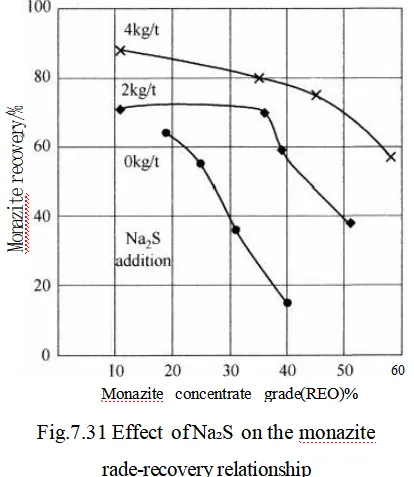
Flotation studies were carried out on ground, deslimed ore. The optimum grinding fineness was about K₈0 = 65 μm. A variety of collectors and depressant systems were examined. Modified fatty acid collectors performed the best on the Mount Weld ore. The use of Na₂S·9H₂O in the conditioning had a significant effect on monazite grade and recovery. Fig.7.31 shows the relationship between monazite grade and recovery at different levels of Na₂S additions.
The final flowsheet and reagent scheme developed for beneficiation of the Mount Weld ore is shown in Fig.7.32 for flotation, and in Fig.7.33 for grinding and desliming. The desliming was performed in three stages at 15% pulp density to the desliming feed cyclone. During flotation, the pulp was conditioned with reagents at about 60% solids. Collector CB110 is composed of a mixture of fatty acids modified with hydrocarbon oil and then oxidized. The final results obtained in continuous operation are presented in Table 7.38.
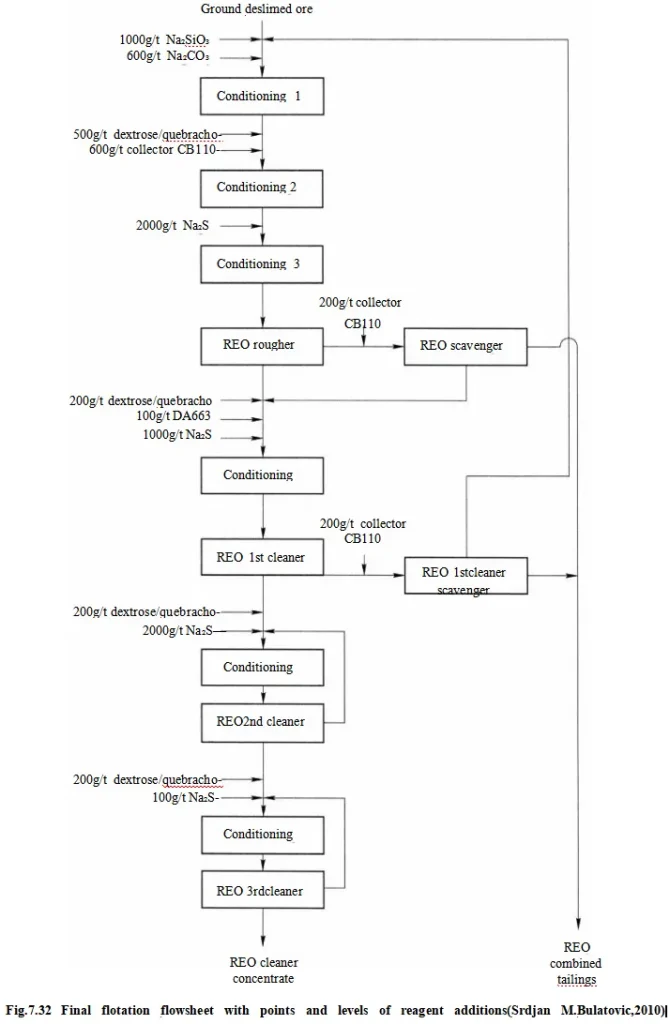
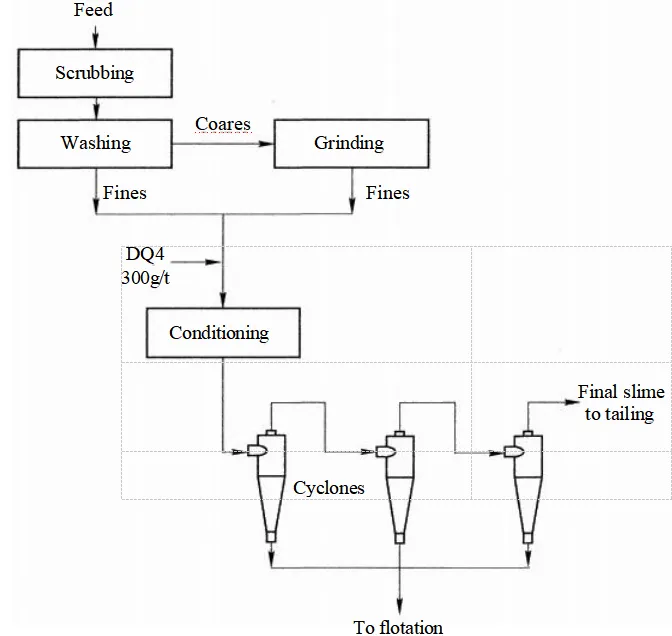
Fig.7.33 Final grinding and desliming flowsheet(Srdjan M.Bulatovic,2010)
Table 7.38 Overall metallurgical results obtained on the Mount Weld ore
| Product | Weight/% | Monazite assay/% | Monazite recovery/% |
| Cleaner concentrate | 20.89 | 58.5 | 77.5 |
| Combined tail | 54.51 | 2.55 | 8.8 |
| Slimes | 24.6 | 8.8 | 13.7 |
| Feed | 100.00 | 15.8 | 100.0 |
 English English
  Spanish
 Russian
 Arabic
 Swahili
 French
 Turkish
 Portuguese
 Korean
 Japanese
 German
 Italian