GXM series ultra-fine grinding
ultra-fine grinding This machine is an internally classified high-pressure ultra-fine roller mill,…

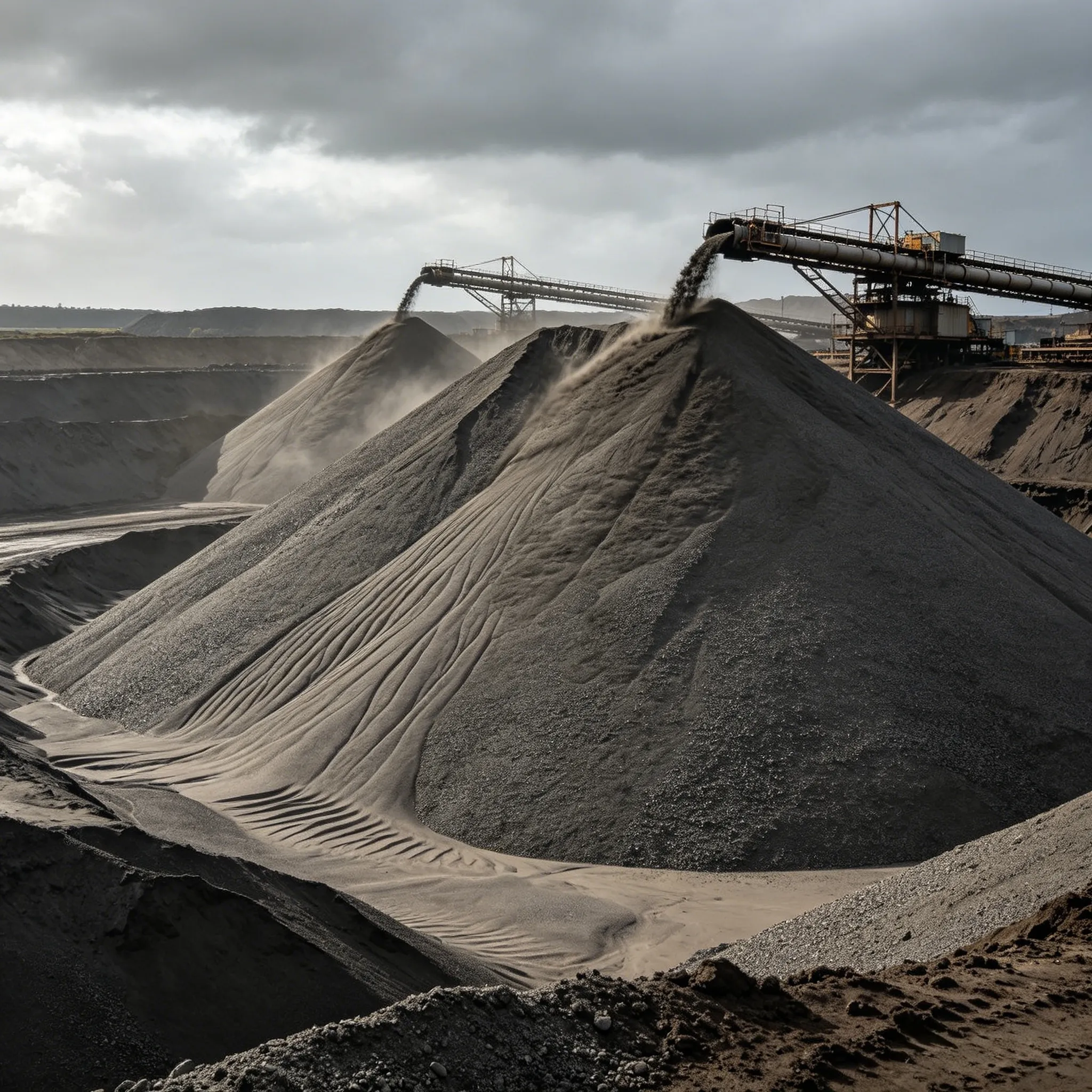
Iron tailings are a composite mineral raw material, which is a mineral waste discharged as slurry after the processing and magnetic separation of iron ore. Their composition includes both chemical and mineral components. The main component is quartz, mainly containing SiO₂, Al₂O₃, Fe₂O₃, CaO, MgO, etc., as well as small amounts of K₂O, Na₂O, S, P and other elements. In most iron tailings, the main component is SiO₂. For tailings used as building material raw materials, the key property is their chemical reactivity in a Ca(OH)₂ solution. Although iron tailings themselves have almost no hydraulic cementitious properties, when iron tailings powder mixed with water is reacted with Ca(OH)₂ under normal temperature or hydrothermal curing conditions, compounds with good hydraulic cementitious properties can be formed. Moreover, according to the hierarchical structure theory of particle-reinforced composite materials, the main role of mineral admixtures is to react with the cementitious material to form gels or microcrystalline minerals, thereby increasing the amount of the cementitious phase. The principle is similar to that of hydrosynthetically produced tailings building materials.
5.1.1.1 Production of non-fired bricks and autoclaved bricks
Non-steamed and non-fired bricks are a type of cemented tailings building material. They refer to building materials or products made by binding tailings particles into a whole using a cementing material at room temperature or below 100°C, resulting in regular shapes that meet service requirements. In such materials, tailings mainly act as aggregate and generally do not participate in the chemical reactions that form the material; however, their own morphology, particle size distribution, surface state, mechanical strength, and chemical stability have a significant impact on the technical performance of the material. The main principle is that the raw materials react with water upon mixing to form substances such as calcium silicate hydrate (CSH) and calcium aluminate hydrate (CAH) (where C = CaO, S = SiO₂, A = Al₂O₃, F = Fe₂O₃). These two hydration products bind the iron tailings particles together and are also the main source of strength of the iron tailings bricks.
The Ma’anshan Institute of Mining Research successfully produced non-fired bricks using tailings from the Qidashan and Waitoushan iron mines. This type of non-fired wall brick uses fine tailings sand (SiO₂ > 70%) as the main raw material, mixed with a small amount of aggregate, calcareous cementitious material, and admixtures. Appropriate amount of water is added, and after uniform mixing, the mixture is molded on a 60 t press at a pressure of 19.6–114.7 MPa. After demolding, the bricks are cured under standard conditions (natural curing) for 28 days to become finished products. The process flow is shown in Figure 5-1. The tailings bricks from Qidashan and Waitoushan were tested, and all indicators met the requirements of the 100-grade standard brick specified in the “Technical Conditions for Non-Sintered Clay Bricks” issued by the former National Bureau of Building Materials.
Dalian University of Technology, in cooperation with the Angang Dagushan Iron Mine, used iron tailings and lime as the main raw materials, with appropriate amounts of modified materials and admixtures, to develop steam-cured tailings bricks. These bricks exhibited good physical and mechanical properties, meeting the requirements of grade 100 and above standard bricks.
Feng Xueyuan et al. used high‑silicon iron tailings with typical characteristics from the Longguan area, Chicheng County, Zhangjiakou City, to produce non‑steamed and non‑fired bricks. The bricks met the national standard requirements for MU10 in terms of compressive strength and flexural strength. Under the optimal mix proportion, the tailings utilization rate reached nearly 50%. Zhang Jinrui, Jia Qingmei, and others used tailings from the Tangshan Shirengou Iron Mine, adding some coarse aggregate and cement in their experimental study, and produced tailings bricks with strength grades of MU10 and MU15. The tailings content in the raw mix reached up to 70%.
The process for making autoclaved bricks from iron tailings is basically the same as that for non‑steamed and non‑fired bricks, the main difference being the curing regime. Jia Qingmei, Zhang Jinrui, et al. also conducted research on making autoclaved bricks from high‑silicon iron tailings from Tangshan Shirengou Iron Mine, achieving good results. After adding corrective materials, proportioning, preparing the batch, and vibration forming, the iron tailings were autoclaved for 11 hours. The resulting autoclaved tailings bricks met relevant standards for compressive and flexural strength, with a particularly high utilization rate of iron tailings, averaging 50% in the raw material mix.
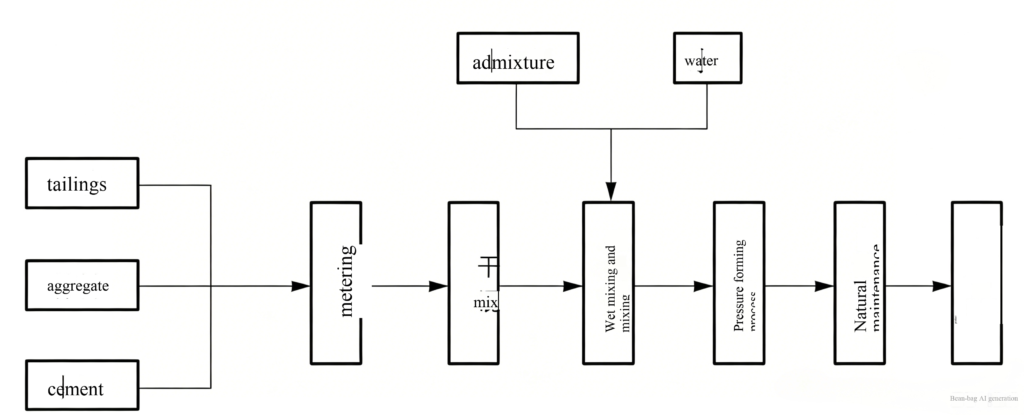
Fig. 5-1 Production process flow of non-fired tailings bricks
Making wall and floor decorative bricks
The production of decorative facing bricks from iron tailings features a simple process, low raw material cost, good physical properties, a smooth and attractive surface, and a decorative effect comparable to other types of decorative facing bricks (e.g., cement floor bricks, ceramic glazed tiles). Chen Jichun et al. successfully produced pressed colored paving bricks using low‑silicon iron tailings (screen oversize tailings from Chengchao Iron Mine, Wuhan Iron and Steel Mining Company). The optimal mix proportion was determined as cement : fly ash : tailings sand = 25 : 10 : 65, with a water‑cement ratio of 8%. Subsequently, they studied the influence of different admixtures on product performance. Using low‑silicon iron tailings (which are difficult to utilize) together with wet‑discharged fly ash, 425# ordinary Portland cement, and admixtures TN, TH, TB, FN, and TNC (commercially available chemically pure reagents), they produced paving bricks. The order of strengthening effect of the admixtures on brick strength and other properties was determined as FN > TNC > TN > TB > TH. Zhang Yi et al. used iron tailings from Huangmeishan, Anhui Province as the main raw material to produce colored floor bricks by a reverse‑vibration forming process and a pressing process. The compressive strength of the bricks exceeded the national standard, meeting road construction requirements. The mix proportions and related data are shown in Table 5‑1. Colored floor bricks produced by the reverse‑vibration process are attractive, high‑strength, slip‑resistant, and wear‑resistant. This process requires low investment, yields quick returns, produces high‑quality products with many varieties, and offers high added value. However, demand and transportation costs are high. The pressing process features a high degree of automation, large unit output, a simple process flow, and high production efficiency. It offers many advantages such as slip resistance, wear resistance, freeze‑thaw resistance, water drainage, easy laying, easy removal, easy patching, and easy repair. Such bricks are widely used in parks, roads, and squares, with huge demand and great development prospects.
The Ma’anshan Institute of Mining Research used fine tailings from the Qidashan and Waitoushan iron mines, added a small amount of inorganic cementitious material, ordinary Portland cement, white Portland cement, and an appropriate amount of water, and after uniform mixing and stirring, produced decorative facing bricks using a two‑layer (base layer and surface layer) construction. The production process is shown in Figure 5‑2. Tests on the products showed that their compressive strength…
Table 5‑1 Mix proportions and compressive strength test results
| Technical solution | Tailings / % | Cement / % | Crushed stone / % | Compressive strength / MPa |
|---|---|---|---|---|
| Reverse‑vibration forming process | 46.2 | 38.5 | 15.3 | 31.15 |
| Pressing process | 40 | 13.3 | 46.7 | 24.9 |
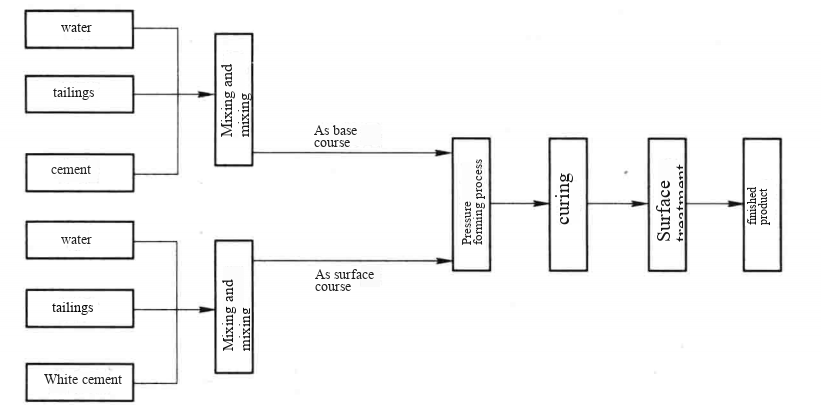
Fig. 5-2 Process flow diagram for the production of decorative facing bricks
The average compressive strength is 19.6 MPa; the flexural strength is 5.0 MPa, and the alkali resistance and corrosion resistance are relatively strong. The production of decorative facing bricks from iron tailings features a simple process, low raw material cost, good physical properties, a smooth and attractive surface, and a decorative effect comparable to other types of decorative facing bricks (e.g., cement floor bricks, ceramic glazed tiles).
Tongji University, in cooperation with the Gushan Iron Mine of Ma’anshan Iron and Steel Co., used tailings powder with a particle size below 0.15 mm as the main raw material, mixed with 10%–15% quicklime powder, and pressed into wall bricks and floor bricks of various specifications and shapes. The produced bricks are brown without any added pigment, with uniform color that does not fade, making them suitable for fair-faced masonry. Using Portland cement as the binder gives even better results and further simplifies the process. The decorative facing bricks produced are especially suitable for exterior wall cladding. Alternatively, the surface of the finished bricks can be treated with unsaturated polyester resin mixed with pigments of different colors to produce single‑colored or natural marble‑patterned glossy facing bricks. Bricks can also be made without any pigment, using only resin or other coatings to produce dark brown glossy bricks, which can replace ordinary ceramic tiles and artificial marble for interior decoration. The tailings bricks treated by atmospheric steam curing have a compressive strength of 12.4 MPa and a flexural strength of 3.0 MPa. When an appropriate amount of fly ash and a small amount of gypsum are added to the mix, the strength can be increased to over 20.0 MPa. Moreover, tests have shown that this type of tailings brick is also a material resistant to atmospheric action.
Production of machine‑pressed lime‑sand bricks
The beneficiation plant of the Jinling Iron Mine, taking into account the mine’s characteristics, uses tailings to produce machine‑pressed lime‑sand bricks. These bricks are made primarily from iron tailings, mixed with an appropriate amount of cement, dry‑mixed uniformly, then mixed with a small amount of binding material and milled to increase surface activity. After being pressed into shape on a press, they are naturally cured. The process is simple: no firing, no steam curing, saving energy (saving about 0.16 t of standard coal per 10,000 bricks compared to clay bricks) and causing no pollution. The lime‑sand bricks produced have accurate dimensions, sharp edges, neat appearance, and straight bodies, reducing the amount of plaster mortar needed, increasing work efficiency, and lowering construction costs. The mine built a production line in October 1989. Tests showed that all physical performance indicators of the lime‑sand bricks met the technical requirements of the Grade 100 machine‑pressed lime‑sand brick standard.
5.1.1.4 Production of carbonated tailings bricks
The Yuquanling Iron Mine began research on using tailings to produce carbonated bricks in 1986 and has achieved success. Carbonated tailings bricks are masonry materials made from tailings sand and lime. After坯料 preparation and press forming, they are carbonated using carbon dioxide (CO₂) from lime kiln exhaust gas.
A. Principle
The semi‑finished carbonated lime‑sand bricks first form calcium hydroxide crystals through the hydration and hardening of quicklime. Then, using CO₂ from lime kiln exhaust gas, carbonation produces calcium carbonate crystals (CaCO₃). Chemically combined water evaporates from the hydrates, and the product obtains its final carbonation strength. The chemical reactions are as follows:
CaO + H₂O → Ca(OH)₂
Ca(OH)₂ + nH₂O + CO₂ → CaCO₃ + (n+1)H₂O
B. Process
80%–85% tailings sand and 15%–20% lime powder are proportioned, mixed with about 9% water, stirred, and then formed on an eight‑hole brick press. Before entering the kiln, the bricks are dried either in a dryer or naturally until the moisture content is below 4%. They are then carbonated in a tunnel kiln with a CO₂ content of 20%–40% and a carbonation depth of over 60%. After leaving the kiln, the finished product is obtained.
The production process for this type of brick is simple, can be carried out with either advanced or basic equipment, and involves no difficult technical problems. It can be mass‑produced wherever tailings sand and limestone are available.
5.1.1.5 Production of serpentine glazed tiles and bricks
The tailings discharged from the Weihai Iron Mine are mainly serpentine slag, with an annual discharge of 100,000–150,000 tonnes. To comprehensively utilize the serpentine slag, feasibility tests on the production process of serpentine slag glazed tiles were carried out from May to July 1987. The main mineral components of the serpentine slag are silicate minerals such as serpentine, olivine, diopside, tremolite, and hornblende. The grinding particle size is fine and uniform: typically 85% < 0.256 mm. Based on its physicochemical characteristics (mineral composition, chemical composition, particle size, etc.), the slag can be directly used as the main raw material for producing ordinary civil building facing materials such as bricks and tiles.
A. Principle of making serpentine slag glazed tiles and bricks
The principle mainly relies on the melting‑crystallization characteristics of the minerals. During the high‑temperature melting process from solid phase to solid‑liquid phase, the repulsive forces between molecules in the material increase, and the bonding forces between molecular bonds decrease. During the crystallization process from solid‑liquid phase to solid phase, the attractive forces between molecules increase, and the bonding forces between molecular bonds increase. The serpentine slag tile/brick blank, which is chemically characterized by being rich in SiO₂, Al₂O₃, CaO, MgO, and Fe₃O₄, undergoes high‑temperature melting and crystallization, completing the physical and chemical reaction process of solid phase → solid‑liquid phase → solid phase. This enhances the bonding forces between molecules, leading to changes in hardness, strength, corrosion resistance, water absorption, and other properties of the fired bricks/tiles, thereby improving various original physical properties.
B. Production process
The main production process for serpentine slag glazed bricks and tiles includes: raw material preparation, blank forming, glazing, hot‑air drying, and melting‑crystallization.
(1) Raw material preparation. Based on the chemical composition and physical characteristics of the slag, prepare a blank material that has higher refractoriness and fineness than ordinary bricks/tiles. The blank material should generally meet the following requirements: chemical composition – SiO₂ 60%–70%, Al₂O₃ 10%–25%, CaO+MgO 0%–25%, Fe₂O₃ 3%–15%; particle size – >0.25 mm: 2%, 0.25–0.05 mm: 40%, 0.05–0.005 mm: 45%, <0.005 mm: 12%; plasticity index <7 (by liquid limit and plastic limit); drying shrinkage <12%; firing linear shrinkage <8%.
(2) Blank forming. The prepared raw material is mixed into a plastic state in a mixer, cut into blanks, and the blanks are sent to a mold and pressed into rough blanks on a press, then dried in a drying chamber.
(3) Glazing. The nearly dry rough blanks are surface‑finished and then sprayed with glaze (base glaze, colored glaze, etc.) as required. After hot‑air drying in a drying chamber to a moisture content below 1%, they are sent to the kiln.
(4) Melting‑crystallization. The dried blanks are placed in a kiln (generally a specially made porous kiln or tunnel kiln made of refractory materials). For the first 0–14 hours, the temperature is raised by an average of 50°C per hour; for hours 14–20, by an average of 30°C per hour. Then the temperature is kept constant for 25–28 hours, with the kiln temperature reaching 1000–1050°C. When the material is in a solid solution state, the fire is stopped for 4–6 hours and the temperature is lowered for crystallization.
This glazed tile production process is simple, uses widely available raw materials, and has low cost, offering broad prospects for utilization.
5.1.1.6 Production of “three‑no” tailings bricks
Angang (Anshan Iron and Steel Group) has produced “three‑no” tailings bricks (no pressing, no steaming, no firing) using iron tailings powder as the main raw material. Tests have shown that these bricks fully meet the requirements of the JC153‑75 MU10 standard, and the product has passed provincial‑level technical appraisal.
A. Main raw materials and quality requirements
These bricks use iron tailings powder as the main material, lime as a curing agent, and cement as a binder.
(1) Iron tailings powder: iron tailings from the Sanshao beneficiation plant in the Anshan area. Their chemical composition, physical properties, and particle size distribution are shown in Tables 5‑2 and 5‑3. Density: 2.85 g/cm³; bulk density: 1480 kg/m³; mud content ≤3%; water content ≤2%.
Table 5‑2 Chemical composition of iron tailings powder
| Component | SiO₂ | FeO | MgO | Al₂O₃ | CaO | FeCO₃ | S | P | Others | Loss on ignition |
|---|---|---|---|---|---|---|---|---|---|---|
| Mass fraction / % | 70.53 | 4.07 | 2.74 | 1.06 | 2.44 | 8.17 | 0.1 | 0.033 | 3.11 | 3.68 |
Table 5‑3 Particle size distribution of iron tailings powder
| Sieve opening / mm | 0.6 | 0.4 | 0.3 | 0.15 | 0.1 | 0.08 | +0.076 | -0.076 |
|---|---|---|---|---|---|---|---|---|
| Partial residue / % | 0.26 | 1.6 | 9.0 | 33.8 | 26.5 | 0.43 | 10.01 | 18.41 |
(2) Lime: quicklime as curing agent. Available CaO content ≥65% by mass; bulk density 1100 kg/m³. Particle size distribution is shown in Table 5‑4. The appropriate addition amount is 10%–20%.
Table 5‑4 Particle size distribution of quicklime powder
| Sieve opening / mm | 0.6 | 0.3 | 0.08 | +0.076 | -0.076 |
|---|---|---|---|---|---|
| Partial residue / % | 14.6 | 27 | 25.6 | 0.25 | 32.51 |
(3) Admixture – fly ash: Fly ash is a widely available industrial waste residue. Density: 2.2 g/cm³; bulk density: 1000 kg/m³; fineness: residue on 0.08 mm sieve ≤8%; loss on ignition ≤7%; SO₃ content ≤3%. Chemical composition is shown in Table 5‑5. The appropriate addition amount is about 15%.
Table 5‑5 Chemical composition of fly ash
| Component | SiO₂ | Al₂O₃ | Fe₂O₃ | CaO | MgO | S |
|---|---|---|---|---|---|---|
| Mass fraction / % | 48.74 | 35.76 | 5.30 | 3.06 | 1.19 | 0.26 |
(4) Activator and composite admixture: The activator is hemihydrate gypsum (CaSO₄·0.5H₂O); the composite admixture is a self‑prepared K‑agent. The appropriate addition amount is 0.5%–1.0%.
(5) Cement: Grade 325 or 425 ordinary Portland cement or blast furnace slag Portland cement. The amount is controlled by cost, generally not exceeding 15%.
B. Mechanism
Achieving the “three‑no” (no pressing, no steaming, no firing) for tailings powder bricks requires that the raw materials form silicates, aluminates, and hydrated sulfoaluminates at room temperature. X‑ray diffraction analysis shows that the green bricks contain a considerable amount of C‑S‑H tobermorite gel or crystals, as well as a small amount of needle‑like crystals of hydrated calcium sulfoaluminate. The composite admixture added to the bricks is a highly effective surfactant. Its dispersing and adsorbing effects increase the hydration points of the cement, improve the interface conditions of the cement, lime, tailings powder, and fly ash particles, accelerate the hydration reaction, and produce considerable strength at room temperature.
The main hydration reactions for preparing “three‑no” bricks include (in the reaction formulas, C = CaO, S = SiO₂, A = Al₂O₃, F = Fe₂O₃):
2C₃S + 6H₂O = 3CaO·2SiO₂·3H₂O + 3Ca(OH)₂
2C₂S + 4H₂O = 3CaO·2SiO₂·3H₂O + Ca(OH)₂
C₃A + 6H₂O = 3CaO·Al₂O₃·6H₂O
C₄AF + 7H₂O = 3CaO·Al₂O₃·6H₂O + CaO·Fe₂O₃·H₂O
3CaO·Al₂O₃·6H₂O + 3CaSO₄·2H₂O + 20H₂O = C₃A·3CaSO₄·3H₂O
xCa(OH)₂ + Al₂O₃ + mH₂O = xCaO·Al₂O₃·mH₂O
yCa(OH)₂ + SiO₂ + nH₂O = yCaO·SiO₂·nH₂O
The Ca(OH)₂ produced by cement hydration further reacts with the active Al₂O₃ and SiO₂ in the tailings powder and fly ash to form low‑alkalinity silicate and aluminate hydrates, making the brick structure dense, increasing strength, and imparting good frost resistance, water resistance, and other excellent characteristics.
C. Process
The process mainly includes batching, mixing, aging, forming, and curing. The raw materials are proportioned as tailings powder : cement : fly ash : lime = 6:1.5:1.5:1 or 7:1:1:1, with the activator (gypsum) added, and dry‑mixed uniformly. Water and K‑agent are added and mixed uniformly by hand. The amount of water added is generally 20%–30% of the tailings powder mass. After mixing, the mixture is allowed to stand for 20–30 minutes, then aged, placed into molds, and the surface is smoothed. The molds are removed after 24 hours, and the bricks are cured in air or water for one month. The strength in water is about 20%–30% higher than in air.
This brick‑making process can utilize large amounts of industrial waste residues, helping to develop material resources, save energy, and reduce production costs.
5.1.1.7 Production of vitrified bricks
To produce vitrified bricks, the raw ore must have high mass fractions of SiO₂ and Al₂O₃, and also contain certain amounts of low‑melting‑point substances such as K₂O, Na₂O, CaO, and MgO. Comparing the chemical compositions of domestic and international ceramic vitrified bricks with those of several typical Chinese iron ore tailings shows that Anshan‑type iron ore tailings can basically meet the compositional requirements, and some iron ore tailings can meet the requirements by adding quartz sand. Notably, iron tailings contain a certain amount of Fe₂O₃, which, after different processing treatments, can give the sintered body different colors such as brown, yellow, red, and black. This makes them a natural colorant for producing colored ceramic vitrified bricks.
As early as the end of the 20th century, China began exploring the feasibility of using iron tailings to produce ceramic vitrified bricks. In 1997, Ni Wen et al. from the University of Science and Technology Beijing (USTB) first produced ceramic vitrified bricks using Damiao iron mine tailings or with the addition of a certain amount of clay. The bricks had a compressive strength of 162 MPa, a flexural strength of 62 MPa, and a water absorption of less than 0.1%. In recent years, as attention to tailings resource utilization has increased and market demand for building materials has continuously risen, research on producing vitrified bricks from iron tailings has grown. In 2007, the Hunan Research Institute of Nonferrous Metals used Benxi Iron and Steel tailings as raw material to produce vitrified bricks. The product was gray, with a water absorption of 0.68% and a compressive strength of 65.3 MPa, meeting the building materials industry standard. In 2012, Shi Qi from Jingdezhen Ceramic Institute used Panzhihua Iron and Steel tailings to produce black vitrified bricks with a water absorption of 0.1%–0.4%, a compressive strength of 46.2–48.7 MPa, and wear resistance of 146–155 mm. In 2013, Jiao Juan et al. from USTB conducted experiments on producing homogenous tiles and ceramic vitrified bricks from Chengchao iron tailings, showing that Chengchao iron tailings can be used to produce black ceramic vitrified bricks.
Experimental study by USTB on producing vitrified bricks using Damiao vanadium‑titanium magnetite tailings with added clay
A. Raw materials
The main minerals in Damiao iron mine tailings are gangue minerals such as plagioclase, pyroxene, chlorite, and epidote. The tailings were ground fine and chemically analyzed; the results are shown in Table 5‑6.
Table 5‑6 Chemical analysis results of tailings (%)
| Component | Fe₂O₃+FeO | Al₂O₃ | MgO | K₂O | Na₂O | CaO | TiO₂ | P₂O₅ | MnO | SiO₂ |
|---|---|---|---|---|---|---|---|---|---|---|
| Mass fraction | 16.48 | 16.26 | 3.62 | 1.02 | 3.02 | 6.79 | 4.28 | 0.62 | 0.15 | 43.02 |
The main mineral in the clay is montmorillonite, with the following chemical composition: SiO₂ 68.04%, Al₂O₃ 16.46%, K₂O 0.22%, Na₂O 2.31%, CaO 0.29%, MgO 6.20%, Fe₂O₃ trace, loss on ignition 5.92%. The clay addition is 10%.
B. Process
The tailings are mixed with clay in a certain proportion, and the mixture is ground to more than 98% < 0.043 mm. The dried material is granulated with 5% water, and the granules are pressed into wet bricks at 38 MPa. The bricks are then fired at 1145–1150°C. After polishing, the fired samples become coffee‑colored vitrified bricks. Tests show that all performance indicators meet the requirements for commercial vitrified bricks. If fired in a reducing atmosphere (i.e., placing the brick blanks in a sagger with charcoal powder, sealed, without direct contact between the bricks and charcoal – direct contact would reduce magnetite to iron oxide and metallic iron, causing melting), the result is a black body, which becomes glossy black after polishing.
The original tailings from the Damiao iron mine can be used to produce coffee‑colored and black vitrified bricks that meet commercial vitrified brick quality standards. In terms of green strength and firing temperature range, scale‑up and industrial trials are feasible.
Although research on producing ceramic vitrified bricks from iron tailings started early in China, large‑scale industrial production of ceramic vitrified bricks from iron tailings has not yet been achieved. To realize industrial‑scale production, technical issues, product promotion, and market development still need to be addressed.
5.1.1.8 Production of fired bricks
Fired bricks are a building material with a long history and very large consumption. To produce fired bricks, China consumes large amounts of clay each year, and clay extraction also destroys much farmland. Therefore, the Chinese government has explicitly banned the production of solid clay fired bricks. Fired bricks do not require high‑grade raw materials but do require large volumes. Iron tailings, being a waste residue with high output and low utilization, have good prospects for this application. By replacing part of the clay with iron tailings and adding an appropriate amount of plasticizer, ordinary clay bricks can be successfully fired. Moreover, by controlling the amount of iron tailings added, tailings bricks of different strength grades can be produced. Using iron tailings to produce fired bricks can leverage existing factory conditions, requiring little investment and yielding quick returns. This also opens a new path for comprehensive utilization of iron tailings, saving energy, utilizing waste, and protecting the environment.
Wang Jinzhong successfully developed fired bricks using tailings from the Waitoushan Iron Mine in Benxi. Because iron tailings have complex compositions and no cohesiveness, using too much in fired bricks reduces plasticity; using too little fails to achieve the goal of large‑scale comprehensive utilization. Therefore, in the experiments, iron tailings were added at 30%, 40%, 50%, and 60% along with clay and an appropriate amount of a self‑made plasticizer. The results showed that ordinary clay bricks could be successfully fired, and that by controlling the amount of iron tailings, tailings bricks of different strength grades could be produced. The process flow is shown in Figure 5‑3.
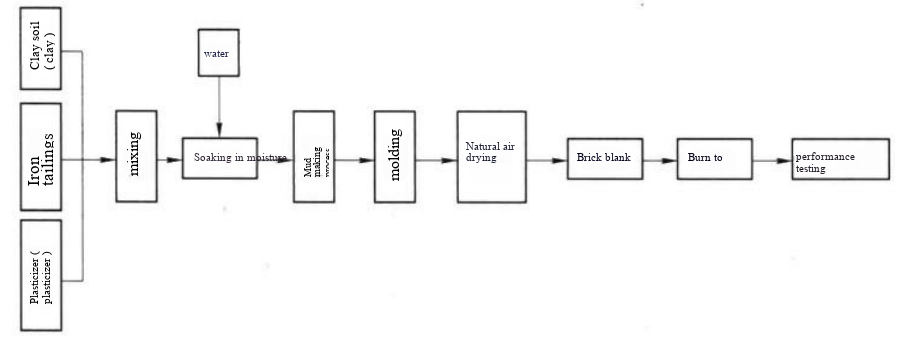
Figure 5-3 Process flow diagram for the production of sintered bricks from iron tailings
In the field of producing sintered bricks from iron tailings, the Meishan Iron Mine is a representative example. Meishan Iron Mine, in cooperation with Xi’an University of Architecture and Technology, Shandong Industrial Ceramic Research & Design Institute, and other institutions, conducted systematic research including laboratory tests, pilot‑scale tests, and industrial trials using tailings from the Meishan Iron Mine. The tailings utilization rate reached 80%–100%. Through process research, the firing temperature range for tailings sintered bricks was determined to be 1050–1150°C. During firing, solid bricks can be stacked vertically, while perforated bricks and large‑hole bricks should be stacked horizontally. Under an oxidizing atmosphere, red products with uniform color can be fired. The produced solid bricks and perforated bricks achieved a compressive strength meeting the MU10 standard for building sintered bricks. Freeze‑thaw tests, efflorescence tests, and lime bursting resistance tests were completed. The freeze‑thaw resistance and water absorption met the standards for building sintered bricks. In April 2005, tailings were officially used as a raw material for brick making, and the sintered bricks produced were applied in high‑rise commercial housing.