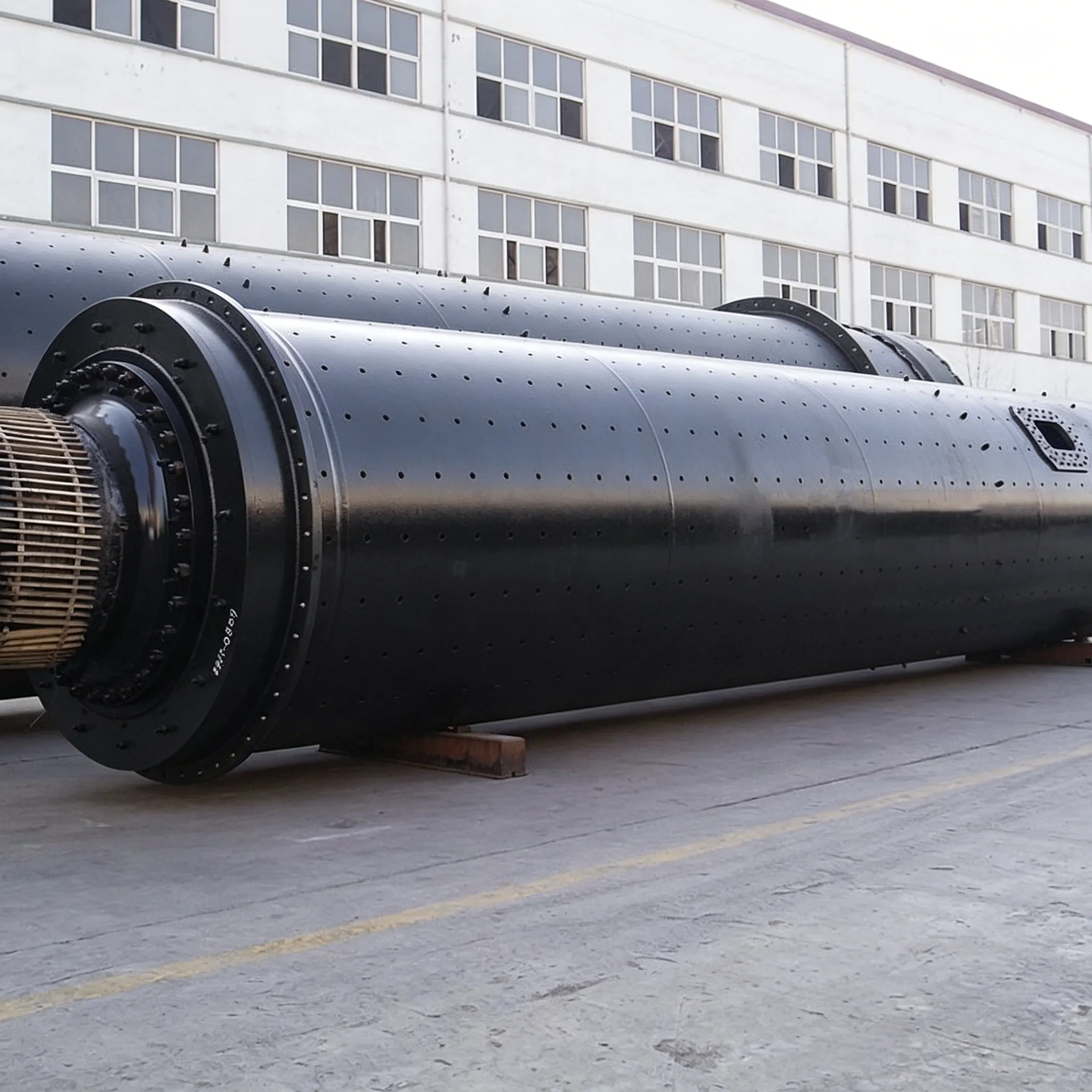
Cement Ball Mill
Cement Ball Mill Product Overview The cement ball mill is key equipment…

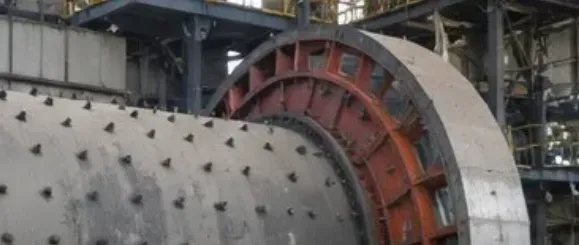
In the grinding system of a mineral processing plant, a common problem is often encountered: the ball mill is running continuously and the cyclone pressure is basically normal, yet the overflow fineness remains unstable. Sometimes the overflow is too coarse, affecting subsequent flotation; at other times, the fine particle content is too high, which may lead to unnecessary grinding energy consumption. At this point, it is necessary to clarify the relationship between grinding fineness and cyclone classification. Grinding determines the extent to which the ore is ground, while cyclone classification determines how particles of different sizes are split into different streams. The two work in coordination and jointly affect the particle size of the pulp that ultimately enters the flotation operation. 1. Grinding fineness and cyclone classification are not the same thing
First of all, two concepts need to be distinguished. Grinding fineness mainly reflects the particle size level achieved by the ore after grinding. In practice, it is usually expressed as the passing rate of a certain sieve size, for example, the -0.074 mm content. The specific index to be adopted needs to be determined according to the ore properties and the requirements of the mineral processing process. Cyclone classification utilizes the flow field formed by the pulp inside the cyclone to cause particles of different sizes, densities, and settling characteristics to follow different trajectories, thereby achieving the separation of coarse and fine particles. During normal operation, coarser particles are more likely to enter the underflow and return to the mill for further grinding, while finer particles are more likely to enter the overflow and be sent to subsequent operations. Therefore, the cyclone does not directly grind all the ore finer; rather, it classifies the grinding product. If the particles produced by the mill are themselves too coarse, the overflow fineness may still fail to meet requirements even if the cyclone is operating normally. If the classification efficiency of the cyclone decreases, some coarse particles may still enter the overflow even if the mill has already produced enough fine particles. This is why one cannot look only at the ball mill, nor only at the cyclone.
2. How does the cyclone affect the final grinding fineness?
The cyclone affects the final product particle size mainly through three aspects.
1. Influence on the proportion of coarse particles entering the overflow
The classification performance of the cyclone is not absolute. In actual operation, some coarser particles may enter the overflow, and some finer particles may also enter the underflow.
If the classification performance is poor, the proportion of coarse particles entering the overflow increases, which may result in a coarser final product size.
At this time, even if the ball mill is still running, the ideal overflow fineness may not necessarily be achieved.
2. Influence on the quantity of coarse particles returned to the mill
The cyclone underflow is usually returned to the ball mill for further grinding.
If the proportion of coarse particles in the underflow is high, it may mean that a large amount of coarse particles are circulating; however, an increase in underflow volume does not necessarily indicate better classification performance, because it may also be affected by factors such as feed density, pressure, apex (spigot) specifications, and operating conditions.
If the circulating load is too high, the material circulation between the mill and the cyclone may become heavier, affecting the system’s processing capacity and operational stability.
Conversely, if coarse particles fail to return to the mill effectively and instead enter the overflow in large quantities, the problem of coarse particles in the overflow may occur.
3. Influence on the overall matching between the mill and the cyclone
The mill is responsible for producing particles of different sizes, and the cyclone is responsible for splitting the streams. Together, they form a closed-circuit grinding system.
If the mill’s processing capacity, the cyclone’s processing capacity, and the feed conditions are not well matched, phenomena such as increased mill load, decreased cyclone classification efficiency, or fluctuations in overflow particle size may occur.
Therefore, grinding fineness is not determined solely by the ball mill, but is the result of the combined effects of factors such as the mill, cyclone, feed, and water volume.
3. Why can the overflow still be too coarse even when the cyclone pressure is normal?
This is a common misunderstanding in plant operations.
Some operators believe that if the cyclone pressure is within the normal range, the classification performance should be normal. However, pressure is only one of the operating parameters and cannot directly represent classification quality.
When the pressure is normal but the overflow is too coarse, the following aspects should be investigated with priority.
First, whether the feed density is too high.
Excessively high density may enhance mutual interference between particles, affect classification efficiency, and cause some coarse particles to enter the overflow.
Second, whether the cyclone equipment condition has changed.
Wear or inappropriate specifications of components such as the apex (spigot) and vortex finder may alter the internal flow field and splitting state.
Third, whether the particle size composition produced by the mill has changed.
If the ore hardness, feed particle size, or ore properties change, the mill may produce more coarse particles. Even if the cyclone operating parameters show no obvious change, the overflow fineness may still deteriorate.
Fourth, whether the cyclone feed distribution is uniform.
When multiple cyclones are operated in parallel, if there are large differences in feed volume and operating status among the individual cyclones, the overall classification performance may be affected.
Therefore, normal pressure only indicates that a certain operating condition is basically normal, and cannot directly prove that the overflow fineness is qualified.
4. When the overflow is too coarse, should the mill be adjusted first or the cyclone?
This requires first determining where the problem lies, rather than directly increasing the mill feed rate or raising the cyclone pressure upon seeing coarse fineness.
On-site Symptoms / Phenomena
Priority Inspection Directions
The above points are only the starting point for on-site troubleshooting, not fixed diagnostic conclusions. The final judgment must also be based on particle size analysis of samples, equipment operating data, and actual process conditions.
Special attention should be paid: Do not blindly reduce the feed rate or increase the cyclone pressure in pursuit of finer overflow. While this may improve a single index, it could lead to reduced processing capacity, increased energy consumption, and even cause other operational problems.
The reasonable goal is to balance processing capacity, classification efficiency, and grinding energy consumption on the premise of meeting the particle size requirements of the mineral processing process.
5. How can automation systems help stabilize grinding fineness?
For the grinding-classification system, the value of automation is not just displaying pressure, liquid level, and current on the screen, but rather linking these parameters together to help operators identify the causes of fluctuations and implement control within a validated range.
1. Monitor the operating status of the mill
Collect mill current or power, feed rate, and necessary operating status signals to observe load variation trends. It should be noted that current and power can assist in judging load changes, but they cannot directly replace the detection of grinding fineness.
2. Monitor key cyclone parameters
Monitor the cyclone feed pressure, pulp flow rate, feed density, and pump sump level, and analyze whether there are obvious fluctuations and inconsistencies among these parameters.
3. Establish coordinated control of feed rate and water addition
When reliable instruments and reasonable process conditions are available, the water addition rate can be adjusted according to the feed rate to stabilize the pulp density or related operating conditions; at the same time, appropriate control strategies can be used to reduce abnormal fluctuations in the pump sump level and cyclone pressure.
However, the water addition rate cannot be mechanically adjusted only according to a fixed ratio; it still needs to be validated in combination with ore properties, target density, and actual classification performance.
4. Incorporate particle size detection into performance evaluation
If an online particle size analyzer is installed on site, the particle size data can be used to assist in evaluating the control effect; if there is no online detection, methods such as regular sampling and laboratory sieve analysis are required to verify whether the overflow particle size meets the requirements.
PLC or DCS can stably execute control strategies, record trends, and issue alarms, but they cannot accurately calculate the overflow fineness based solely on pressure, liquid level, or current.
Truly effective control should be based on reliable particle size detection or assay results, continuously verifying and optimizing the control parameters.

 English English
 Spanish
 Russian
 Arabic
 Swahili
 French
 Turkish
 Portuguese
 Korean
 Japanese
 German
 Italian