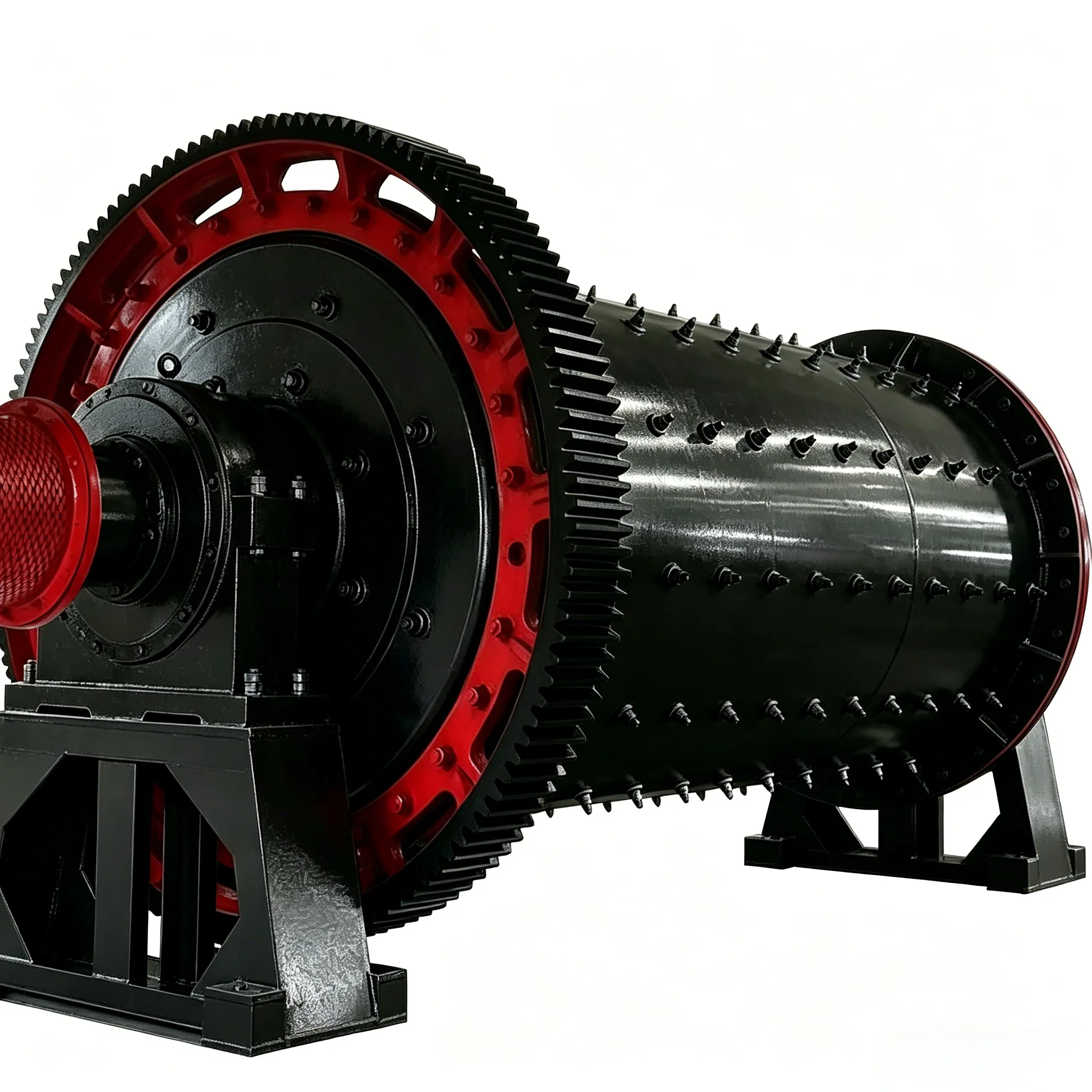
Grate Discharge Ball Mill
Construction of a Grate Discharge Ball Mill The difference between a grate…


Nickel slag is an industrial solid waste generated during the smelting of ferronickel alloys or electrolytic nickel. Its emission volume is enormous—approximately 6 to 10 times the output of ferronickel alloy. China’s annual nickel slag emissions have exceeded 30 million tons, making it the fourth largest smelting waste. Large accumulations of nickel slag not only occupy valuable land resources but also pose potential pollution risks to soil and groundwater.
However, nickel slag is not “waste.” Its main components are silicates and a small amount of metal oxides, containing valuable elements such as residual nickel and iron, and it possesses high potential activity and resource utilisation value. Through scientifically sound processing, nickel slag can be converted into highly active micro‑powders, which are widely used in cement admixtures, concrete additives, and new building materials, achieving the transformation of industrial solid waste into high‑value resources.
So, how is an efficient nickel slag powder production line built? This article provides a comprehensive analysis of the process flow, core equipment selection, and application prospects for nickel slag powder production lines.
Understanding raw material properties is the first step in process design. Nickel slag is generally grey‑black in lumps or granules, with main components including SiO₂, Fe₂O₃, Al₂O₃, etc., and some containing residual metallic nickel, iron, and other minerals. Its grinding process faces the following three major challenges:
These characteristics mean that nickel slag grinding cannot simply use conventional mineral powder processing equipment; it requires targeted process solutions and specialised equipment.
Modern nickel slag powder production lines generally adopt an integrated process of “pre‑treatment – grinding – iron removal – collection – storage”. A typical process flow with a vertical roller mill (VRM) as the core is as follows:
Raw material pre‑treatment is the foundation for stable operation of the production line.
Stockyard air‑drying: Nickel slag transported into the plant is first air‑dried in the stockyard to reduce initial moisture.
Screening control: The particle size of nickel slag is controlled to below 60 mm through screening equipment to ensure uniform and stable feed.
Iron removal pre‑treatment: Nickel‑iron impurities are removed by a high‑intensity magnetic separator, and then screened by a vibrating screen to ensure that the feed particle size is ≤50 mm and moisture content ≤6%, thus reducing equipment wear and improving grinding efficiency.
After pre‑treatment, the nickel slag is continuously conveyed to the feed hopper by loading equipment, ensuring continuous material supply and avoiding production stoppages.
A constant‑rate feeder is installed at the discharge end of the feed hopper to uniformly feed the nickel slag into a column mill for primary grinding.
The column mill adopts the “more crushing, less grinding” design concept. Through squeezing and shearing action, it grinds the nickel slag so that over 90% of the particles are smaller than 5 mm. The key roles of this stage are:
The fine powder from primary grinding enters a three‑stage iron removal system, using high‑intensity magnetic separators to remove iron impurities step by step.
Objective: Ensure that the final iron content in the product is controlled below 2%, meeting the quality requirements for building materials or micro‑powder admixtures.
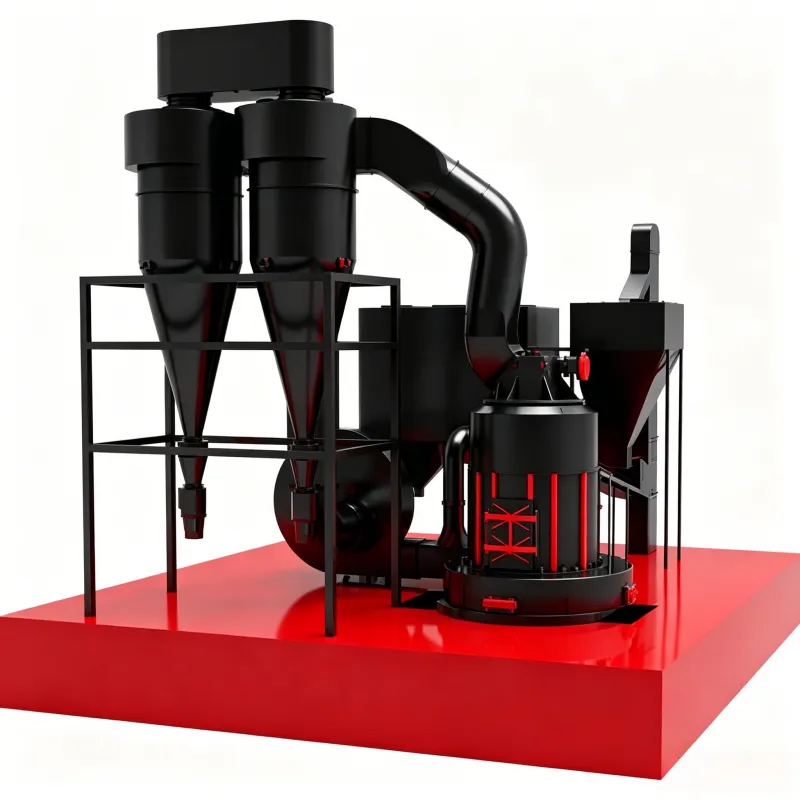
The de‑ironed nickel slag fines are conveyed to the vertical roller mill system for deep grinding. The VRM is the core equipment of the entire production line, integrating grinding, drying, and classification in one unit.
Workflow:
Through deep processing in the VRM, the nickel slag is ground to a specific surface area of 4200–4500 cm²/g, meeting high‑performance mineral admixture standards.
Re‑circulation processing: During grinding, large inert impurities and iron‑rich particles that cannot be fully ground are discharged from the mill bottom through a discharge outlet. These materials are discharged through an air‑lock heavy‑hammer discharge valve, then conveyed by a bucket elevator to the top, where they undergo secondary iron removal via a dry magnetic separator to recover nickel‑iron resources. The de‑ironed material is returned to the VRM system through an intermediate bin for re‑processing, ensuring that resources are fully utilised.
The dust‑laden gas from the mill is purified by a high‑efficiency bag filter. The collected nickel slag powder is conveyed to the finished product silo via an air chute or screw conveyor. After treatment, the dust concentration in the exhaust gas is below 10 mg/Nm³, meeting environmental standards.
The finished nickel slag powder is stored in large steel silos or concrete silos. A bulk loader or packer is installed at the bottom of the silo for bulk or bagged dispatch according to customer requirements.
Equipment selection for a nickel slag powder production line directly determines investment costs, operating efficiency, and product quality. The following is a comparison of the three main options:
| Comparison Aspect | Vertical Roller Mill | Raymond Mill | Ball Mill |
|---|---|---|---|
| System Power Consumption | ≤38–43 kWh/t | Moderate | Up to 90 kWh/t |
| Product Specific Surface Area | 420–500 m²/kg | 80–400 mesh (conventional) | Difficult to stably reach 400 m²/kg |
| Integrated Functions | Grinding + drying + classification in one | Grinding only | Grinding only (requires separate drying) |
| Single‑unit Capacity | Up to 180 t/h | A few to tens of t/h | Smaller |
| Capital Investment | Higher | Lower | Moderate |
| Suitable Scale | Large‑scale, mass production | Small to medium projects | Traditional, being phased out |
Selection recommendations:
In 2012, Xinxiang Great Wall built the first 300,000 t/y nickel slag production line for Henan Xuchang Tengxin Technology Co., Ltd. All the produced nickel slag powder was sold to large cement and ready‑mix concrete enterprises in and around Henan, achieving good economic returns and booming sales. At the end of 2013, the company signed a contract for a second production line, which was successfully commissioned in August 2014. The two lines together produce 600,000 t/y of nickel slag micro‑powder, with the main equipment being the GRMS33 vertical roller mill.
In 2015, after on‑site inspections and repeated comparisons of several Chinese industrial waste slag grinding equipment manufacturers, PT. Gunung Steel Group of Indonesia ultimately chose to sign an EPC contract with Xinxiang Great Wall for a 300,000 t/y nickel slag micro‑powder production line. The main equipment was the GRMS33 vertical roller mill, and the project was successfully completed and commissioned in November 2016. During load operation, the mill achieved a capacity of 50 t/h and a specific surface area of 450 m²/kg, meeting all design requirements for output and quality.
The nickel slag powder production line with a VRM as the core offers the following five key advantages:
The VRM uses the bed‑of‑material grinding principle, reducing energy consumption by 20%–30% compared with traditional ball mills. It can utilise waste heat from kilns or boilers for drying. The production line is equipped with fully enclosed conveying, negative‑pressure dust collection, sound insulation, and noise reduction facilities, effectively controlling dust and noise pollution.
The entire production line adopts a DCS distributed control system, enabling remote monitoring, automatic start/stop, fault alarms, and data logging, greatly reducing manual intervention. The VRM system is equipped with an automatic loading control system that dynamically adjusts roller pressure based on parameters such as bed thickness, vibration, and power consumption.
It can handle nickel slag raw materials with different compositions, particle sizes, and moisture contents. Product fineness can be flexibly controlled by adjusting air volume, air temperature, grinding pressure, and other parameters.
The VRM integrates grinding, drying, and classification, simplifying the process flow, reducing the number of potential failure points, and lowering maintenance costs. The system is equipped with multi‑dimensional on‑line monitoring of temperature, pressure, vibration, etc., ensuring equipment safety.
Economic benefits: Recovery of valuable nickel‑iron metals; nickel slag micro‑powder sold as a cement admixture enjoys broad market prospects. Environmental benefits: Reduction of land occupation and environmental pollution from waste slag; alignment with the national circular economy and “dual carbon” strategic development direction.
The nickel slag powder production line is a key pathway for transforming industrial solid waste into high‑value resources. The modern process solution centred on the vertical roller mill, through an integrated flow of “pre‑treatment – grinding – iron removal – collection – storage”, achieves efficient, energy‑saving, and clean utilisation of nickel slag.
Whether from the perspective of environmental pressure (reducing land occupation and pollution) or economic returns (recovering valuable metals and producing high‑value‑added micro‑powders), building a scientifically designed nickel slag powder production line is a wise choice for both metallurgical and building‑material enterprises. With the continuous strengthening of national policies on solid waste resource utilisation and the deepening of the “dual carbon” goals, the nickel slag powder processing industry is ushering in unprecedented development opportunities.
 English English
 Spanish
 Russian
 Arabic
 Swahili
 French
 Turkish
 Portuguese
 Korean
 Japanese
 German
 Italian