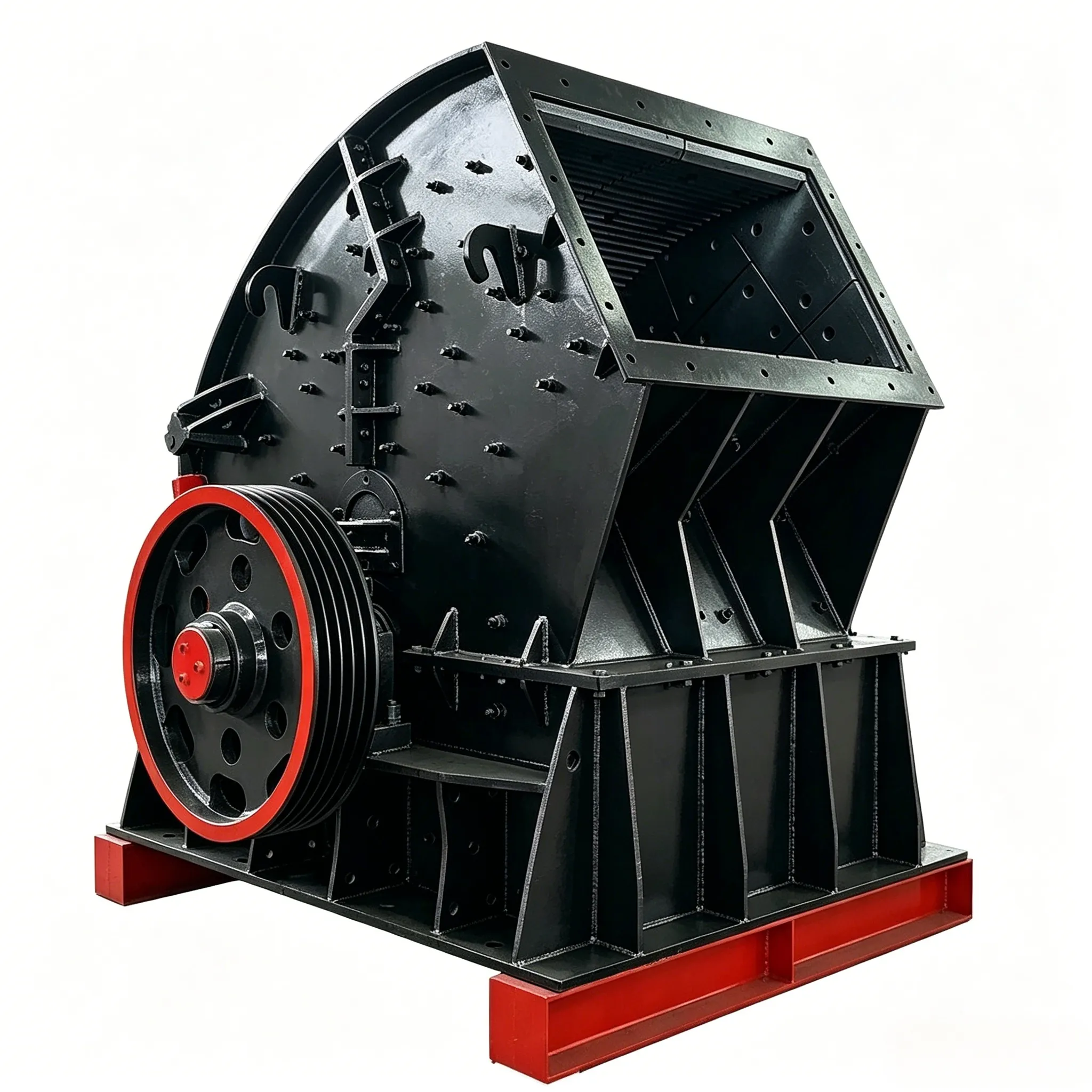
Hammer Crushers
Types of Hammer Crushers Since its introduction in 1924, the hammer crusher…

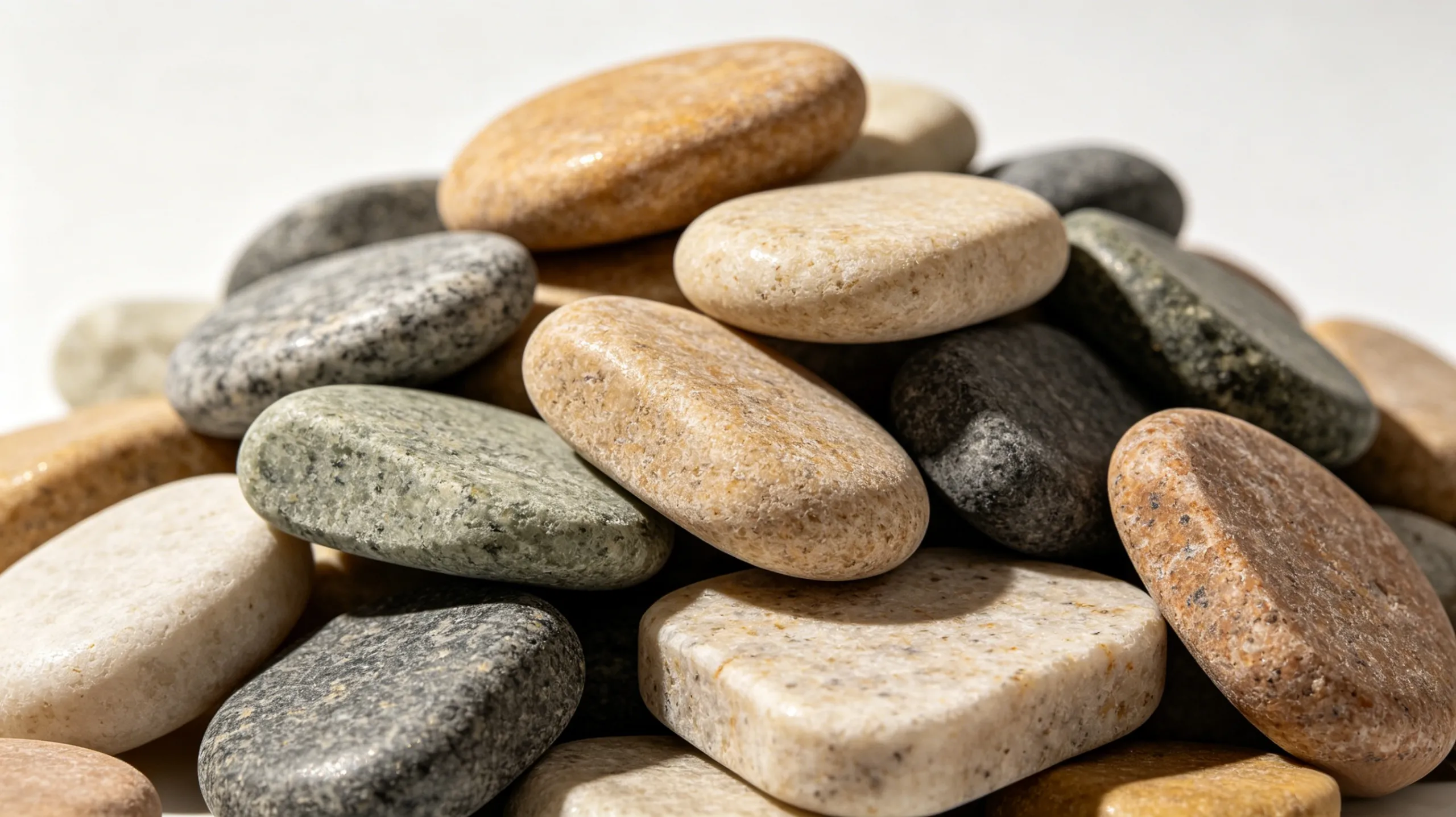
Artificial stone first appeared in the United States in the 1960s. It is made from unsaturated polyester resin with fillers, pigments, and a small amount of initiator through a certain processing procedure. This product not only has a simple synthesis method, short production cycle, and low cost, but also exhibits excellent performance. It possesses sufficient strength, stiffness, water resistance, aging resistance, corrosion resistance, and other properties, and has been widely used in various architectural decorations.
The tailings artificial stone developed by the Beijing General Research Institute of Mining and Metallurgy uses tailings as the main aggregate and 5Mg(OH)₂ · MgCl₂ · 8H₂O (referred to as the 518 phase) as the binder, with internal admixtures of a water repellent agent and an activator. Under normal temperature and pressure, the stone product is first synthesized, and then, depending on the type, performance, and requirements of the stone product, an external water repellent agent is applied to treat its surface to obtain stone products with different characteristics. To ensure that the magnesium cementitious material forms the 518 phase and that the 518 phase does not undergo phase transformation in water or humid environments, the sample is generally prepared with MgO/MgCl₂ > 4.27 and H₂O/MgCl₂ > 4.18. An internal water repellent agent is added to reduce the phase transformation rate of the 518 phase when it encounters water or water vapor; an external water repellent agent is applied to further reduce the degree of phase transformation of the 518 phase when it encounters water or water vapor, thereby improving the water resistance and quality of the stone. Tests have shown that the main properties of tailings artificial stone, such as water resistance and alkali resistance, meet the required standards. Moreover, any type of tailings can be used to synthesize tailings artificial stone. The synthesis process is simple, has no waste (no waste gas, waste water, or solid waste), has low cost, is non-toxic and odorless, has high strength, and allows for freeform shaping, making it suitable for use as imitation stone decorative materials for both interior and exterior walls.
Hou Yanyan from the College of Science, Civil Aviation University of China, used unsaturated polyester resin and tailings from Shanxi Datong Jinyin Mining Co., Ltd. as the main raw materials to cast artificial cloudstone slabs at normal temperature and pressure. The resulting gloss and mechanical properties met industry standards.
(1) Raw materials. The tailings from Shanxi Datong Jinyin Mining Co., Ltd. were used as filler. They are gray in color, with the main component being SiO₂, and containing small amounts of Al₂O₃, Fe₂O₃, MgO, etc. The particle size ranges from 0.043 to 0.375 mm.
(2) Reagents. No. 191 resin, industrial grade, produced by Tianjin Letai Chemical Co., Ltd.; cyclohexanone peroxide, chemically pure, produced by Shanghai Aladdin Company; cobalt naphthenate, chemically pure, produced by Dalian No.1 Organic Chemical Co., Ltd.; methyl silicone oil, analytically pure, produced by Tianjin Yingda Rare and Precious Chemical Reagent Factory.
(3) Process. The tailings were sieved into five particle size fractions: +0.167 mm, -0.167 mm + 0.107 mm, -0.107 mm + 0.074 mm, -0.074 mm + 0.043 mm, and -0.043 mm. They were washed, dried, and set aside. A self-made polyvinyl alcohol release agent was evenly coated on the inner layer of the mold and allowed to dry. No. 191 resin, cyclohexanone peroxide, cobalt naphthenate, and methyl silicone oil were mixed in proportion, and tailings were added. The mixture was stirred at room temperature and quickly poured into the prepared mold, then vacuumed. After complete solidification, the sample was demolded and subjected to post-curing treatment at 80°C. Depending on the intended use, the sample was then ground and polished. The process route for artificial stone preparation is shown in Figure 5-8.

Figure 5-8 Process route for artificial stone preparation
The structure, gloss, mechanical properties, and corrosion resistance of the prepared artificial stone were tested and observed using a gloss meter, a Zeiss polarizing microscope, and a Fourier transform infrared spectrometer. The effect of tailings with different particle sizes on product performance was studied, and the gloss, flexural strength, and corrosion resistance were tested and analyzed. The experiments proved that tailings were successfully used as fillers to synthesize artificial stone whose gloss and mechanical properties met industry standards. Infrared spectroscopy results showed that the resin and filler were bonded together, and a chemical reaction occurred at the interface, forming new substances. The gloss of the artificial stone increased with the increase in filler particle size, and its flexural strength also increased with the increase in filler particle size. However, the smaller the filler particles, the stronger the corrosion resistance. This result indicates that particle size reduction has both positive and negative effects on the performance of artificial stone.
 English English
  Spanish
 Russian
 Arabic
 Swahili
 French
 Turkish
 Portuguese
 Korean
 Japanese
 German
 Italian