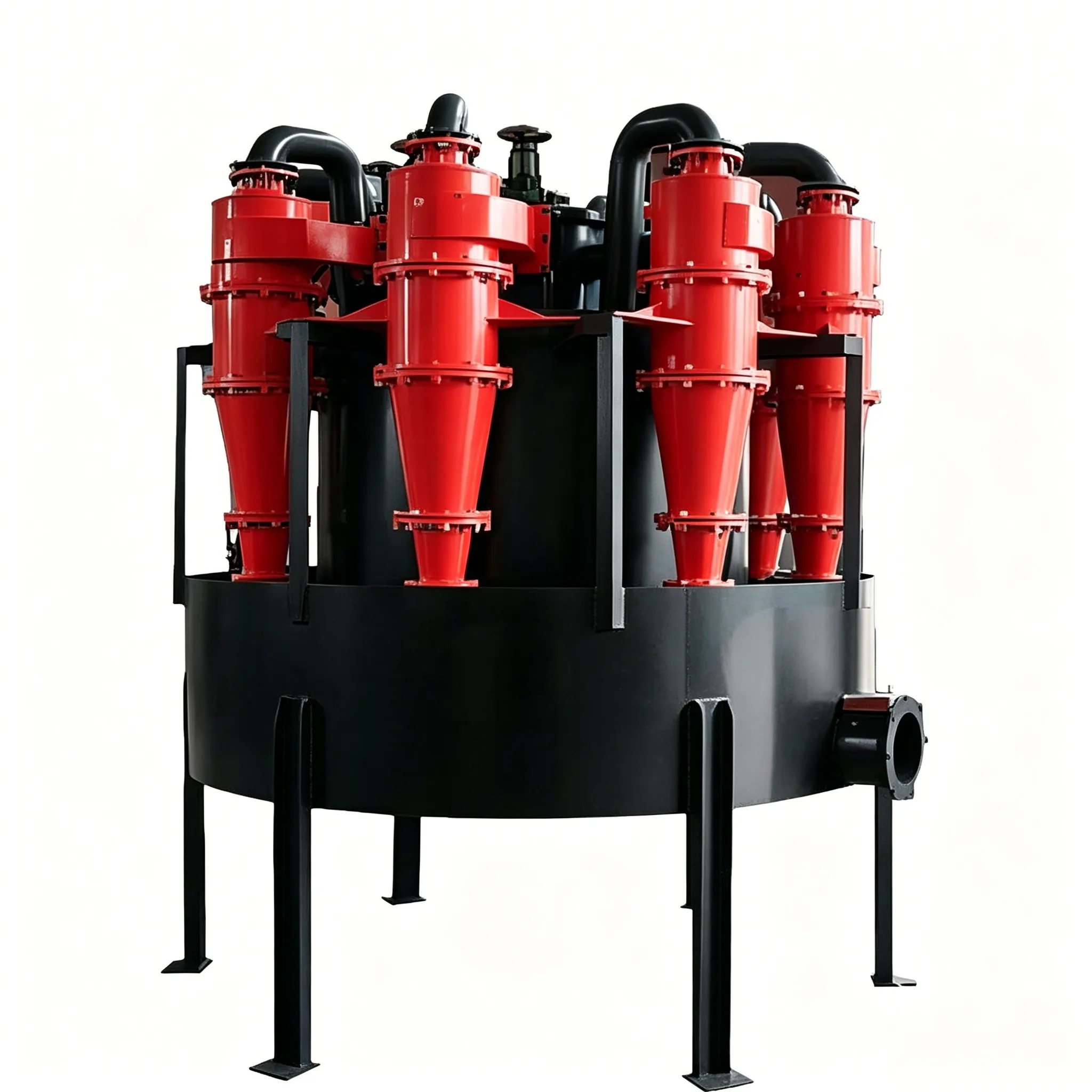
Hydrocyclone
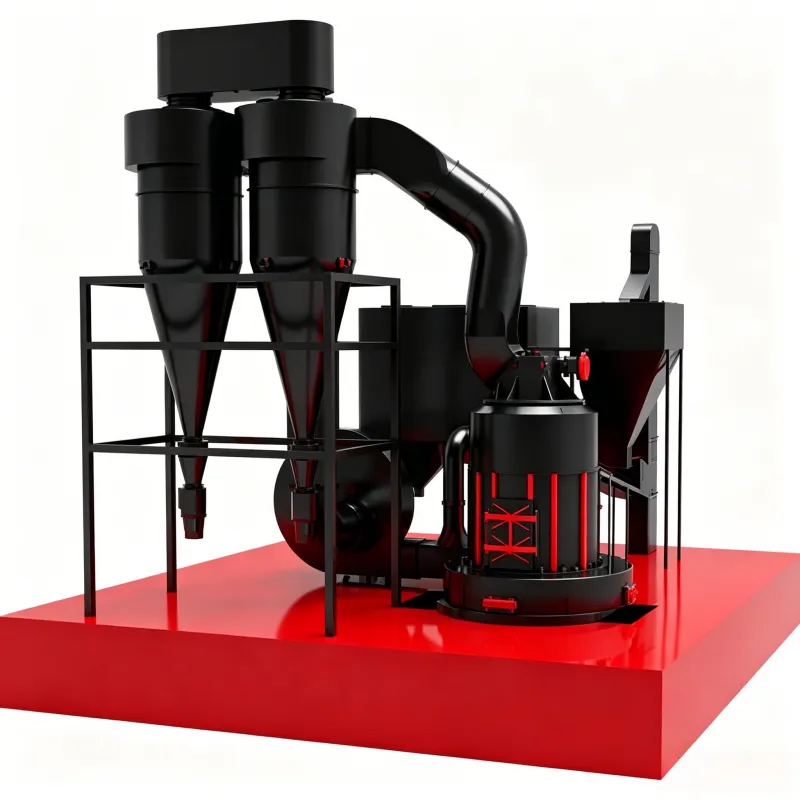
Hydrocyclone The hydrocyclone is a device that uses centrifugal force to classify…


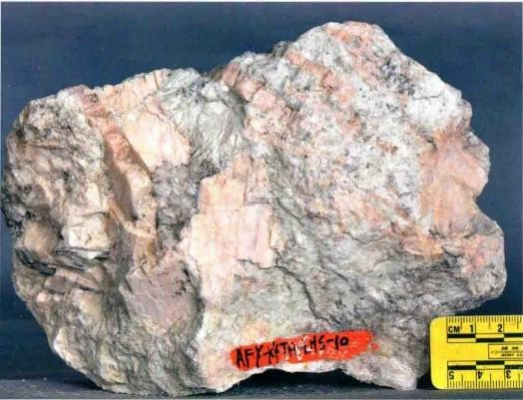
RE1-B18
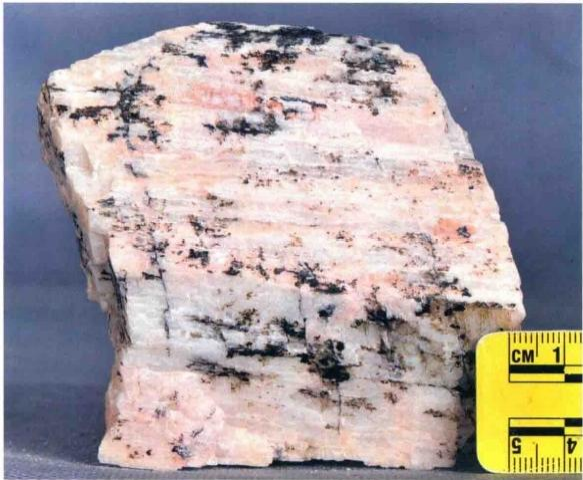
Spodumene. The ore-bearing rock is grayish-white to light flesh-red, with a medium to medium-coarse pegmatitic texture and massive structure. The main mineral components constituting the rock (ore) are cleavelandite, quartz, and muscovite. Cleavelandite: pale bluish-green, vitreous luster, hardness greater than that of a knife, occurring mostly as anhedral granular aggregates. Quartz: colorless and transparent, greasy luster, hardness greater than that of a knife, occurring as anhedral grains and glomerular aggregates. Muscovite: colorless and transparent, vitreous luster, hardness less than that of a knife, occurring as scaly aggregates. The above three minerals are gangue minerals of the ore, with a total content of about 75%. The ore mineral is spodumene, light flesh-red in color, with vitreous luster and hardness greater than that of a knife. Spodumene occurs in two forms: one is vein-like, where spodumene in the veins occurs as thin tabular to tabular crystals; the other is disseminated, occurring as granular aggregates. The spodumene veins or veinlets have vein widths greater than 1 cm, while the veinlets are generally about 5 mm wide; veins in different directions may interconnect. The spodumene veins cut across all gangue minerals, indicating that the spodumene veins formed at a later stage. Minor amounts of disseminated and glomerular spodumene can also be observed at the margins of the spodumene veins. The overall spodumene content is about 25%.
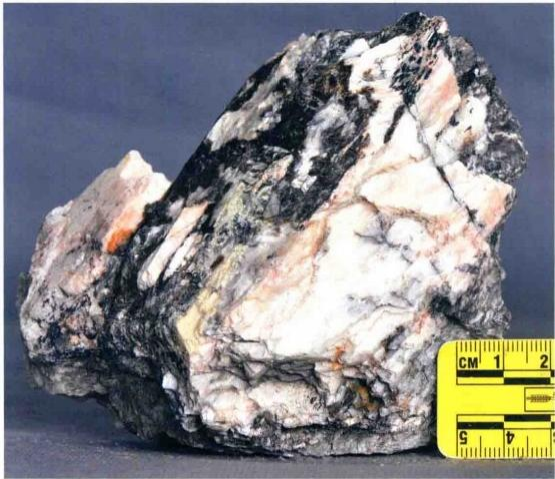
RE1-B19
Spodumene-bearing cleavelandite pegmatite. The rock is pale bluish-green in color, with a pegmatitic texture and massive structure. The main mineral component is cleavelandite, pale bluish-green, vitreous luster, hardness greater than that of a knife, occurring as tabular plates with a thickness of 1–2 mm and length up to 3–4 cm, exhibiting one set of very perfect cleavage with curved cleavage surfaces, accounting for about 90% of the rock. Spodumene is pink to flesh-red, vitreous luster, tabular crystals, hardness greater than that of a knife, occurring as tabular or granular crystals, with aggregates distributed as elongated lenticular bodies or fine veins within the cleavelandite pegmatite. Muscovite and glomerular quartz are associated at the margins of the lenticular spodumene. Spodumene content is less than 10%, while muscovite and quartz are present in very minor amounts.

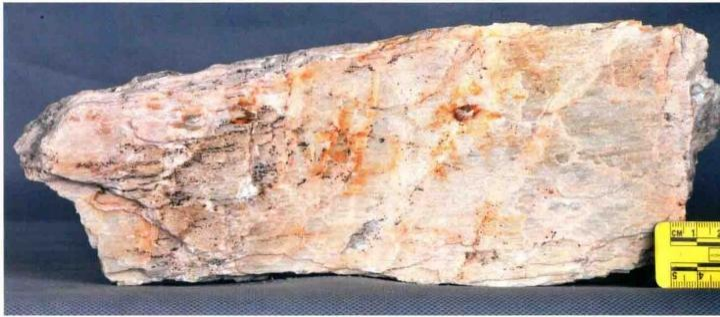
RE1-B20
Spodumene-bearing cleavelandite–quartz pegmatite. The rock is grayish-white in color, with a pegmatitic texture and massive structure. The main mineral components are cleavelandite and quartz, with minor amounts of spodumene and specularite. Cleavelandite: milky-white to pale bluish-green, vitreous luster, hardness greater than that of a knife, occurring as tabular platy crystals with no intact crystals observed, accounting for about 30%. Quartz: colorless to light gray, greasy luster, hardness greater than that of a knife, mostly occurring as anhedral grains, with aggregates as glomerular or massive forms, accounting for about 40%. Spodumene: yellowish-white to light flesh-red, vitreous luster, hardness greater than that of a knife, occurring as tabular crystals with plate faces longer than 5 cm and about 3 cm wide, with visible thickness less than 1 cm; a minor portion occurs as anhedral granular and glomerular aggregates, accounting for about 15%. Specularite: iron-black, metallic luster, hardness greater than that of a knife, occurring as flaky aggregates, with fine magnetite inclusions visible on fracture surfaces, accounting for 10%–15%.
RE1-B21
Spodumene. The crystals belong to the monoclinic system, occurring as prismatic individuals. Colorless and transparent, vitreous luster, with a colorless streak. Perfect cleavage on {110}, and parting along {100} and {010}. Hardness 6.5–7, density 3.03–3.22 g/cm³. It has good transparency and can reach gem quality, with slight internal flaws in the crystals. It occurs in pegmatites of the cleavelandite–spodumene zone (beryllium‑ and niobium‑bearing lithium ore zone) of the No. 3 vein, No. 1 pit, Koktokay (Keketuohai) mine.

RE1-B22
Spodumene. The main ore mineral is spodumene, accounting for about 95%; the gangue minerals are mainly muscovite and quartz, totaling about 5%. The crystals belong to the monoclinic system, occurring as prismatic individuals. Light pink in color, vitreous luster, with a colorless streak. Perfect cleavage on {110}, and parting along {100} and {010}. Hardness 6.5–7, density 3.03–3.22 g/cm³. It occurs in pegmatites of the cleavelandite–spodumene zone (beryllium‑ and niobium‑bearing lithium ore zone) of the No. 3 vein, No. 1 pit, Koktokay (Keketuohai) mine.
RE1-B23
Spodumene (spodumene single mineral). Spodumene is white to light flesh-red in color, with vitreous luster and hardness greater than that of a knife. The crystals occur as euhedral tabular forms, developing two sets of cleavages with an intersection angle of 30° to 150°. The intersection of the two cleavages gives the spodumene a rhombic prismatic shape.



 English English
 Spanish
 Russian
 Arabic
 Swahili
 French
 Turkish
 Portuguese
 Korean
 Japanese
 German
 Italian