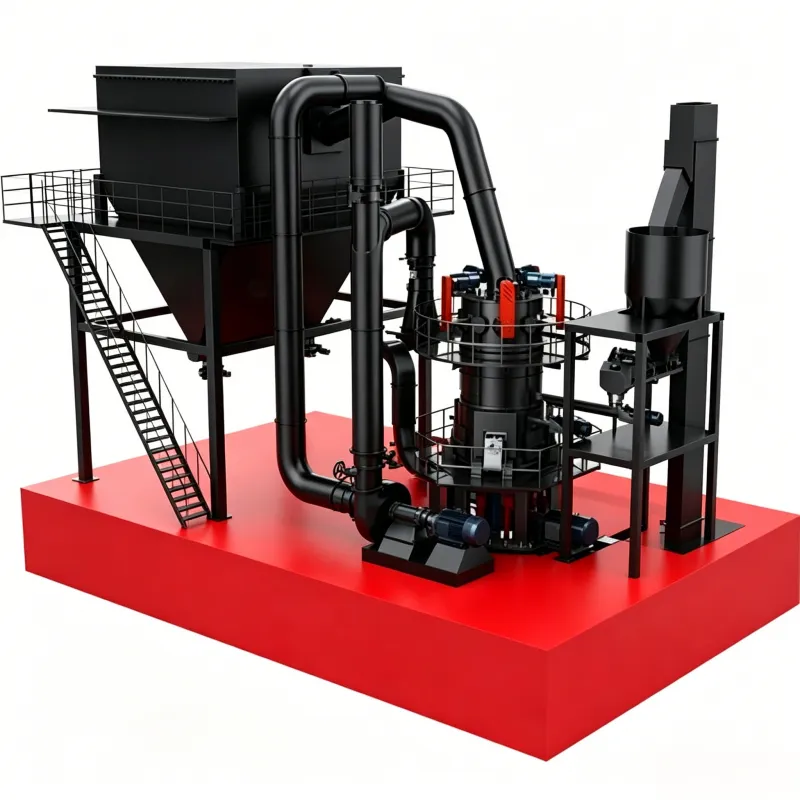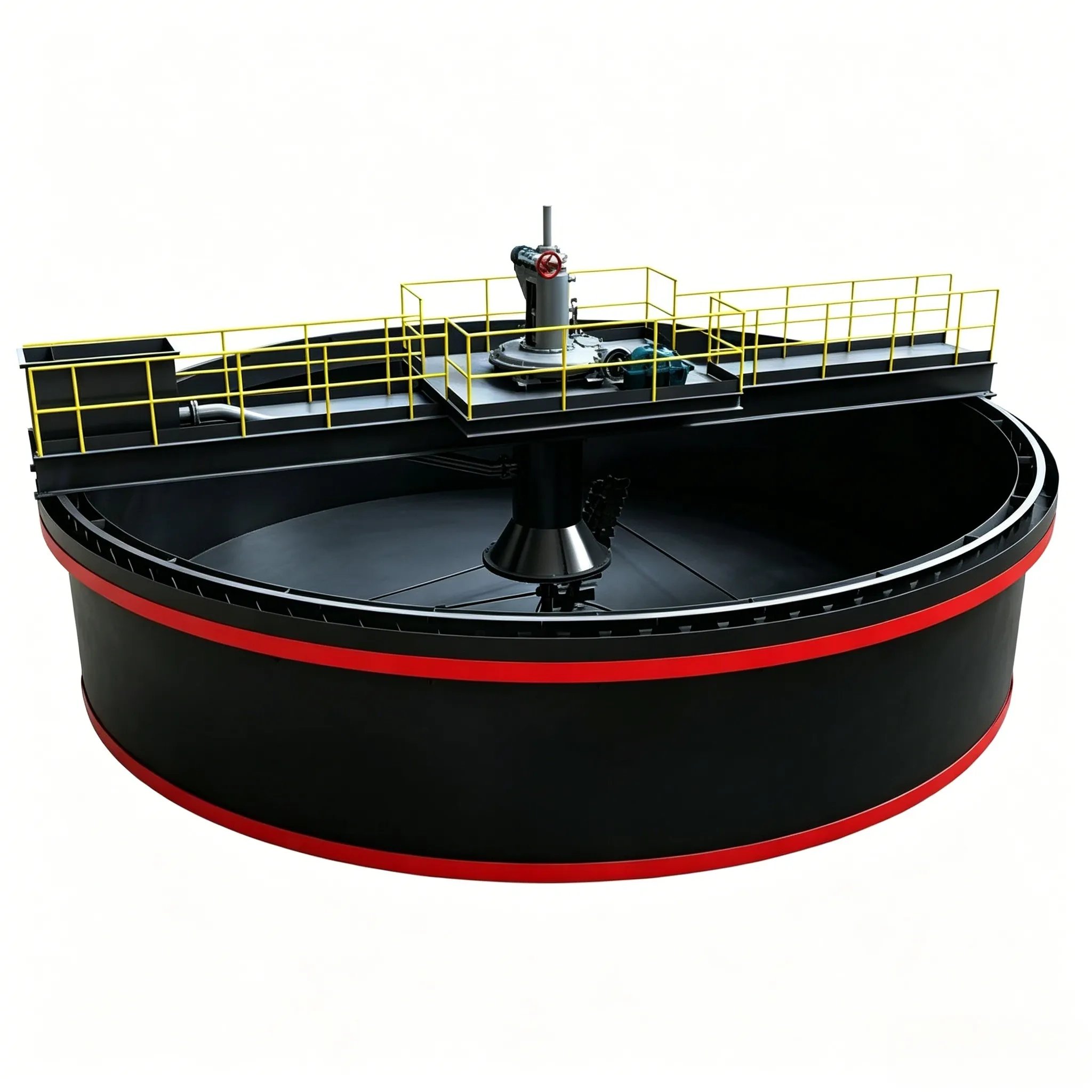
High-Efficiency Thickener
High-Efficiency Thickener The high-efficiency thickener is a new type of thickening equipment…


In iron ore flotation, starch and its derivatives are currently the most widely used depressants in all anionic reverse flotation processes. Starch can be extracted from several plants, such as corn, cassava, potato, wheat, rice, and calathea. In the mineral industry, corn starch remains the most widely used.
The mechanism of starch’s inhibition of minerals is generally considered to be primarily due to the role of hydrogen bonding. Because starch molecules are large, each glucose monomer has three hydroxyl groups, and modified starch also contains carboxyl or amino groups. These polar groups can bind to water molecules through hydrogen bonding and can also adsorb onto the surface of minerals containing highly electronegative elements (such as oxygen), thus making the minerals hydrophilic or adsorbing onto the surface of several mineral particles. Through polymer bridging, fine mineral particles flocculate. According to the principle of electrostatics, cationic modified starch, being positively charged in solution, is more easily adsorbed onto the surface of negatively charged minerals, thus inhibiting or flocculating them. Conversely, anionic modified starch, being negatively charged in solution, is more readily adsorbed onto positively charged mineral surfaces, leading to inhibition or flocculation. Furthermore, the relationship between mineral surface charge and pH shows that as the pH of the solution increases, the surface charge of quartz and metal oxides increases towards the negative value. This increases the adsorption capacity of cationic starch, while anionic starch adsorption decreases due to like-charge repulsion. Quartz has a zero-electric point (ZE) pH of 2–3, where cationic starch readily adsorbs onto its surface, with adsorption increasing with pH, while anionic starch adsorption is affected by like-charge repulsion. Conversely, hematite has a ZE pH of 6.5, where anionic starch readily adsorbs onto its surface, with adsorption increasing with pH, while cationic starch adsorption is affected by like-charge repulsion.