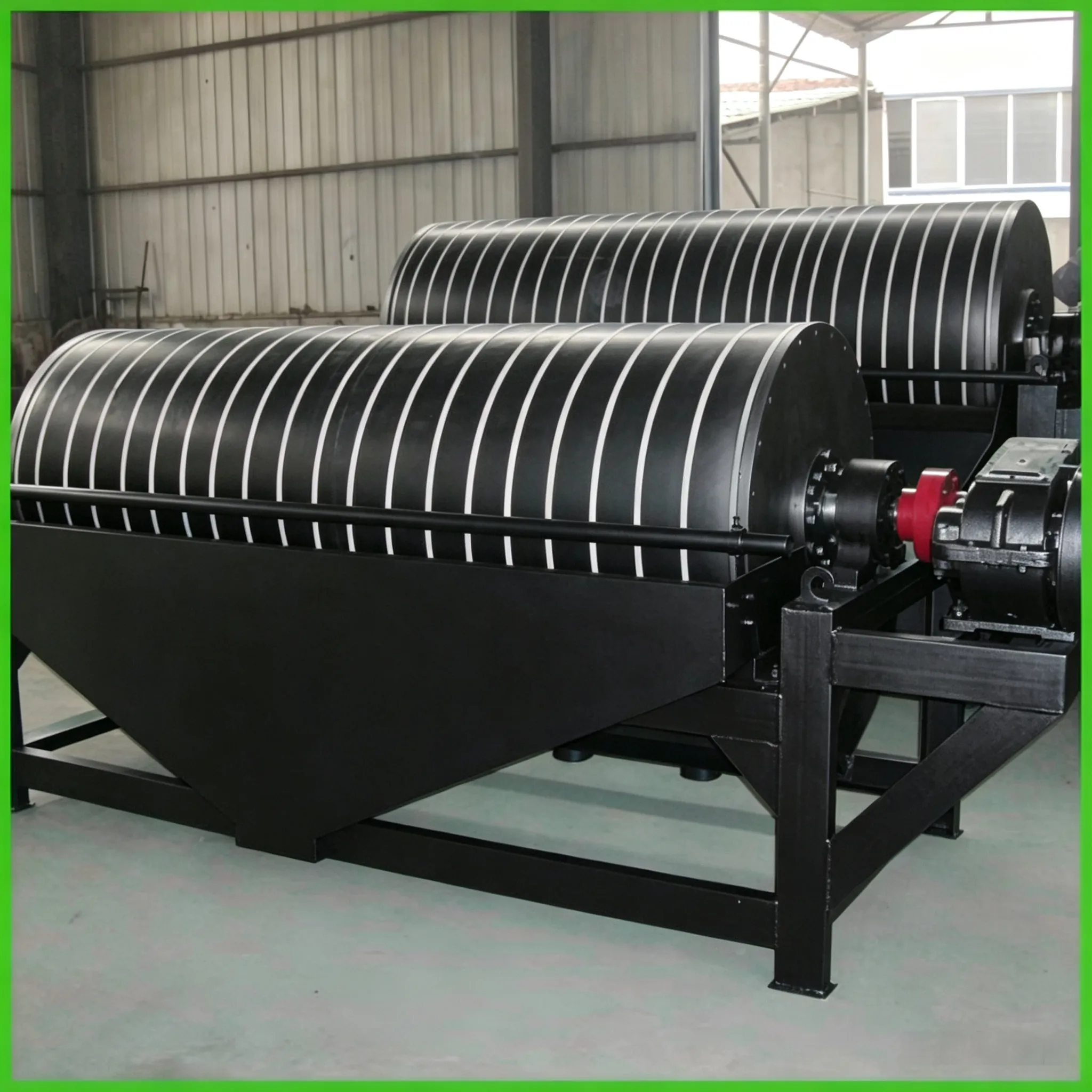
Construction of Permanent Magnetic Drum Separators
Permanent magnetic drum separators are widely used for magnetite ore beneficiation, coarse…

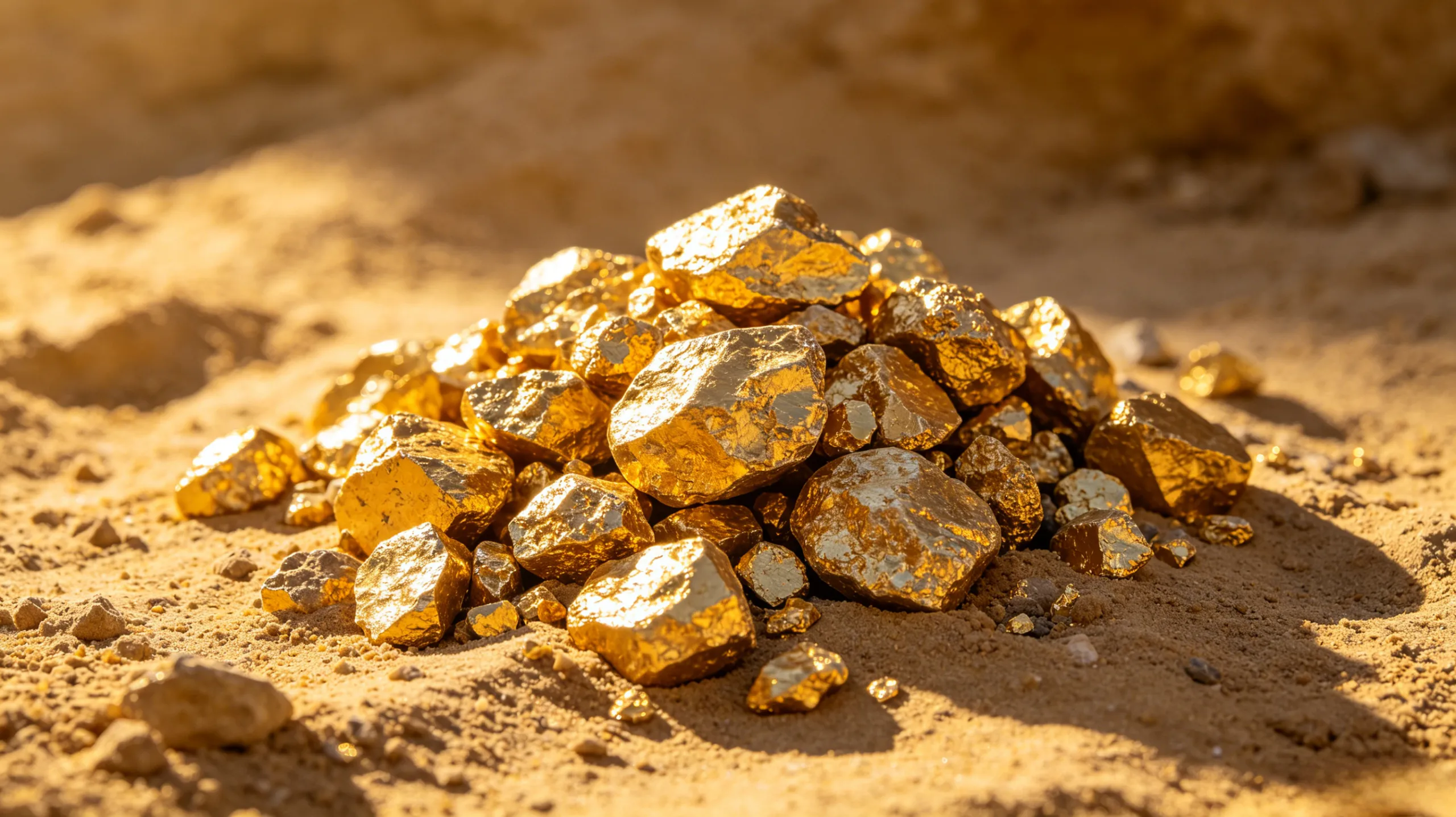
(1) Single magnetic separation process. Magnetite is one of the earliest utilized ores, and magnetite beneficiation is the main process in iron ore beneficiation. Magnetite ore is mainly sedimentary metamorphic magnetite ore. The majority of iron minerals in the ore are magnetite, mainly fine-grained; the gangue minerals are mainly silicate minerals such as quartz or amphibole, some of which contain a lot of iron silicate. Since magnetite ore is a strongly magnetic mineral, high-grade and high-recovery iron concentrate can be obtained by using weak magnetic separation. Many large and medium-sized magnetic separation plants often use a single-stage grinding magnetic separation process when the grinding particle size is greater than 0.2-0.3 mm; and a two-stage magnetic separation process when it is less than 0.2-0.3 mm. When weak coarse grinding can separate qualified tailings, a staged grinding magnetic separation process is used. If a certain amount of gangue minerals are produced during mining due to the mixing of surrounding rock or ore into the products of each crushing stage, a dry magnetic separator is used for pre-selection before grinding. For some ores, in order to obtain high-grade iron concentrate with an iron content of 66%–68%, further processing methods such as fine screening, magnetic separation column, and reverse flotation can be used.
Currently, with the gradual refinement of the particle size of the magnetite being beneficiated, the negative impact of magnetic agglomeration on beneficiation is becoming increasingly apparent. Magnetic and non-magnetic inclusions make it increasingly difficult to improve the concentrate grade by relying solely on magnetic separation.
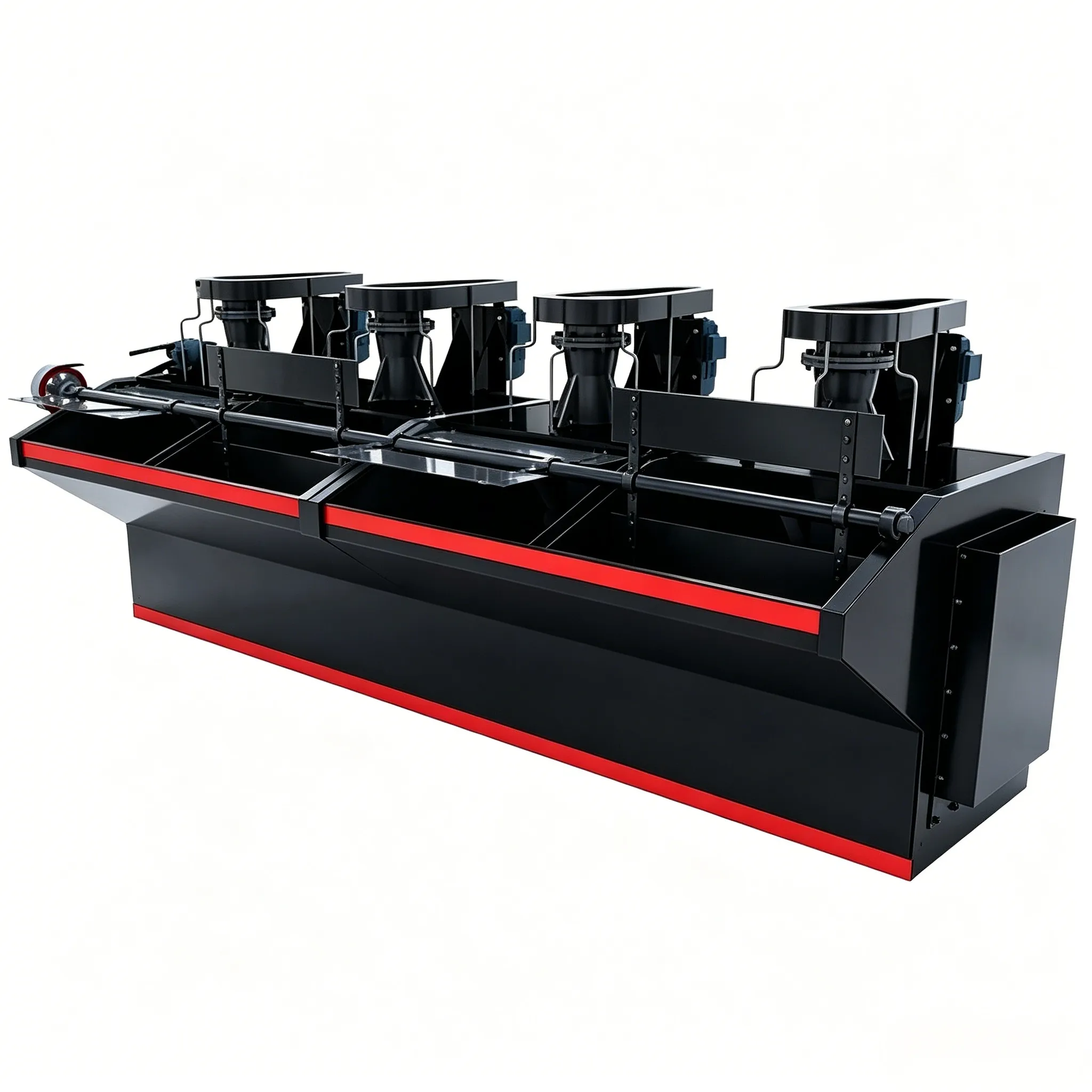
(2) Weak Magnetic-Cation Reverse Flotation Process Flow Weak magnetic-reverse flotation combines magnetic separation with reverse flotation to achieve complementary advantages in the beneficiation of magnetite ore, which is beneficial to improving the grade of magnetite ore beneficiation concentrate. Reverse flotation processes are divided into cationic reverse flotation and anionic reverse flotation depending on the reagent system, especially the type of collector. Cationic reverse flotation uses starch as a depressant for magnetite and amine reagents such as dodecylamine as collectors. Its advantages include a simple reagent system, low required pulp temperature (above 25℃), and neutral pulp. Disadvantages include sticky flotation foam, which is unfavorable for subsequent processing, poor selectivity, high SiO₂ content in the iron concentrate, unstable indexes, and severe corrosive effect on rubber. For example, the Anshan Iron and Steel Group’s Gongchangling iron ore beneficiation plant, a large-scale iron mine in China, has adopted a weak magnetic-cationic reverse flotation process with good results. Using cationic reverse flotation, the Anshan Iron and Steel Group’s Gongchangling magnetite beneficiation plant can increase the iron concentrate content from 64%–65% iron and 8%–10% SiO₂ in weak magnetic separation to 68.5%–69.5% iron and reduce SiO₂ to 3.5%–4%.
(3) Weak magnetic-anionic reverse flotation process. Compared with cationic reverse flotation, anionic reverse flotation has its own advantages, such as non-sticky flotation foam, more stable indicators, and minimal corrosive effect on rubber. However, anionic reverse flotation requires a wider variety of reagents, higher flotation pulp temperature (above 30℃), and alkaline pulp, which is beneficial for concentrate pipeline transportation and direct concentrate filtration. Acid treatment is required before filtration. For example, the Jianshan Iron Mine is an Anshan-type magnetite deposit. The Ma’anshan Mining Research Institute compared weak magnetic-positive flotation and weak magnetic-reverse flotation processes. Based on the characteristics of the Jianshan Iron Mine, the iron and silica reduction process of the Jianshan Iron Mine beneficiation plant was determined to be the anionic reverse flotation process, which achieved better indicators. Taiyuan Iron & Steel Group’s Jianshan magnetite beneficiation plant employs anionic reverse flotation, which can increase the iron concentrate content from 65.75% iron and 28.5% SiO2 in weak magnetic separation to 69.08% iron and reduce SiO₂ content to 3.5%–4%.
(4) Full Magnetic Separation Process For a long time, most magnetite beneficiation plants have used conventional drum magnetic separators as the main beneficiation equipment. Although significant technical modifications have been made to the specifications of the magnetic separator, the feeding method, and the structure of the tank, the strong “magnetic agglomeration” effect reduces the selectivity of the magnetic separation process, resulting in “magnetic inclusions” and “non-magnetic inclusions.” This leads to a persistently high SiO₂ content in the final magnetite concentrate, exceeding 6.5%. To obtain high-quality iron concentrate, some beneficiation plants have chosen various full magnetic separation methods, using new magnetic separation equipment to achieve advanced indicators such as an iron concentrate grade greater than 69% and a SiO₂ content less than 4% in industrial trials. For example, the Benxi Steel Waitoushan and Nanfen ore dressing plants effectively separate quartz intergrowths from iron concentrate using magnetic separation columns. The iron grade of the concentrate can be increased to approximately 69.5%, the SiO₂ content in the concentrate is reduced to below 4%, the tailings grade and metal recovery rate remain basically unchanged, and the newly added processing cost is less than 20 yuan/t.
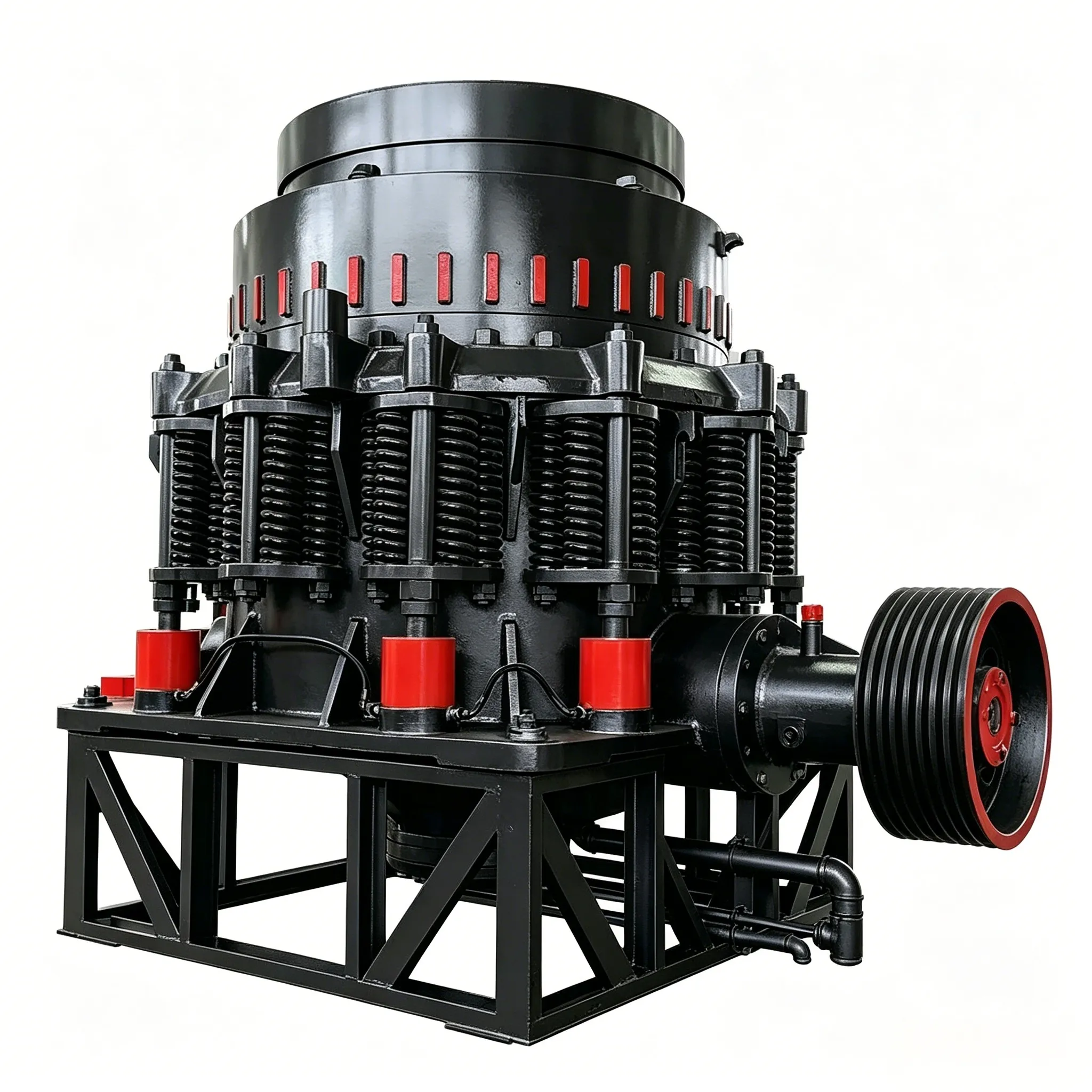
The full magnetic separation process mainly relies on the combination of various new magnetic separation equipment to achieve effective separation of magnetite. Typical equipment includes magnetic separation columns, high-frequency vibrating fine screens, magnetic field screening machines, magnetic agglomerators, and demagnetizers. The combination of these devices with traditional weak magnetic separation equipment has greatly promoted the advancement of magnetic separation technology. Compared with reverse flotation for iron and silicon reduction, the full magnetic separation process highlights advantages such as simple process, reliable technology, low investment, short construction period, low operating cost, and no environmental pollution. However, the promotion of the full magnetic process has certain limitations; it often cannot obtain good indicators for finely disseminated magnetite.
(5) Ultrafine Crushing-Wet Magnetic Separation Tailings Removal Process: This process involves crushing the ore to below 5mm or 3mm, followed by wet magnetic separation and tailings removal using a permanent magnet medium-intensity magnetic separator. This process is of particular importance for energy conservation, consumption reduction, effective utilization of extremely low-grade iron ore, and improvement of the final iron concentrate quality. To develop and utilize iron ore with a grade below 20%, Maanshan Iron & Steel’s Gaocun Iron Mine experimentally studied the use of a high-pressure roller mill to crush the ore to below 3mm, followed by medium-intensity wet magnetic separation to remove 40% of the coarse tailings, increasing the iron grade of the feed material to approximately 40%. After regrinding and re-selection, the final iron concentrate was obtained. This process achieved a final iron concentrate grade of over 65%, reduced SiO₂ content to below 4%, and a tailings grade below 10%. In addition, Shandong Laiwu Iron Mine and Jinling Iron Mine adopt a hammer crusher-wet permanent magnet medium-intensity magnetic separation process. The particle size of the feed material is more than 80% -5mm, which can remove 30% to 40% of the coarse tailings.
 English English
  Spanish
 Russian
 Arabic
 Swahili
 French
 Turkish
 Portuguese
 Korean
 Japanese
 German
 Italian