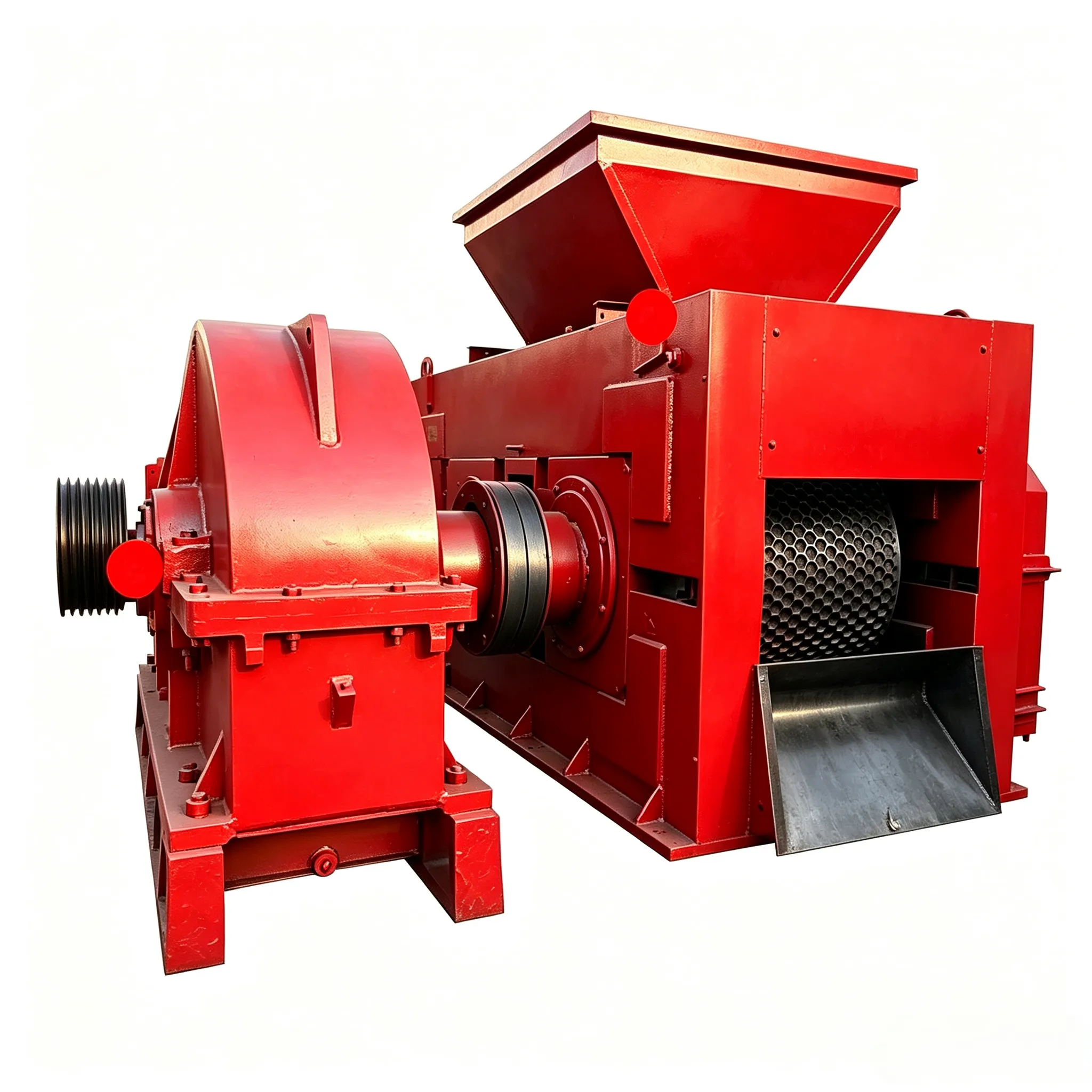
Briquette Machine
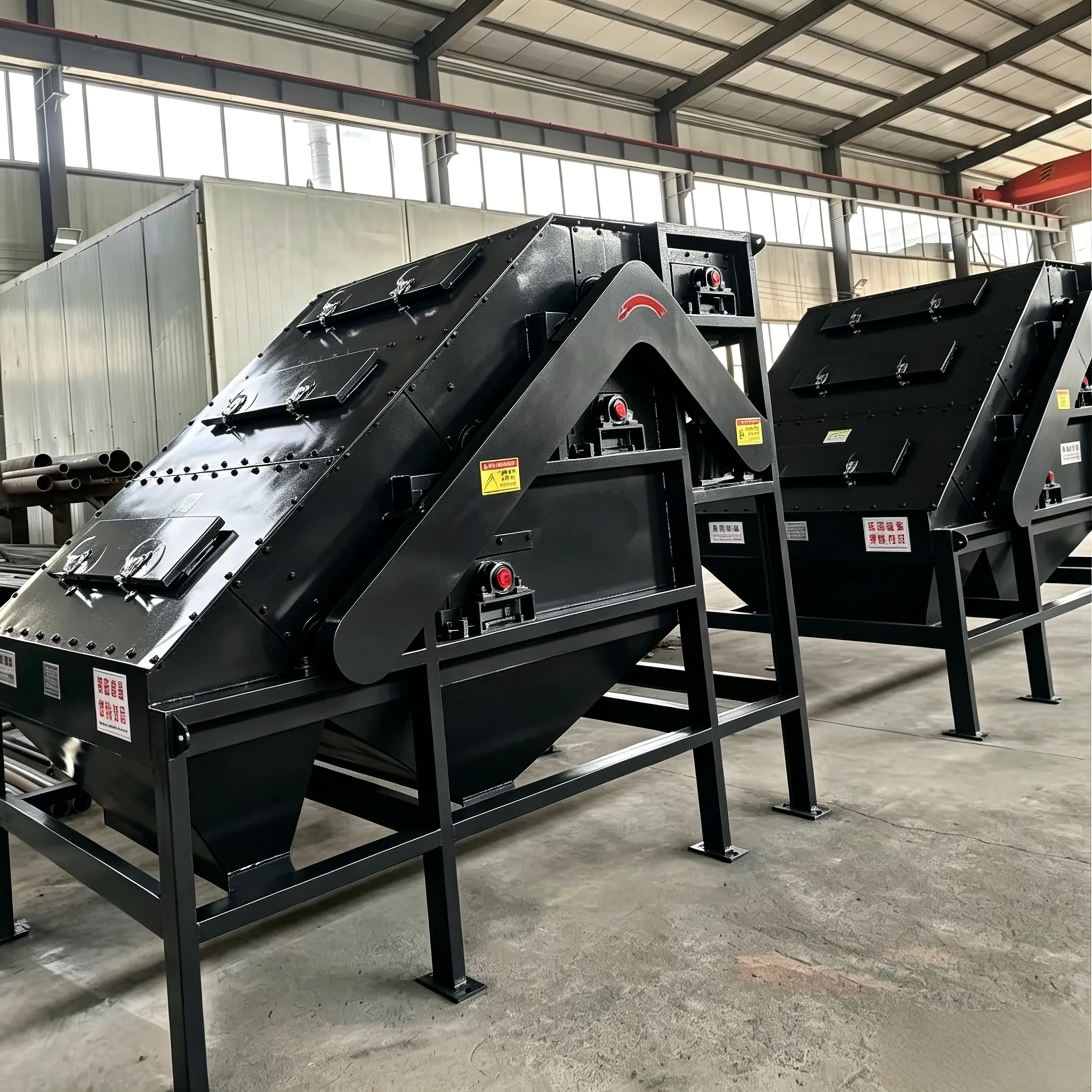
Product Overview Briquette machines are industrial equipment designed to compress powdery or…

Technical Field: The present invention relates to a beneficiation process for bastnaesite ore, in particular to a bastnaesite ore beneficiation process combining gravity concentration, magnetic separation and flotation.
Background Art: Bastnaesite is the main mineral for extracting rare earth elements such as La, Ce, Pr, Nd, Sm, Eu, Gd, etc. Typical deposits include the Mountain Pass rare earth mine in the United States, the Maoniuping rare earth mine and the Dalucao rare earth mine in Sichuan, China, the Weishan rare earth mine in Shandong, and the Bayan Obo rare earth mine. The first four types are simple bastnaesite ores, while the latter is a mixed rare earth ore of bastnaesite and monazite. At present, the beneficiation processes for separating bastnaesite include gravity concentration, magnetic separation, flotation, or combinations of these three processes. The Mountain Pass rare earth concentrator in the United States adopts a “high‑temperature flotation method”, i.e., the ore is ground finely, pulped, heated to above 90°C, subjected to six stages of conditioning, with sequential addition of ammonium lignosulfonate, C‑30 tall oil or oleic acid, sodium fluorosilicate, soda ash, etc., for flotation. Through a closed‑circuit process of one stage of roughing and five stages of cleaning, a bastnaesite concentrate with a grade of REO = 60%–62% and a rare earth recovery of 65%–70% can be obtained from a feed ore with REO ≥ 7%. For the Maoniuping rare earth mine in Sichuan, most operations adopt gravity concentration or a combination of gravity–magnetic or gravity–flotation. Gravity concentration can produce a bastnaesite concentrate with REO = 50%–55%, magnetic separation can produce a bastnaesite concentrate with REO = 70%–72%, and the overall rare earth recovery is 45%–56%. Using a gravity–flotation process, gravity concentration yields a bastnaesite concentrate with REO = 50%–56%; flotation uses 3–5 kg/t of sodium silicate, 0.4–1.0 kg/t of sulfuric acid, and 2–4 kg/t of H₂₀5 or JD‑2 collector, and after one stage of roughing and two stages of cleaning, a flotation concentrate with REO = 52%–58% is obtained, with an overall rare earth recovery of 55%–65%.
For the mixed rare earth ore of bastnaesite and monazite, a high‑intensity magnetic separation–flotation process is adopted. The middlings after high‑intensity magnetic separation of iron (containing REO = 7%–12%) are used as the feed for rare earth flotation. Flotation uses 4.5–7.5 kg/t of sodium silicate and 2.0–3.0 kg/t of hydroxamic acid collectors, and after one stage of roughing and two to three stages of cleaning, a concentrate with REO = 56%–60% and a flotation recovery of 58%–64% is obtained. The disadvantages of the above processes are: 1. Low concentrate grade and recovery; 2. Long process flowsheet, especially the high‑temperature flotation method, which consumes large amounts of energy and has high costs; 3. High total consumption of flotation reagents, large dosage of sodium silicate, and difficulty in settling tailings slurry, causing environmental pollution; 4. Tailings from gravity or magnetic separation are generally not subjected to recovery treatment, resulting in serious resource wastage.
Summary of the Invention: The technical problem to be solved by the present invention is to improve the existing bastnaesite beneficiation process, so as to increase the grade and recovery of rare earth concentrate, simplify the process flowsheet, and reduce production costs. To solve the above technical problem, the present invention is realized as follows: the ore is ground to a fineness of 60%–95% passing less than 0.15 mm and fed to a shaking table for gravity concentration. After gravity concentration, a coarse bastnaesite concentrate, middlings, and tailings are separated. The middlings are fed to a magnetic separator for magnetic separation, producing a medium‑sized bastnaesite concentrate and tailings. The tailings from magnetic separation and the tailings from shaking table separation are further subjected to screening and grinding, so that the ore reaches 75%–85% passing less than 0.074 mm, and then fed to a desliming device for desliming. During desliming, 0.2–2 kg/t of dispersant is added, and the operation is carried out under pH = 7.5–9.5. The deslimed underflow is sent to a conditioning tank for pulping, with the addition of 0.4–1.8 kg/t of sodium silicate as regulator and depressant. The conditioned pulp is sent to flotation equipment for flotation, with sequential addition of 0.8–3 kg/t of hydroxamic acid collector as primary collector, 30–300 g/t of L₁08 as auxiliary collector, and 20–150 g/t of frother as flotation reagents. The flotation operation is carried out under the conditions of pulp pH = 7–9.5, pulp density 50%–62%, and pulp temperature 30–50°C.
The optimal reagent regime for the above flotation operation is: addition of 1.2–1.6 kg/t of hydroxamic acid primary collector, 100–150 g/t of auxiliary collector L₁08, and 60–100 g/t of frother.
The above hydroxamic acid primary collectors include salicylhydroxamic acid, ammonium salicylhydroxamate, sodium salicylhydroxamate, and potassium salicylhydroxamate.
The above auxiliary collector may also be L303, with a dosage of 150–400 g/t.
The advantages of the present invention after implementation are: 1. Short process flowsheet and high enrichment ratio; especially, high‑quality concentrate can be produced through only 1–2 flotation operations; 2. The overall grade of rare earth concentrate is greater than 62%, with a maximum of 68%–74%, and the overall rare earth recovery is 80%–85%; 3. Low total consumption of flotation reagents and low production cost, especially low dosage of sodium silicate, and the tailings slurry water is easy to settle, which is beneficial for tailings water discharge; 4. Separation of tailings from shaking table gravity concentration and magnetic separation improves the utilization rate of resources.
Detailed Description of the Embodiments: The following are examples of the present invention applied to treating the Maoniuping rare earth ore in Sichuan, for further illustration:
The Maoniuping rare earth ore in Sichuan is the second largest light rare earth resource base in China. The main minerals are bastnaesite, barite, celestite, fluorite, calcite, galena, wulfenite, pyrite, iron (manganese) minerals, aegirine, albite, arfvedsonite, quartz, etc. The crystallization grain size of bastnaesite is uneven (from several centimeters to several micrometers), the ore is severely weathered, and the slime content is relatively high (about 20%). The ore grade is REO = 3%–10%. The implementation examples of the present invention on this ore are as follows.
Example 1: The raw ore grade is REO = 5.5%. The ore is ground to 70% passing 100 mesh and fed to a shaking table for gravity concentration, producing a coarse bastnaesite concentrate with REO greater than 57% and a gravity recovery greater than 45%. The middlings from shaking table (REO > 16%) are fed to a magnetic separator with a magnetic field intensity greater than 10,000 gauss, producing a bastnaesite concentrate with REO greater than 72%. The shaking table tailings and magnetic tailings are combined and further subjected to screening and grinding, so that the ore reaches 85% passing less than 0.074 mm, and then fed to a desliming device. Desliming is carried out with addition of 0.8–1.2 kg/t of sodium silicate as dispersant under pH = 8.5–9. The deslimed underflow is sent to a conditioning tank for pulping, with addition of 0.8–1.0 kg/t of sodium silicate as regulator and depressant, and controlled at pulp pH = 7.5–8.2, pulp density 50%–62%, and pulp temperature 35–40°C. The conditioned pulp is fed to flotation equipment, with sequential addition of 1.3–1.6 kg/t of ammonium salicylhydroxamate, 80–100 g/t of auxiliary collector L₁08, and 50–80 g/t of frother No. 2 oil, and flotation is carried out under the conditions of pulp pH = 7.5–8.2, pulp density 50%–62%, and flotation temperature 35–40°C. After one stage of flotation, a bastnaesite concentrate with REO = 62%–68% and a flotation recovery of 88%–92% is obtained. The overall rare earth recovery of the whole process is 80%–84%.
Example 2: The ore sample is the same as in Example 1, but the feed grade is REO = 7.8%. The ore is ground to 60% passing 100 mesh and fed to a shaking table to produce a coarse bastnaesite concentrate with a grade of REO = 57%–58%; the middlings (REO > 18%) are fed to a magnetic separator with a magnetic field intensity greater than 10,000 gauss, producing a medium‑sized bastnaesite concentrate with a grade of REO = 72%–74%. The shaking table tailings and magnetic tailings are fed to a 150‑mesh high‑frequency fine screen. The screen oversize is fed to a ball mill and ground to 75% passing 200 mesh, then combined with the screen undersize fine tailings and fed to a desliming device, with addition of 200–400 g/t of sodium hexametaphosphate as dispersant under pulp pH = 8.5–9.0 for desliming. The deslimed underflow is sent to a conditioning tank for pulping, with addition of 0.9–1.1 kg/t of sodium silicate as regulator and depressant, and controlled at pulp pH = 8.5–9.0, pulp density 50%–62%, and pulp temperature 33–40°C. The conditioned pulp is fed to flotation cells, with sequential addition of 1.0–1.3 kg/t of primary collector sodium salicylhydroxamate, 90–120 g/t of auxiliary collector L₁08, and 50–80 g/t of frother pine oil. Flotation is carried out under the conditions of pulp pH = 8.0–8.5, flotation temperature 33–40°C, and pulp density 50%–62%. After one stage of roughing and one stage of cleaning, a high‑quality rare earth concentrate with a grade of REO = 65%–72% and a flotation recovery of 88%–92% is obtained. The overall rare earth recovery of the whole process reaches 82%–85%.
Example 3: The ore sample is the same as in Example 1, but from a different mining area, with a feed grade of REO = 7.0%. The ore is first fed to a double‑deck high‑frequency vibrating screen for classification. The oversize from the first deck (greater than 1 mm) is discarded as coarse gangue. The oversize from the second deck is ground to 75% passing less than 0.15 mm and fed to a shaking table for gravity concentration, producing a coarse bastnaesite concentrate with REO > 57%. The middlings from the shaking table are fed to a magnetic separator with a magnetic field intensity greater than 10,000 gauss, producing a medium‑sized bastnaesite concentrate with REO = 72%–74%. The shaking table tailings and magnetic tailings are fed to a 150‑mesh vibrating screen for screening. The screen oversize is ground to 75% passing 200 mesh and then combined with the screen undersize and the fine particles (<0.10 mm) from the second deck undersize of the double‑deck high‑frequency screen (containing large amounts of slime), and fed to a desliming device, with addition of 0.6–1.0 kg/t of sodium silicate as dispersant under pulp pH = 8.5–9.0 for desliming. The deslimed underflow is conditioned and then fed to flotation cells. Flotation is carried out with sequential addition of 0.7–0.9 kg/t of sodium silicate, 1.2–1.5 kg/t of primary collector potassium (or ammonium) salicylhydroxamate, 200–350 g/t of auxiliary collector L₃03, and 60–80 g/t of frother No. 2 oil, under the conditions of pulp pH = 8.0–8.5, pulp density 50%–60%, and flotation temperature 33–38°C. After one stage of flotation, a fine‑grained bastnaesite concentrate with REO = 64%–68% is obtained. The overall rare earth recovery of the whole process is 80%–84%.
 English English
 Spanish
 Russian
 Arabic
 Swahili
 French
 Turkish
 Portuguese
 Korean
 Japanese
 German
 Italian