
Feed size: ≤20 mm
Product output: 0.6–10 t/h
Powder fineness: 400–2500 mesh
Applicable materials: limestone, marble, calcite, barite, dolomite, phosphate rock, potassium feldspar, granite, bentonite, kaolin, bauxite, magnesite, talc, fluorite, zeolite, mica, gypsum, graphite, carbon black, quicklime, calcium carbonate, magnesium oxide, etc.
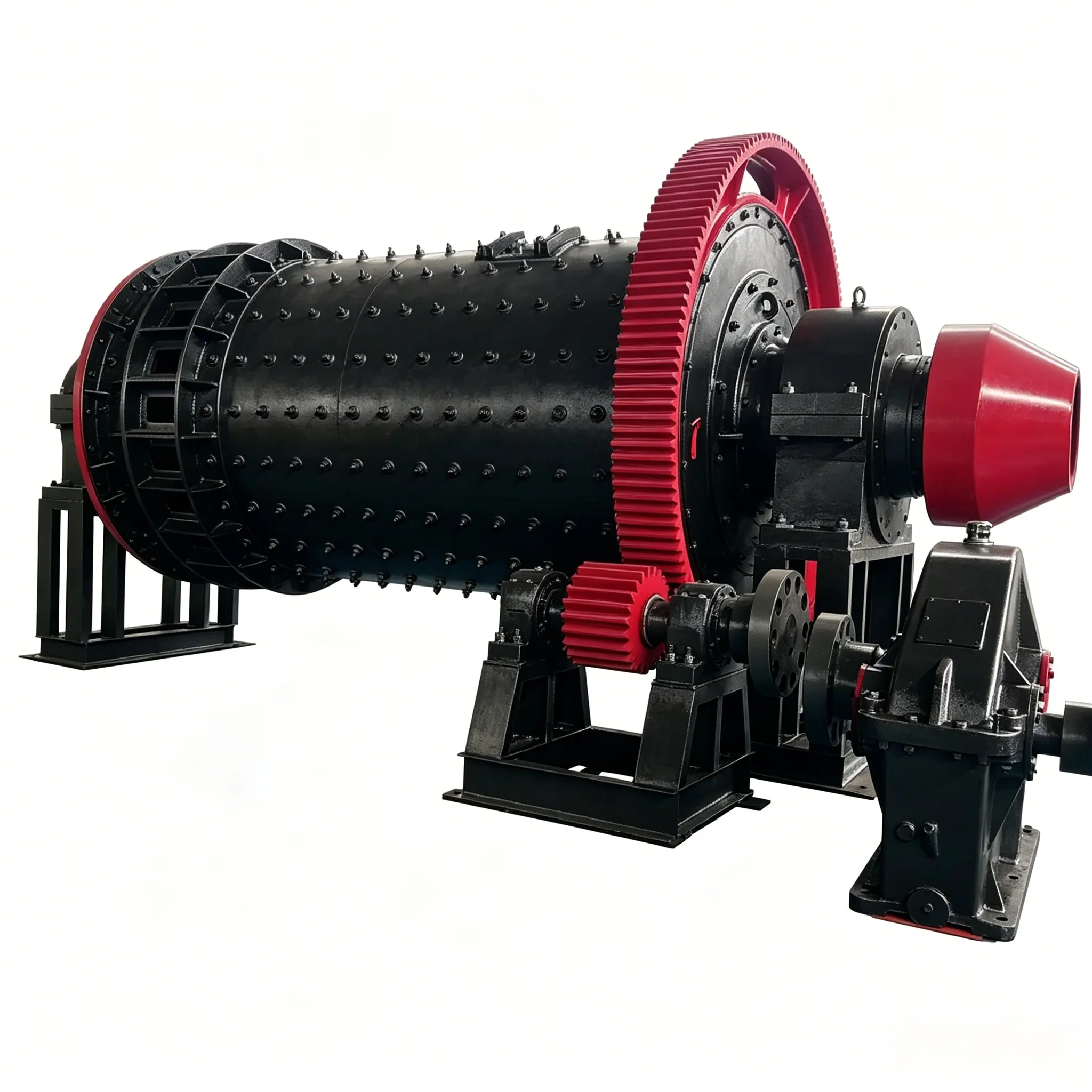
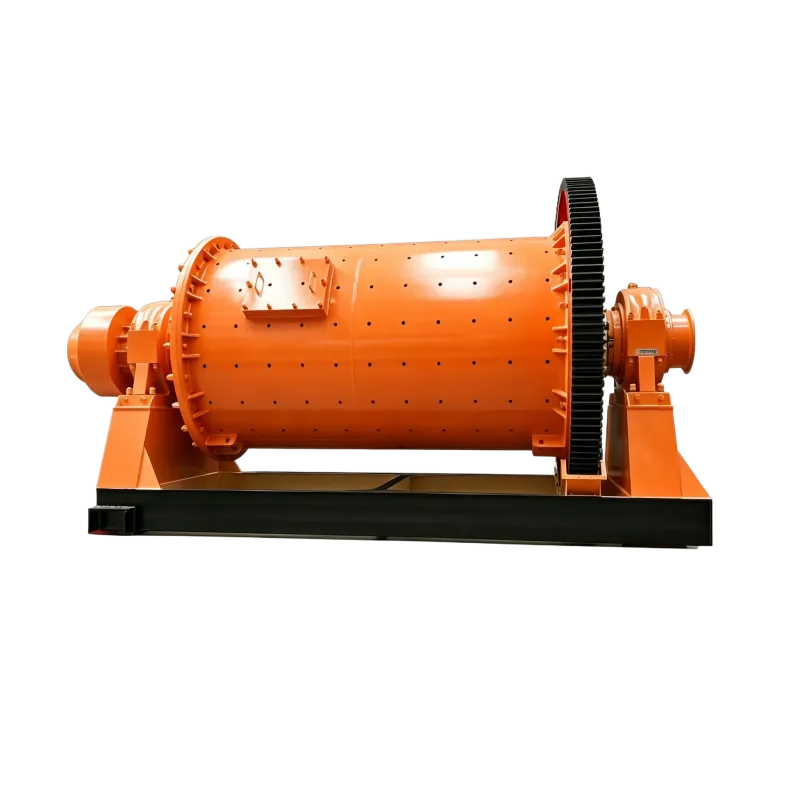
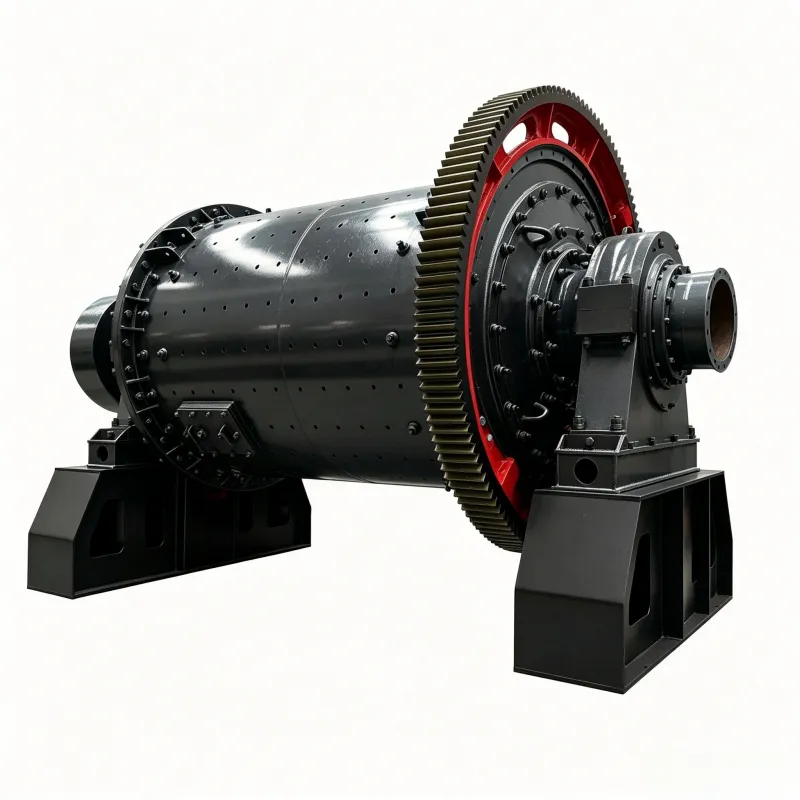
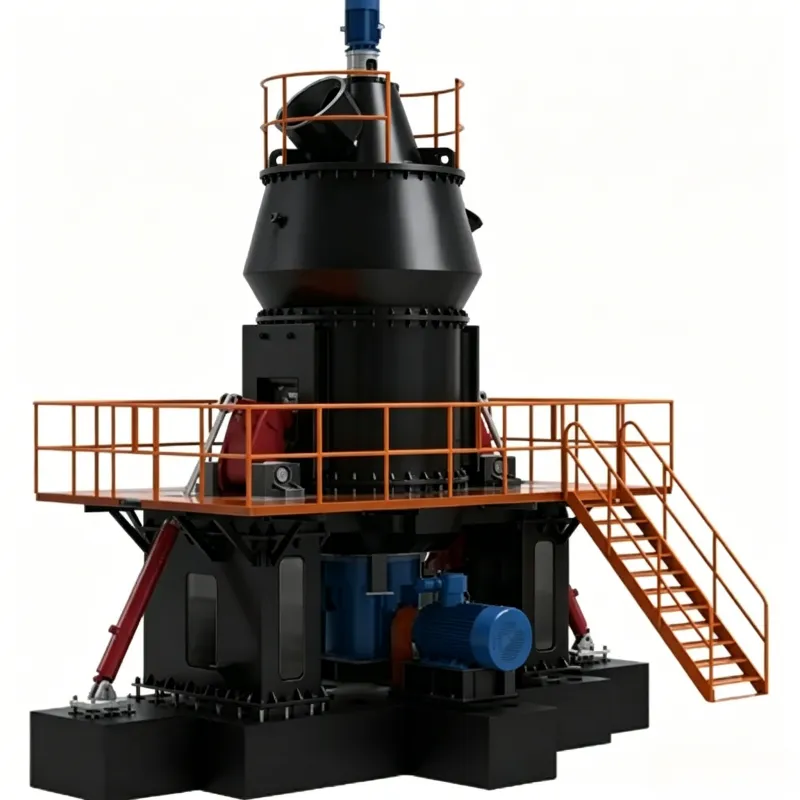
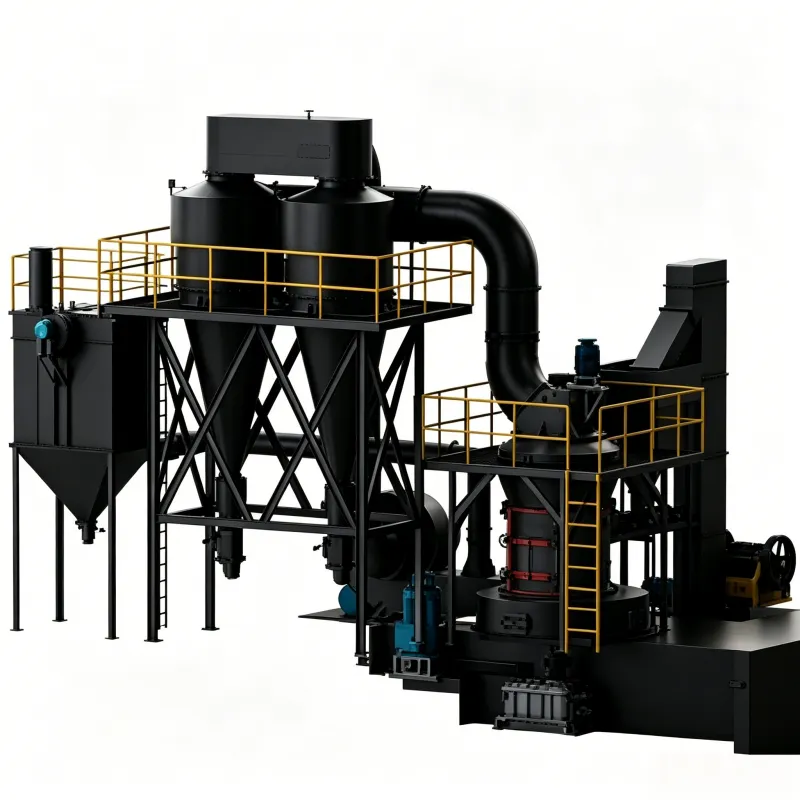
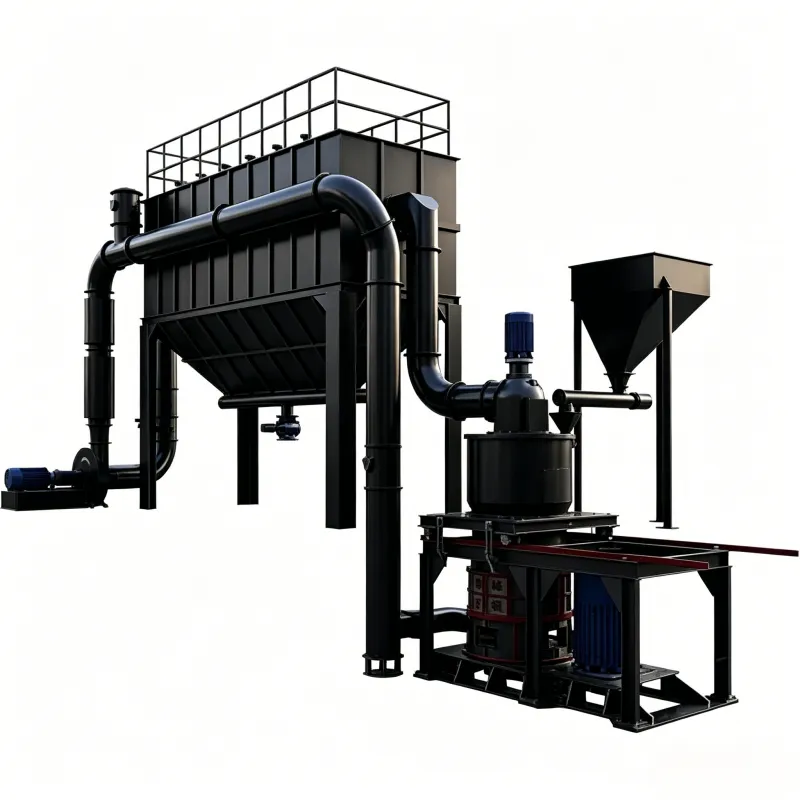
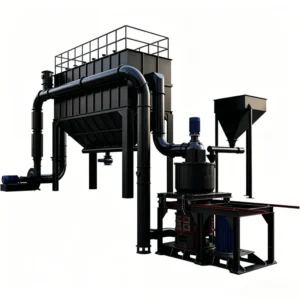
The KXHGM Ultrafine Ring Roller Mill is an ultrafine grinding equipment developed on the basis of the traditional ring roller mill. It features multiple layers of grinding rollers and rings (2–4 layers) that crush the material layer by layer. The classification system uses a high-precision centrifugal turbo classifier, producing finished powder with excellent particle shape, good flowability, and concentrated particle size distribution (D97 < 2500 mesh, content of particles < 2 μm ≤ 30%). It effectively solves the problems of insufficient fineness in Raymond mills, high energy consumption in jet mills, expensive investment in ultrafine vertical roller mills, and complex process lines in ball mill classification systems. It is suitable for ordinary ultrafine powder applications such as rubber, cosmetics, ceramic glazes, and feed additives.
| System | Components | Function |
|---|---|---|
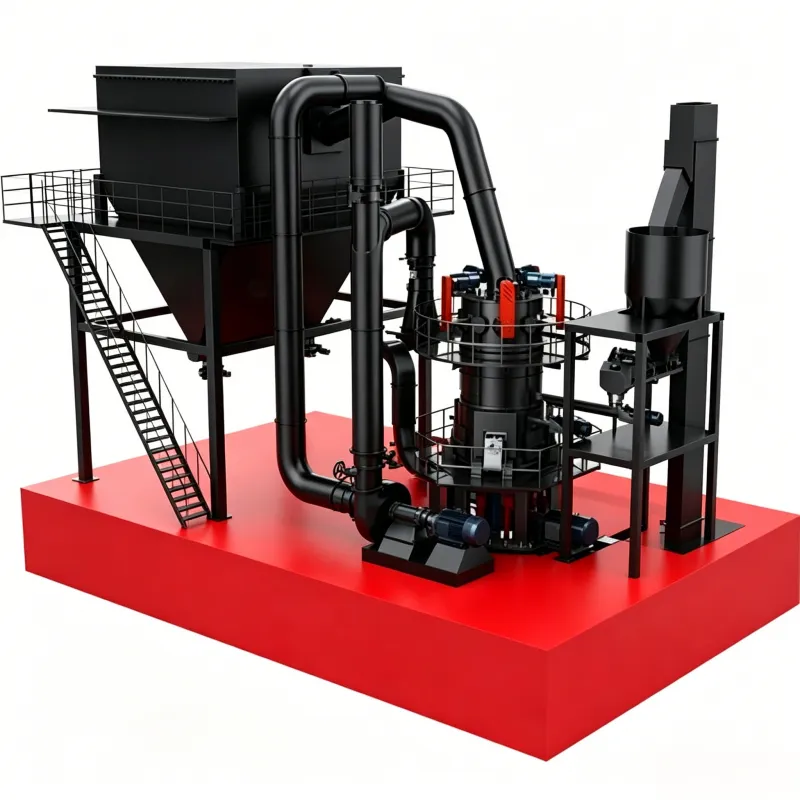
| Grinding System | Consists of multiple layers of grinding rings and grinding rollers | A single grinding ring cooperates with multiple grinding rollers (≥15) to repeatedly crush the material layer |
| Classification System | Uses a high-precision centrifugal turbo classifier | Precisely controls fineness through stepless speed adjustment |
| Collection System | Composed of cyclone collector and pulse jet bag filter | Two-stage collection process; total recovery rate of finished powder ≥99.9% |
| Air Circuit System | Uses a negative pressure closed-loop air circuit | Provides stable airflow, reducing system energy consumption |
Raw Material → Crusher → Conveying Equipment → Ultrafine Ring Roller Mill → Cyclone Collector → Pulse Jet Bag Filter → Finished Product Packaging
Raw material is first coarsely crushed by a crusher to a particle size suitable for milling (≤20 mm), and then fed into the ultrafine ring roller mill by conveying equipment (bucket elevator, vibrating feeder, etc.).
After the material enters the grinding zone, it is scooped up by the rotating shovel blade and thrown between the multiple sets of grinding rollers and grinding rings. Driven by the rotating disk, the rollers repeatedly crush the multi-layer material bed, achieving ultrafine grinding of the material. Subsequently, the ground powder is carried by the airflow to the centrifugal turbo classifier above (single-head or multi-head structure can be flexibly selected according to actual needs).
Then, by adjusting the rotational speed of the classifier impeller, qualified ultrafine powder passes through the classifier wheel and enters the collection system. Coarse particles are thrown back into the grinding chamber by centrifugal force and fall back into the grinding ring raceway for regrinding, forming a closed-circuit cycle.
(When processing ultrafine powder >800 mesh, a secondary classification system can be flexibly configured to ensure classification accuracy.)
Finally, the qualified powder enters the cyclone collector with the airflow for gas-solid separation. Most of the powder is collected as finished product. The remaining dust enters the pulse jet bag filter for recovery and purification. The purified clean gas (emission concentration ≤10 mg/m³) is discharged by the fan. The entire system operates under negative pressure, with no dust leakage.
| KXHGM Technical Parameters of the Ultrafine Ring Roller Mill | ||||||
| Mesh (D97) | KXHGM1000X | KXHGM2000X | KXHGM3000X | |||
| capacity(kg/h) | power(kW) | capacity(kg/h) | total power(kW) | capacity(kg/h) | total power(kW) | |
| 800 | 2500~2800 | 152 | 4000~4500 | 237 | 5500~7000 | 287~340 |
| 1250 | 1500~1800 | 2500~3000 | 3500~4000 | |||
| 1500 | 1000~1300 | 1800~2200 | 2500~3000 | |||
| 2000 | 650~750 | 1200~1500 | 1500~2000 | |||
| 2500 | 600~650 | 800~1000 | 1100~1500 | |||
| 3000 | / | / | / | / | 1000~1200 | |
| The above data are for reference only. Actual parameters vary depending on the material. Please contact us for a professional customized solution | ||||||
| KXHGM Technical Parameters of the Ultrafine Ring Roller Mill(C model) | ||||
| Mesh (D97) | KXHGM1000C | KXHGM3000C | ||
| capacity(kg/h) | total power(kW) | capacity(kg/h) | total power(kW) | |
| 400 | 5500~6200 | 237 | 9000~9500 | 280 |
| 600 | 4000~4500 | 6500~7500 | ||
| 800 | 3600~4300 | 6000~6500 | ||
| The above data are for reference only. Actual parameters vary depending on the material. Please contact us for a professional customized solution | ||||
No. Single-head and multi-head refer to the equipment structure — the classifier consists of one or multiple classifier wheels. Primary and secondary refer to the process configuration. In a secondary classification system, each stage can be flexibly designed with a single-head or multi-head classifier.
It can, but it would be overkill and not cost-effective. The ultrafine ring roller mill is an ultrafine grinding device mainly used for 400–2500 mesh ultrafine powder. When processing 80–400 mesh medium-fine powder, the classifier speed and system airflow must be significantly reduced, making efficient grinding impossible. Moreover, the equipment cost is not as economical as a Raymond mill. It is generally not recommended to use an ultrafine ring roller mill for medium-fine powder unless there are plans to upgrade to ultrafine powder production later.
The ultrafine ring roller mill is suitable for grinding brittle materials with Mohs hardness ≤7. It is not suitable for high-hardness materials, as this would accelerate wear of the grinding rollers and rings. For ultrafine powder processing of high-hardness materials, a ball mill + air classifier production line is typically used.