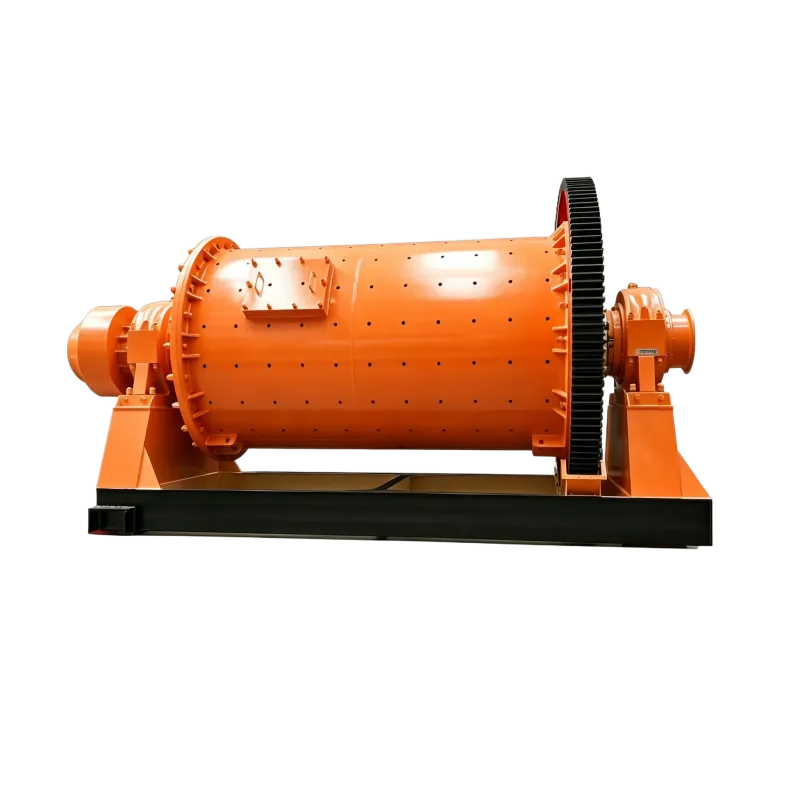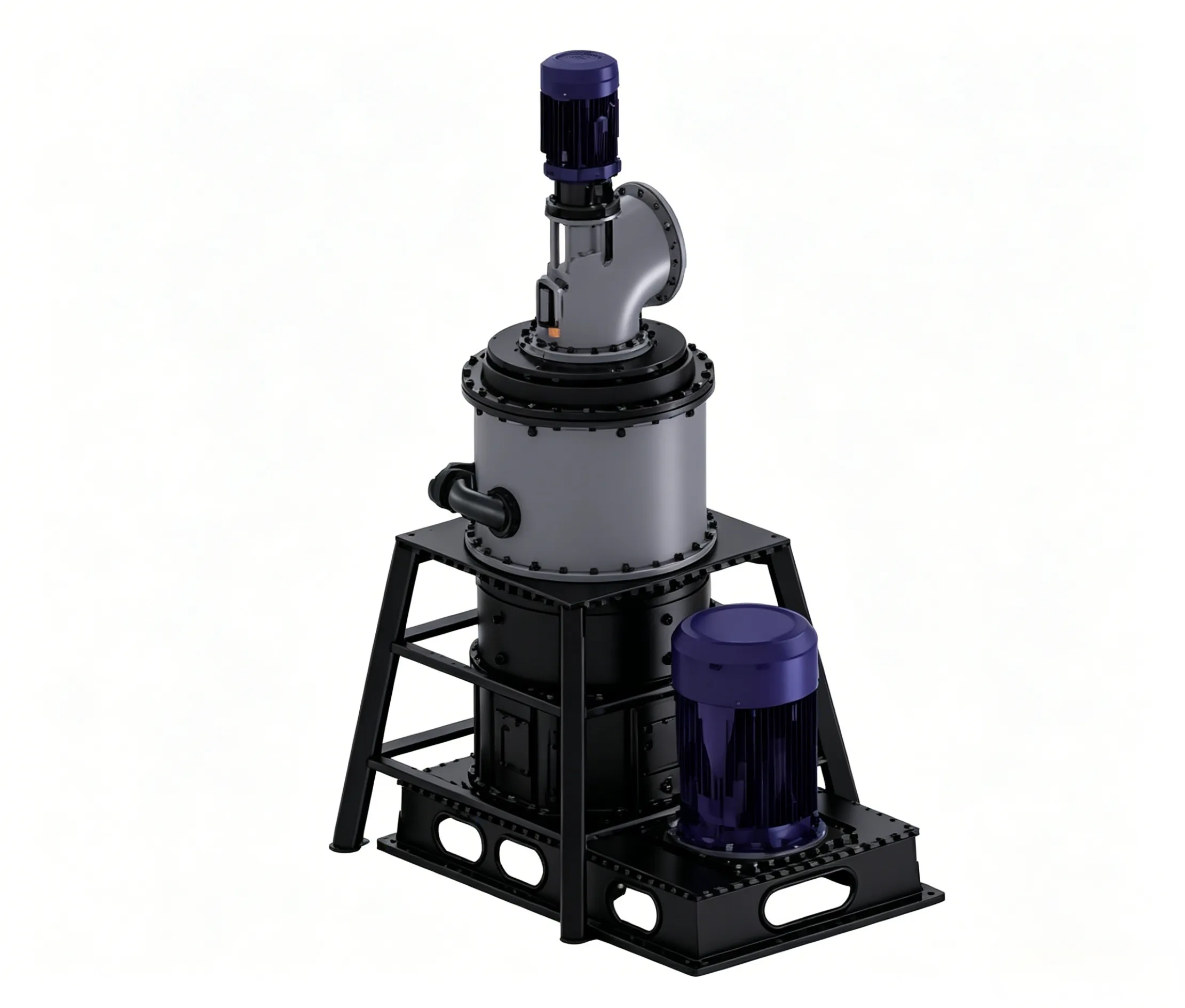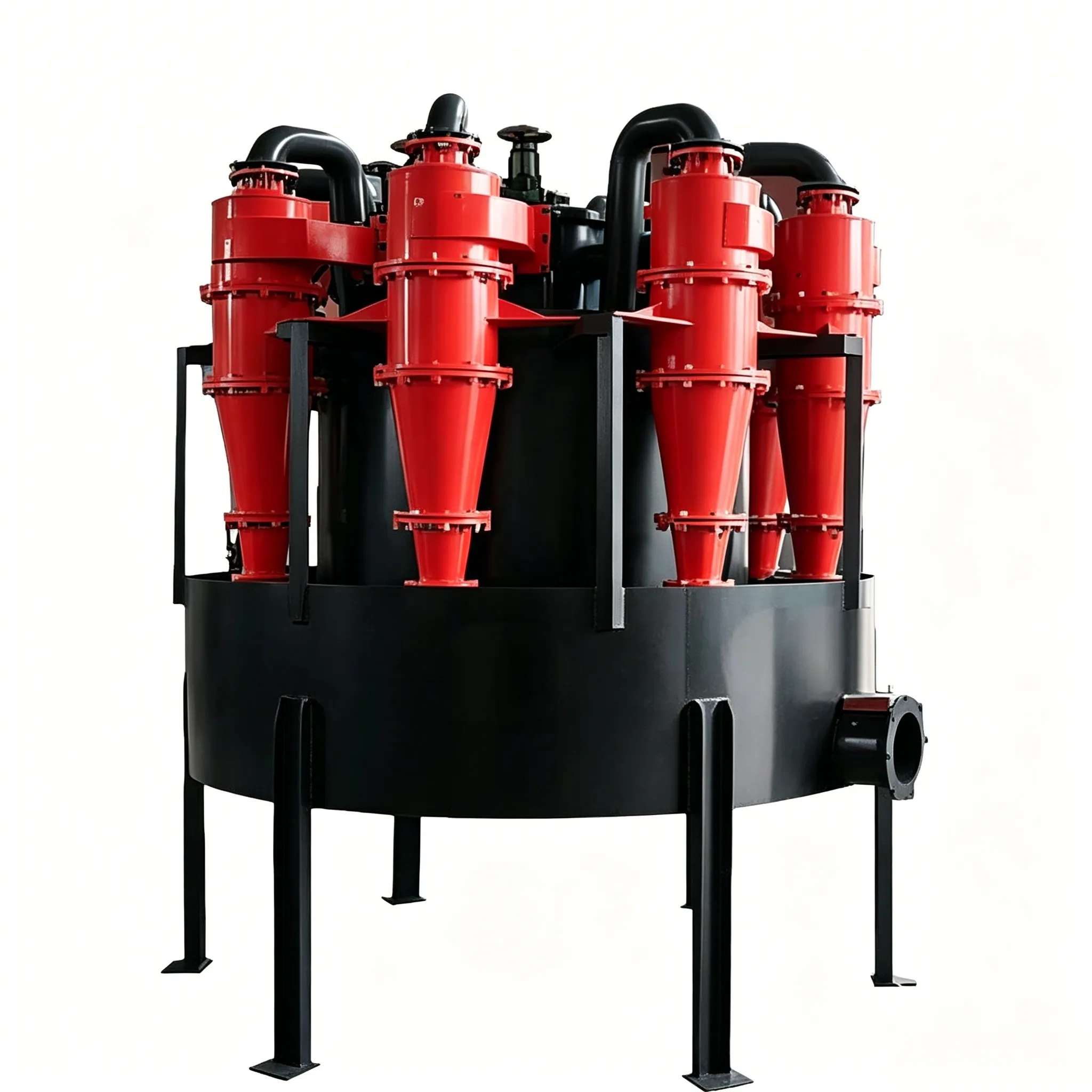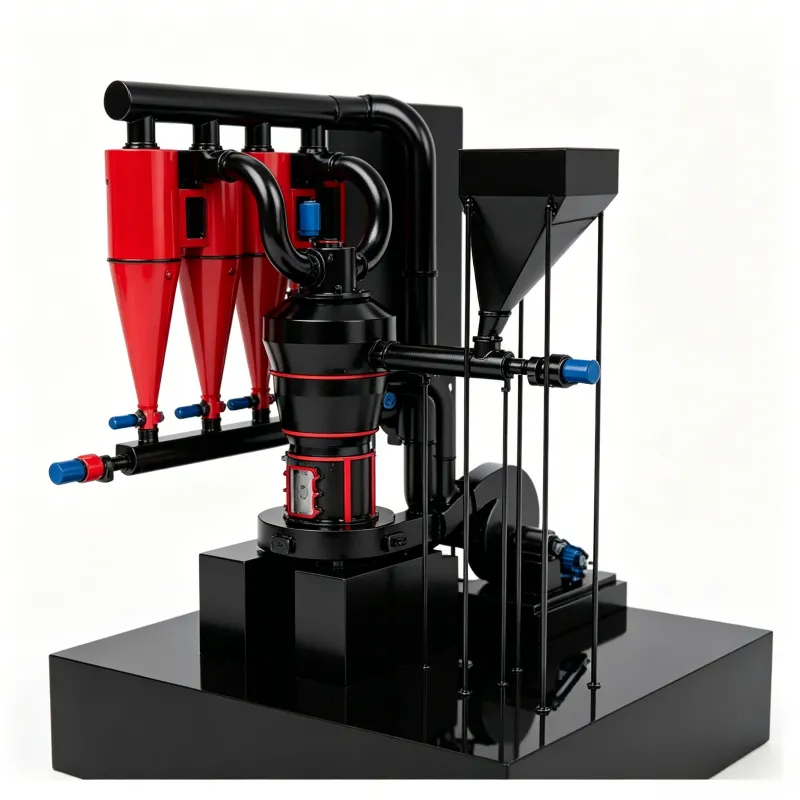
KX Raymond Mill
Introduction to Raymond Mill The Kx Raymond Mill is a core product…

Installation Method
The details are as follows:
(1) Center section. Assemble the center tube, place it over the central support column, and then mount it onto the turntable. The bearing surface of the turntable shall be level, and the rotating parts shall turn freely. The brushes and slip rings of the current collector shall remain in close contact. On top of the central support column beneath the turntable base, apply a high-grade cement mortar to form an inclined surface to facilitate the outflow of slurry.
(2) Rollers, rails, and rack rails. The rail joints shall not interfere with the fixing pads of the rack. The center radius of the rail, the height difference at the top surface, and the height difference at the joints shall comply with the specified requirements.
(3) Rake frame. The rake frame is transported in sections. Weld the joints of each section according to the rake frame packaging drawing and transport diagram, and simultaneously drill the bolt holes for connecting the rake frame and rake teeth (no gas cutting allowed). After positioning the rake teeth, weld the support rods. Adjust the distance between the rake teeth and the tank bottom using the adjustable screw rods on the upper part of the rake frame; the deviation shall not exceed 20% of the nominal value.
(4) Drive mechanism. Remove the top plate and end access panels of the “housing” on the drive frame. First, install the drive mechanism inside the housing, adjust the roller and rail to ensure good contact between the drive gear and the rack, then assemble and weld the drive frame according to the dimensions shown on the drawings.
(5) Secondary grouting. After adjusting all dimensions, carry out secondary grouting to secure the anchor bolts.
(6) Electrical part. Install the electrical part, connect the power supply. The current collector shall have no leakage, and grounding shall be provided as required.
(7) The allowable installation tolerances and inspection methods for the rails, racks, and center turntable base shall conform to those specified in Table 14-7.
Table 14–7 Allowable Deviations for Installation of Track, Rack, and Center Turntable Base
| Item/Time | project | allowable deviation | unit | Inspection Method | ||
| 1 | Track diameter | ≤45m | ±8.0 | mm | Measuring inspection | |
| 2 | >45m | ±12.0 | mm | |||
| 3 | Relative elevation difference between the track and the central plate | ±5.0 | mm | Check with a level gauge | ||
| 4 | Circular orbit | Levelness of track surface | 0.40/1000 | two | Check with a level meter | |
| 5 | Rail joint | Height difference between the two track heads | ≤0.5 | mm | Measuring inspection | |
| 6 | Gap between two tracks | 2-4 | mm | |||
| 7 | Misalignment of the end faces of two tracks | ≤1 | mm | |||
| 8 | rack | Distance b from the tooth top surface to the track top surface (see Figure 14-8) | 0-2 | mm | Check with a level gauge | |
| 9 | Distance from the track center, a (see Figure 14-8) | ±2 | mm | Measuring inspection | ||
| 10 | Circumferential pitch at the joint | ±1 | mm | Measure and check with a ruler | ||
| 11 | Levelness of tooth top surface | 0.40/1000 | one | Check with a level meter | ||
| 12 | Center base plate | Degree of overlap with the center of the pool body | 2 | mm | Check with a tape measure | |
| 13 | elevation | +10 0 | mm | Check with a level gauge | ||
| 14 | levelness | 0.10/1000 | Check with a level meter | |||
(8) The allowable tolerances for the assembly of the rake frame and drive mechanism shall conform to those specified in Table 14-8 (see Figure 14-8).
Table 14-8 Allowable tolerances for the assembly of the rake frame and drive mechanism
Table 14-8 Allowable Deviations for Installation of the Rake Frame Transmission Mechanism
| Item No | project | allowable deviation | unit | Inspection Method | ||
| 1 | Rake frame | levelness | 1/1000 | one | Level meter inspection | |
| 2 | Assembly length | ±10.0 | mm | Measuring inspection | ||
| 3 | Planar warping (over the entire length) | ≤10 | mm | Measure and inspect with a tape measure | ||
| 4 | Warping in the width direction | ≤3 | mm | Check with a tape measure | ||
| 5 | transmission mechanism | Gear to rack c | <30m | ±3.0 | mm | Measuring inspection |
| 6 | Roller on track d | ≥30m | ±5.0 | mm | Measuring inspection | |
| 7 | Horizontal levelness of truss | 1/1000 | one | Level meter inspection | ||
| 8 | Horizontal levelness of the roller | 0.3/1000 | one | Level meter inspection | ||
| 9 | Roller axis deflection | 0.5/1000 | one | Measure and inspect with a tape measure | ||
| 10 | Coupling assembly | It shall comply with the provisions of GB50231 | Check with feeler gauge or dial gauge | |||
| 11 | Gear and rack meshing | It shall comply with the provisions of GB50231 | Feeler gauge, dye check | |||
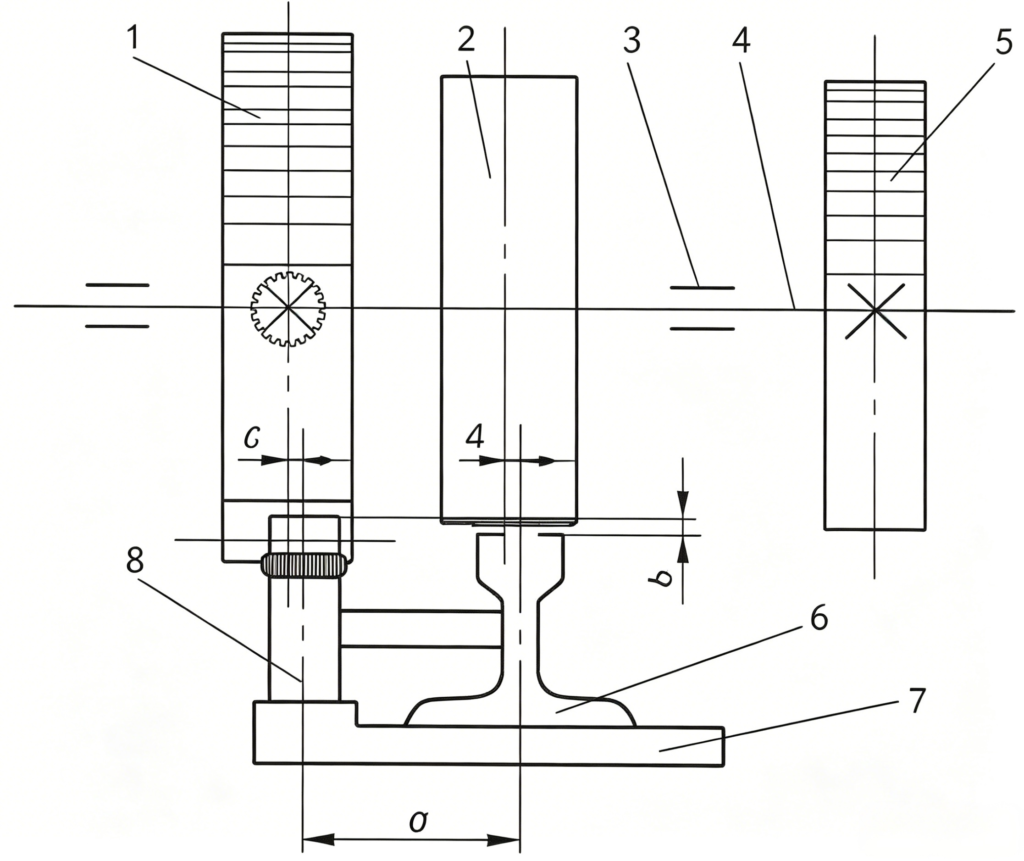
Figure 14-8 Schematic diagram of rail and rack installation
1—Gear; 2—Roller; 3—Bearing; 4—Shaft; 5—Gear; 6—Rail; 7—Base plate; 8—Rack
Table 14-9 Allowable Deviations for Installation of Ore Tank Frame
| Item No | project | allowable deviation | unit | Inspection method | |
| 1 | pillar | Longitudinal and transverse centerlines | 5.0 | mm | Measure and inspect with a tape measure |
| 2 | elevation | ±5.0 | mm | Level gauge inspection | |
| 3 | perpendicularity | 1/1000 | one | Check with a tape measure | |
| Overall height ≤5 | mm | ||||
| 4 | groove | Slot frame bending | 1/1000 | one | Check with a tape measure |
| Total length ≤10 | mm | ||||
Test Run
The test run shall comply with the following provisions:
(1) The no-load test run duration shall be 4 hours.
(2) During operation, the rollers and the rail shall maintain continuous contact; no roller shall be suspended (lifted off the rail).
(3) Before the load test run, the turntable water seal groove shall be filled with clean water, and the tank bottom shall be checked for leakage.
(4) During the load test run, feed shall be introduced only after the mechanism is operating normally. Before stopping, feed shall be stopped first, and the machine shall be stopped only after the slurry in the tank has been completely discharged.
(5) During the load test run, if a shutdown occurs due to a fault, the machine shall not be restarted until the slurry in the tank has been completely drained.
(6) The load test run duration shall be 24 hours.
The details are as follows:
(1) Check whether all bolts are tightened.
(2) Check whether all lubrication points are adequately lubricated.
(3) Check the overflow launder, feed pipe (or launder), discharge pipe, and all valves for any debris blockage.
(4) Adjust the rakes to the same angle and set the height appropriately.
(5) Manually turn the machine several revolutions to check for any obstruction to the rotation of the equipment.
The details are as follows:
(1) No-load start-up. First, turn the machine manually. After confirming that no jamming exists in any rotating part, start the motor and run it idle for 1–2 hours. After verifying that all components are operating normally, fill the tank with clean water to half of the tank depth. Then feed slurry evenly. Once solids have settled in the tank, discharge intermittently, measure the slurry concentration, and monitor the motor load. When the discharged slurry reaches the specified concentration, control the discharge evenly. Before discharging, notify the next process to start the conditioning tank and the slurry pump, and supply slurry to the next process at the specified concentration.
(2) Load start-up. During load start-up, the rakes are generally lifted. After manually turning the machine, start the motor. Once the equipment is running normally, begin feeding slurry while slowly lowering the rakes to the specified position. The lowering speed of the rakes depends on the amount of settled solids in the tank. To prevent shaft torsion accidents due to lowering the rakes too quickly, the general rule is to lower the rakes by no more than half the pitch of the lifting screw per revolution, and to lower them slowly and evenly, using the lifting screw to restrain the descent so that the screw does not bear the full weight of the rakes.
The details are as follows:
(1) In the event of an unscheduled power outage, notify the upstream and downstream processes to stop feeding slurry. For high-efficiency thickeners, stop adding flocculant.
(2) For a planned normal shutdown, first stop feeding slurry and stop adding flocculant. Continue discharging until the discharge concentration falls below 25%, then stop adding water and stop discharging. The rakes may continue to operate depending on the situation, but they must never be lifted.
The details are as follows:
(1) Frequently check whether all components are operating and lubricated properly. Address any issues promptly.
(2) Monitor the motor load. Adjust the discharge rate according to the feed volume and the rake load to keep the rake load stable and control the underflow concentration within the specified range. Measure the underflow concentration once per hour.
(3) Frequently check whether the feed pipe and discharge pipe are blocked and whether the overflow is clean. Discharging of turbid overflow is strictly prohibited.
(4) If the thickener is shut down with solids stored in the tank, closely monitor the rake load. During this period, discharge intermittently and recirculate the discharge.