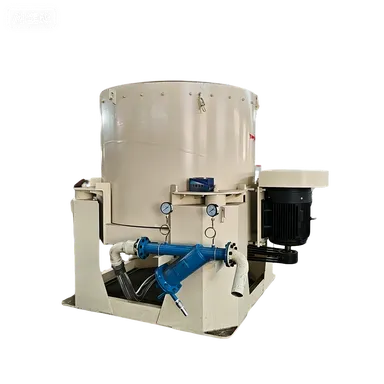
Centrifugal Concentrator
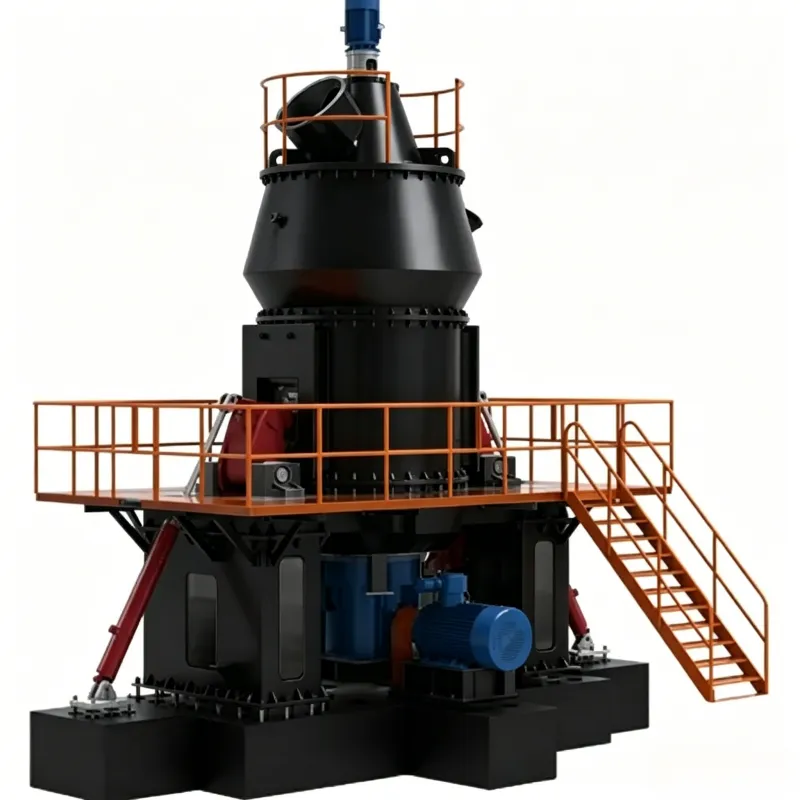
Centrifugal Concentrator – High-Efficiency Fine-Particle Gravity Concentrator Product Overview The centrifugal concentrator…

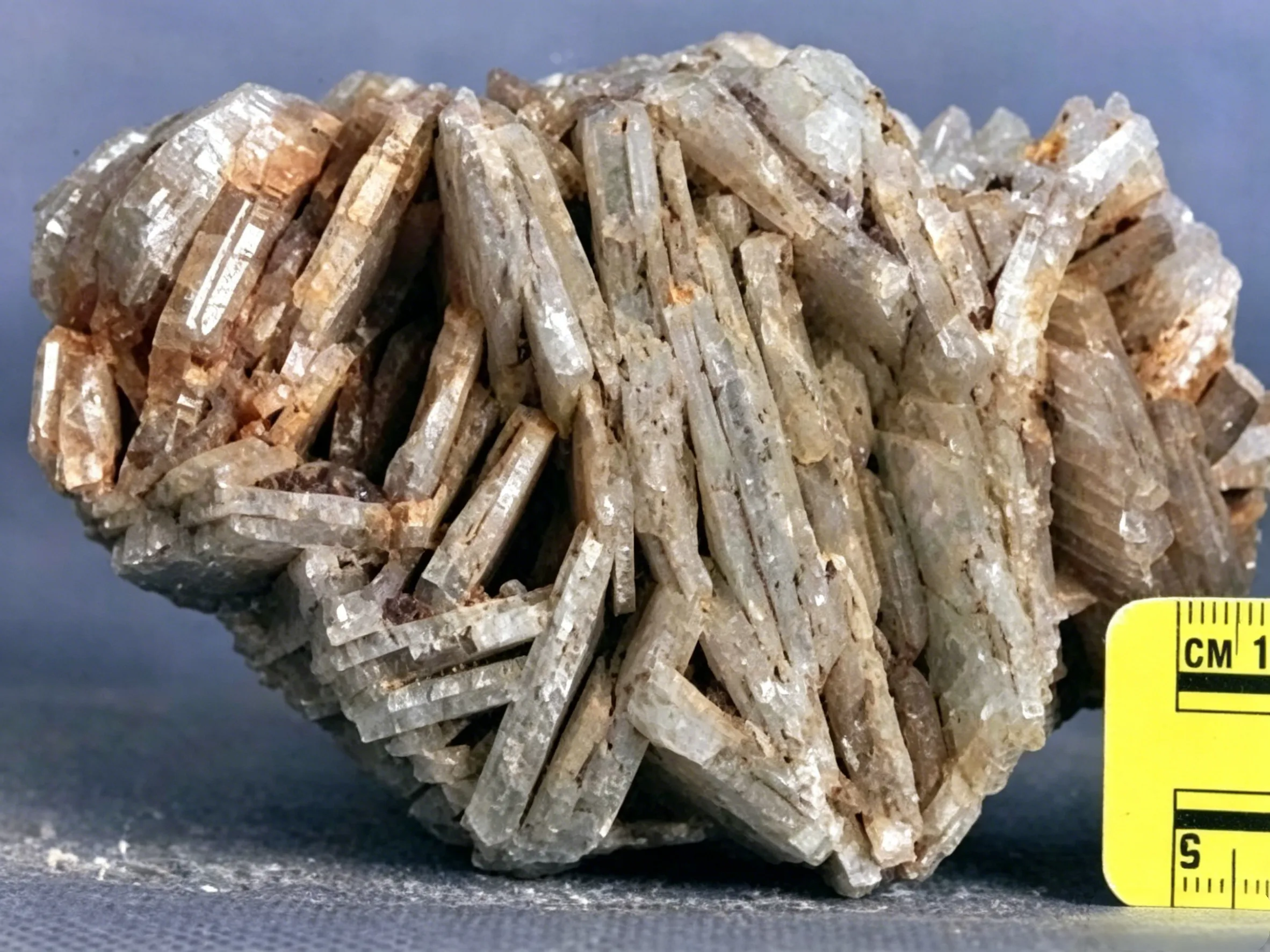
RE1-B29
Cleavelandite (cleavelandite pegmatite). Cleavelandite is colorless and transparent, with strong vitreous luster, hardness greater than that of a knife, very high purity, and free of impurities. Cleavelandite exhibits a high degree of euhedralism, occurring as flaky to thin‑tabular polycrystals; individual crystals are generally 5 cm in length, 2–3 cm in width, and single plates are 1–2 mm thick. Each tabular polycrystalline aggregate may consist of 2 to 5 cleavelandite plates. The cleavelandite pegmatite vein is 10 cm wide, with crystals growing inward perpendicular to the vein walls from both sides.
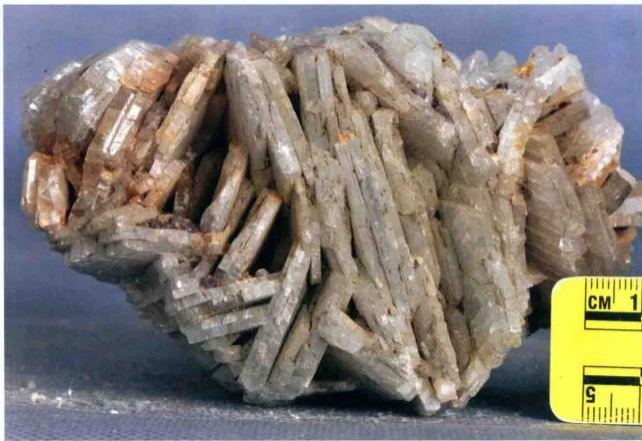
RE1-B30
Tourmaline–cleavelandite pegmatite. The rock is pale bluish-green in color with black patches, exhibiting a microcrystalline texture and massive structure. The main mineral components are cleavelandite, tourmaline, muscovite, and minor potassium feldspar. Cleavelandite: pale bluish-green, tabular–platy crystals, euhedral to subhedral, with individual crystals 2–5 cm in length, 1–3 cm in width, and 1–2 mm in thickness, vitreous luster, hardness greater than that of a knife, accounting for about 70%. Tourmaline: black, commonly with dark greenish margins, high hardness, vitreous luster; partly occurring as euhedral prismatic crystals with longitudinal striations on crystal faces, grain size about 1 mm × 5 mm; mostly occurring as anhedral granular aggregates, distributed as coarse glomerular aggregates, with individual glomerules up to 2 cm × 3 cm, accounting for about 20%. Muscovite: white to light yellowish-brown, occurring as large flakes within the tourmaline aggregates, accounting for about 5%. Tourmaline and muscovite are mostly distributed in the interstices between cleavelandite crystals. In addition, a small amount of granular, light flesh-red potassium feldspar is also present in the interstices of cleavelandite, accounting for 2%–3%.
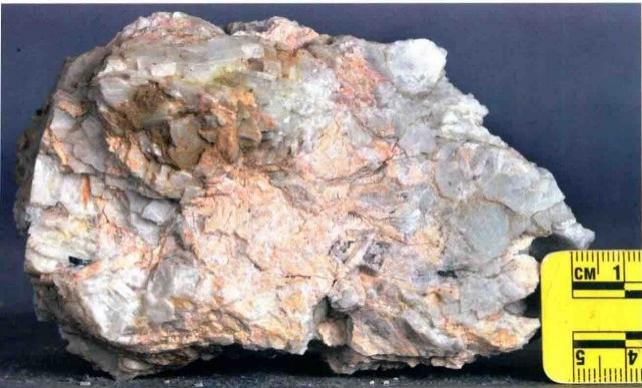
RE1-B31
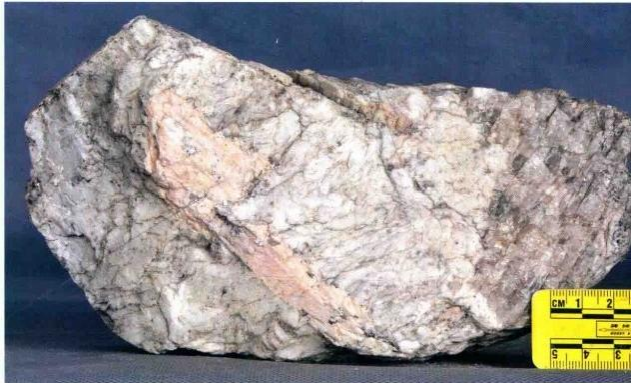
Cleavelandite. The main ore mineral is cleavelandite, accounting for about 90%; the gangue minerals are mainly quartz, spodumene, and muscovite, totaling about 10%. The crystals belong to the triclinic system, with aggregates occurring as flakes. Grayish-white in color, vitreous luster, opaque. Cleavage {001} perfect, {010} nearly perfect, {110} imperfect. Hardness 6–6.5, density 2.60–2.63 g/cm³. It occurs in pegmatites of the cleavelandite–spodumene zone (beryllium‑ and niobium‑bearing lithium ore zone) of the No. 3 vein, No. 1 pit, Koktokay (Keketuohai) mine.

RE1-B32
Cleavelandite. The main ore mineral is cleavelandite, accounting for about 85%; the gangue minerals are mainly quartz, spodumene, muscovite, etc., totaling about 15%. The crystals belong to the triclinic system, with aggregates occurring as flakes. Grayish-white in color, vitreous luster, opaque. Cleavage {001} perfect, {010} nearly perfect, {110} imperfect. Hardness 6–6.5, density 2.60–2.63 g/cm³. It occurs in pegmatites of the cleavelandite–spodumene zone (beryllium‑ and niobium‑bearing lithium ore zone) of the No. 3 vein, No. 1 pit, Koktokay (Keketuohai) mine.



 English English
 Spanish
 Russian
 Arabic
 Swahili
 French
 Turkish
 Portuguese
 Korean
 Japanese
 German
 Italian