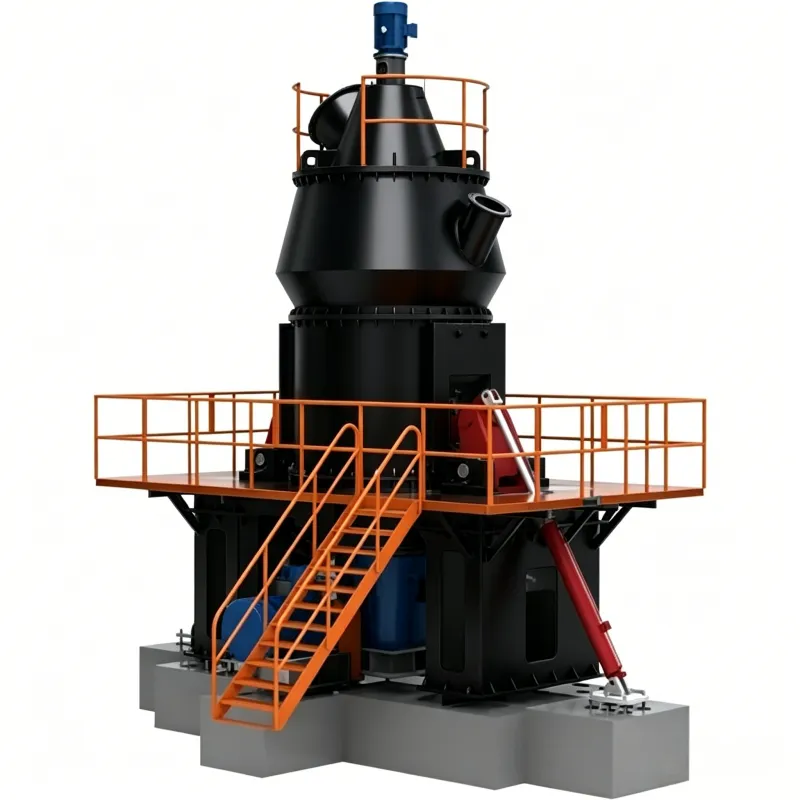
Cement Vertical Roller Mill
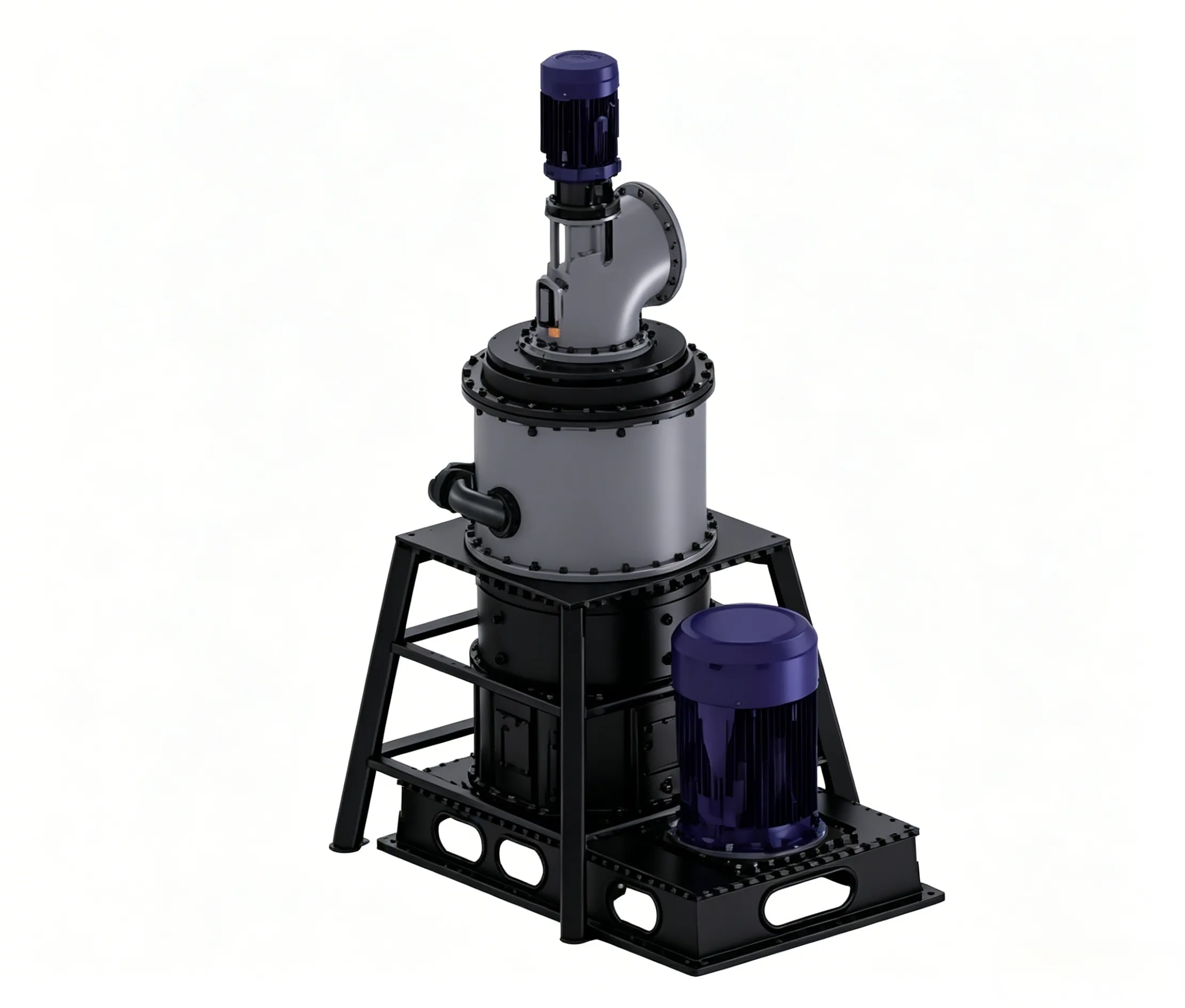
Introduction to Cement Vertical Roller Mill The GKLM cement vertical roller mill…


The present invention relates to a mineral processing technology, and in particular to a gold ore dressing process.
The current gold ore dressing process is a two-stage one-closed-circuit crushing process, a one-stage one-closed-circuit grinding process, and a flotation circuit consisting of one stage of roughing, three stages of cleaning, and two stages of scavenging, with the flotation middlings returned in sequence. This is the conventional process commonly used in gold ore dressing. This process has low crushing efficiency, a low fines content in the final crushed product (only 66.36%), low crushing capacity (38.97 t/h), long operating hours, which directly affects the improvement of grinding and flotation capacity, and poor separation performance with low technical indices. It cannot simultaneously improve the recovery and concentrate grade, has low recovery, high power consumption, high cost, and insignificant economic benefits.
The object of the present invention is to overcome the above deficiencies of the prior art and to provide a gold ore dressing process with high crushing efficiency, improved technical content and key technical-economic indices, low power consumption, and low cost.
The object of the present invention can be achieved by the following measures: A gold ore dressing process, comprising the steps of: a) subjecting the raw ore to first-stage crushing, then screening with a double‑deck vibrating screen; the oversize product is recrushed and then fed together with the middle‑deck product to second‑stage crushing; the second‑stage crushed product is returned and combined with the first‑stage crushed product for further screening. b) The final screened product is ground in a first‑stage ball mill in closed circuit with a classifier; the classifier overflow is classified by a hydrocyclone and then fed to a second‑stage ball mill for regrinding, forming a closed grinding circuit with the hydrocyclone. c) The hydrocyclone overflow is first subjected to preferential flotation, and its froth product is subjected to two stages of cleaning and three stages of cleaning to finally become the concentrate product; the tailings after preferential flotation are subjected to a separation circuit comprising one stage of roughing, one stage of cleaning, two stages of cleaning, three stages of cleaning, and one stage of scavenging; the tailings from the first cleaning stage and the froth product from the scavenging stage are combined and fed to the hydrocyclone for reclassification and re‑separation; the second cleaning stage forms a closed circuit with the first cleaning stage, and the third cleaning stage forms a closed circuit with the second cleaning stage.
Compared with the prior art, the present invention can produce the following positive effects: Because the present invention adopts a two‑and‑a‑half‑stage one‑closed‑circuit crushing process, and a two‑stage two‑closed‑circuit grinding process, followed by preferential flotation and cleaning, and after the tailings undergo one roughing and one scavenging operation, the cleaning tailings and scavenging concentrate are combined and returned with the raw ore for regrinding and re‑flotation, this process has high crushing efficiency, a high fines content in the final crushed product (81.55%), high crushing capacity (53.84 t/h), short operating hours, good separation performance, and high technical indices. It can simultaneously improve the recovery and concentrate grade, with recovery increased by 3.03%, concentrate grade increased by 16.57 g/t, power consumption reduced by 21.5%, cost reduced by 18.9%, and annual economic benefit increased by 8.6012 million RMB. The comparison of technical indices between the present invention and the prior art is shown in the table below:
| Item | Prior art process indices | Present process indices |
|---|---|---|
| Feed grade | 3.85 g/t | 3.87 g/t |
| Concentrate grade | 43.81 g/t | 60.38 g/t |
| Tailings grade | 0.26 g/t | 0.13 g/t |
| Recovery | 93.71% | 96.7% |
| Power consumption | 31.73 kWh/t | 24.91 kWh/t |
| Dressing cost | 33.34 RMB/t | 27.04 RMB/t |
| Crushing capacity | 38.97 t/h | 53.84 t/h |
| Final crushed product size (-8 mm) | 66.36% | 81.55% |
The best embodiment of the present invention is described in detail below with reference to the accompanying drawings:
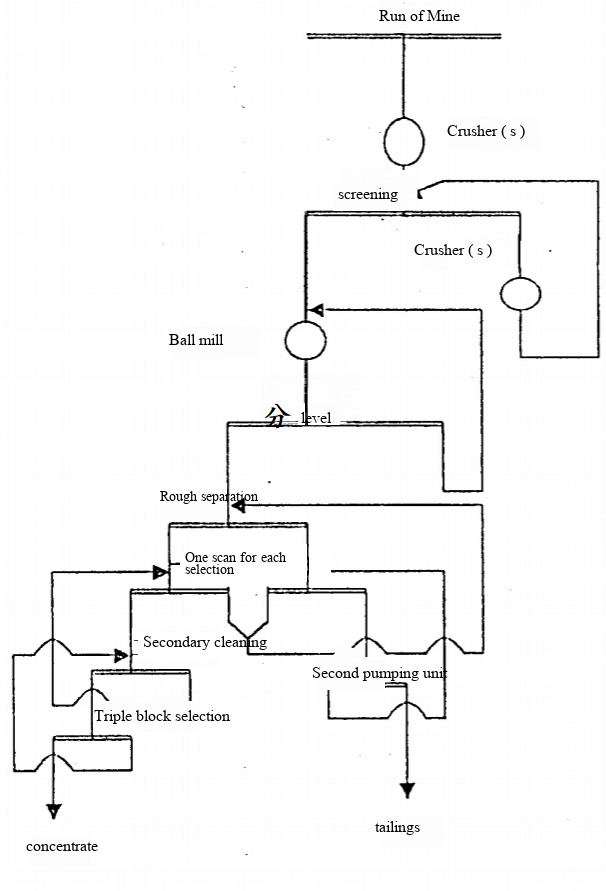
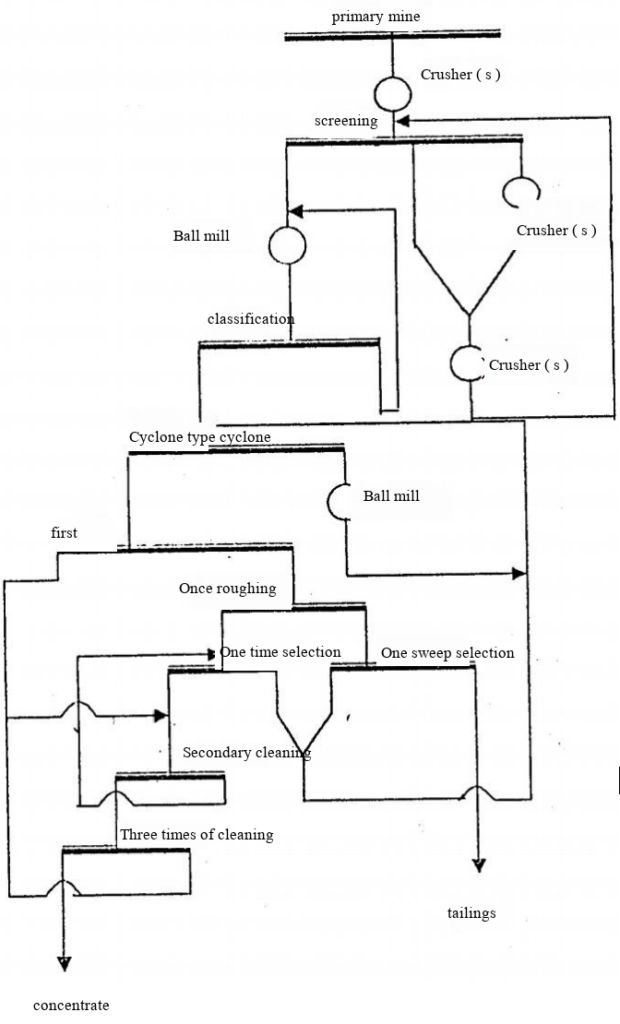
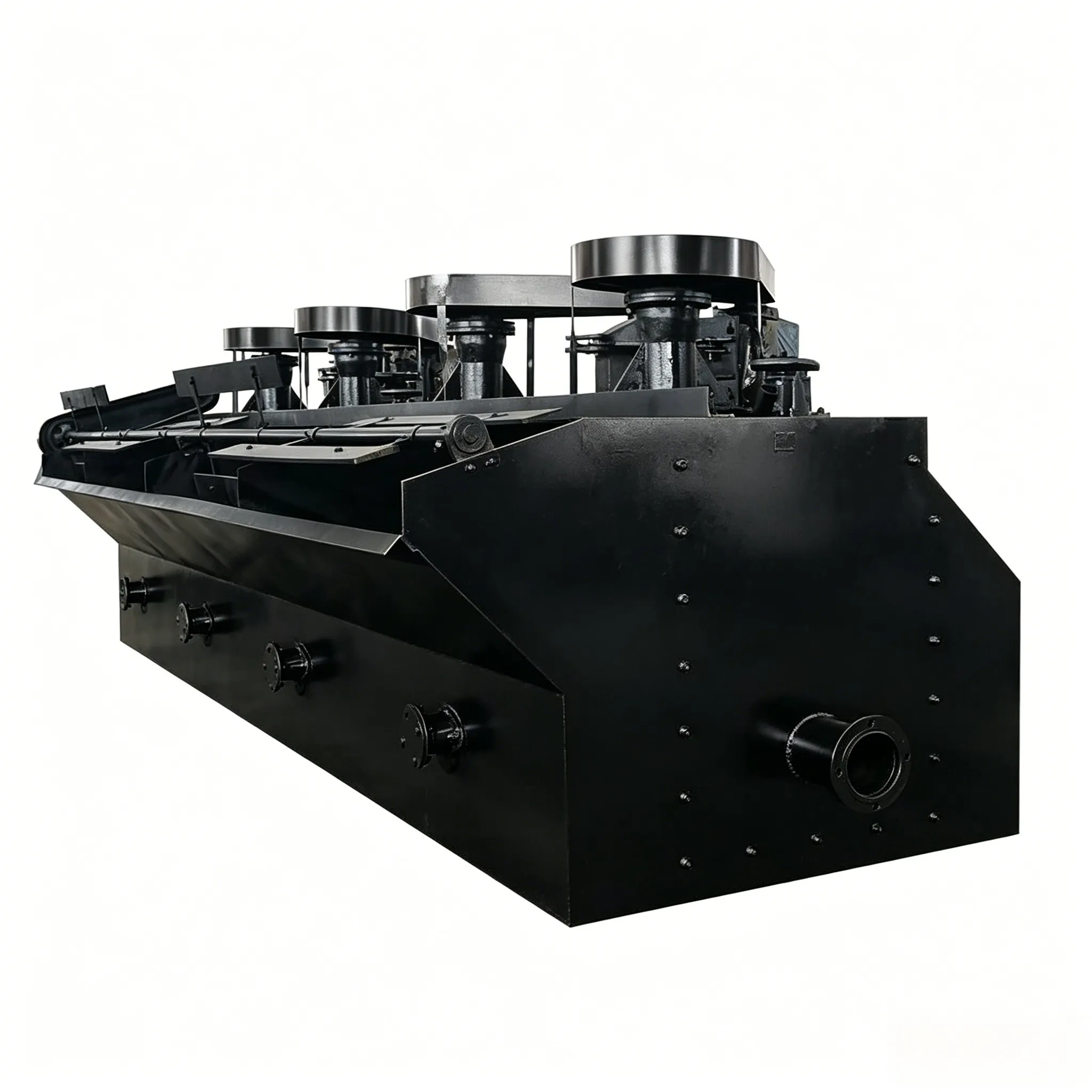
Embodiment: A gold ore dressing process, the flowsheet of which is as follows: The raw ore enters the ore bin through a 250×250 mm grizzly screen. A pneumatic breaker is arranged on the grizzly screen to break large blocks larger than 250 mm. After being broken, the ore is fed by an electric vibrating feeder into a jaw crusher for first‑stage crushing, to a particle size of less than 60 mm. The crushed product is conveyed by a belt conveyor to a double‑deck circular vibrating screen with a screen aperture of 10 mm. The oversize product is fed by an electric vibrating feeder to a heavy‑duty compound pendulum crusher for recrushing, and then together with the middle‑deck product is fed by belt conveyor to a cone crusher for second‑stage crushing to a particle size of 10 mm. The second‑stage crushed product is returned and combined with the first‑stage crushed product for further screening, forming a two‑and‑a‑half‑stage one‑closed‑circuit crushing flowsheet. The final screened product is weighed by a belt scale on the belt conveyor and then fed to a first‑stage grate ball mill for grinding in closed circuit with a classifier. The classifier overflow is classified by a hydrocyclone and then fed to a second‑stage ball mill for regrinding, forming a closed grinding circuit with the hydrocyclone. The hydrocyclone overflow is first subjected to preferential flotation in flotation cells. The tailings after preferential flotation undergo a separation circuit comprising one stage of roughing, one stage of cleaning, two stages of cleaning, three stages of cleaning, and one stage of scavenging. The froth product from roughing is sent to the first cleaning stage; the tailings from roughing are sent to the scavenging stage; the froth product from the first cleaning stage is sent to the second cleaning stage; the tailings from the first cleaning stage and the froth product from the scavenging stage are combined and fed to the hydrocyclone for reclassification, then to the second‑stage grinding operation for regrinding, and combined with the raw ore for re‑flotation. The froth product from the second cleaning stage is sent to the third cleaning stage; the tailings from the second cleaning stage are returned to the first cleaning stage, forming a closed circuit with the first cleaning stage. The concentrate from the third cleaning stage is the final product; the tailings from the third cleaning stage are returned to the second cleaning stage, forming a closed circuit with the second cleaning stage. The froth product from the preferential flotation is subjected to two stages of cleaning and three stages of cleaning to finally become the concentrate product.
 English English
 Spanish
 Russian
 Arabic
 Swahili
 French
 Turkish
 Portuguese
 Korean
 Japanese
 German
 Italian