
Feed size: ≤120 mm
Product output: 85–733 t/h
Fineness: 80–400 mesh
Applicable materials: cement raw meal, steel slag, water slag, clay, gypsum, coal gangue, limestone, etc.
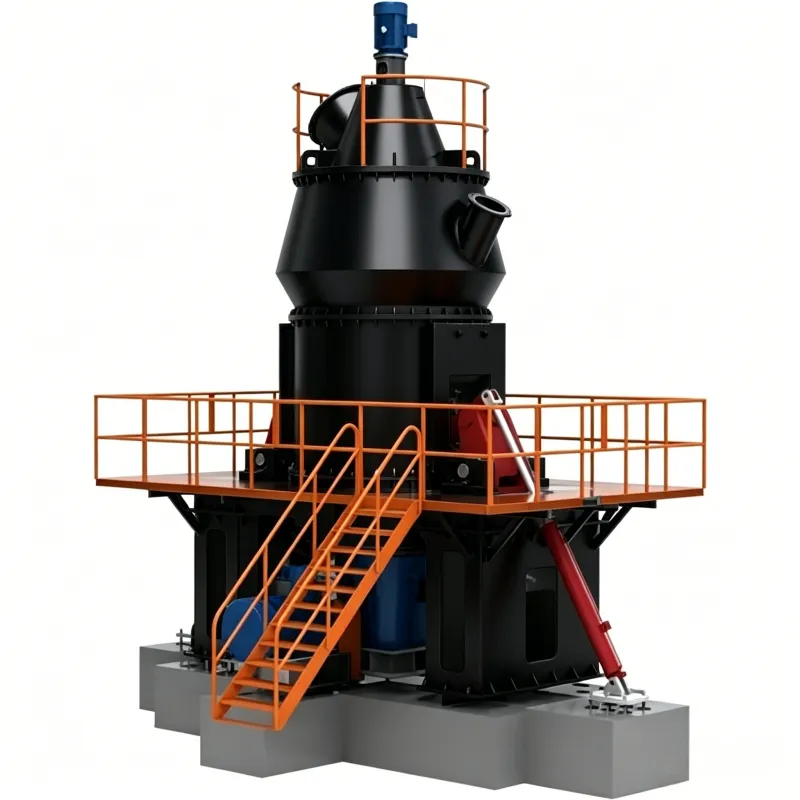
Introduction to Cement Vertical Roller Mill
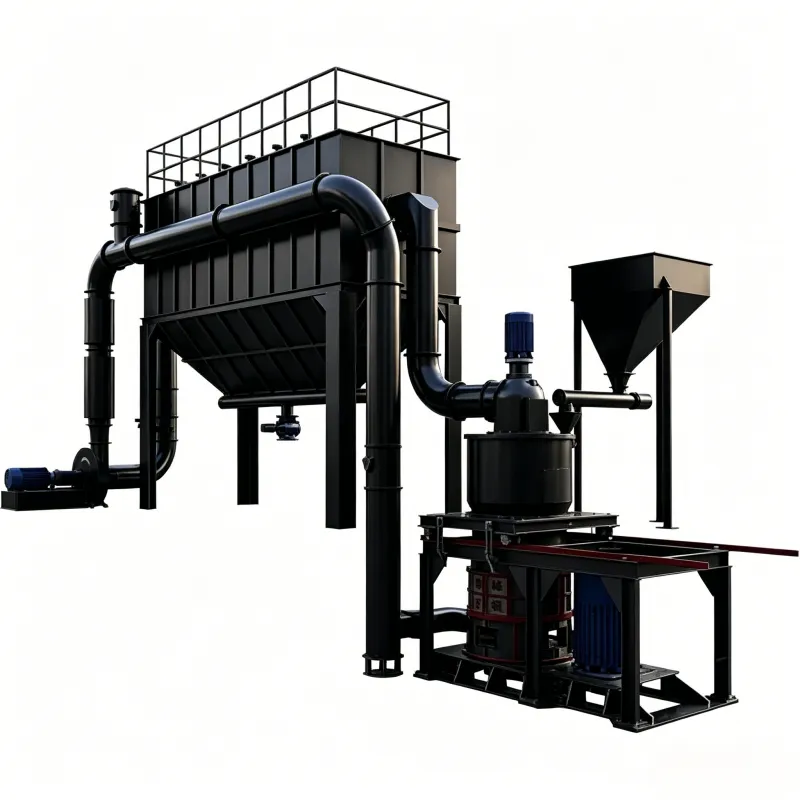
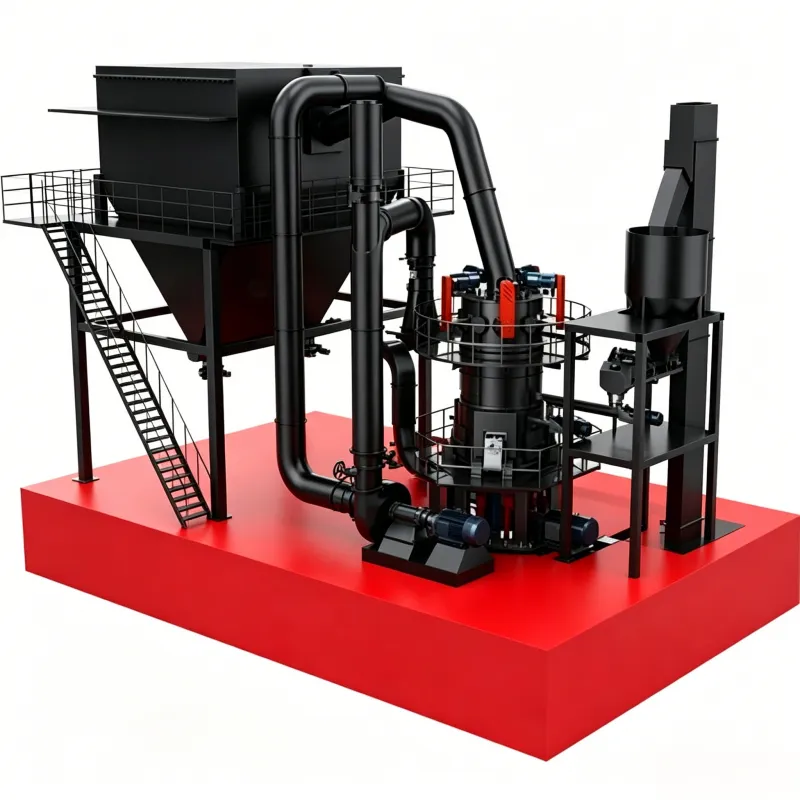
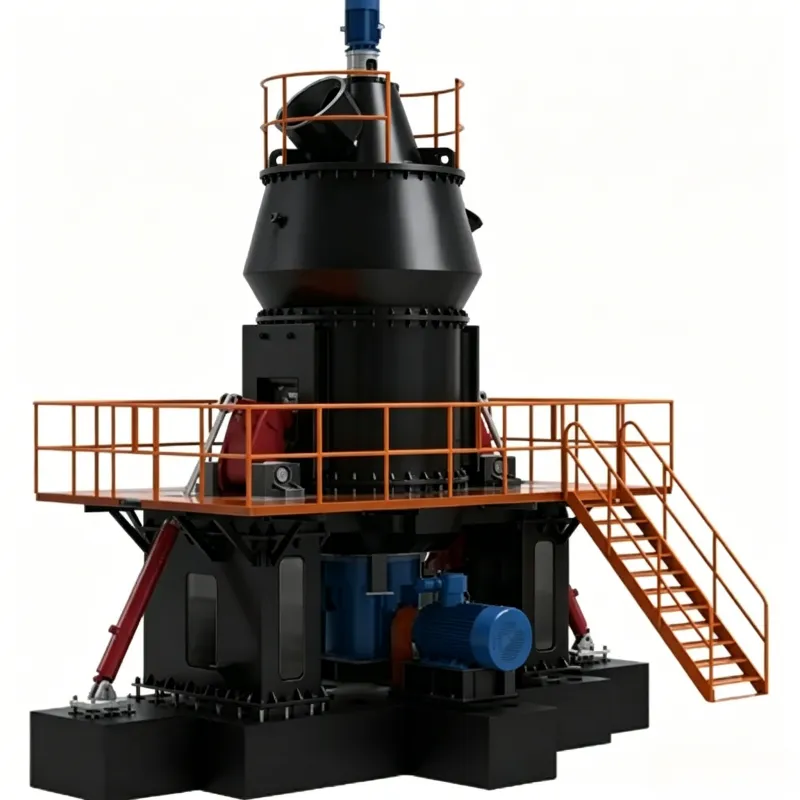
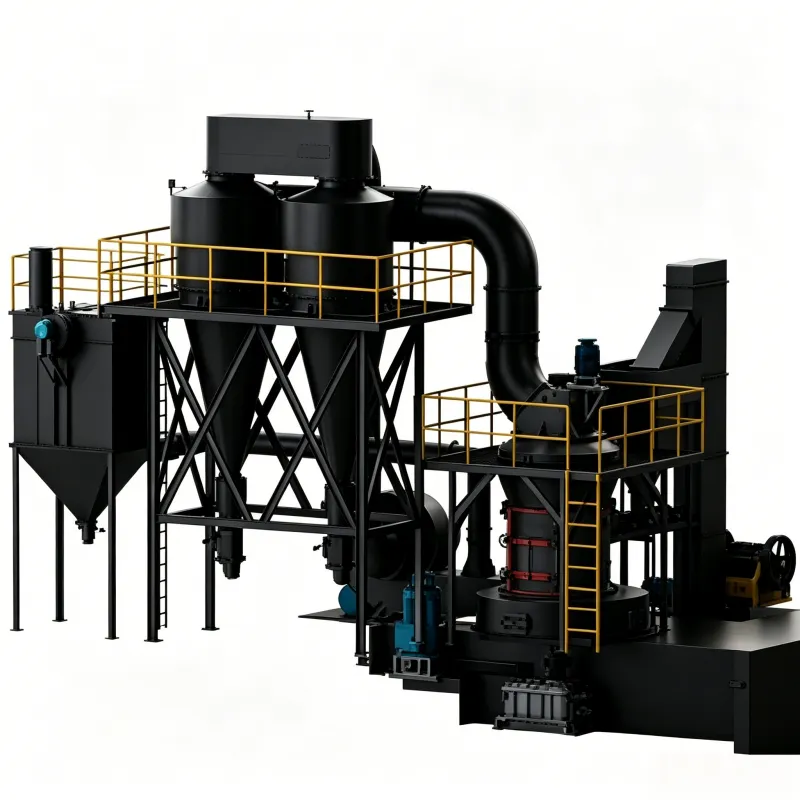
The GKLM cement vertical roller mill is developed by Kenex Group Mining Machinery based on the vertical mill, incorporating an advanced external circulation system. Unlike traditional internal circulation, it features an external independent classifier. All materials are circulated externally through an elevator, eliminating the need for hot air pneumatic conveying from the bottom. This results in low system resistance and significant energy savings. It is suitable for large-scale production lines in cement raw meal preparation and industrial waste residue utilization.
Comparison between Cement Vertical Roller Mill and Traditional Vertical Roller Mill
| Cement Vertical Roller Mill | Traditional Vertical Roller Mill |
|---|---|
| External circulation system; material is vertically conveyed by a bucket elevator | Internal circulation system; material is pneumatically conveyed by fan air flow |
| External independent classifier | Top-mounted internal classifier |
| Low system resistance: approx. 3,000–4,000 Pa | High system resistance: approx. 8,000–9,000 Pa |
| No airflow interference → less wear, longer service life | Airflow interference → increased wear |
Features and Advantages of the Cement Vertical Roller Mill
Energy Saving & Consumption Reduction
Adopts mechanical external circulation to replace pneumatic internal circulation. System resistance is directly reduced by approximately 5,000 Pa. Fan ventilation power consumption and overall grinding power consumption are significantly lowered. Multiple production line measurements show comprehensive energy saving of ≥30%.
Stable & Reliable Operation
No airflow circulation interference inside the mill → equipment vibration value is notably reduced. The material bed is uniform and stable. Over-grinding of material is completely suppressed. Finished product has uniform particle size and stable quality.
Efficient Drying
Full hot air penetration and high thermal efficiency ensure thorough drying. Capable of directly processing high-moisture raw materials with original moisture ≤20%, without the need for pre-drying equipment.
Heavy-Duty Wear Resistance
Grinding rollers and grinding table are mainly cast from high-chromium alloy wear-resistant material, supplemented with thickened wear-resistant liners. Excellent impact resistance and wear resistance. Heavy-duty steel structure design ensures robust construction. Annual equipment operation rate ≥95%.
Clean & Environmentally Friendly
Utilizes a multi-stage negative-pressure closed dust collection process consisting of a cyclone collector + pulse jet bag filter. Dust emission concentration is stably ≤10 mg/m³. The entire machine operates under fully sealed negative pressure, with operating noise ≤85 dB(A). Meets national ultra-low environmental emission requirements.
Cement Raw Meal → Cement Vertical Mill → Bottom Discharge → Elevator → External Classifier → Qualified Powder → Dust Collector → Finished Packaging
Cement raw meal is stably and evenly fed into the cement vertical roller mill from the batching bin via conveying equipment such as a quantitative feeder. The rotating grinding table drives the grinding rollers to crush and grind the material.
While the material is being ground, high-temperature hot air enters from the bottom of the vertical mill and penetrates upward through the material layer on the grinding table, achieving hot-air drying. Since there is no circulating airflow interference inside the mill, the air velocity is low, forming a thicker and more stable material bed. The hot air can fully penetrate, significantly improving drying efficiency. The system can directly process high-moisture materials with moisture content ≤20%.
After grinding, the powder is not classified by internal airflow. Instead, it is collected by the bottom scraper plate and directly discharged from the main unit. It is then transported via a bucket elevator (mechanical lifting) to the external classifier located above the mill for separation:
If high-quality cement is required, a ball mill can be added for segmented grinding and multi-stage classification.
This system consists of an external-circulation vertical roller mill and a ball mill. The vertical mill pre-grinds and produces more than 40% qualified finished product. The remaining coarse material enters the ball mill for fine finish grinding. Compared to a single ball mill system (power consumption ≈ 42 kWh/t), the semi-finish grinding system reduces process power consumption to 25–28 kWh/t. The finished cement temperature is 70–85°C, standard consistency water demand is 25–27%, with better particle size distribution and improved cement performance.
A multi-stage dust collection system is adopted:
The system achieves high overall product recovery and low exhaust gas emission concentration. The entire line is controlled by a PLC intelligent system with a high degree of automation, fully meeting the continuous and stable production requirements of the cement industry.
| Cement Vertical Roller Mill Parameter Comparison Table | |||||
| Model | Ring diameter(mm) | capacity(t/h) | Raw material moisture | cement raw meal | Specific surface area(m²/kg) |
| KXLM2500 | 2500 | 85~100 | <10 | ≤1% | 350~450 |
| KXLM2800 | 2800 | 130~160 | |||
| KXLM3400 | 3400 | 190~240 | |||
| KXLM3700 | 3700 | 240~300 | |||
| KXLM4200 | 4200 | 320~400 | |||
| KXLM4500 | 4500 | 400~500 | |||
| KXLM4800 | 4800 | 440~550 | |||
| KXLM5100 | 5100 | 550~670 | |||
| KXLM5600 | 5600 | 600~730 | |||
| The above data are for reference only. Actual parameters vary depending on the material. Please feel free to contact us for a professional customized solution. | |||||
Cement Vertical Roller Mill – Frequently Asked Questions
Q: What is the difference between the raw material finish grinding process and the semi-finish grinding process of a cement vertical roller mill?
A:
Finish grinding system: The vertical mill adopts an external circulation system, offering advantages such as simple process, low energy consumption, and strong adaptability. It is widely used for grinding various materials including cement, slag, raw meal, etc.
Semi-finish grinding system: Composed of an external-circulation vertical mill and a ball mill, this system features even lower energy consumption, better powder performance, and a more reasonable particle size distribution. However, the process is more complex, requires more equipment, involves higher investment, and has greater maintenance workload. It is mainly used for producing high-quality cement.
Q: What should be done if the external circulation elevator of the cement vertical roller mill fails?
A:
Immediately cut off the feed, reduce the grinding pressure, and lower the classifier speed. After the current returns to normal, gradually resume feeding.
Q: What is the difference between a cement vertical roller mill and a coarse powder vertical roller mill?
A:
Cement vertical mill: Adopts an external circulation system, aiming for moderate fineness, reasonable particle size distribution, and stable product quality to meet the strict requirements of cement production.
Coarse powder vertical mill: Uses a static classification system with an even simpler process flow. Its primary goal is to produce coarse powder in large quantities with minimal fineness requirements, achieving the lowest possible energy consumption and cost.