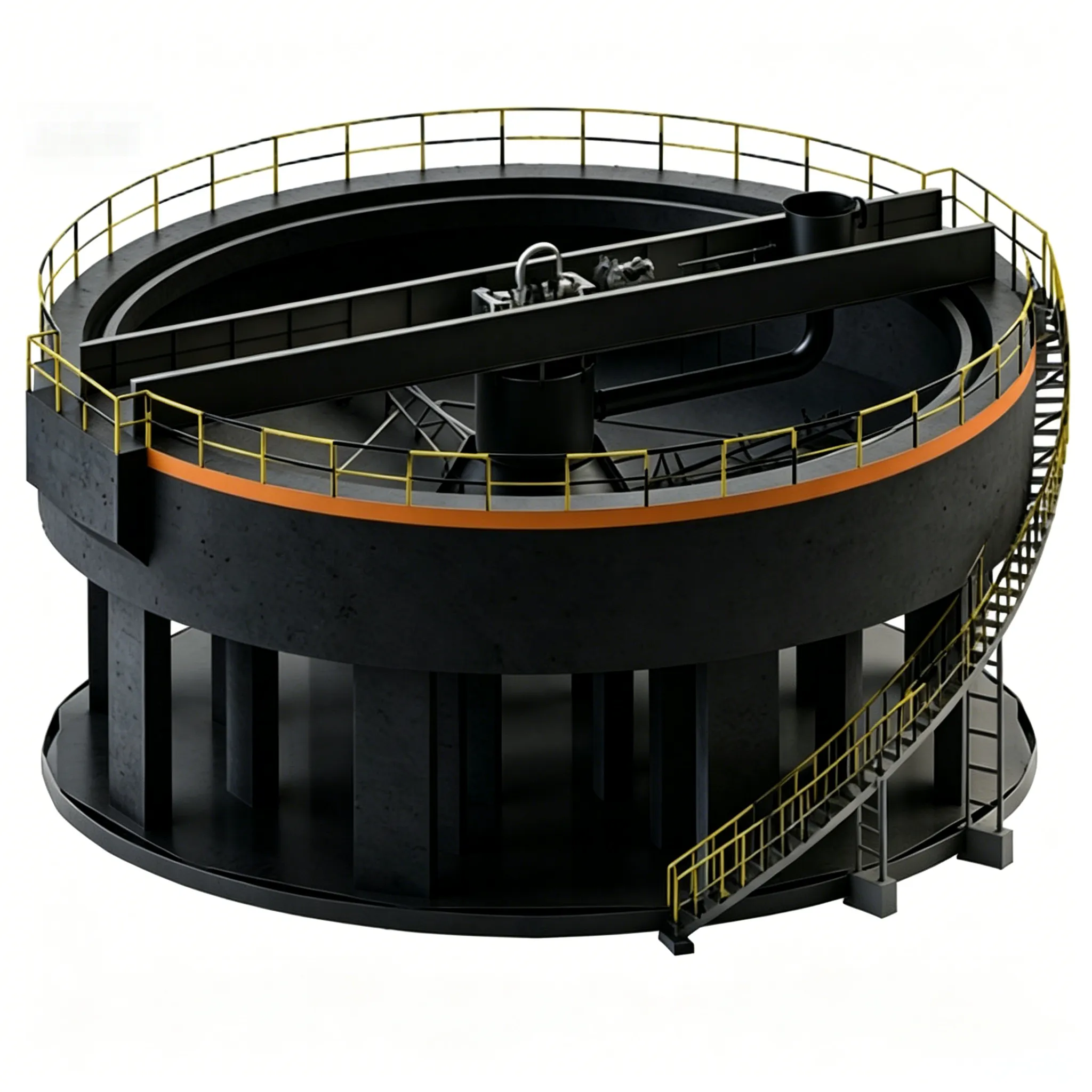
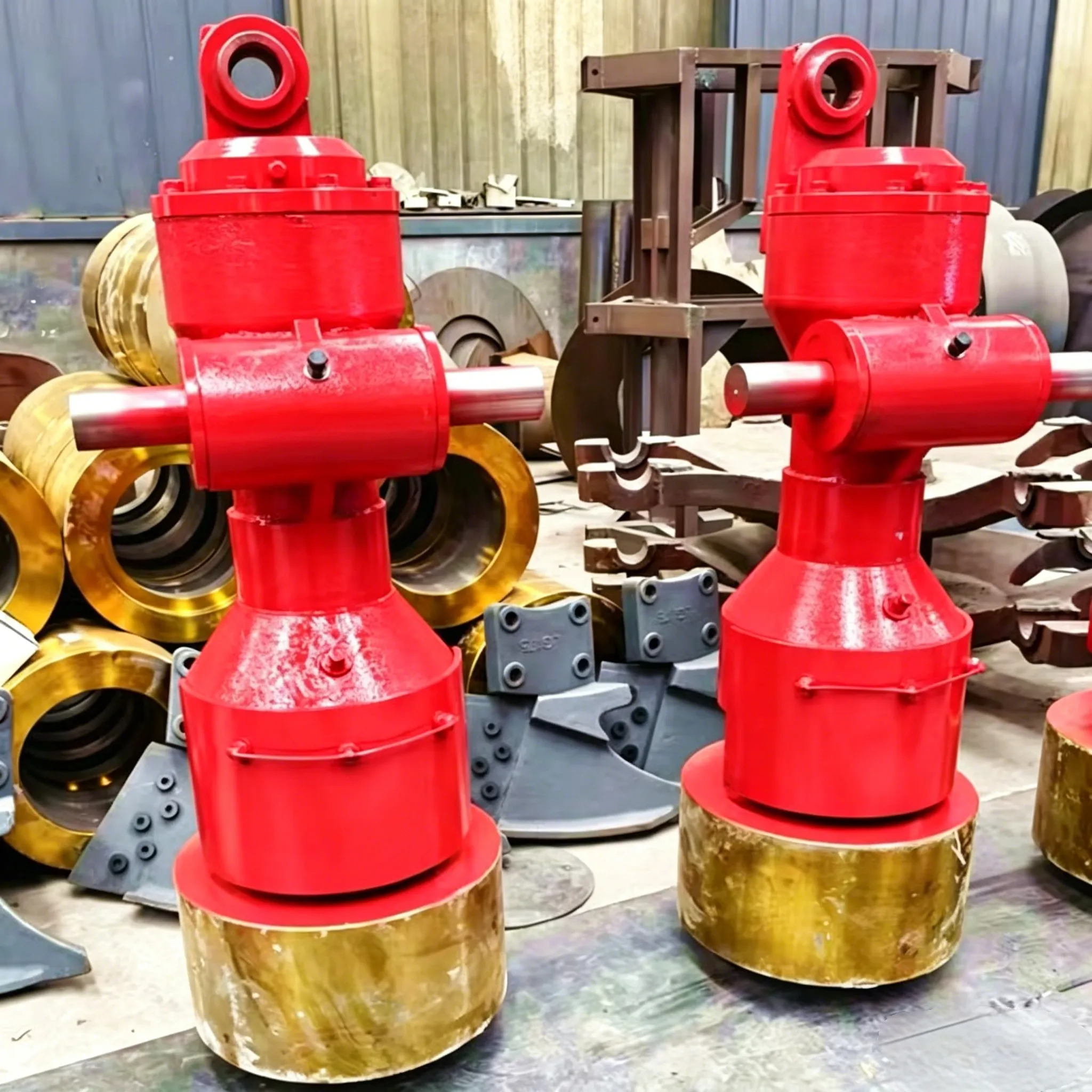
Center-Drive Thickener
Center-Drive Thickener Currently, the center-drive thickeners produced in China are relatively small…

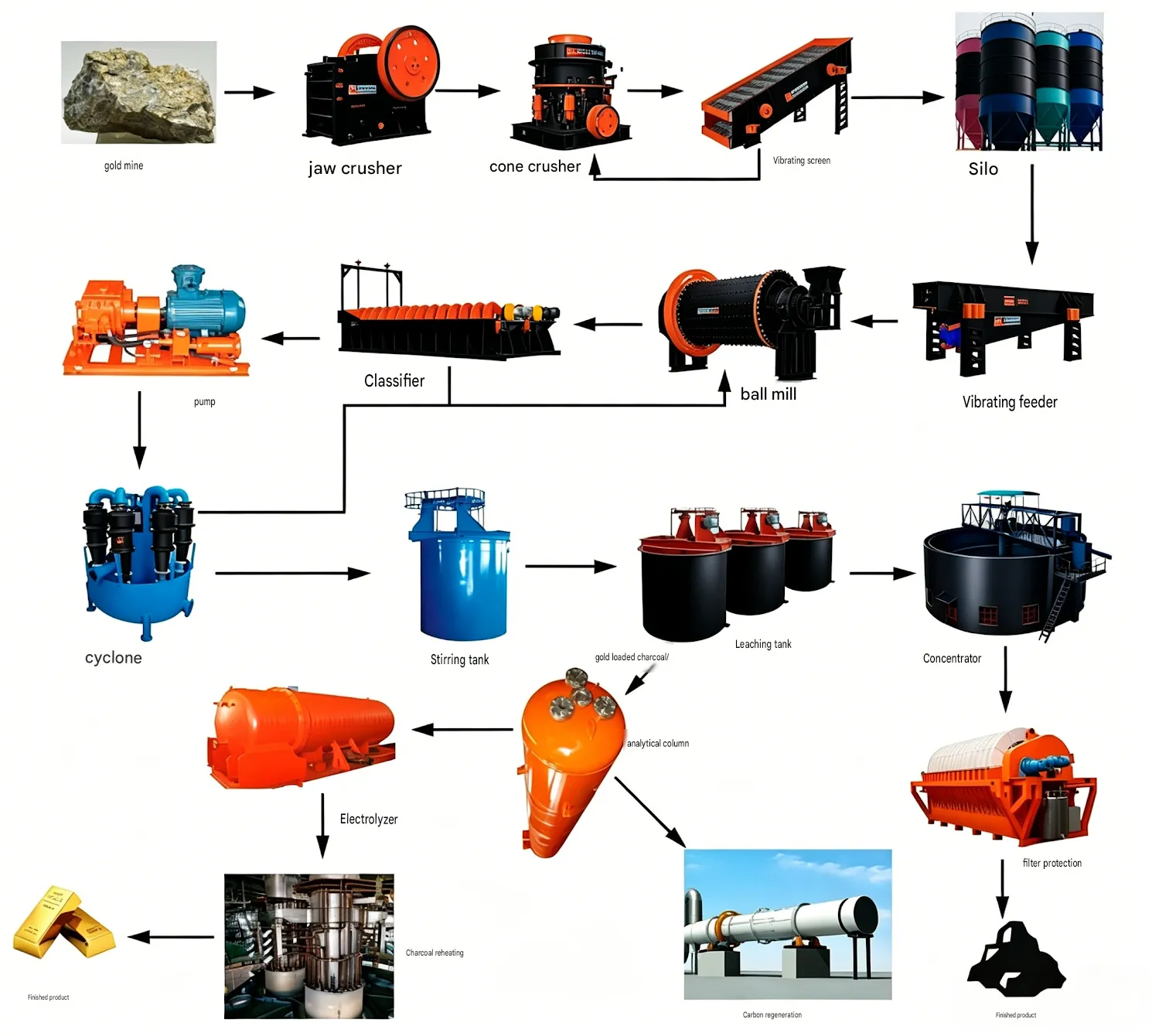
This plan is designed for small‑scale mineral processing plants with a daily throughput of 30–100 tonnes. It is suitable for grinding and beneficiation of ores such as gold, copper, iron, and quartz sand. Small‑scale plants offer low investment thresholds, short construction periods, and flexible operation, making them an ideal choice for early‑stage mine development or when ore supply is inconsistent.
| Parameter | Value |
|---|---|
| Ore types | Gold ore, copper ore, magnetite, quartz sand, etc. |
| Feed size | ≤20–25 mm |
| Target grind size | 60–80% passing 200 mesh (single‑stage grinding) |
| Grinding mode | Wet grinding (preferred) or dry grinding |
Single‑stage closed‑circuit grinding – beneficiation:
Run‑of‑mine → Jaw crusher → Hammer crusher → Vibrating screen → Ball mill → Spiral classifier (or hydrocyclone)
                                                                       ↓
                                                               Qualified pulp → Beneficiation (flotation / magnetic separation)
                                                                       ↓
                                                               Tails → Tailings pond
                                                               Concentrate → Dewatering
For small plants where the final grind of –200 mesh is below 80%, a single grinding stage is sufficient. The ground pulp is classified by a spiral classifier; the qualified product goes to the next process, while coarse particles are returned to the ball mill for regrinding.
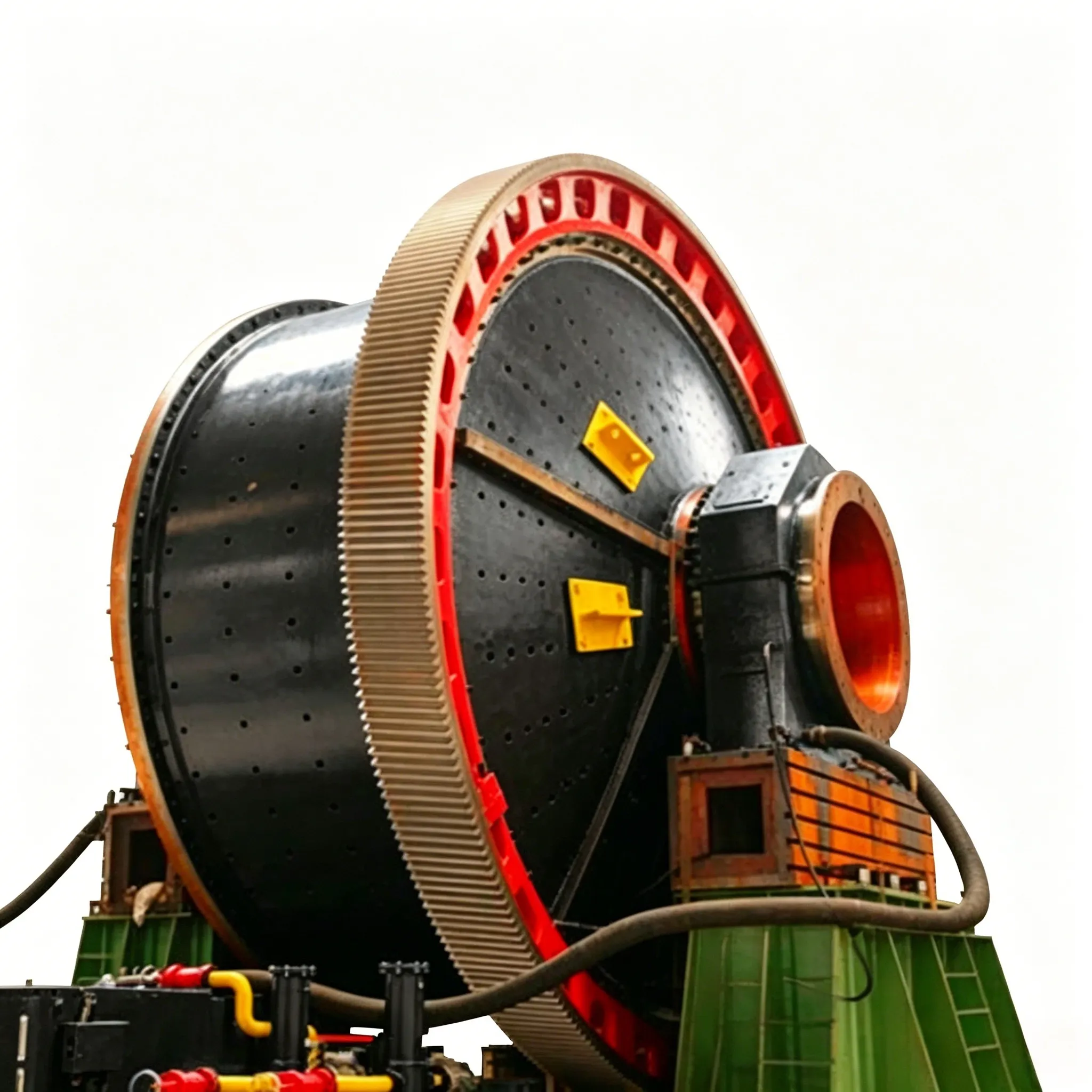
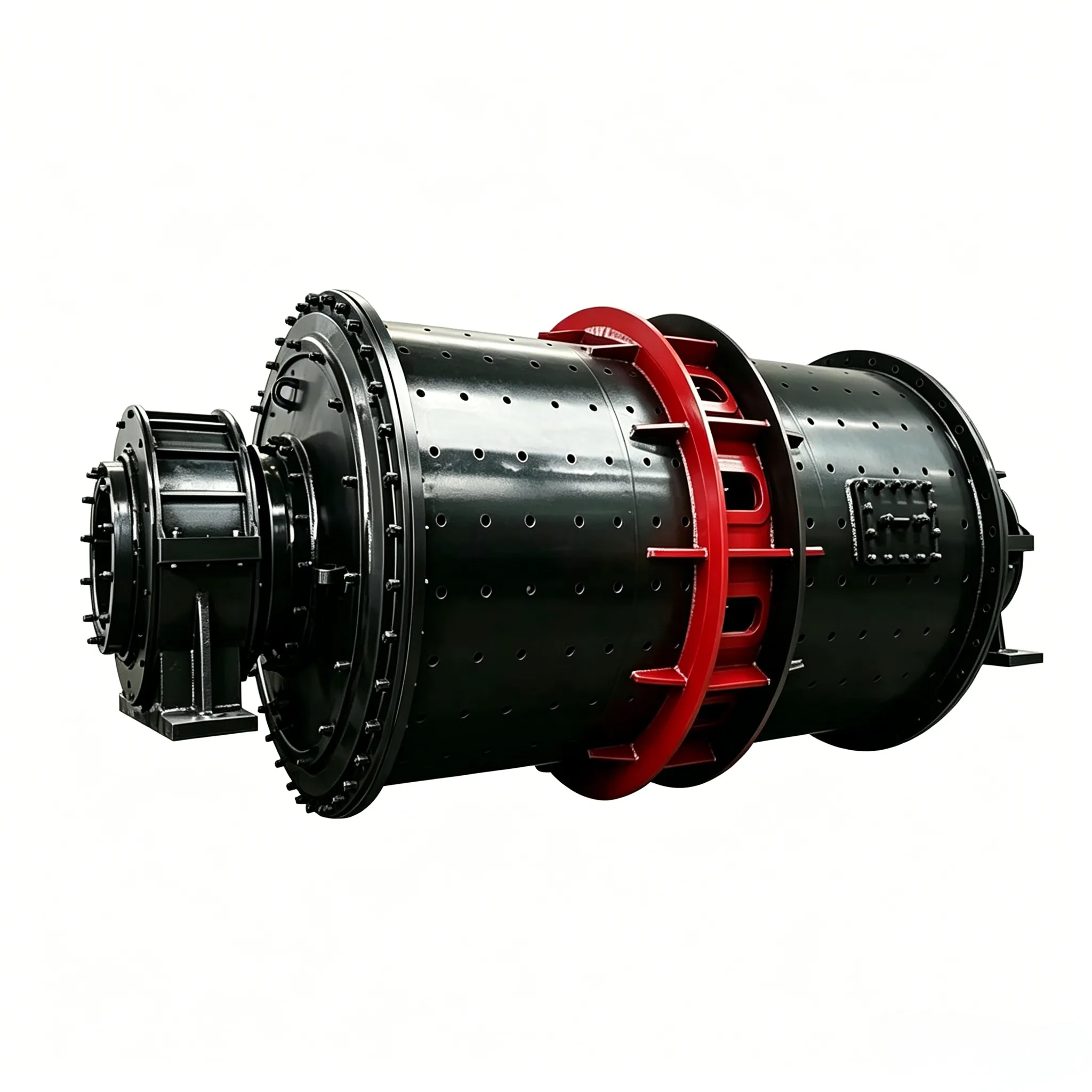
Common ball mill models for small plants and their indicative prices:
| Model | Capacity | Motor Power | Indicative Price (RMB 10,000) | Application |
|---|---|---|---|---|
| Φ900×1800 | 0.5–2 t/h | 15–22 kW | 3–8 | Mini plant / laboratory |
| Φ1200×2400 | 1–3 t/h | 30–37 kW | 8–15 | Small plant |
| Φ1500×3000 | 3–8 t/h | 55–75 kW | 15–25 | Standard small plant |
| Φ1830×3600 | 5–15 t/h | 90–130 kW | 25–40 | Larger small plant |
Note: Prices are market references as of 2025–2026. Actual costs vary with shell material, liner type, drive system, brand, and customisation. Small ball mills (drum diameter ≤1.5 m) typically range from RMB 80,000 to 250,000.
Recommended option for 50 t/d: Φ1500×3000 wet overflow ball mill with 55 kW motor – approximately RMB 180,000–250,000.
| No. | Equipment | Model / Specification | Power | Indicative Price (RMB 10,000) | Remarks |
|---|---|---|---|---|---|
| 1 | Vibrating feeder | – | 1.5 kW | 2–4 | Uniform feeding |
| 2 | Jaw crusher | PE‑250×400 | 15 kW | 3–5 | Primary crushing |
| 3 | Hammer crusher | PC‑400×600 | 22 kW | 5–8 | Secondary crushing |
| 4 | Vibrating screen | Double‑deck | 3 kW | 2–4 | Control feed size |
| 5 | Ball mill | Φ1500×3000 | 55 kW | 18–25 | Core equipment |
| 6 | Spiral classifier | FG‑7 | 3 kW | 3–5 | Closed‑circuit classification |
| 7 | Flotation cells (or magnetic separator) | 7 cells / drum type | 5.5 kW/cell | 10–20 | According to ore type |
| 8 | Agitation tank | Φ1500×1500 | 5.5 kW | 3–5 | Pulp conditioning |
| 9 | Thickener | NZ‑6 | 2 kW | 3–5 | Concentrate dewatering |
| 10 | Filter press | Vacuum type | 3 kW | 3–5 | Concentrate drying |
| 11 | Belt conveyors & accessories | Custom | – | 3–5 | Material handling |
| 12 | Power distribution & control | Complete set | – | 5–8 | Electrical control |
Subtotal for equipment: approximately RMB 600,000–950,000
If ore amenability testing or routine assaying is required, consider:
| Model | Description | Indicative Price |
|---|---|---|
| XMQΦ240×90 | Laboratory cone ball mill | ~RMB 6,000–7,000 |
| XMQΦ400×600 | Medium‑size lab ball mill | ~RMB 10,000–20,000 |
For very tight budgets, used ball mills are an alternative. Prices typically range from 40–60% of new equipment. A small used ball mill may cost as little as RMB 50,000 or over RMB 300,000 depending on condition and age. Inspect service life and maintenance records carefully.
| Cost Category | Amount (RMB 10,000) | Share | Remarks |
|---|---|---|---|
| Equipment purchase | 60–95 | 45–55% | Ball mill, crushers, classifier, flotation, etc. |
| Civil works | 30–50 | 20–30% | Plant building, foundations, bins |
| Installation | 5–10 | 4–6% | Equipment setting, piping |
| Electrical system | 5–8 | 4–5% | Cabling, switchgear, controls |
| Transport | 3–8 | 2–5% | Can be higher for remote sites |
| Spare parts & consumables | 3–5 | 2–3% | Grinding balls, liners, etc. |
| Other costs (design, commissioning, training) | 5–10 | 4–6% | Engineering services |
| Equipment + civil total | 110–185 | – | – |
| Working capital | 20–30 | – | Ore purchase, labour, power, etc. |
| Total project investment | 130–215 | – | Including working capital |
Reference: For a 50 t/d small gold flotation plant, equipment investment is about RMB 650,000–850,000, civil and installation about RMB 300,000–400,000. A standard 100 t/d flotation plant typically totals RMB 0.8–3.0 million.
| Scale | Equipment Investment | Total Investment (incl. civil) | Application |
|---|---|---|---|
| 30 t/d | RMB 400,000–600,000 | RMB 800,000–1.2 million | Micro plant / pilot testing |
| 50 t/d | RMB 600,000–950,000 | RMB 1.3–1.8 million | Standard small plant |
| 100 t/d | RMB 800,000–1.3 million | RMB 1.8–3.0 million | Larger small plant |
| Cost Item | Unit Cost (RMB/t) | Remarks |
|---|---|---|
| Electricity | 15–25 | Grinding accounts for 40–60% of total plant power |
| Grinding media (balls) | 5–10 | Depends on ore hardness |
| Liner consumption | 2–4 | High‑manganese steel liners |
| Labour | 8–12 | 8–10 operators |
| Maintenance & repairs | 3–5 | Routine upkeep |
| Others (water, reagents, etc.) | 5–10 | Process‑dependent |
| Total per‑tonne cost | 38–66 | – |
Reference: Small flotation plants typically report ~RMB 55–70/t.
Assume:
Annual gold production: 15,000 × 3 × 85% = 38,250 g = 38.25 kg
At a gold price of RMB 450/g, annual revenue: 38.25 × 1000 × 450 ≈ RMB 17.22 million
| Phase | Timeline | Activities |
|---|---|---|
| Preliminary | Months 1–2 | Ore amenability test, site selection, equipment sourcing |
| Procurement | Months 2–3 | Enquiries, comparison, contracting, manufacturing |
| Civil works | Months 3–5 | Plant construction, equipment foundations |
| Installation | Months 5–6 | Equipment positioning, piping, electrical |
| Commissioning | Months 6–7 | Single‑machine testing, linked trial run, pilot production |
| Formal production | Month 7 | Reach design capacity |
| Risk Factor | Impact | Mitigation |
|---|---|---|
| Ore grade fluctuation | High | Strengthen exploration, establish grade monitoring |
| Equipment breakdown | Medium | Keep key spare parts, secure after‑sales service agreement |
| Product price drop | High | Monitor markets, control inventory levels |
| Stricter environmental policy | Medium | Install tailings pond and effluent treatment facilities |
| Rising energy costs | Medium | Use energy‑efficient equipment, optimise grinding parameters |
 English English
 Spanish
 Russian
 Arabic
 Swahili
 French
 Turkish
 Portuguese
 Korean
 Japanese
 German
 Italian